Best of Utah

Sugar House: Sugar Alley Fire Aftermath

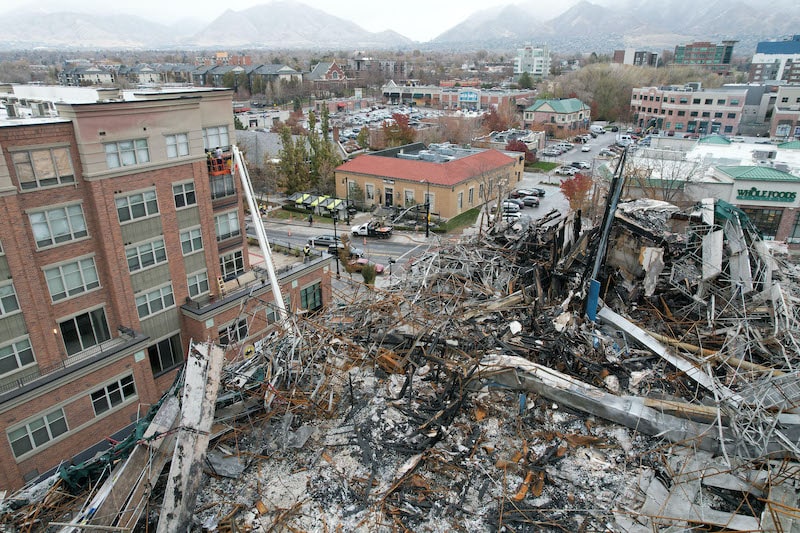
Construction was well underway when Sugar Alley caught fire on October 25, 2022 greatly impacting nearby businesses for months afterwards.

|


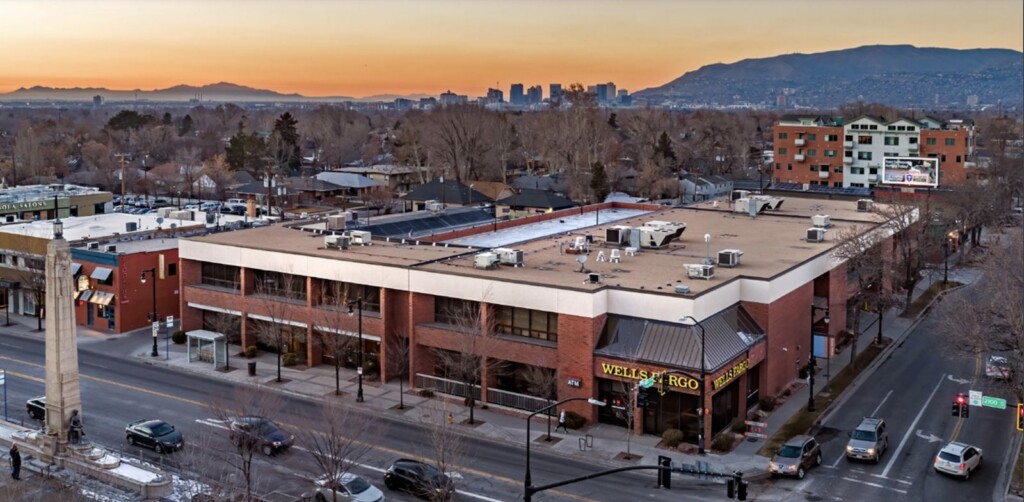
When Salt Lake City approved the current zoning ordinance for the Sugar House Business District, it gave property owners the right to construct mixed-use (residential with commercial) structures up to 100′ tall, with specific conditions and restrictions. In a short time, historic buildings such as the iconic Granite Drug Store were demolished, and the 6-story “Vue at Sugar House” rose over the notorious Sugar Hole that was left in the ground. 

All around the Business District, other landowners exercised their right to lease or sell their lots for mixed-use re-development. On the Granite block alone, three more multi-story projects went up: “2100 Sugarhouse” (two stories); the “Sugarmont Apartments and Townhomes” (seven stories); and most recently, the eight story building at 2188 S Highland Drive known as “Sugar Alley.” 

Sugar Alley was designed to meet design guidelines updated in 2021 for the east part of downtown Sugar House. The Sugar House Community Council approved the over-all concept, which included some old ideas in tribute to the history of the site as well as new ones, such as a large glass atrium facing Highland Drive. 

Construction was well underway when Sugar Alley caught fire on October 25, 2022. Fire companies responded quickly. There were no injuries, but the building was destroyed. After lengthy study, the Fire Department’s investigation determined that the cause of the fire was not criminal. There may be ongoing private insurance investigations underway to learn more about the cause of the fire. 

Fire Department personnel ordered some residents of the nearby Sugarmont Apartments to evacuate their homes. Fire Chief Tony Allred credits the staff at Sugarmont and Sugar Vue for their quick and efficient assistance in helping to move the residents to safety, and most residents were able to return to their homes within 48 hours. 

Businesses on the south side of the Vue along the Elm Lane frontage — SLC Med Spa, SportClips,  Mochinut, and Real Advantage — were ordered to remain closed due to glass actively falling onto the sidewalk. A structural engineer for the City required the closure of Buffalo Wild Wings, Cubby’s, and Cold Stone City due to concern that the unstable remains of the burnt structure might collapse.  

Demolition of the ruined building began two weeks after the fire. Business owners were allowed into their spaces at that time, and were able to notify their clients and customers that they were open and how to reach them. Whitney Murdock of SLC Med Spa said that the lack of communication and coordination during the first period was frustrating. Even after the barricades came down on Elm Lane, there was confusion about how to enter the stores and where to park.   

SLC’s Department of Economic Development stepped up to notify businesses of the resources available to them. They tried to amplify the “Open for Business” message on social media, as did the Sugar House Chamber of Commerce.  

Now, the Granite block residents and businesses face several more years of active construction as Sugar Alley rises again. They are anxious to learn what will happen next.


, ,

Join our newsletter.
Stay informed.


  • Ogden Utah: Boomtown, Bargain, or Utah’s Next Unaffordable City?

    With its reinvigorated downtown and close proximity to mountains and river pathways, this northern Utah city is enjoying a renaissance. Ogden’s stock of affordable housing — compared to other metros along the Wasatch Front — currently draws people in for a closer look. 


  • The End of an Era? FanX and the Salt Palace Closure

    For more than a decade, FanX has called the Salt Palace home. With the convention center set to close for a massive renovation, founder Dan Farr is preparing for a new chapter while planning one final celebration in its longtime venue.


  • The Stratos Project and Corporate Power: Who Controls Utah’s Future?

    If we were all just consumers, Governor Cox, Mike Lee, Speaker Schultz, and Kevin O’Leary would have it easy. If we were just more concerned about money, jobs, and tech, and less concerned about raising our kids in communities (not in front of screens), culture, the environment, and water, those smart dudes would get exactly what they want — Stratos: a city of the future, buzzing with processors and transistors, making all of our AI dreams come true! 

    The world we could live in would be a dazzling, Mr. Wonderful kind of place. We would beat those pesky Chinese in the AI war; our AI robots could do all of our farming and ostensibly harvest the water we need for the Great Salt Lake out of thin air. But apparently, we just don’t get it. We haven’t yet reached the point predicted by Aldous Huxley’s vision in Brave New World, where we are completely distracted, dopamine-driven consumers who only need sex, drugs, and stuff to remain happy.

    Maybe Stratos will be an amazing marvel, and somehow, as Governor Cox claims, “. . . add more water to the Great Salt Lake.” But we aren’t sold. While this Stratos project has received considerable attention, it’s worth taking a step back to attempt to understand how corporate power appears to have usurped civic power.

    Civics is the practice of shaping our society through our collective voices and community involvement. Ask the residents in Tremonton, Utah how well that is working out for them. Can we still shape our world through our elected leaders? Does it matter who we vote for at the ballot box if organizations like UDOT, UTA, and MIDA can supersede our local government authority and citizen backlash? 

    The corporatization of our communities and the interests that impact our political leaders’ decision making processes are seen as far more of a concern than the average Utah resident’s concerns. Special interests and corporate power are shaping Utah’s future more than ever. 

    It’s worth asking: ‘How can we regain control over shaping Utah’s future in light of the growing power and billions that the technocrats now wield in shaping our world today?’ Amazon’s market cap exceeds the GDP of Canada. The “Magnificent Seven” tech stocks now have a greater market cap than the entire GDP of Europe ($23.6 trillion. EU countries have $19.3 trillion GDP). Will tech companies become their own nation-states and dominate their own chunks of various states? Will we become their subjects?

    There are two sides to this coin: We love Utah not just because we have the most outdoor wilderness playgrounds, but also because of Utah’s prosperity and job market. This is because Utah has become a tech hub. Our tech leadership has minted several billionaires and billion-dollar businesses. Utah offers a market and an educated workforce that more businesses and giant corporations want to be a part of. This is a benefit for even non-tech Utahns.

    The problem with this success is that as we dole out more money to attract more tech businesses, data centers, fulfillment centers, and big corporate retailers, it becomes more difficult to carve out our “sense of community.” As corporate sovereignty replaces local business sovereignty, we see that our voices and our votes matter less.

    Ask who our politicians work for, and nearly every Utahn believes they work far more for their corporate donors than they work for the average Utah citizen. So how do we best regain control over our communities?

    Continue reading and support independent Utah journalism with a purchase of Utah Stories (Digital + Print) or 3 month free trial (Digital).


  • The Utah Farm That Refuses to Give Up as Development Closes In

    Running a farm is hard enough, but rapid city growth makes it even tougher. More than a decade ago, the late Verl Cook faced a series of staggering hurdles that threatened to wipe out his family’s livelihood.

    First, the city decided to treat the Cook’s greenhouse — the most profitable part of the farm — like a big-box retail store. They demanded the family build a paved parking lot, a project that would cost $200,000.