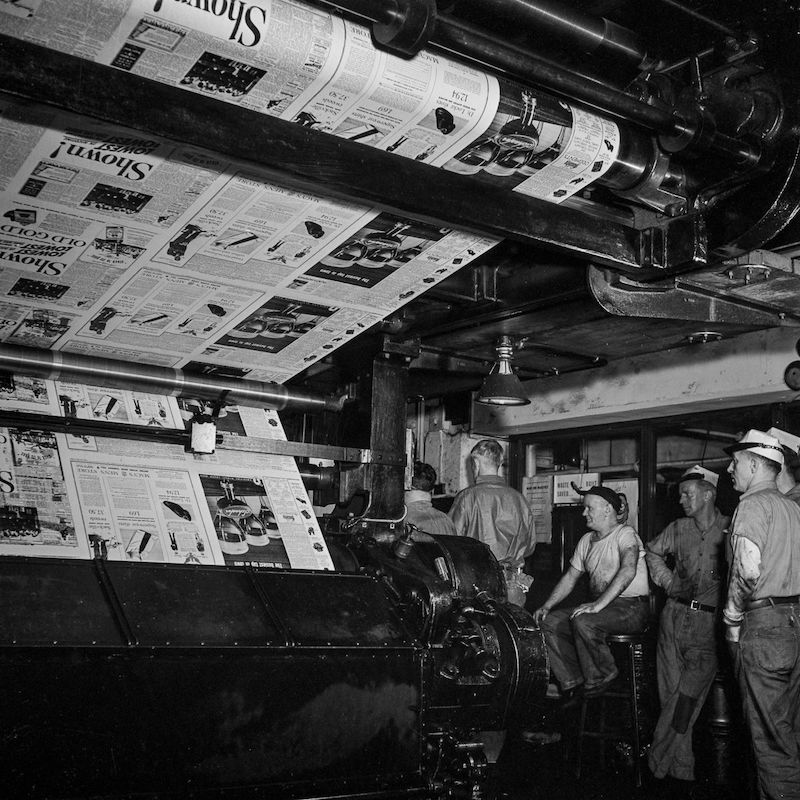
Printing on paper kills trees; printing requires tons of energy; printing on paper requires ink that is not great for the environment. Printing is wasteful and expensive, it’s antiquated, it’s “legacy media”, it’s passe ― so why do it?
I was reminded last week why we print on paper. YouTube struck Utah Stories channel with a “community violation strike”. This violation wasn’t for any new content we had recently published, rather, it was for a podcast we produced nearly two years ago based on a KUTV news story about a Utah woman who had allegedly died from the Covid vaccine. We debunked the claim and stated the facts directly from the CDC’s website. Still, YouTube removed our content, and now they are threatening to remove our channel “if we violate their standards again.”
Why does this matter? YouTube, which is owned by Google, controls a huge chunk of all of the video that is streamed online. YouTube is incredible. I’m a huge fan of the platform, and we reach a much wider audience than we ever would without them. But now YouTube (Google), as well as Instagram (Facebook) and Twitter, are all getting marching orders from our deep-state authorities on what they must censor, and the FBI has been heavily involved in this censorship.
Certainly the rise of newspapers created problems with misinformation and disinformation, but especially in the United States, the government never silenced newspapers or prevented the spread of information. Civil discourse and debate allowed citizens to arrive at their own conclusions and the best ideas rose to the top while the worst ideas were tossed into the trash-bin of history.
Now we are witnessing centralized powers telling us what we are allowed to talk about and what we cannot say. We must reject this trend, we must be able to report and talk about facts, but also examine various sides of issues which involve people’s opinions. The silencing of conscientious objectors to government policies violates our First Amendment.
We print Utah Stories each month to keep our liberties and free speech alive and well in Utah. Perhaps you’ve noticed that we do not shy away from controversy and criticism of our government leaders no matter their political affiliation. We believe in debate, promoting critical thinking, and promoting democracy by sharing the truth.
Please support the printing of this magazine that is not afraid to hold truth to power by subscribing. Big thanks to the hundreds who already have.