Community Relations

Five Ogden Women Working Hard to Build Community

In honor of Women’s HIstory Month, we’re highlighting five Ogden women who work tirelessly to build community. 
|


OGDEN – In honor of Women’s HIstory Month, we’re highlighting five Ogden women who work tirelessly to build community. 

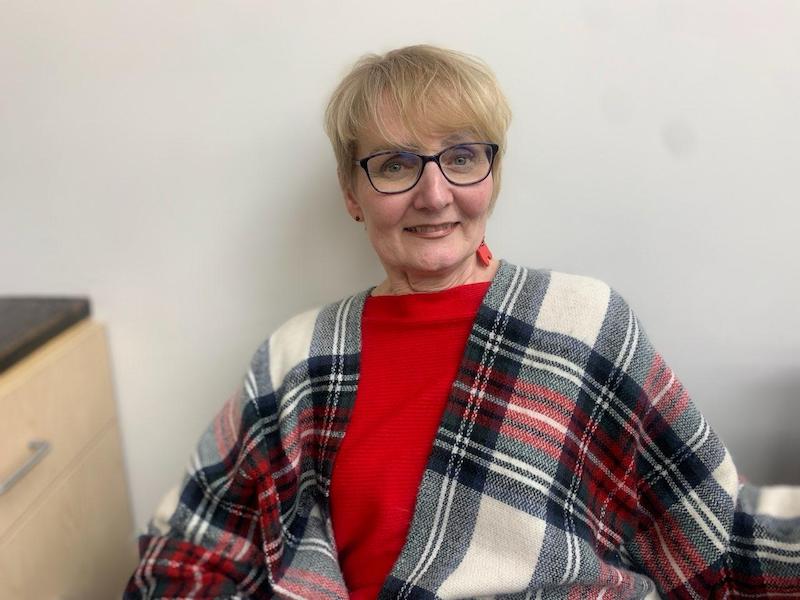
Tamara Brown-Johansen.

Tamara Brown-Johansen 

Her students call her Brown-Jo. At 63, she’s in her 38th year teaching Consumer and Family Science classes at Ben Lomond High School

“When I did my student teaching, I absolutely fell in love with it,” Brown-Johansen said. “I like the weird adolescent mind.”

In addition to teaching, Brown-Johansen strives to connect with students in and out of class. The Title I school is filled with teens who qualify for free and reduced breakfast and lunch.

“When I hear some of their back stories, it’s a miracle they’re here. A lot of them don’t have what they need to be a successful adolescent, let alone grow into a successful adult,” she said. “So we try as a whole school to bridge that gap.”

Kym Buttschardt.

Kym Buttschardt

Kym Buttschardt, 55, grew up in Ogden when lower 25th Street was in serious decline. Little did she know that she’d help spur its renaissance.

After college, she moved to Washington D.C. with no plans to return to her hometown. But life had other ideas.

“Ogden didn’t have a magnetic pull for me,” Buttschardt said. “The magnetic pull was that I met my husband [Pete], and he moved to Ogden to open the Union Grill.” 

It opened in 1991 and the couple decided to plant their proverbial flag in Ogden.

“We wanted to be a community gathering place first and a restaurant second,” Buttschardt said.

By 1995, they also opened Roosters, a thriving brewpub on lower 25th Street. And two decades later, they’ve added three locations on B Street in West Ogden, in Layton, and inside the Salt Lake Airport.

“I genuinely like people and enjoy figuring out how things work,” Buttschardt said. “In Ogden you can do that.” 

Kathie Darby.

Kathie Darby

Growing up on Ogden’s 2nd Street in the 1950s and ‘60s, Kathie Darby’s first two decades of life were marked by poverty and struggle.

“I was that pregnant girl in high school,” Darby said. “I had to leave the school. My husband (now her ex) got to stay.”

Darby later earned her GED, and dove into child-rearing, work and volunteer service. 

Her children are now college educated, and Darby has served on almost every charitable board and committee in town. She took a vigorous but unsuccessful stab at politics, running for the Utah House in 2016 and again in 2018. 

“It was worth the effort, but sad to lose,” Darby said.

Now married to Joe Darby, the 70-year-old Darby views life’s struggles as testaments to the human spirit: “I’ve witnessed a lot. The goal is to try to make other people’s lives easier.”

Betty Sawyer.

Betty Sawyer

After graduating from Morgan State University in Baltimore, MD, Betty Sawyer moved west. 

Now 69, she’s been in Ogden for 43 years, championing rights and opportunities for people living on the margins. 

“I was one of 10 children that integrated my local high school in Baltimore,” Sawyer said of her coming of age in the 1960s. 

Once in Ogden, she and husband “Butch” ran the Marshall White Center for decades. 

“We took a lot of pride in having a place where we could come together, have fun and provide education for our youth and families,” Sawyer said.

Her leadership roles in Ogden’s NAACP chapter also span four decades. 

In 1991, Sawyer helped launch Project Success to boost education and job opportunities for Ogden’s inner city youth.

She also dove into politics, running once for state House, once for state Senate, and once for the Ogden School Board. 

While those campaigns came up short, Sawyer said that other women told her she inspired them to run for office. 

“That’s part of the work I do … to open those doors of opportunity,” Sawyer said.
Marcia White.

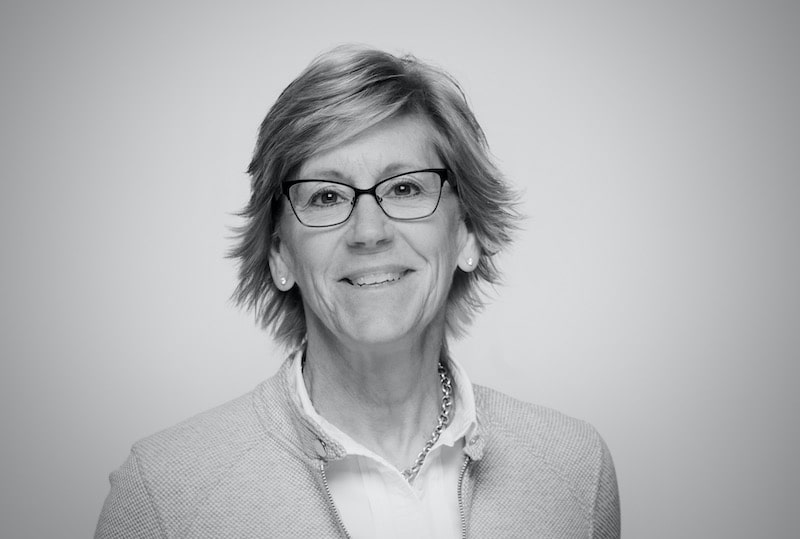
Marcia White 

At 59, Marcia White is in her 10th year on the Ogden City Council. The Nebraska native grew up surrounded by politics.

“My great uncle was a two-term governor and three-term US senator from Nebraska. My mom helped run his field office in Lincoln,” White said. 

White moved to Ogden 12 years ago, equipped with a Masters degree in Public Administration along with a powerful skill set.

“I’m data-driven but also administrative and organizational, ” White said. 

In her role on the Ogden City Council, White said she’s most proud of their efforts to make the community more environmentally and fiscally sustainable.

“It’s understanding how we fit into the greater good of Ogden,” White said.

She also works as economic development director for Wasatch Front Regional Council.

Subscribe to Utah Stories weekly newsletter and get our stories directly to your inbox

* indicates required


, ,


Join our newsletter.
Stay informed.


  • Has Utah’s Soft-on-Crime Justice Reform Made Communities Safer?

    Has this “soft-on-crime” approach resulted in safer streets?

    SALT LAKE CITY — A decade has passed since former Utah Governor Gary Herbert signed a massive justice reform bill into law in hopes that the state could reduce its prison population and manage low-level offenders through rehabilitation programs instead of incarceration. Has this reinvestment resulted in lower crime and recidivism rates?

    According to the Utah Department of Corrections, that landmark Justice Reinvestment Initiative aimed to “continue holding offenders accountable and securing our communities, but in a way that considers individual risks and treatment needs.”

    Are communities really safer when mental health and substance use needs are addressed through programs administered outside prison walls? The idea was to treat criminals differently based on their mental health needs and backgrounds. But at least one retired Adult Probation and Parole Officer, believes this “soft-on-crime” approach hasn’t resulted in safer streets.

    LOOKING BACK

    State Senator Todd Weiler, in that legislative role since 2012, helped drive the passage of the Justice Reinvestment Initiative (JRI), a massive bill that enjoyed broad-based approval among state officials and the Legislature as a whole.

    In November 2014, Weiler attended the national summit on the issue in San Diego, an event hosted by Pew Charitable Trusts. 

    “I was very involved in it. We had a lot of high hopes,” Weiler, a Woods Cross Republican, said in a recent interview. “That was about the time we were finalizing plans for the new prison. And we actually said that because of JRI we don’t need as many beds because we’ll be incarcerating fewer people. So that new prison was designed with this idea.”

    A key part of JRI dealt with adjusting sentencing for crimes related to addiction, dividing offenders into two basic groups: dangerous criminals who are a threat to society (that group goes to prison), and low-level offenders who get help kicking addictions through state-sponsored programs or private-sector rehabilitation.

    “The ultimate goal was if we have an otherwise good person who got caught up in an addiction, and as a result committed crimes, they need to be punished for their crimes,” Weiler said. “It’s not that we’re going to overlook what they did, but we wanted to focus primarily on helping them overcome their addiction and [that means] getting them back to their job and their family.” 

    Before JRI, low-level drug offenders with felonies would spend years in prison, which wreaked havoc with their lives and future prospects. Addressing the root cause of their theft and property crimes through supervision and treatment made sense. 

    “We’re all imperfect people,” Weiler said. “So we want people working their jobs, paying their bills and raising their kids rather than sitting in jail and watching TV or playing cards.”

    To access this post, you must purchase Utah Stories (Digital + Print) or 3 month free trial (Digital).


  • Salt Lake City Newcomers Club: Finding Friendship and Belonging Since 1948

    Moving away from your hometown can come with many blessings. But for some, it also comes with just as many bouts of loneliness. That ache of not knowing where to meet people, or grieving the friends you left behind, comes in waves. Workplaces and churches can sometimes provide ready-made communities, but what happens when they don’t? Where do you go to find true belonging?


  • Five Car Maintenance Mistakes That Now Cost More Than Ever

    As car prices and monthly payments climb, small maintenance oversights can turn into major expenses. What drivers often miss, and why it matters more now.


  • A Stand-Up Wheelchair Gives Paralysis Patients Greater Independence

    After a cycling accident left him paralyzed, Bill Winchester had to relearn how to navigate daily life from a wheelchair. A stand-up wheelchair later gave him the ability to rise, move more independently, and regain parts of the active life he once knew.