MILFORD – Set your GPS for the middle of nowhere and you could easily end up in Beaver County ― a sprawling 444 square miles in west central Utah where roughly 7,249 people reside.
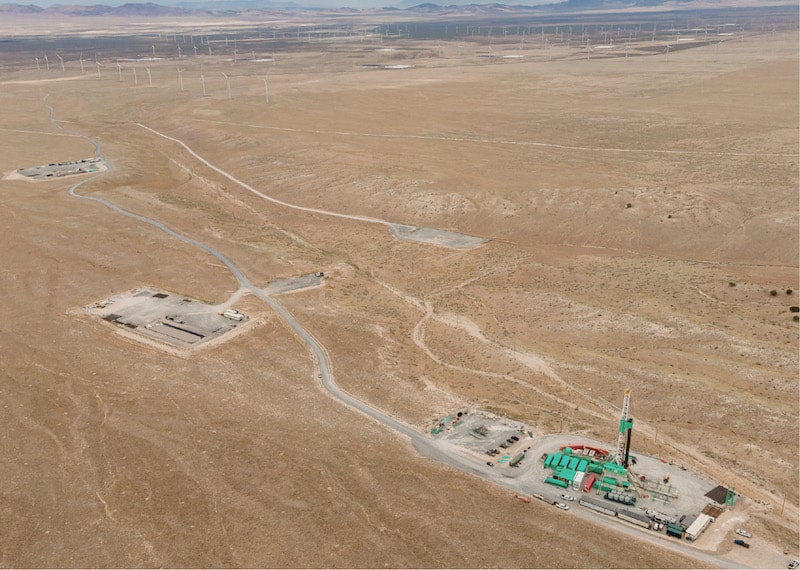
Not far from the town of Milford (population 1500), Utah’s Renewable Energy Corridor stretches out across the desert, with PacifiCorp’s Blundell Geothermal Plant built in 1984, a 168-turbine wind farm, a solar field and the Smithfield Pig Farm that produces biogas for the Dominion gas pipeline.
Helping to feed Utah’s power grid:
- One megawatt of electricity can power about 1,000 homes
- The Blundell Geothermal Plant continuously produces 36 megawatts
- Each of the 168 windmills produce 2 megawatts for about six hours per day
- The solar field produces 340 megawatts about six hours per day
- Total # of homes powered = 205,000 (36,000 + 84,000 + 85,000)
Utah FORGE is the corridor’s most recent addition, and perhaps could prove to be its most profound. FORGE stands for Frontier Observatory for Research in Geothermal Energy.
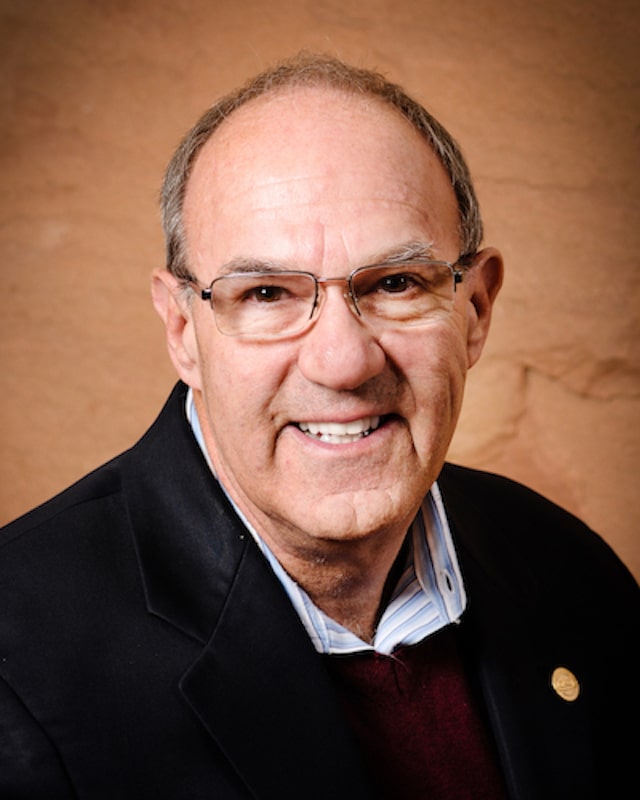
Dr. Joseph Moore, a research professor in the University of Utah’s Energy & Geoscience Institute, has worked in the renewable energy arena for almost half a century, with his latest work focused on Utah FORGE.
Moore believes the project is on the cusp of a prototype that could benefit the entire world with the ability to generate electricity from a constant renewable source.
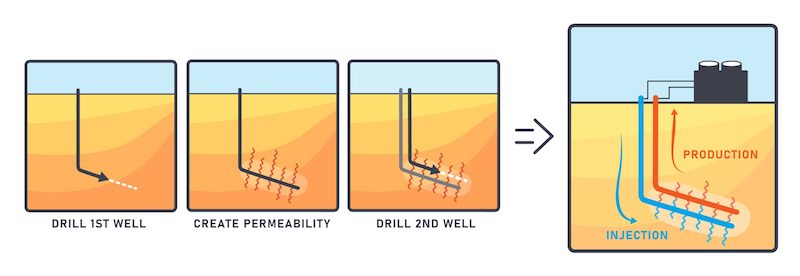
“The goal of FORGE is to build a geothermal reservoir where a natural one does not exist,” Moore said, noting that the Milford Valley site would be the first of its kind anywhere in the world.
If successful, Moore said the project would demonstrate the ability to drill down anywhere in the U.S. to a depth of four miles and tap into temperatures hot enough to generate continuous electricity.
“It’s inexhaustible,” Moore said. “The earth isn’t going to cool down.”
Utah FORGE facts
The ambitious $335 million geothermal project is primarily funded by the U.S. Department of Energy. Moore’s current $220 million contract extends through July 2025.
“That is the largest geothermal grant that DOE has ever released and it is the largest grant that the U of U has ever received,” Moore said. “So this is a big deal.”
An additional $115 million is expected from 2025 to 2030, but that approval is still pending.
In 2014, Utah competed with three other sites for the project, and those were narrowed to two in 2016: Sandia National Lab’s Fallon location (where Top Gun was filmed) and Utah’s Milford Valley site.
Those two contestants each drilled a test well, and DOE ultimately favored Utah based on temperatures, rock type and minimal environmental concerns. So by 2018, Utah came away with the prize.
Since then, about half of the project’s $220 million budget has been spent on building the groundbreaking field laboratory in Milford Valley, Moore said.
Utah FORGE drilled its first injection well in 2021 and then began fracturing the rock to create permeability. The next task involves drilling a production well parallel to the injection well that will transfer heat by way of water circulating through the fissures.
“We’ve drilled six wells since the project started ― the deepest is 9500 feet and 460 degrees F,” Moore said. “So we’ve got the heat but not the fractures to allow water to circulate through the rock and extract heat.”
If and when the prototype proves to be successful, other sites will be able to duplicate the effort to tap the earth’s natural internal heat and turn it into electricity.
When he gets downtime, Moore said he enjoys fly fishing and road cycling. But those hobbies often take a backseat to the all-consuming FORGE project.
“What I love about it is that we’re doing something to make the environment better,” Moore said. “The whole goal of this is to make a safe, environmentally conscious environment for my kids and grandkids.”
MORE RELATED CONTENT
Professor Zeev Valentine Vardeny & The Hidden Space Race
Will Tesla Drive the Green Energy Revolution?
Combining Economic and Environmental Sustainability
Would The New Green Deal work for Salt Lake City, Utah? The Mayor Jackie Biskupski Thinks So.
Salt Lake Air Cleaning Solutions
Installing Solar with “Creative Energies”

SUPPORT LOCAL JOURNALISM AND SUBSCRIBE TO PRINT MAGAZINE