

Quietly and steadily since the mid-1990s, a barren field has been cultivated for sustainability and converted into a farm along the South Fork of the Ogden River. Four yurts, a straw bale home, beehives, grazing cows and ducks, and an Earthship-style chicken coop now sit on the seventeen-and-a-half-acre agricultural cooperative, Dancing Moose Farm.
It’s a dream unfolding for Ogden-based entrepreneur and “coffee shop and sustainability junkie” Dan Dailey, who saw the potential of the arid landscape on the eastern edge of the mountainous Ogden Valley town of Huntsville, just off highway 39, which leads to Causey Reservoir and Monte Cristo.
Starting with a small community garden that he and his wife Suzy planted behind the original Ogden location of their 30-year-old Grounds For Coffee cooperative franchise, Dailey’s vision grew. He would transform these empty acres into a homestead, working farm, and educational facility based on the concept of permaculture and sustainability.
“Many farmers sell off their land to developers to build multiple home subdivisions and the farms are lost forever. Many subdivisions are named after what was destroyed,” Dailey said. “Just look at Hwy 89 from Layton to Ogden that were once productive orchards, and now the subdivisions are named after what was lost.”

Dancing Moose Farm operates as a LLC, licensed with Weber County under an agritourism designation which, Dailey explains, sustains farmland by allowing farmers to earn additional income on the farm through things like you-pick gardens, farm stands, educational facilities, weddings, farm-to-table dinners and farm stays.

Education and community involvement in the project is a main focus. This summer, Dailey organized an Earthship-inspired chicken coop class. “The chicken coop now houses 70 chickens and will be a great home for them this winter,” he said.
Earthships, which began in the 1970s by Earthship Biotecture, are solar homes made of natural and recycled materials, such as tires, that are self-regulating and minimally reliant on public utilities or fossil fuels, making them essentially off grid.
Large groups of volunteers and class enrollees joined the Earthship project. Daniel Keiley said he got involved because he finds large scale agriculture, the way it is practiced today, to be entirely unsustainable. “My parents were both raised on farms; we always had a compost pile and garden in the yard of my youth,” he said. “I much prefer farmers markets and local businesses.”
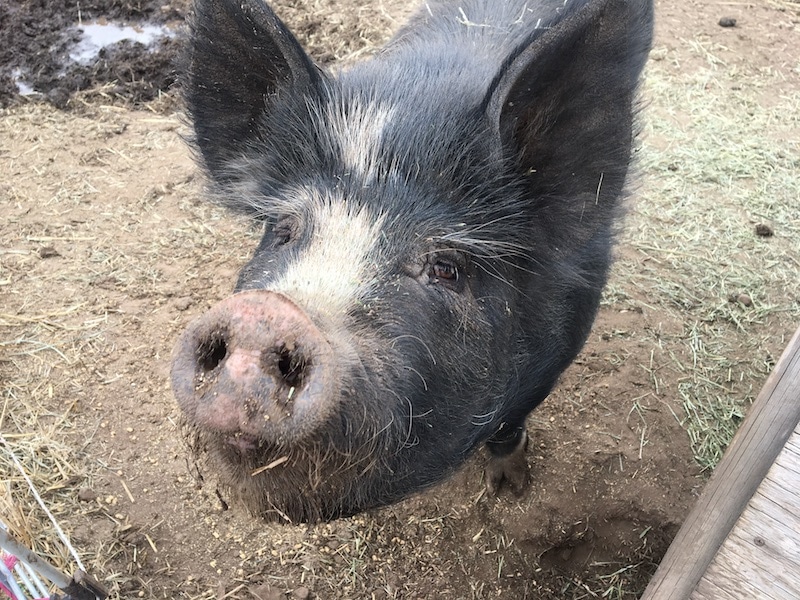
In addition to the chicken coop, Dailey built an off-grid 1,000 square foot handcrafted strawbale home. For the last couple of years, he and his son Addison and daughter-in-law Laurel have grazed cows, introduced Idaho Pasture Pigs to the property, and have raised various breeds of chickens and ducks. The permaculture farm is also now home to eight beehives.
The ambitious project hasn’t been without its challenges, and there were times Dailey admits he questioned whether it was worth it. “The agritourism designation is fairly new for Weber County and many things are firsts,” he said.

It took an unexpected three years to build the four yurts, three for students and farm tour participants, and one classroom and hospitality yurt, having first to seek Weber County Commission approvals, engineering, permitting, site planning, architect design, septic design and engineering as well as meeting all of the fire codes. But they did it. The county commission voted unanimously in full support of keeping larger tracts of agricultural land undeveloped.
The outbreak of COVID-19 added additional delays to their plans, but Dailey hopes to resume building upon their planned 2021-22 projects for Dancing Moose soon.
The future of Ogden Valley’s premiere agritourism destination is fruitful: fifty trees, a food forest, orchard, pond, and solar panels to offset the bathrooms and educational center, the distribution of handmade soaps, lip balm, body and facial creams online and at their farm stand, and a variety of permaculture-inspired classes like Beekeeping 101, wood-fired pizza oven construction, canning, soap making, nature journaling, star gazing, chicken processing, and rotational grazing.
The Daileys welcome all to join, build, and learn together with this project. Find Dancing Moose Farm on Facebook or Instagram or contact dancingmoosefarm@gmail.com.
Subscribe to Utah Stories weekly newsletter and get our stories directly to your inbox