For a long time, the mushroom selection at most grocery stores was unimpressive: white or brown, button or cremini. Maybe a few portobellos were thrown in for good measure. But in recent years, mushrooms — and their diverse shapes, textures, and flavors — are having their moment in the sun.
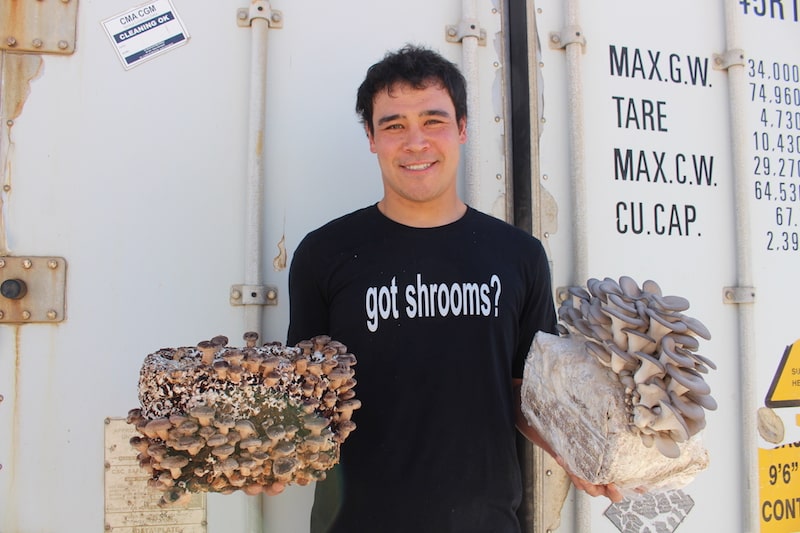
While there are more than 10,000 known types of mushrooms (and mycologists suspect this is only a fraction of what’s out there), there are around 300 that are considered edible and about 30 that are domesticated. In Ogden mushroom farmer Adam Wong is producing a whole range of colorful shrooms in his highly controlled indoor facility for restaurants, grocery stores and farmers markets.
Wong started Intermountain Gourmet Mushrooms nearly seven years ago after learning the ins and outs of growing mushrooms from friends who were running a now-defunct mushroom farm in Salt Lake City.
“It’s the challenge of it,” Wong says of his draw to growing mushrooms. “There are a lot of variables to get the mushroom to perform its best throughout all the stages. It’s a trial and error process. When you think you have it dialed in, something completely off-rails you.”
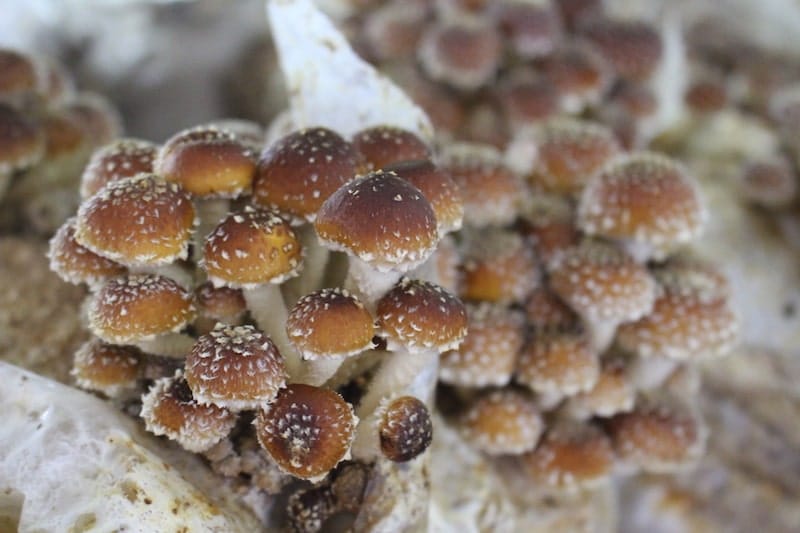
While it may be called “farming” mushrooms, the process is a far cry from throwing seeds in the soil. It all starts with spores — the mushroom’s microscopic reproductive unit — cultivated on petri dishes in Intermountain Gourmet’s lab. As the spores germinate, Wong breaks them up and adds them to bags of moist sterilized grain which the mycelium — the vegetative part of a fungus made up of a network of fine white filaments — begins to consume.
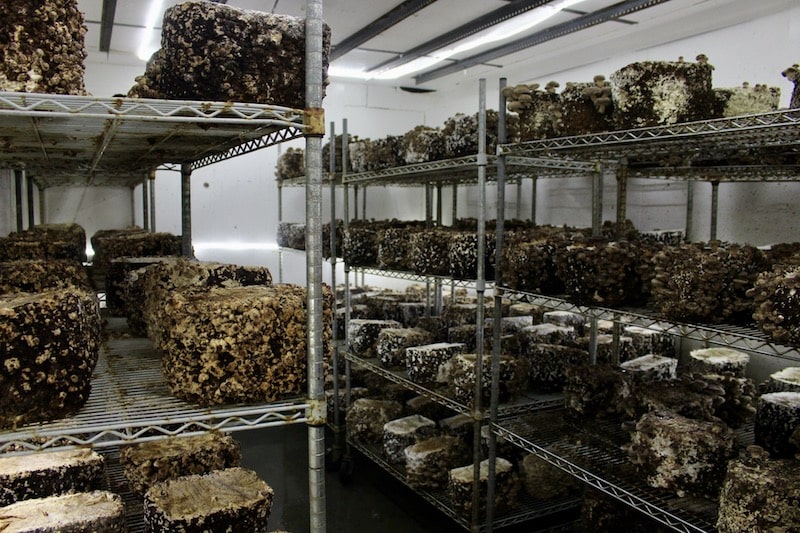
Next, Wong takes the colonized grain and adds it to sterilized bags of sawdust and other nutritional amendments and puts them in the temperature-controlled fruiting room where they are misted four to six times an hour. Depending on the mushroom, it can take anywhere from three to 16 weeks for the mushrooms to fruit.
Currently, Intermountain Gourmet produces anywhere from 700 – 1,000 pounds of mushrooms every week, including oyster, shiitake, pioppino, lion’s mane, king trumpet, chestnut, woodyear, maitake, beech and reishi.
“During the summer months when the farmers markets are going, we grow the whole rainbow spectrum of oysters: pink oysters, blue oysters, brown oysters, yellow oysters,” adds Wong.
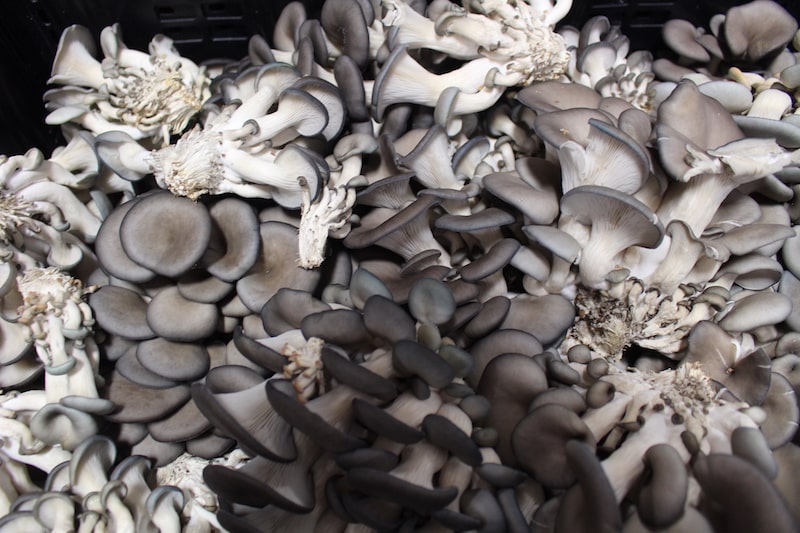
The oyster is a good ‘starter mushroom’ for those who are only familiar with the ubiquitous white button.
“Anything you can do with a button mushroom, you can do with an oyster, and it has a little more flavor and packs a better health punch as well,” says Wong. “My other favorite, shiitake, goes well with Asian food and pastas. They are really meaty with an umami flavor.”
Wong also makes a limited supply of tinctures using reishi, which has been shown to have a number of health benefits.
Restaurants from Park City to Provo use Intermountain Gourmet in creative ways. This year shoppers can now purchase Wong’s mushrooms in Harmons.
“Mushrooms are easy but difficult at the same time to grow. They grow outdoors in nature in unsterile conditions, but when you try to control that and get the most efficiency then there’s a lot that can go wrong,” explains Wong. “But we plan to keep expanding. There’s a few new kinds of mushrooms we’re trying to dial in on a larger scale, so we’ll continue refining the process until it’s ready.”
Subscribe to Utah Stories weekly newsletter and get our stories directly to your inbox