Utah Stories

Proposed Promontory Landfill Hits a Roadblock

Box Elder County documents reveal cozy ties between commissioners and Promontory Point Landfill

|


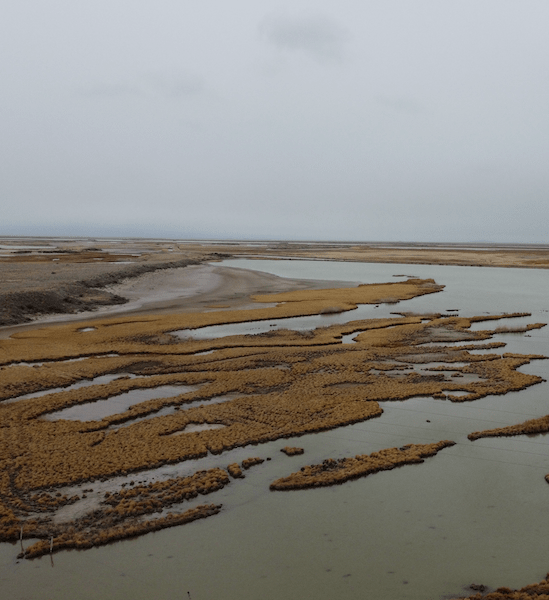
Salt Creek flows into the Great Salt Lake just a few miles from the proposed Promontory Point Landfill site. Drone Permission from Gina Allen Director.

Box Elder County documents reveal cozy ties between commissioners and Promontory Point Landfill

PROMONTORY POINT Much has been written about a  2,000-acre landfill situated near the shores of the Great Salt Lake. The controversial waste dump years in the making has yet to receive any trash.

Licensed since 2004 to handle Class I waste from cities and counties within Utah, its current owners Promontory Point Resources LLC, and wealthy parent company Allos Environmental aim to haul in the more lucrative and potentially more toxic Class V refuse from other states as well. 

In March 2016, state lawmakers acted on the landfill’s behalf, passing a resolution in support of Promontory Point Resources acquiring its coveted Class V permit. 

At the time, legislators were led to believe the non-operational landfill had been processing municipal waste for years. And its location “in the middle of nowhere,” as Rep. Mike Schultz described it seemed well-suited for the task. 

That permit application included coal ash transported by rail from coal-fired power plants around the country. Coal ash is federally regulated due to contaminants such as arsenic, cadmium and mercury that could pollute air and water.

In mid-2017, the state Division of Waste Management & Radiation Control (DWMRC), along with an independent contractor’s needs assessment report, identified deficiencies in PPR’s Class V application that included potential environmental impacts and no existing need for another Class V landfill in Utah.

In February 2018, amid robust public concern about the facility’s environmental impacts, Promontory Point Resources withdrew that Class V application, then reapplied with a revised version in October 2020. 

Their current Class 1 permit for municipal waste comes up for renewal this August.
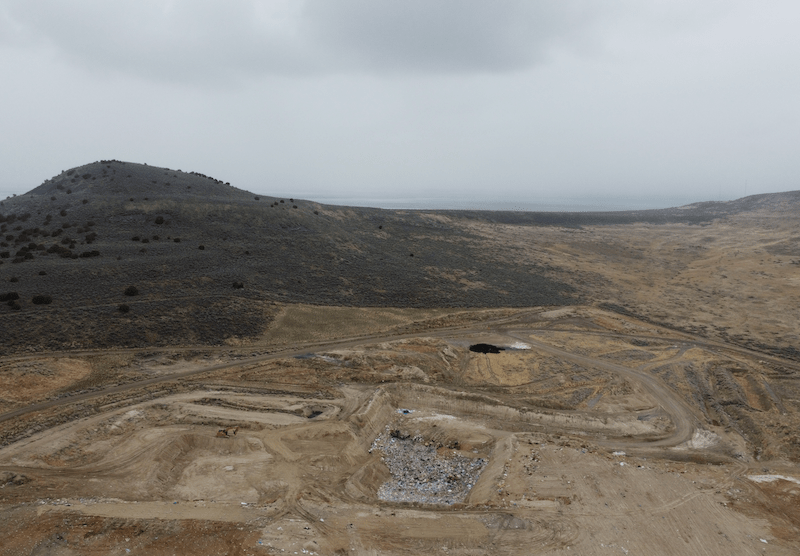
Existing Box Elder County Landfill has plenty of room and is a safe distance from migratory bird areas to prevent any potential toxicity to the lake and ecosystem.

Shady contract?

On December, 4, 2019, the Box Elder County Commission hastily approved a contract with Allos Environmental for the Promontory Point landfill to handle county waste in emergency situations in spite of the item not appearing on the commission’s agenda and the public having no notice of it. 

Fast forward to March 3, 2021, when county commissioners rescinded that contract with equal speed.

A YouTube video of that meeting contains this brief explanation from the County Attorney’s office: “This is just an agreement, I think you’re all aware of the situation. It was a contract that was entered into unknowingly in violation of procurement requirements. So this is an agreement to rescind that contract to resolve that situation so we don’t have a contract that was obtained improperly. Nothing was done on the contract while it was in existence so this just does away with the contract.”

However, Friends of the Great Salt Lake (FOGSL), an organization that advocates on behalf of the lake’s environment and ecosystem, took note of the Commission’s opaque action in December 2019.

On March 5, 2020, FOGSL filed a request with Utah’s Division of Waste Management & Radiation Control (DWMRC) to review what they deemed to be an illegal contract.

On Jan. 13, 2020 Allos/Promontory Point Resources CEO Ann Garner sent a letter to DWMRC Director Ty Howard, which indicates the need for such a contract.

“Per the requirement of our Class I Solid Waste permit, we are submitting a copy of our contract with Box Elder County. The attached contract meets the requirements of our permit …”  

In his Feb. 6, 2020 reply to Garner, Howard said the contract met the requirements and Promontory Point Resources could begin accepting solid waste “upon finalization, funding and approval of financial reassurance.”

But FOGSL not only questioned the Commission’s circumvention of open meetings requirements but also the contract’s contents or lack thereof.

“There was very little information within the contract that would make it what we’d consider a viable contract,” said Friends Executive Director Lynn De Freitas. They are still waiting for a response from Howard regarding their petition for review.
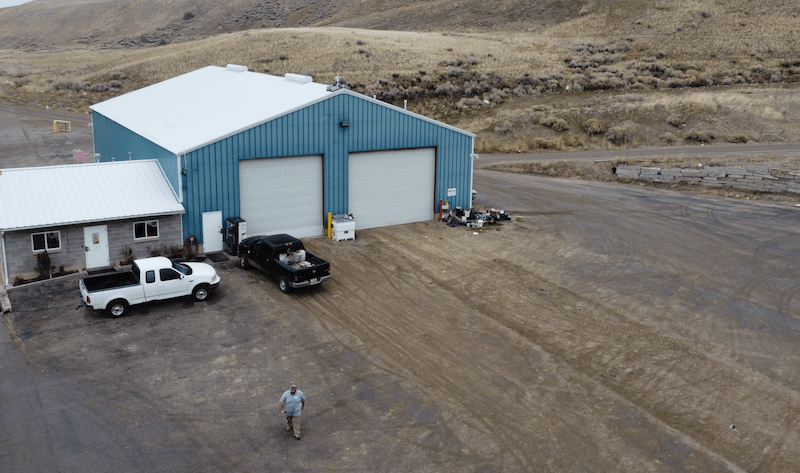
Box Elder County landfill.

Playing favorites?

In 2014, Randy Moulding launched efforts to open the 225-acre Franklin Hills Landfill on his 2,200 acres in Box Elder County’s Hansel Valley. But he claims county officials have repeatedly blocked his progress, instead advancing Promontory Point Landfill over his site.

In October 2020, Moulding a longtime landfill operator in Weber County filed suit against Box Elder County and its three commissioners, alleging equal protection violations along with arbitrary and capricious agency action regarding his rezone petition for a landfill.

On Dec. 12, 2019, Moulding emerged from the five-year process with Utah’s Department of Environmental Quality with his regional landfill permit for Franklin Hill in hand. But in August 2020, the Box Elder Planning Commission denied his rezone request and the County Commission followed suit on Sept. 2, 2020.

According to Moulding’s court claim, evidence backing his state permit contradicted the Planning Commission’s findings supporting their denial.

“The reason I stay in the fight is because that’s what I do for a living, I’m in the landfill business,” Moulding said, adding that “Weber and Davis Counties need a landfill up north, (because) going south through all that traffic isn’t good.”

Both Weber and Davis Counties currently haul their trash southward to landfills in Tooele County.

After clearing all the hurdles in the state’s DWMRC permitting process, Moulding believes he deserves the chance to make a go of it with Franklin Hill.

“But Box Elder County commissioners for whatever reason want Promontory and they don’t want mine,” Moulding said.

Box Elder County documents reveal cozy ties between commissioners and Promontory Point landfill.

A January 2015 letter of intent from the current Commissioners indicated their interest in the county purchasing Promontory Point Landfill for $5 million, and then sharing royalties from waste deposit and product removal over 30 years. 

But that sale never materialized. During an August 2015 Commission meeting, the County attorney after consulting with Utah Counties Indemnity Pool raised concerns about the constitutionality of such a partnership. 

In December 2016, Utah’s Private Activity Bond Board met to consider PPL’s request for $16 million. That request, approved with a 5-4 vote, limited the use of those funds to Class I waste only.
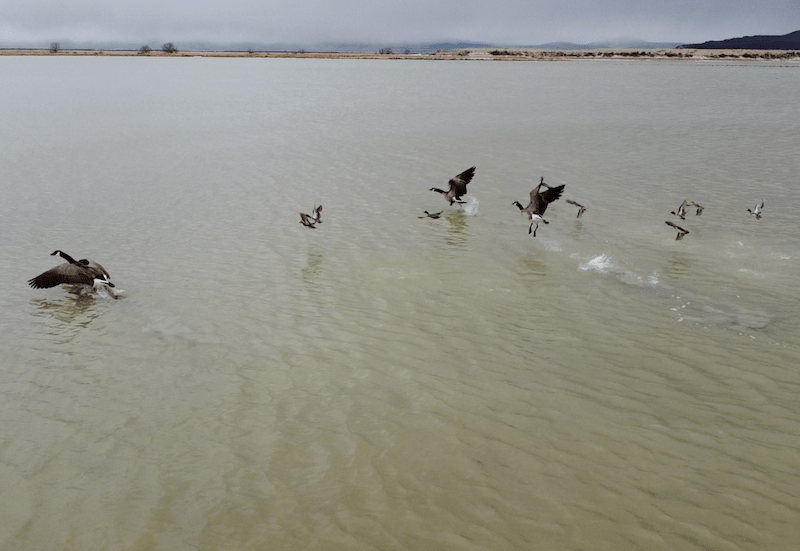
Migratory Canadian geese in Salt Creek just a few miles from the proposed landfill.

Shifting focus

Meanwhile, Promontory Point Landfill’s second crack at obtaining a Class V permit is wending its way through the state DWMRC. 

A needs assessment prepared for Allos/Promontory Point Resources in October 2020 by NERA Economic Consulting shows a shift in focus from their previous Class V permit application.

For starters, coal ash will not be accepted. It identifies their target market for Class I municipal waste as northern Utah and southern Idaho. The more lucrative Class V waste market focuses on northern California’s glut of excavated soils. 

In terms of transport, tipping and disposal fees for that excavated soil, the NERA analysis portrays PPL as competing very well with similar facilities in Arizona, California, Idaho, Nevada and Oregon. 

But De Freitas of FOGSL said she’d feel better if DWMRC would seek an independent, third-party review. 

Brian Speer, solid waste section manager for DWMRC, said they’re negotiating a contract with a third party to review the NERA needs assessment. But he acknowledged that effort might differ from what De Freitas has in mind.

“Its purpose is simply to ensure that all the statute requirements for the needs assessment have been met and to help us formulate an opinion,” Speer said,  “By using an outside contractor, we just have some additional expertise to assist with that.”

De Freitas points to the state’s economic boon about $1.32 billion annually from mineral extraction, brine shrimp harvesting and recreation on and around the Great Salt Lake.  

In her thinking, protecting the self-contained lake’s delicate ecosystem should be reason enough to pursue an independent analysis. And there’s more at stake than revenue.

“There are 10 million migratory birds annually that rely on the Great Salt Lake for resting, staging and nesting; 338 species  of birds rely on that system. Thirty percent of the Pacific flyway waterfowl, swans, geese come through to use the lake for obvious reasons,” De Freitas said.

When DWMRC issues a draft permit, a 30-day public comment period follows. But Speer could not project if and when that might happen for Promontory Point Landfill.

There’s a lot of public interest in this permit application,” Speer said, and we are receiving input and questions from a lot of folks. Some of that slows down our review process and some of it helps.”

By email, Brett Snelgrove, vice president of operations for Allos Environmental in Utah, declined to answer questions for this story, saying, “Unfortunately, our experience with journalists has been so poor that we’ve decided to no longer respond to these requests for the time being.”

Subscribe to Utah Stories weekly newsletter and get our stories directly to your inbox

* indicates required


, , ,


Join our newsletter.
Stay informed.


  • Utah Official’s $36K Travel Reimbursements Raise Questions About Use of Taxpayer Funds

    The trek into the office is a necessary evil for many employees; unpaid time that could be spent elsewhere. But some state employees are able to cash in on their commutes.

    That includes one member of Gov. Spencer Cox’s cabinet who heads the Utah Department of Cultural & Community Engagement. The department oversees a number of civic and social programs ranging from museums, libraries and the state historical society, to volunteerism efforts and multicultural affairs. 

    The employee’s in-state travel expenses made up a large chunk of the department’s employee reimbursements in recent years, according to documents obtained by The Utah Investigative Journalism Project obtained through a public records request. 

    The UIJP reviewed spreadsheets detailing the reimbursed expenses of the department’s 17-person leadership team over the 2024 and 2025 fiscal years. 

    The analysis showed one employee, Executive Director Donna Law, accounted for nearly a third of the team’s reimbursements in 2024 and 43% in 2025. Law, who lives in Cedar City, spent more than 11 times the average amount spent by all other employees included in the analysis. 

    The majority of Law’s expenses were categorized as in-state travel, which includes mileage and lodging. Between the two years, she spent $21,607.94 on lodging, $10,135.42  on auto mileage, and $1,455.00 in miscellaneous travel expenses and meals for a total of over $33,000. 

    The next highest amount spent on in-state travel was $3,385. Law’s overall spending far exceeded any other employee.

    The nearly $36,000 Law spent on travel and other items wasnearly three times that spent by the employee with the second highest amount in reimbursements. His expenses, in contrast, were largely out-of-state travel.

    Continue reading and support independent Utah journalism with a purchase of Utah Stories (Digital + Print) or 3 month free trial (Digital).


  • The $7 Million Recruit: How NIL Changed College Athletics Forever

    In 2012, Jabari Parker, a top high school prospect and member of the Church of Jesus Christ of Latter-day Saints, was facing his biggest decision to that point in his life: where to play college basketball. 

    Fans of BYU athletics hoped and perhaps prayed that Parker would pick the school owned by the church he was raised in. BYU was listed as one of his final choices. But he ultimately chose to spend his college years at Duke before attempting a career in the NBA. BYU fans were disappointed, but no one was truly surprised. Duke over BYU was the best choice for a young prospect in 2012. 

    A.J. Dybantsa.

    What changed between 2012 and 2024 when A.J. Dybantsa, the number one high school prospect, chose BYU over every other school? The answer is roughly $7 million dollars. That is what Dybantsa is reportedly making to play basketball at BYU. 

    The deal was supported by Utah Jazz owner Ryan Smith, who met multiple times with the Dybantsa family in multiple attempts to bring the young player to Provo. 

    According to Smith, he had no financial role in bringing Dybantsa to BYU, but the influence of Utah’s most famous billionaire acting as a “booster” or unofficial recruiter certainly swayed the decision.

    Prior to 2021, boosters acting as recruiters was taboo to the NCAA governing body. It was called improper recruiting. But in 2021, California began the modern era of NIL, or the ability of a college athlete to benefit from their name, image, or likeness, when they passed the “Fair Pay to Play Act.” 

    This new law gave college athletes in California the ability to benefit from their NIL, something that was banned in the rest of the country to that point. The NCAA saw that this law would create an unfair advantage for California schools that could now give young athletes the chance to make money off their talent and image while still in college. 

    The NCAA knew they needed to do something quickly, so they rushed through a policy that opened up NIL to all college athletes in the country, and it has been expanding and evolving over the last four years. 

    Grant Duff, who has coached at the University of Utah, Weber State University, and is now the defensive coordinator for Idaho State University, says, “The best part of NIL is that athletes have an opportunity to make good money. The downside comes with the free-for-all that money causes.”

    Dybantsa confers with BYU Head coach, Kevin Young.

    One of the biggest current examples of what a school can do when the boosters are willing to pay for success is Texas Tech University. From 2020-2024, Texas Tech had 34 wins, which works out to 6.8 wins per year with a low of 4 wins and high of 8. Then Texas Tech’s boosters got involved, led by Cody Campbell, an oil industry businessman and Chairman of the Texas Tech board. The football program was given 28 million dollars for NIL with a simple message attached to the large pile of money: Win. And win now. And win they did. 

    By signing NIL deals with athletes in the transfer portal, Texas Tech went from a middle-of-the-pack school in their conference to one of the top 12 teams in the country. They didn’t just win games in 2025, they made many of their opponents look like they didn’t belong on the same field, including the University of Utah and BYU twice. That is what money can buy.

    Continue reading and support independent Utah journalism with a purchase of Utah Stories (Digital + Print) or 3 month free trial (Digital).


  • Cottonwood Heights Corruption Allegations: A Case That Never Reached a Courtroom

    A year ago, we here at Utah Stories recorded a podcast episode that we never published. We were revisiting corruption allegations from ten years ago. We decided not to publish the video, so it sat there on YouTube for nearly 12 months.

    Then somehow the video was published. How? We are not sure, but once it got out there, the comments came pouring in.

    Dozens of viewers, then hundreds, supported the video with their comments on our examination of allegations of police misconduct in Cottonwood Heights. The video recounts how the Police Department was reported by business owners as focusing enforcement on customers of the former Canyon Inn bar. These allegations did not result in a publicly documented, full investigation by Utah’s Justice Department nor the FBI (at least to our knowledge). So why rehash the past?

    We believe the story of The Canyon Inn (and other area business owners) vs. CHPD and Cottonwood Heights Mayor Kelvin Cullimore raises questions about what can happen when allegations surface and do not move forward through a formal legal process with state or federal oversight.

    In 2012, Cottonwood Heights business owners at the mouth of the canyons began publicly objecting to police activity whereby up to seven cruisers were pulling over 711 and Canyon Inn bar customers on their busiest evenings.

    According to those accounts, drivers leaving the bar were frequently pulled over by police and were given DUI tickets, sometimes even after passing a sobriety examination. The volume and concentration of those stops led residents and business owners to complain about the “heavy-handed treatment” of CHPD toward motorists, especially in and around the Canyon Inn and neighboring 711, and eventually the Porcupine Pub.

    Customers responded in predictable ways. Some chose not to return and avoid the area. Others went to different establishments. Over time, the owner of the Canyon Inn, Jim Stojack, stated that his revenue declined by 70% and that he believed police activity near his business was the main contributing factor.

    Utah Stories reported on these concerns by conducting interviews; gathering video documentation provided by those involved; and making public records requests. Through our GRAMA requests, we reviewed DUI citations issued by the Cottonwood Heights Police Department and examined how those cases were resolved in Holladay Justice Court. During that period, we observed a higher number based on our review of DUI cases dismissed in court due to lack of evidence compared to other jurisdictions. One DUI attorney, Tyler Ayers, went on record saying that CHPD was issuing a high volume of DUI citations that were later dismissed.

    That observation raised questions about how cases were being documented and prosecuted. It did not, on its own, establish intent or misconduct, but it became part of a broader set of concerns raised by multiple sources.

    Continue reading and support independent Utah journalism with a purchase of Utah Stories (Digital + Print) or 3 month free trial (Digital).


  • Why Did Salt Lake City Tear Down Its Most Beautiful Buildings?

    If you go into the Utah State Archives and spend time with photographs from the late 1800s and early 1900s, you start to notice something that doesn’t line up with what exists today.

    Main Street looks cohesive. Not in a uniform way, but in a way that suggests the people building it shared an understanding of proportion, material, and permanence. Four-story buildings line the street—stone, brick, cast iron—each one detailed in ways that don’t feel incidental. Arched windows, carved stone, brickwork that changes pattern as it rises. Even the cast iron facades were designed to replicate masonry, not hide behind it.

    Then you go downtown and try to find those same buildings.

    Most of them are gone.

    Out of more than 400 buildings designed by Richard Kletting, over 300 have been torn down. That number alone reframes the conversation. Kletting designed the Utah State Capitol, the Saltair resort, commercial buildings, schools, churches, mansions—virtually every type of structure…

    Continue reading and support independent Utah journalism with a purchase of Utah Stories (Digital + Print) or 3 month free trial (Digital).