Investigation

Slippery Sales: Utah’s MLM companies push high volumes of “immunity boosting” essential oils during pandemic scare despite lack of scientific support

Multi-level marketers are prohibited by law from making direct health claims about their products. But since they overwhelmingly use independent distributors for direct sales, the industry often is unaccountable to the sales pitches of its on-the-ground distributors. Allowing them to pass on bad science, unverified anecdotes and sometimes outright lies to sell their products.

|


The following story was written and reported by The Utah Investigative Journalism Project in partnership with Utah Stories.
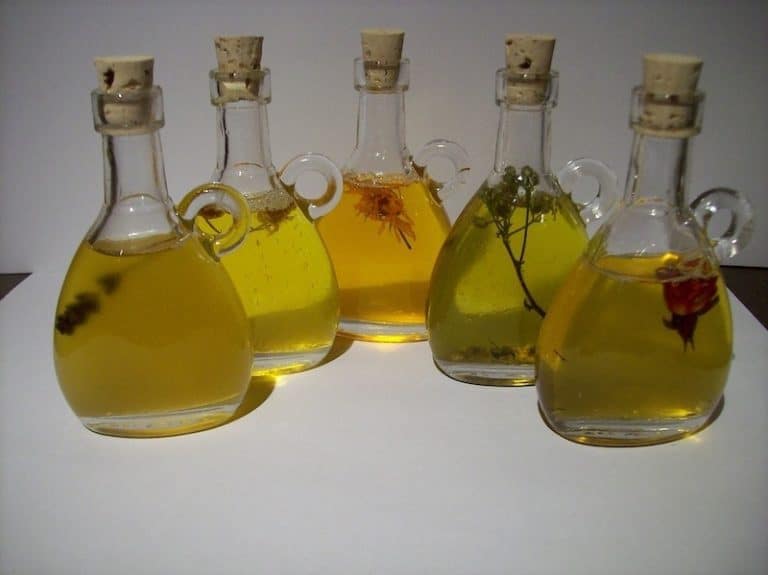
"immunity boosting" essential oils

“Hi!  I just need some advice please!,” read a panicky post made to the Facebook page of “DT Essential Oils – Best Recipes & Remedies” on March 24. The woman wrote that her husband was traveling for work to Washington and she wanted to know which doTerra oils would protect him against COVID-19. A chorus of commenters of the page’s nearly 43,000 members chimed in support suggesting a variety of doTerra’s essential oils like the company’s On Guard products, often promoted as being able to boost one’s immune system—despite no FDA verification of the claim and a lack of scientific support.

Multiple commenters urged placing On Guard on a face mask, or inside nostrils and on ears (despite product warnings against direct skin application).

One commenter posted a meme of a woman laughing in the rain under a bright umbrella with “Virus Stopper” next to it, with instructions underneath for using frankincense and oregano oils.

One user posted a screenshot of a supposed medical article—lacking a byline or sources—with the headline “Oregano Oil Proves Effective Against Coronavirus.”

Multi-level marketers are prohibited by law from making direct health claims about their products. But since they overwhelmingly use independent distributors for direct sales, the industry often is unaccountable to the sales pitches of its on-the-ground distributors. Allowing them to pass on bad science, unverified anecdotes and sometimes outright lies to sell their products.

Major Utah-based essential oil companies doTerra and Young Living have recently reported backlogs of sales of their “immunity boosting” products.

At the corporate level the companies are careful to avoid illegal marketing playing to pandemic fears, but messaging to distributors is also vague about claims or poorly communicated. DoTerra has been releasing daily videos recapping the latest COVID-19 headlines and offering social distancing and hygiene advice—but without telling distributors outright what they can say about their supposed “immunity boosting” products.

Young Living has a Facebook page called “Young Living Conduct Success” with helpful posts talking about which claims are legal and which are not—especially in regards to their products’ anti-viral capabilities. The page has over 64,000 followers and over 62,000 likes. But none of the page’s informative posts was shared to the 1.5 million followers on Young Living’s main Facebook page all throughout March.

In an emailed statement doTerra explained the company does not claim their products treat or cure any illnesses including COVID-19, and that they actively search for non-compliant claims to be taken down. The company also states their informational videos “have mentioned several times there is currently no cure for COVID-19,” and that people should follow the guidance of the Centers for Disease Control and the World Health Organization.

“During this time we are particularly sensitive to any coronavirus claims and have asked our Wellness Advocates to be as well.”

In a statement from Young Living the company also noted their members have been “provided training resources” to know not to make claims that their products can treat COVID-19 and are policing compliance as well.

“Our compliance team is continuing to actively work to remove any posts or other materials contrary to this on a global scale,” the company states.

Natural Ways

Young Living Malaysia made a post on March 13 touting the value of the company’s Thieves Oil hand sanitizer with 65% alcohol content. Health guidelines recommend sanitizers with 60% or higher alcohol content to disinfect COVID-19, but the social media post stated that traditional 90% and higher sanitizer “will evaporate with your skin moisture and may lead to cracks, that might lead to unnecessary infection due to open wound.”

One Young Living distributor from New Brunswick, Canada posted that she and her family had coronavirus but that “We managed it with vitamins, thieves oil and natural ways,” adding at the end of the post “I’m pretty sure it was [COVID-19]…”

These claims are frustrating but not surprising says Dr. Jessie Hawkins a research director for the Franklin School of Integrative Health Sciences. She also does clinical trial research on essential oil products and holds a PhD in Health Research from Middle Tennessee State University, and has also completed  completed post-graduate epidemiology studies at the London School of Hygiene and Tropical Medicine.

She says part of the reason there are so few research studies of the effects of essential oils on human subjects comes from industry resistance. Companies don’t want scientific testing when they might not like the results.

“With the regulatory loopholes and the way companies can market their products they don’t have to subject them to science,” Hawkins says.

That marketing loophole is such a big reason these products are sold through direct sales, says William Keep, the Vice President for Academic Affairs at The College of New Jersey, who has previously assisted as an expert witness in the prosecution of pyramid schemes, and has co-written multiple articles on pyramid schemes along with Peter Vander Nat, the retired senior economist at the Federal Trade Commission.

The pitches succeed because they come from childhood friends, family members and others desperate to make a sale and willing to trade on that association to keep their numbers up, he says.

“It’s an industry that leverages trust for a profit and I think that’s awful,” Keep says, adding that “this is not the [economic] environment where people are going to put $2,000 on their credit card to join” an MLM. “In order to get them to do it, [distributors] now have to make even more outrageous claims.”

Doctor’s Orders

Dr. David Hill, the “founding medical officer” for doTerra has over 148,000 followers on his Facebook page. On March 20, he posted a video that never once mentions COVID-19 by name, but instead discusses various ways to protect and strengthen the body’s immune system.

In the video he repeatedly plugs doTerra’s On Guard, “immunity support” products, while talking about the importance of washing and sanitizing hands, and surfaces people touch.

“I love the On Guard hand soap and that should be a staple you go for every single day,” Hill says in the video. He also advised people that they could make their own surface cleaner from citrus oil and peppermint oil, despite the fact that the Environmental Protection Agency does not include any doTerra products in its list of disinfectants that can be used against COVID-19 contaminated surfaces.

He also advises people they can make “DIY hand sanitizer” by adding On Guard essential oil with aloe and water—another recipe that would not sanitize hands effectively against COVID-19 according to CDC guidelines.

Dr. Hawkins says companies like doTerra overemphasize scientific evidence, promoting research studies that reference benefits found in petri dish conditions of the effects of oils on bacteria. But it’s a huge leap she says to extrapolate what those tests could actually mean for the human body when it comes to efficacy and safe dosing.

“We could put bleach in a petri dish and accomplish all sorts of stuff, but we don’t pop a bleach pill or diffuse it around the house,” she says.

Join our newsletter.
Stay informed.


  • Utah Official’s $36K Travel Reimbursements Raise Questions About Use of Taxpayer Funds

    The trek into the office is a necessary evil for many employees; unpaid time that could be spent elsewhere. But some state employees are able to cash in on their commutes.

    That includes one member of Gov. Spencer Cox’s cabinet who heads the Utah Department of Cultural & Community Engagement. The department oversees a number of civic and social programs ranging from museums, libraries and the state historical society, to volunteerism efforts and multicultural affairs. 

    The employee’s in-state travel expenses made up a large chunk of the department’s employee reimbursements in recent years, according to documents obtained by The Utah Investigative Journalism Project obtained through a public records request. 

    The UIJP reviewed spreadsheets detailing the reimbursed expenses of the department’s 17-person leadership team over the 2024 and 2025 fiscal years. 

    The analysis showed one employee, Executive Director Donna Law, accounted for nearly a third of the team’s reimbursements in 2024 and 43% in 2025. Law, who lives in Cedar City, spent more than 11 times the average amount spent by all other employees included in the analysis. 

    The majority of Law’s expenses were categorized as in-state travel, which includes mileage and lodging. Between the two years, she spent $21,607.94 on lodging, $10,135.42  on auto mileage, and $1,455.00 in miscellaneous travel expenses and meals for a total of over $33,000. 

    The next highest amount spent on in-state travel was $3,385. Law’s overall spending far exceeded any other employee.

    The nearly $36,000 Law spent on travel and other items wasnearly three times that spent by the employee with the second highest amount in reimbursements. His expenses, in contrast, were largely out-of-state travel.

    To access this post, you must purchase Utah Stories (Digital + Print) or 3 month free trial (Digital).


  • The $7 Million Recruit: How NIL Changed College Athletics Forever

    In 2012, Jabari Parker, a top high school prospect and member of the Church of Jesus Christ of Latter-day Saints, was facing his biggest decision to that point in his life: where to play college basketball. 

    Fans of BYU athletics hoped and perhaps prayed that Parker would pick the school owned by the church he was raised in. BYU was listed as one of his final choices. But he ultimately chose to spend his college years at Duke before attempting a career in the NBA. BYU fans were disappointed, but no one was truly surprised. Duke over BYU was the best choice for a young prospect in 2012. 

    A.J. Dybantsa.

    What changed between 2012 and 2024 when A.J. Dybantsa, the number one high school prospect, chose BYU over every other school? The answer is roughly $7 million dollars. That is what Dybantsa is reportedly making to play basketball at BYU. 

    The deal was supported by Utah Jazz owner Ryan Smith, who met multiple times with the Dybantsa family in multiple attempts to bring the young player to Provo. 

    According to Smith, he had no financial role in bringing Dybantsa to BYU, but the influence of Utah’s most famous billionaire acting as a “booster” or unofficial recruiter certainly swayed the decision.

    Prior to 2021, boosters acting as recruiters was taboo to the NCAA governing body. It was called improper recruiting. But in 2021, California began the modern era of NIL, or the ability of a college athlete to benefit from their name, image, or likeness, when they passed the “Fair Pay to Play Act.” 

    This new law gave college athletes in California the ability to benefit from their NIL, something that was banned in the rest of the country to that point. The NCAA saw that this law would create an unfair advantage for California schools that could now give young athletes the chance to make money off their talent and image while still in college. 

    The NCAA knew they needed to do something quickly, so they rushed through a policy that opened up NIL to all college athletes in the country, and it has been expanding and evolving over the last four years. 

    Grant Duff, who has coached at the University of Utah, Weber State University, and is now the defensive coordinator for Idaho State University, says, “The best part of NIL is that athletes have an opportunity to make good money. The downside comes with the free-for-all that money causes.”

    Dybantsa confers with BYU Head coach, Kevin Young.

    One of the biggest current examples of what a school can do when the boosters are willing to pay for success is Texas Tech University. From 2020-2024, Texas Tech had 34 wins, which works out to 6.8 wins per year with a low of 4 wins and high of 8. Then Texas Tech’s boosters got involved, led by Cody Campbell, an oil industry businessman and Chairman of the Texas Tech board. The football program was given 28 million dollars for NIL with a simple message attached to the large pile of money: Win. And win now. And win they did. 

    By signing NIL deals with athletes in the transfer portal, Texas Tech went from a middle-of-the-pack school in their conference to one of the top 12 teams in the country. They didn’t just win games in 2025, they made many of their opponents look like they didn’t belong on the same field, including the University of Utah and BYU twice. That is what money can buy.

    To access this post, you must purchase Utah Stories (Digital + Print) or 3 month free trial (Digital).


  • Cottonwood Heights Corruption Allegations: A Case That Never Reached a Courtroom

    A year ago, we here at Utah Stories recorded a podcast episode that we never published. We were revisiting corruption allegations from ten years ago. We decided not to publish the video, so it sat there on YouTube for nearly 12 months.

    Then somehow the video was published. How? We are not sure, but once it got out there, the comments came pouring in.

    Dozens of viewers, then hundreds, supported the video with their comments on our examination of allegations of police misconduct in Cottonwood Heights. The video recounts how the Police Department was reported by business owners as focusing enforcement on customers of the former Canyon Inn bar. These allegations did not result in a publicly documented, full investigation by Utah’s Justice Department nor the FBI (at least to our knowledge). So why rehash the past?

    We believe the story of The Canyon Inn (and other area business owners) vs. CHPD and Cottonwood Heights Mayor Kelvin Cullimore raises questions about what can happen when allegations surface and do not move forward through a formal legal process with state or federal oversight.

    In 2012, Cottonwood Heights business owners at the mouth of the canyons began publicly objecting to police activity whereby up to seven cruisers were pulling over 711 and Canyon Inn bar customers on their busiest evenings.

    According to those accounts, drivers leaving the bar were frequently pulled over by police and were given DUI tickets, sometimes even after passing a sobriety examination. The volume and concentration of those stops led residents and business owners to complain about the “heavy-handed treatment” of CHPD toward motorists, especially in and around the Canyon Inn and neighboring 711, and eventually the Porcupine Pub.

    Customers responded in predictable ways. Some chose not to return and avoid the area. Others went to different establishments. Over time, the owner of the Canyon Inn, Jim Stojack, stated that his revenue declined by 70% and that he believed police activity near his business was the main contributing factor.

    Utah Stories reported on these concerns by conducting interviews; gathering video documentation provided by those involved; and making public records requests. Through our GRAMA requests, we reviewed DUI citations issued by the Cottonwood Heights Police Department and examined how those cases were resolved in Holladay Justice Court. During that period, we observed a higher number based on our review of DUI cases dismissed in court due to lack of evidence compared to other jurisdictions. One DUI attorney, Tyler Ayers, went on record saying that CHPD was issuing a high volume of DUI citations that were later dismissed.

    That observation raised questions about how cases were being documented and prosecuted. It did not, on its own, establish intent or misconduct, but it became part of a broader set of concerns raised by multiple sources.

    To access this post, you must purchase Utah Stories (Digital + Print) or 3 month free trial (Digital).


  • The Utah Bombings That Exposed One of America’s Greatest Forgers

    On an ordinary October morning in 1985, downtown Salt Lake City was shattered by a blast that killed businessman and document collector Steve Christensen. Hours later, a second bomb tore through a quiet Holladay neighborhood, killing Kathy Sheets, the wife of Christensen’s former business partner. The next day saw a third explosion. This one was in a car near Temple Square that nearly killed rare-documents dealer Mark Hofmann. 

    Rumors swirled instantly, tying the attacks to money, religion, and shadowy early-Mormon documents Christensen had recently acquired. For days, Utah held its breath. What unfolded was stranger and darker than fiction. The bombs weren’t the work of religious extremists or enemies of the Church of Jesus Christ of Latter-day Saints, but instead, the doings of Mark Hofmann himself. Hofmann was a nerdy, soft-spoken dealer who had secretly become one of the most skilled document forgers in American history. 

    His creations were so convincing that they reshaped historical narratives, fooling scholars, collectors, and church leaders. When the lies began to close in, the bombs became his final, desperate attempt to keep his world from collapsing.

    Hofmann had been fabricating Mormon and American historical documents for years. He was a prodigy of deception, sourcing period paper, mixing inks that cracked just right, and mimicking handwriting with obsessive precision. Most of all, he knew how to read people. Utah in the 1970s and ’80s was a collector’s paradise. As bookseller Ken Sanders told Salt Lake Magazine, it was “a consciousness shift,” a recognition that rare Utah history was a treasure worth pursuing. It was also, he notes, fertile ground for affinity fraud.

    Nothing captured that vulnerability more than the Salamander Letter, a supposed 1830s correspondence which claimed Joseph Smith encountered a magical white salamander rather than an angel. The document shook Latter-day Saint circles. Church leaders, worried about its implications, quietly purchased it along with other materials Hofmann dangled before them. Many reasoned that if the church was willing to buy it, then it must be authentic and true, and Hofmann understood that psychology perfectly.

    To access this post, you must purchase Utah Stories (Digital + Print) or 3 month free trial (Digital).