Education

University of Utah—giving Utah students a path to succeed

Making the transition to high school is no easy task, fortunately for Utah students, the University of Utah   has a program that is designed to help lower income kids from disadvantaged communities entering high school. PATHS (Promoting Access to High Schoolers) The University of Utah program supports Utah students from their first day of 9th grade to…

|

for Utah students, the University of Utah   has a program that is designed to help lower income kids from disadvantaged communities entering high school.

for Utah students, the University of Utah   has a program that is designed to help lower income kids from disadvantaged communities entering high school.

Making the transition to high school is no easy task, fortunately for Utah students, the University of Utah   has a program that is designed to help lower income kids from disadvantaged communities entering high school.

PATHS (Promoting Access to High Schoolers)

The University of Utah program supports Utah students from their first day of 9th grade to their first day of college.

This remarkable program aims to help kids with more than just school work.

From the university webpage: “success means being prepared both academically and socially, developing a cultural identity, and cultivating a sense of belonging within the wider community.”

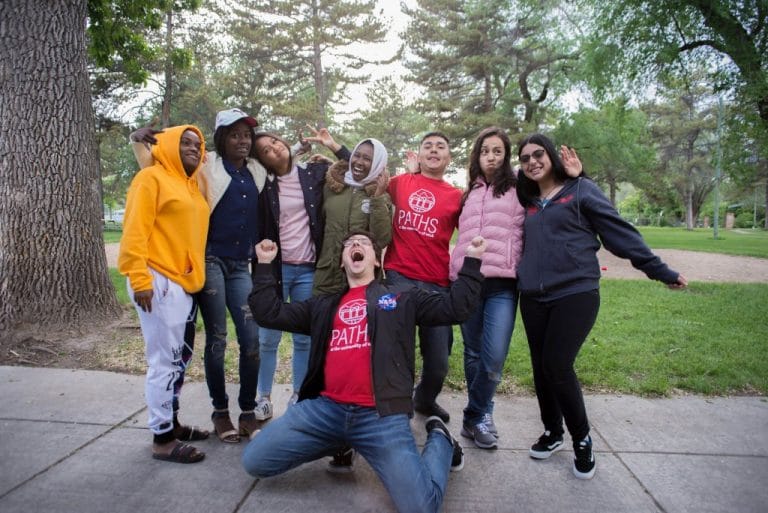
PATHS hosted a family night at Jordan Park on May 17.

The event gave parents, friends, and students the opportunity to meet one another, communicate with faculty, and just have a good time.

Keeping in line with the program goals, this is one way they help establish a sense of community with students and family.

I had the opportunity to photograph and interact with the students myself. I was surprised at the confidence level of the kids and their families. It appeared that no one, even new comers, were strangers.

Hailey Leek, a PATHS advisor says, “The best thing about the program is it brings kids from all over Utah together.”

For more information about PATHS please visit https://continue.utah.edu/paths/about


*for more reading on education, click here

, ,


Join our newsletter.
Stay informed.


  • From Water Bottles to “Brain Rot”: Classroom Trends Shaping Student Culture in 2026

    What may sound like noise or nonsense to adults often carries meaning inside today’s classrooms. From oversized, sticker-covered water bottles to repeated phrases borrowed from online videos, small habits have become shared language among students. This is what student culture looks like heading into 2026.


  • Has Utah’s Soft-on-Crime Justice Reform Made Communities Safer?

    Has this “soft-on-crime” approach resulted in safer streets?

    SALT LAKE CITY — A decade has passed since former Utah Governor Gary Herbert signed a massive justice reform bill into law in hopes that the state could reduce its prison population and manage low-level offenders through rehabilitation programs instead of incarceration. Has this reinvestment resulted in lower crime and recidivism rates?

    According to the Utah Department of Corrections, that landmark Justice Reinvestment Initiative aimed to “continue holding offenders accountable and securing our communities, but in a way that considers individual risks and treatment needs.”

    Are communities really safer when mental health and substance use needs are addressed through programs administered outside prison walls? The idea was to treat criminals differently based on their mental health needs and backgrounds. But at least one retired Adult Probation and Parole Officer, believes this “soft-on-crime” approach hasn’t resulted in safer streets.

    LOOKING BACK

    State Senator Todd Weiler, in that legislative role since 2012, helped drive the passage of the Justice Reinvestment Initiative (JRI), a massive bill that enjoyed broad-based approval among state officials and the Legislature as a whole.

    In November 2014, Weiler attended the national summit on the issue in San Diego, an event hosted by Pew Charitable Trusts. 

    “I was very involved in it. We had a lot of high hopes,” Weiler, a Woods Cross Republican, said in a recent interview. “That was about the time we were finalizing plans for the new prison. And we actually said that because of JRI we don’t need as many beds because we’ll be incarcerating fewer people. So that new prison was designed with this idea.”

    A key part of JRI dealt with adjusting sentencing for crimes related to addiction, dividing offenders into two basic groups: dangerous criminals who are a threat to society (that group goes to prison), and low-level offenders who get help kicking addictions through state-sponsored programs or private-sector rehabilitation.

    “The ultimate goal was if we have an otherwise good person who got caught up in an addiction, and as a result committed crimes, they need to be punished for their crimes,” Weiler said. “It’s not that we’re going to overlook what they did, but we wanted to focus primarily on helping them overcome their addiction and [that means] getting them back to their job and their family.” 

    Before JRI, low-level drug offenders with felonies would spend years in prison, which wreaked havoc with their lives and future prospects. Addressing the root cause of their theft and property crimes through supervision and treatment made sense. 

    “We’re all imperfect people,” Weiler said. “So we want people working their jobs, paying their bills and raising their kids rather than sitting in jail and watching TV or playing cards.”

    To access this post, you must purchase Utah Stories (Digital + Print) or 3 month free trial (Digital).


  • Salt Lake City Newcomers Club: Finding Friendship and Belonging Since 1948

    Moving away from your hometown can come with many blessings. But for some, it also comes with just as many bouts of loneliness. That ache of not knowing where to meet people, or grieving the friends you left behind, comes in waves. Workplaces and churches can sometimes provide ready-made communities, but what happens when they don’t? Where do you go to find true belonging?


  • How I Lost 120 Pounds and Changed My Relationship With Food

    Throughout most of my life, I used food to cope with chaos, depression, and pain I did not yet understand. By my early twenties, I weighed over 320 pounds and felt trapped in a body that limited every part of my life. This is the story of how learning about food, mental health, and habit-building helped me lose 120 pounds and rebuild stability.