
Community Relations

Utah Senator Luz Escamilla Headed into a Campaign to be Elected Salt Lake City Mayor

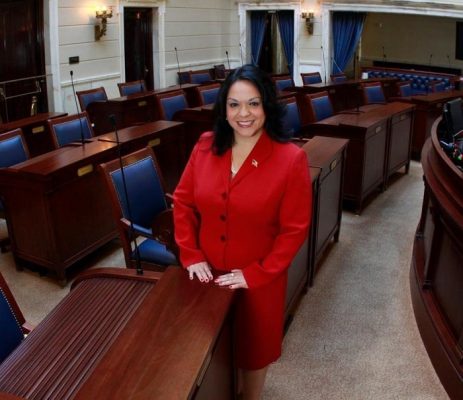
Utah Senator Luz Escamilla hardly broke stride as she exited her 11th legislative session last month and headed straight into a campaign to be elected mayor of the state’s capital city in 2020.

|


Photos courtesy of Luz Escamilla.

Utah Senator Luz Escamilla hardly broke stride as she exited her 11th legislative session last month and headed straight into a campaign to be elected mayor of the state’s capital city in 2020.

In 2008, the odds were not in favor of a 29-year-old Mexican immigrant from the West Side of Salt Lake City to be elected to the Utah Senate, she said in an interview the day after announcing her mayoral campaign. As a young professional and mother, she was frustrated that whole segments of the population were underrepresented by state lawmakers, and her only option was to try and help solve the problem.

“I wasn’t going to wait for someone to ask me,” she said.

She set her course and won. Eleven years later, in the spotlight of enthusiastically supportive colleagues, friends, and associates from across the political spectrum, Escamilla was described as a pragmatic, data-driven policymaker and talented business professional – the experienced leader who Salt Lake City needs in today’s political climate.

She said many of her supporters are also mentors and associates she credits for her growth as a professional, leader and politician and she follows in their footsteps.

“It’s important for me to leave open doors because women have been opening doors for me,” she said.

A different light gets cast on Escamilla by those who oppose her principles and approach to policymaking. She has been attacked by anti-immigration campaigners, labeled a Mexican spy, and in the most extreme cases, received death threats against herself and her daughter.

 Luz Escamilla.

As a freshman senator, Escamilla immediately earned bold wins for Utah’s Hispanic and other underserved communities, including formal appreciation for the “Work Done by the League of United Latin American Citizens” and a resolution to tackle root causes of gang violence.

An “aha moment” came one morning as she and her daughter watched a clearly derogatory cartoon depiction of Mexicans.

“She said, ‘Mom, why don’t they like us?’” Escamilla said. She knew she had to do more.

In 2010 and 2011, Escamilla fought for a bill that would make it possible for illegal immigrants in Utah to obtain identification cards allowing them to receive state services in return for paying taxes. Her efforts garnered national media attention, including an interview with Greta Van Susteren on Fox News. The bill failed to pass, but she cemented her reputation as a policymaker who does not back away from real solutions, even if they invite controversy.

“Making a commitment to be part of the conversation on something as complicated as immigration is serious,” she said. “I believe in what I’m doing. I know we can solve problems with good policies.”

Eleven years of experience with policy-making and building relationships has been instructive in ways she couldn’t have anticipated. Today she sees the real value of that experience. “In the state, we change lives every day,” she said. “To see the result of legislation after it happens is just amazing…There’s a lot of humility in the process of becoming a good legislator.”

In Spanish, Luz means “light.” Through public service, Escamilla has become a beacon.

, ,

Join our newsletter.
Stay informed.


  • The End of an Era? FanX and the Salt Palace Closure

    For more than a decade, FanX has called the Salt Palace home. With the convention center set to close for a massive renovation, founder Dan Farr is preparing for a new chapter while planning one final celebration in its longtime venue.


  • The Stratos Project and Corporate Power: Who Controls Utah’s Future?

    If we were all just consumers, Governor Cox, Mike Lee, Speaker Schultz, and Kevin O’Leary would have it easy. If we were just more concerned about money, jobs, and tech, and less concerned about raising our kids in communities (not in front of screens), culture, the environment, and water, those smart dudes would get exactly what they want — Stratos: a city of the future, buzzing with processors and transistors, making all of our AI dreams come true! 

    The world we could live in would be a dazzling, Mr. Wonderful kind of place. We would beat those pesky Chinese in the AI war; our AI robots could do all of our farming and ostensibly harvest the water we need for the Great Salt Lake out of thin air. But apparently, we just don’t get it. We haven’t yet reached the point predicted by Aldous Huxley’s vision in Brave New World, where we are completely distracted, dopamine-driven consumers who only need sex, drugs, and stuff to remain happy.

    Maybe Stratos will be an amazing marvel, and somehow, as Governor Cox claims, “. . . add more water to the Great Salt Lake.” But we aren’t sold. While this Stratos project has received considerable attention, it’s worth taking a step back to attempt to understand how corporate power appears to have usurped civic power.

    Civics is the practice of shaping our society through our collective voices and community involvement. Ask the residents in Tremonton, Utah how well that is working out for them. Can we still shape our world through our elected leaders? Does it matter who we vote for at the ballot box if organizations like UDOT, UTA, and MIDA can supersede our local government authority and citizen backlash? 

    The corporatization of our communities and the interests that impact our political leaders’ decision making processes are seen as far more of a concern than the average Utah resident’s concerns. Special interests and corporate power are shaping Utah’s future more than ever. 

    It’s worth asking: ‘How can we regain control over shaping Utah’s future in light of the growing power and billions that the technocrats now wield in shaping our world today?’ Amazon’s market cap exceeds the GDP of Canada. The “Magnificent Seven” tech stocks now have a greater market cap than the entire GDP of Europe ($23.6 trillion. EU countries have $19.3 trillion GDP). Will tech companies become their own nation-states and dominate their own chunks of various states? Will we become their subjects?

    There are two sides to this coin: We love Utah not just because we have the most outdoor wilderness playgrounds, but also because of Utah’s prosperity and job market. This is because Utah has become a tech hub. Our tech leadership has minted several billionaires and billion-dollar businesses. Utah offers a market and an educated workforce that more businesses and giant corporations want to be a part of. This is a benefit for even non-tech Utahns.

    The problem with this success is that as we dole out more money to attract more tech businesses, data centers, fulfillment centers, and big corporate retailers, it becomes more difficult to carve out our “sense of community.” As corporate sovereignty replaces local business sovereignty, we see that our voices and our votes matter less.

    Ask who our politicians work for, and nearly every Utahn believes they work far more for their corporate donors than they work for the average Utah citizen. So how do we best regain control over our communities?

    Continue reading and support independent Utah journalism with a purchase of Utah Stories (Digital + Print) or 3 month free trial (Digital).


  • KUER Goes After The Other Side Academy

    A recent KUER article critically examines The Other Side Academy (TOSA), focusing primarily on former participants who describe the program negatively and questioning the philosophy behind therapeutic communities. Every institution should be subject to scrutiny, and TOSA is no exception. But after reading the article, I was left asking a different question: Why is this level of scrutiny almost never applied to the homelessness industry itself?


  • Nine Mile Ranch: Preserving Utah’s Historic Nine Mile Canyon

    Nine Mile Canyon is famous worldwide for its Fremont and Ute rock art panels, some of which are pecked ‘petroglyphs,’ while others are painted ‘pictographs.’ The canyon, home to the Fremont people and a seasonal pass-through for the Utes, preserves prehistoric pit houses, rock shelters and granaries. It’s the most concentrated rock art spot in North America.