Investigation

No-Knock Search Warrant Costs Utah Police Forces $60K in Payouts to Victims

In 2016, Cottonwood Heights Police and Unified Police executed a no-knock search warrant at a Taylorsville house using explosives and battering rams. They were looking for a woman suspected of selling methamphetamine who rented a mother-in-law basement apartment there, as well as evidence of drug dealing.

|


In 2016, Cottonwood Heights Police and Unified Police executed a no-knock search warrant at a Taylorsville house using explosives and battering rams. They were looking for a woman suspected of selling methamphetamine who rented a mother-in-law basement apartment there, as well as evidence of drug dealing.

The violent entry through the front door and several other entry points rousted the homeowner and her three adult sons out of their beds in their part of the residence and the four — who were never suspects, in the investigation that led to the raid — were arrested at gunpoint.

Three years later, the family members reached a settlement in their federal lawsuit alleging that the raid violated their constitutional rights. But despite what could be considered a win, Daniel McGuire, who filed the suit along with his mother and two brothers, feels that justice has eluded them.

McGuire notes that no one ever apologized and the settlement does not require any changes in procedures at the Cottonwood Heights Police Department and the Unified Police Department, the two agencies whose officers participated in the Nov. 4, 2015, operation.

“They’re human and make mistakes, but this was more than a mistake,” McGuire said. “How about an apology? How about a promise to do better from now on? How about some policy changes? How about some self-reflection and commitment to personal growth?”

But police deny they did anything wrong and say the settlement was just a way to end the case. Cottonwood Heights paid the family $60,000 in December 2018 to settle the matter; a year earlier, UPD had paid $15,000. to end its part of the case. In both settlement agreements, all of the defendants expressly denied any liability.

“They knew innocent people were in the house and decided to use explosives and put our lives at risk and traumatize us anyway,” McGuire said.

He said there are less violent ways to conduct a raid and believes the tenant could have been arrested on her way to work, rather than in an operation that expended significant police resources.

At 3 a.m. on the day of the raid, McGuire said, a loud blast that sent pieces of glass from the window flying into his basement bedroom woke him up. Thinking that home invasion robbers were shooting at him, he immediately was in fight-or-flight mode.

“I burst out of bed and banged my knee on the desk,” McGuire said. “I screamed to call 911 and ran upstairs.”

But Cottonwood police officers and UPD SWAT members were already there when McGuire, covered in glass and with his ears ringing from the explosion, got to the top of the stairs. All the family members in the house – mother and homeowner Trudy Hemingway and sons Daniel McGuire, then 36, Michael McGuire, 33, and Aaron Christensen, 18 – were quickly handcuffed.

Then they allegedly were held in freezing temperatures on the street and in the garage for more than two hours and their requests for medicine, medical attention, water, and bathroom breaks were denied while the officers searched the home. When Daniel McGuire complained about their treatment, police violated his right to free speech by threatening to jail him, according to the family’s lawsuit.

The tenant was arrested in her apartment and a search warrant return shows that a firearm, methamphetamine, bath salts, $225, a ledger and miscellaneous paraphernalia were seized. The lawsuit says no contraband was found in the family’s home. Hemingway and her sons were released and never charged in the case.

In the suit, the family alleged that a police affidavit in support of the search warrant contained false information and omitted vital facts, including that the house encompassed two residences separated by a door with a double-sided deadbolt; the tenant lived in the basement apartment, and police did not suspect any family member of involvement in the tenant’s crimes. They also said officers used excessive force and Daniel McGuire’s right to free speech right was violated when he was threatened with arrest for protesting the officers’ actions.

The suit also claimed that Cottonwood Heights Police Chief Robby Russo implemented a policy that condones constitutional violations and instructed officers to officers to stop, arrest or search first and justify the action later. Another allegation said the chief deters whistleblowers by gathering compromising information about his officers and by asking the rank and file questions such as, “Are you a rat?”

“Chief Russo reportedly fancies himself the leader of an organized crime family, with posters of famous mafia movies plastering his office walls,” the suit said.
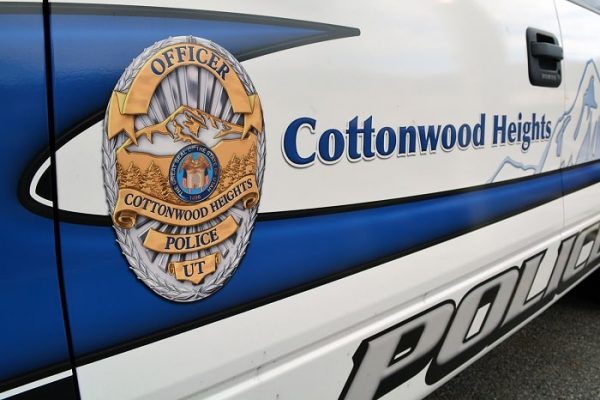
Named as defendants were Cottonwood Heights Police, the Unified Police Department, and more than 30 officers. The suit sought an unspecified amount of money and a permanent injunction restraining the defendants from “committing such unconstitutional acts going forward.”

Lawyers for Cottonwood Heights responded that a check of Taylorsville city records had not shown separate apartments in the home or a building permit to convert part of the house into apartments. Also submitted into evidence was a photo taken at the raid that shows the door between the mother-in-law apartment and the rest of the basement was open.

And, the police affidavit said, a no-knock warrant was necessary to keep evidence from being destroyed and suspected traffickers from arming themselves. In addition, her boyfriend was an enforcer for a gang and was staying at the apartment; however, he was not there during the raid).

As for the allegations of how Russo runs the department, lawyers for Cottonwood Heights acknowledged that the chief has an autographed poster from the Sopranos television series hanging in his office but denied the other claims.

Cottonwood Heights City Manager Tim Tingey backs up the chief and the officers, saying, “I feel our police department is very well run.”

By the time the suit went to trial in December 2018, most of the defendants had been dismissed and the case had boiled down to one claim, the question of whether the search was constitutional. On the second day of trial, the family agreed to accept the $60,000 payment from Cottonwood Heights.

The payment ended the legal proceedings but the effects of the raid linger. Family members said in the suit that they relive that night through nightmares and flashbacks. Michael McGuire has received medical treatment for severe neck and back pain stemming from the raid.

Daniel McGuire, a musician, and activist who has been involved in a range of issues, such as protests leading up to the Iraq War, said he feels betrayed by the people “who have a duty to protect us.”

“They knew innocent people were in the house and decided to use explosives and put our lives at risk and traumatize us anyway,” McGuire said. “They left us out of the warrant application entirely, leaving the impression on the magistrate that the tenant had full run of the house. They paid no personal consequences for these actions that have impacted me deeply.”

Also discouraging was the drawn-out court battle and the dismissal of some defendants and claims on the basis of qualified immunity, he said.

“The process takes far too long to feel just and there are too many legal protections for them when they harm people,” McGuire said. “It’s retraumatizing and feels at several steps like ripping a scab off a healing wound to bleed again. I wouldn’t wish the litigation process on any victim.”

Read our previous story about how a new Cottonwood Heights City Council member runs into trouble when attempting transparency.

,


Join our newsletter.
Stay informed.


  • Whiskey, Bullets & a Buried Town: Archaeologists Reveal Alta’s Wild Past

    Before Alta was known for powder days and lift lines, it was a silver mining town clinging to the side of a narrow canyon. In the late 1800s, men lived at 8,000 feet, went underground each day, and endured winters that regularly buried buildings in snow. This past summer, that mining town resurfaced — literally — during construction at the Alta Ski Area.

    To understand what Alta really looked like, you don’t begin with legend. You begin with its trash — and this time, that happened almost by accident.

    Alta Ski Area was installing underground water reservoirs to support snowmaking. Because the project sits on Uinta-Wasatch-Cache National Forest land, an archaeologist was required to monitor the excavation. No one expected the trench to produce much.

    But, It did.

    Artifacts began surfacing almost immediately. Enough that the Forest Service contacted the Utah State Historic Preservation Office for help. Lexi Little, who coordinates the Utah Cultural Site Stewardship Program, helped mobilize nearly 30 volunteers to assist with what quickly became a focused two-week excavation.

    Winter deadlines were approaching. The pipes for the reservoirs had to go in the ground. There wasn’t time for a slow, extended dig.

    “It was two weeks of digging in the dirt and helping figure out exactly what we were looking at,” Little said.

    Most of the people screening soil weren’t professional archaeologists. They were trained stewards from around Utah — part of a statewide volunteer network that now approaches 500 people. They poured dirt through shaker screens, scanning for fragments that could piece together a town long buried.

    “Archaeology is human trash,” Little explained. “Archaeologists are very into trash.”

    Alta had left plenty behind.

    https://youtu.be/hzIHzx3OGoo?si=dKcl2CEz-t6FZzYw

    Victorian-style ceramics appeared first — the kind typically used in hotels. Medicine bottles followed. Ink bottles. Hand-blown glass. A porcelain doll’s foot surfaced from the soil, a small detail that shifted the mental image of the town. Families were here. Children were here. This wasn’t only a camp of miners.

    The bottles helped establish time. Manufacturing details — whether glass was hand-blown or mold-made, whether a maker’s mark appeared on the base — allowed archaeologists to date many of the artifacts to the 1870s through the 1890s, when Alta was booming as a silver mining town.

    “That gives you that range of dates for when Alta was really booming,” Little said.

    One reusable soda bottle clearly stamped “Salt Lake City” connected the canyon to the valley economy below.

    Then something unusual rolled out of a dirt pile.

    A corked bottle. Intact. Liquid still inside.

    To access this post, you must purchase Utah Stories (Digital + Print) or 3 month free trial (Digital).


  • Utah Homelessness Crisis: Tyler Clancy Challenges ‘Housing First’ Failures

    “It’s not normal to see someone sleeping on the sidewalk in a sleeping bag with a needle sticking out of their arm.”

    That sentence should not be controversial. In a sane society, it would barely need saying. But in Utah — where politicians, nonprofits, consultants, and bureaucrats have spent more than a decade congratulating themselves for “addressing homelessness” while the streets of Salt Lake have become more dangerous, more drug-soaked, and more morally disorienting — it lands like an indictment. And it came not from a crank, a talk-radio host, or a downtown business owner at the end of his rope, but from Tyler Clancy, Utah’s newly appointed homeless coordinator.

    That matters because if Clancy is serious — and after sitting down with him, he appears to be — then he represents something Utah’s homelessness system has not had in a very long time: someone willing to say the obvious out loud. The old script is dead. Everybody knows it, but almost nobody in power has wanted to admit it. 

    For years, Utah’s homelessness policy has been built on a polite fiction — that if we build enough units, distribute enough funding, and avoid being too “judgmental,” the crisis will gradually resolve itself. That story was easier to maintain when Utah was receiving national praise for “solving chronic homelessness.” It is much harder to sustain now, when the conditions on the ground tell a very different story.

    Magnolia Apartments opened to help alleviate homelessness, but the results were not all positive.

    Part of that failure became painfully clear over the last four years. By most accounts, former homelessness coordinator Wayne Niederhauser was a decent man and a very nice guy. But one person close to him described his tenure as that of “a tiger without stripes”— someone with the title, but not the appetite to challenge the sprawling network of nonprofits and service providers receiving millions in taxpayer dollars. That lack of accountability has had real consequences. Multiple former and current residents have told Utah Stories that of the roughly 60 original tenants who moved into Magnolia when it opened, about 20 have since died — most, they say, from accidental drug overdoses. 

    If those accounts are even close to accurate, they should have triggered a public reckoning. Instead, the system kept moving, protected by good intentions, insulated from scrutiny, and largely unbothered by outcomes that would be considered a scandal in almost any other context.

    That is the machine Clancy is stepping into, and unless he is willing to confront it directly — not just coordinate around it — his role risks becoming one more layer of management over the same failures. The reality he inherits is not complicated in the way policymakers like to suggest. It is visible, immediate, and increasingly impossible to explain away. 

    Open drug use, fentanyl addiction, untreated mental illness, rising disorder, and a growing sense among both the public and the homeless themselves all indicate that the system is not working. Complexity exists, but it has also become a convenient shield for cowardice. It is the language people use when they want to avoid saying what is plainly in front of them: Utah has spent years managing visible human collapse while calling it compassion.

    The Lie Utah Told Itself

    For years, Utah’s approach to homelessness rested on a narrative few in power were willing to question. It sounded compassionate. It polled well. And it avoided uncomfortable truths.

    Continue reading with a Utah Stories subscription. Start your 3-month free trial.

    To access this post, you must purchase Utah Stories (Digital + Print) or 3 month free trial (Digital).


  • Utah Official’s $36K Travel Reimbursements Raise Questions About Use of Taxpayer Funds

    The trek into the office is a necessary evil for many employees; unpaid time that could be spent elsewhere. But some state employees are able to cash in on their commutes.

    That includes one member of Gov. Spencer Cox’s cabinet who heads the Utah Department of Cultural & Community Engagement. The department oversees a number of civic and social programs ranging from museums, libraries and the state historical society, to volunteerism efforts and multicultural affairs. 

    The employee’s in-state travel expenses made up a large chunk of the department’s employee reimbursements in recent years, according to documents obtained by The Utah Investigative Journalism Project obtained through a public records request. 

    The UIJP reviewed spreadsheets detailing the reimbursed expenses of the department’s 17-person leadership team over the 2024 and 2025 fiscal years. 

    The analysis showed one employee, Executive Director Donna Law, accounted for nearly a third of the team’s reimbursements in 2024 and 43% in 2025. Law, who lives in Cedar City, spent more than 11 times the average amount spent by all other employees included in the analysis. 

    The majority of Law’s expenses were categorized as in-state travel, which includes mileage and lodging. Between the two years, she spent $21,607.94 on lodging, $10,135.42  on auto mileage, and $1,455.00 in miscellaneous travel expenses and meals for a total of over $33,000. 

    The next highest amount spent on in-state travel was $3,385. Law’s overall spending far exceeded any other employee.

    The nearly $36,000 Law spent on travel and other items wasnearly three times that spent by the employee with the second highest amount in reimbursements. His expenses, in contrast, were largely out-of-state travel.

    To access this post, you must purchase Utah Stories (Digital + Print) or 3 month free trial (Digital).


  • The $7 Million Recruit: How NIL Changed College Athletics Forever

    In 2012, Jabari Parker, a top high school prospect and member of the Church of Jesus Christ of Latter-day Saints, was facing his biggest decision to that point in his life: where to play college basketball. 

    Fans of BYU athletics hoped and perhaps prayed that Parker would pick the school owned by the church he was raised in. BYU was listed as one of his final choices. But he ultimately chose to spend his college years at Duke before attempting a career in the NBA. BYU fans were disappointed, but no one was truly surprised. Duke over BYU was the best choice for a young prospect in 2012. 

    A.J. Dybantsa.

    What changed between 2012 and 2024 when A.J. Dybantsa, the number one high school prospect, chose BYU over every other school? The answer is roughly $7 million dollars. That is what Dybantsa is reportedly making to play basketball at BYU. 

    The deal was supported by Utah Jazz owner Ryan Smith, who met multiple times with the Dybantsa family in multiple attempts to bring the young player to Provo. 

    According to Smith, he had no financial role in bringing Dybantsa to BYU, but the influence of Utah’s most famous billionaire acting as a “booster” or unofficial recruiter certainly swayed the decision.

    Prior to 2021, boosters acting as recruiters was taboo to the NCAA governing body. It was called improper recruiting. But in 2021, California began the modern era of NIL, or the ability of a college athlete to benefit from their name, image, or likeness, when they passed the “Fair Pay to Play Act.” 

    This new law gave college athletes in California the ability to benefit from their NIL, something that was banned in the rest of the country to that point. The NCAA saw that this law would create an unfair advantage for California schools that could now give young athletes the chance to make money off their talent and image while still in college. 

    The NCAA knew they needed to do something quickly, so they rushed through a policy that opened up NIL to all college athletes in the country, and it has been expanding and evolving over the last four years. 

    Grant Duff, who has coached at the University of Utah, Weber State University, and is now the defensive coordinator for Idaho State University, says, “The best part of NIL is that athletes have an opportunity to make good money. The downside comes with the free-for-all that money causes.”

    Dybantsa confers with BYU Head coach, Kevin Young.

    One of the biggest current examples of what a school can do when the boosters are willing to pay for success is Texas Tech University. From 2020-2024, Texas Tech had 34 wins, which works out to 6.8 wins per year with a low of 4 wins and high of 8. Then Texas Tech’s boosters got involved, led by Cody Campbell, an oil industry businessman and Chairman of the Texas Tech board. The football program was given 28 million dollars for NIL with a simple message attached to the large pile of money: Win. And win now. And win they did. 

    By signing NIL deals with athletes in the transfer portal, Texas Tech went from a middle-of-the-pack school in their conference to one of the top 12 teams in the country. They didn’t just win games in 2025, they made many of their opponents look like they didn’t belong on the same field, including the University of Utah and BYU twice. That is what money can buy.

    To access this post, you must purchase Utah Stories (Digital + Print) or 3 month free trial (Digital).