Utah Stories

Cottonwood Heights: Council Member Finds Opposition to Transparency

Even before Tali Bruce was sworn in as a Cottonwood Heights City Council member in January 2018, she and police Chief Robby Russo were at odds on the issues.

|


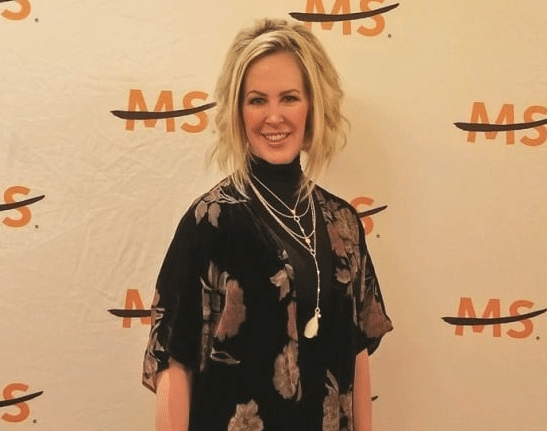
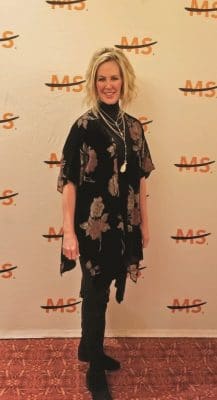
Cottonwood Heights District 3 council member, Tali Bruce.

Even before Tali Bruce was sworn in as a Cottonwood Heights City Council member in January 2018, she and police Chief Robby Russo were at odds on the issues.

According to Bruce, Russo endorsed her opponent in the fall 2017 election, an action she believes was inappropriate coming from a police officer.

[*According to her opponent this never happened.]

Now, 15 months later, their differences remain — and the situation has escalated since the campaign ended and her time on the council began, Bruce said.

“I’ve felt harassed and bullied almost from Day 1,” she said. Russo has declined comment on Bruce’s allegations.
Police Chief Robby Russo
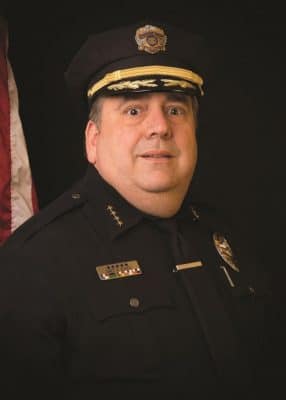
Police Chief Robby Russo.

Bruce said she became a target early in 2018 after suggesting a cost analysis to determine if it would be more economical to contract with the Unified Police Department for law enforcement services. She alleges police officers tried to intimidate her for several months beginning in March 2018 by tailgating her, and in one instance, sitting outside her home in a patrol car as she was leaving to go to a council meeting. When she rolled down her car window to talk to him, the officer pretended to take a phone call, Bruce said.

“How many streets are going unpatrolled while they’re doing that?” she asked.

Another point of contention was a proposal from other council members in November 2018 to give Russo a raise and extend his contract, which expires in July 2019. Bruce wanted the city to conduct a performance review of the police department before voting, but the majority of council members wanted to go forward then.

Bruce was on the losing end of a 3-1 vote to extend the contract for two additional years and to increase Russo’s annual salary to $145,516 from the current $128,656. The additional $16,860 was an increase of approximately 13 percent.

Two days later, Tali Bruce said, an employee at one of the pubs she and her husband own was pulled over for driving without insurance. Rather than issuing a fix-it ticket, the officer had the vehicle towed, which left the woman and her daughter by the side of the road on a cold night.

She also believes there was an orchestrated effort to get residents who support Russo to pack a city meeting to criticize her after a false rumor had circulated that she wanted to eliminate all police from Cottonwood Heights.

And Bruce is disappointed that she didn’t get a courtesy notification when Russo filed an open-records request for all of her emails after she proposed the cost-benefit analysis.

According to City Manager Tim Tingey, Russo’s raise brought his salary to a little above the mid-range for police chiefs in the Salt Lake Valley.

Tingey, who became city manager in October 2018, also said employees are allowed to endorse candidates as long as they do so in their personal capacity. He also said that because of liability concerns, people are not allowed to drive uninsured vehicles and that towing those cars is not unusual.

Mayor Mike Peterson agreed that submitting the open records request was not a good choice, and said the matter should have been handled differently.

The mayor also said he personally has not seen anything that he thinks is bullying but stressed that he can’t tell Bruce how to feel.

“I feel bad that she feels bullied,” he said.

The feelings probably go both ways, Peterson said. While Bruce feels like she’s being bullied, Russo probably feels he’s being bullied by the councilwoman by her constant criticism, he said.

During his campaign for mayor, he walked most of the city and held numerous meetings, according to Peterson. From that experience, he believes there is “tremendous support” for the police.

The chief and the police department have been involved in a number of controversies. For years, there were allegations that police helped put the Canyon Inn bar out of business in 2015 by harassing customers with heavy-handed traffic stops and allegedly bogus DUI citations to make way for a new development project. More recently, a former Cottonwood Heights police officer filed a federal lawsuit against the department alleging she was sexually harassed and discriminated against because of a disability.

Russo and then-mayor Kelvyn Cullimore have denied any wrongdoing in the Canyon Inn matter. Lawyers for the city have denied the allegations in the harassment suit, which is pending in U.S. District Court.

In a 2016 survey asking Cottonwood Heights residents for their input on important issues, the city asked if the police department is too aggressive on enforcement “aimed at preventing impaired driving.” Of the 1,268 respondents, 37 percent either strongly or somewhat disagreed, and 31 percent strongly or somewhat agreed. The remaining 32 percent neither agreed nor disagreed.

On the question of whether the department is professional and responsive, 58 percent agreed and 21 percent disagreed. Police are committed to address the issues that pose the biggest threats to community safety, according to 49 percent of respondents, versus 25 percent who disagreed. Sixty-six percent trusted the department to deter and deal with crime, while 20 percent did not.

Bruce, who is serving her first term on the city council, said she ran for office because she perceived the community was divided and wanted to heal the divide.

On her campaign website, www.talibruce.com, Bruce said she would not “blindly support big money developers” over the desires of average citizens. She also said she wanted police officers to have regular training in de-escalation tactics.

Bruce said that despite her situation, she believes the majority of police officers “are really terrific people.”

“There are definitely times when it’s shaken me,” Bruce said of the alleged effort to intimidate her. “Certainly, it’s taken its toll, but it’s made me stronger.”

Correction: Michael Hanson who ran against Tali Bruce was not endorsed by Chief Robby Russo. We incorrectly stated that he was.
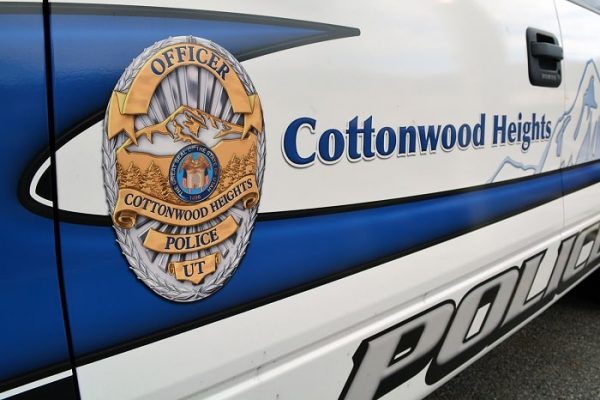

Read the story about how CHPD and Unified Police are required to pay victims of a no-knock search warrant $60K.

,


Join our newsletter.
Stay informed.


  • Artist Kate Kilpatrick Brings Utah’s History to Life Through Murals

    “I think we’re all interconnected; as individuals as well as societies,” Kilpatrick notes. Her work showcases those connections exuberantly, and whatever scale she’s working on, you can bet that in terms of energy and spirit, she’s painting large.


  • Why Most People Stay Stuck in Business and What It Takes to Move Forward

    Every so often, you meet an immigrant who came here with almost nothing and managed to build something exceptional.

    Prakash Shah is the kind of man who has spent enough time around risk that he no longer treats it like an interruption.

    Today, he works in business brokerage and advisory, helping owners sell companies, helping buyers decide whether they should step in, and, when the fit is right, helping connect those buyers with private equity. He works in a world of valuations, leverage, due diligence, and hard questions that most people would rather postpone. He also operates in Utah real estate and has built a career around seeing value before it is obvious to everyone else. That is who he is now. What makes him interesting is how early that instinct started to form, and how little his life resembles the way most Americans are raised to think about comfort, career, and security.

    He grew up in Nepal in a boarding school system that would feel severe to many Americans. He was an only child, yet he saw his parents only twice a year for twelve straight years, until high school graduation. He lived inside routine. He shared space with boys from different social classes and different family circumstances. The school was structured enough that money did not buy you any special standing once you were inside. Everyone followed the same rules. Everyone was subject to the same discipline. In his case, it was an army school. Everything was measured. Everything was scheduled. In that kind of environment, you do not build your life around preference. You build it around adaptation.

    That contrast matters.

    A lot of American children are raised to search for what fits them. What are you passionate about? What do you enjoy? What feels right? Those are not bad questions, but they can create a habit of waiting for life to align itself before action begins. Prakash learned something else much earlier. He learned that life often does not align itself first. You enter the room as it is, you deal with the people in it, and you figure out how to function without making your comfort the center of every decision. He said that one of the biggest lessons from those years was tolerance, the ability to live with people from all walks of life and genuinely learn to get along with them. That is not a soft value. In business, it turns into resilience. In negotiation, it turns into patience. In career terms, it turns into range.

    When he came to the United States over 25 years ago, he did not arrive with the kind of runway that allows for a prolonged identity search. He came with two suitcases and enough money for one semester. He went to Hunter College in New York City, then to NYIT near Central Park, studying media and then media and technology management. He also studied psychology. Those details matter because they show something about his mind. He was interested in people before he built a career around deals. Even then, what attracted him was not technical prestige. It was understanding motives, behavior, and how people reveal themselves.

    But New York is merciless toward vague ambition. It demands payment in rent, transit, food, and time.

    Prakash worked constantly. He took multiple jobs. He paid tuition, paid rent, and skipped most of what Americans imagine as college life. There were no romantic years of drifting from café to concert to self-discovery. He talked about not having the luxury of dates, travel, or finding himself. He was working. Even laundry was not a small detail. In New York, he pointed out, you do not just throw clothes in a machine at home. You haul them to the laundromat, count quarters, and measure what is necessary. He also described distraction in a way that most native-born Americans probably do not think about. For immigrants, distraction is not always pleasure. Sometimes distraction is the constant pressure of competing needs. Tuition or rent. Food or savings. A better coat or another month of making do. He was not romanticizing the struggle. He was describing the arithmetic of it.

    That arithmetic did not make him cautious. If anything, it did the opposite.

    While in college, he had the option of safer analytical work. Instead, he took a sales job with Time Warner Cable that sent him into the South Bronx from 6 p.m. to 10 p.m. to knock on doors. He is not a physically imposing man. He knew exactly what kind of neighborhoods he was walking into. He described apartment buildings where people kept pit bulls, where tension was normal, where one mistake in tone or timing could end a conversation immediately. For most people, that kind of job would have been something to survive and forget. For him, it became a school in human behavior. “It’s not about talking… it’s about listening,” he said.

    One story from that period says almost everything about how he operates. He knocked on a door one night around 8:45 and found himself facing a huge man with a gun on the table, pit bulls nearby, and a half-eaten pizza in front of him. It had all the ingredients of a very bad scene.

    Continue reading and support independent Utah journalism with a purchase of Utah Stories (Digital + Print) or 3 month free trial (Digital).


  • Ancient Pyramid Discovered in Sugar House Park, Salt Lake City

    A Salt Lake City resident says he may have uncovered what he believes to be a buried structure beneath a well-known hill in Sugar House Park, raising questions that have drawn both curiosity and skepticism.


  • Utah Fits All Scholarship Applications Open Through April 30 for K–12 Students

    Utah families have more learning paths than ever and, increasingly, more ways to make those paths affordable. This spring, the Utah Fits All Scholarship opened  for new family applications on April 1, and the application window stays open for one month. The program is a public K–12 scholarship that provides $4,000 to $8,000 per student,…