Utah Stories

Enjoy Life. Eat Pie. The Sunglow Cafe—a Small-Town Diner Serves up a Twist on Homemade Tradition

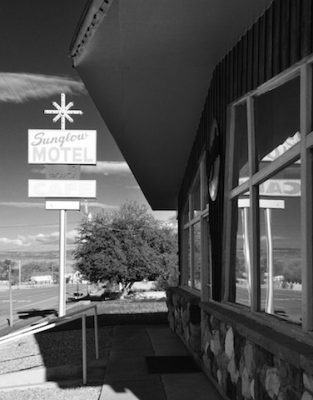
Walking into the Sunglow Cafe in Bicknell, Utah is like walking onto a movie set. The cafe is famous for their pickle pie and pinto bean pie.

|


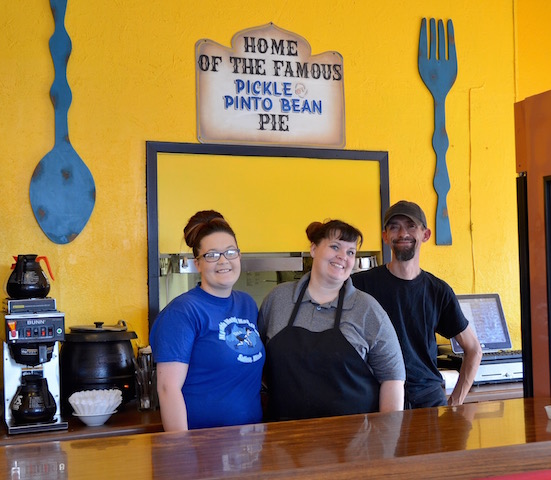
At the Sunglow Cafe, you are likely to be welcomed and waited on by Saidee (left) or her mom, Misty (center), while Saidee’s dad, Brian, serves as manager and cook. Photos by Sharon Spaulding.

Amble into the Sunglow Café in Bicknell (pop. 322), and you’ll think you’ve walked onto a movie set and into a world both familiar, but different.
At the Sunglow Cafe, mustard colored walls echo the sandstone outside, while teal painted arrows reminiscent of Native American symbols point to a mantra the locals know so well.

Mustard colored walls echo the sandstone outside. Large, teal painted arrows on the walls are reminiscent of ancient Native American symbols seeming to guide you on the path to wisdom. Inside this modern day Kiva a few miles outside of Torrey, these arrows point to a different sort of mantra written just inside the front door: Enjoy life. Eat Pie.

Though baseball caps have replaced cowboy hats, Levis still seem to fit just right over the mostly long, lean frames of men who sit as comfortably in a saddle as they do in an easy chair. Chances are you’ll be welcomed by Sadiee or her mom, Misty. Brian, Sadiee’s dad and Sunglow’s cook, flips burgers, eggs, and pancakes on the griddle.

At the Sunglow Café you can order steak and eggs for breakfast, steak and salad for lunch, or steak and potatoes for dinner. Bicknell is still cattle country. For $1.99, you can have chocolate milk. The menu is as long and deep as the famous red rock canyons nearby. But while people come in for good food at honest prices, curiosity seekers come to taste the fruit of knowledge: the Pickle and Pinto Bean pies.

Yes, you read correctly, the Pickle and Pinto Bean pies have made the Sunglow somewhat famous. They were the creation of Cula Ekker, who was once known as the “Pie Queen” of Wayne County.

No one knows the exact origin of Cula’s creations, but, says Brian, they date to the Depression when people simply had to make do with what they had and everything was made from scratch.

Cula’s brother, Milton Taft, says he and his sister were two of six siblings who grew up nearby on a farm. When Cula was just nine years-old, a brother was injured in a riding accident and spent most of a year in a hospital in Salt Lake City. Their mom went with him, leaving Cula to handle the cooking for the family and the farm hands.

“Cula loved to cook,” says Milton. “She was always cooking. She had a job for several years cooking at the local school.”

When Milton built the Sunglow motel in 1965, along with the restaurant, Cula signed on as chef and began serving up her famous Pickle Pie.

According to Brian, legend has it that one day two bikers were passing through and one had a recipe for Pinto Bean pie. He and Cula swapped their secret formulas. No one knows what became of the biker, but Cula added the pinto bean to her menu.

Cula passed away a few years ago, but not before sharing her recipes with Bessie Stewart, who has worked at the Sunglow for 31 years. Also born and raised in Wayne County, Bessie comes in at 5 a.m. to make up about 14 fresh pies, and she still makes the soup noodles from scratch. Last November, she baked over 300 pies to fill Thanksgiving orders.

“Cooking is all I ever done all my life,” she says. “We moved to Hanksville when Lake Powell went in, and worked for people in motels and gas stations and then moved to Bicknell. I started working for Cula in 1983.”

In addition to continuing Cula’s legacy, Bessie is locally and affectionately known as the “pistol-packing pastry chef.” She once unloaded the barrel of a .22, firing at her husband as he tried to disappear into the darkness of a desert night.

“The Lord was with him,” she laughs. “We were both so angry. When I picked up that gun, he knew I meant business and took off running. It was so dark I couldn’t see, so I fired at the sounds he made as he ran. It took a few years before we could laugh about it,” she says, “but eventually we made up.” Today, she has four kids, 15 grandchildren, and 15 great-grandchildren. Her husband passed away several years ago.

Says Brian, “Every summer we get about 50 tour buses packed with Europeans headed to Escalante. The French love the pies. We hear it over and over again that this is the type of pastry you would find in a different kind of eating establishment.”

What’s the secret? Says Bessie, “It’s the lard. We only use pure pork lard. It makes for the flakiest crust.”

In addition to Pickle and Pinto Bean, the Sunglow serves up Buttermilk and Oatmeal pies along with the more traditional Apple, Pecan, and Blueberry. Whole pies are $9.95 and a single slice is $3.49.

In addition to its famous Pickle and Pinto Bean pies, pastry chef Bessie Stewart makes up traditional varieties almost daily. Everything is made fresh. If you can’t decide, try the Sampler – Oatmeal, Buttermilk, Pickle, and Pinto Bean.

Pickle Pie has a sweet but tangy taste you might savor on a summer’s day, while the Pinto Bean, coconut mashed with the beans, has a hearty, stick-to-your-ribs kind of pie.

Whoever painted those four words on the wall was truly wise: Enjoy Life. Eat Pie. At least at the Sunglow Café.

Cula Ekker’s Pie Dough Recipe

6 cups sifted flour
2 teaspoons salt
1 – ¼ pounds (2-1/3 cups) of pure pork lard – no substitutions
12 tablespoons Water
2 tablespoons vinegar
2 eggs

In a mixing bowl, sift flour and salt. With pastry blender or two knives, cut in lard until mixture resembles coarse crumbs. Whisk together water, vinegar, and eggs until thoroughly mixed. Sprinkle liquid, 1 tablespoon at a time, into flour mixture, stirring lightly with a fork after each addition until the pastry is just moist enough to hold together. Shape pastry into a ball. Roll out as desired.

The Sunglow Family Restaurant and Hotel at 91 E Main St, Bicknell, UT  435 425-3701

 

, , ,

Join our newsletter.
Stay informed.


  • The $7 Million Recruit: How NIL Changed College Athletics Forever

    In 2012, Jabari Parker, a top high school prospect and member of the Church of Jesus Christ of Latter-day Saints, was facing his biggest decision to that point in his life: where to play college basketball. 

    Fans of BYU athletics hoped and perhaps prayed that Parker would pick the school owned by the church he was raised in. BYU was listed as one of his final choices. But he ultimately chose to spend his college years at Duke before attempting a career in the NBA. BYU fans were disappointed, but no one was truly surprised. Duke over BYU was the best choice for a young prospect in 2012. 

    A.J. Dybantsa.

    What changed between 2012 and 2024 when A.J. Dybantsa, the number one high school prospect, chose BYU over every other school? The answer is roughly $7 million dollars. That is what Dybantsa is reportedly making to play basketball at BYU. 

    The deal was supported by Utah Jazz owner Ryan Smith, who met multiple times with the Dybantsa family in multiple attempts to bring the young player to Provo. 

    According to Smith, he had no financial role in bringing Dybantsa to BYU, but the influence of Utah’s most famous billionaire acting as a “booster” or unofficial recruiter certainly swayed the decision.

    Prior to 2021, boosters acting as recruiters was taboo to the NCAA governing body. It was called improper recruiting. But in 2021, California began the modern era of NIL, or the ability of a college athlete to benefit from their name, image, or likeness, when they passed the “Fair Pay to Play Act.” 

    This new law gave college athletes in California the ability to benefit from their NIL, something that was banned in the rest of the country to that point. The NCAA saw that this law would create an unfair advantage for California schools that could now give young athletes the chance to make money off their talent and image while still in college. 

    The NCAA knew they needed to do something quickly, so they rushed through a policy that opened up NIL to all college athletes in the country, and it has been expanding and evolving over the last four years. 

    Grant Duff, who has coached at the University of Utah, Weber State University, and is now the defensive coordinator for Idaho State University, says, “The best part of NIL is that athletes have an opportunity to make good money. The downside comes with the free-for-all that money causes.”

    Dybantsa confers with BYU Head coach, Kevin Young.

    One of the biggest current examples of what a school can do when the boosters are willing to pay for success is Texas Tech University. From 2020-2024, Texas Tech had 34 wins, which works out to 6.8 wins per year with a low of 4 wins and high of 8. Then Texas Tech’s boosters got involved, led by Cody Campbell, an oil industry businessman and Chairman of the Texas Tech board. The football program was given 28 million dollars for NIL with a simple message attached to the large pile of money: Win. And win now. And win they did. 

    By signing NIL deals with athletes in the transfer portal, Texas Tech went from a middle-of-the-pack school in their conference to one of the top 12 teams in the country. They didn’t just win games in 2025, they made many of their opponents look like they didn’t belong on the same field, including the University of Utah and BYU twice. That is what money can buy.

    Continue reading and support independent Utah journalism with a purchase of Utah Stories (Digital + Print) or 3 month free trial (Digital).


  • Why Did Salt Lake City Tear Down Its Most Beautiful Buildings?

    If you go into the Utah State Archives and spend time with photographs from the late 1800s and early 1900s, you start to notice something that doesn’t line up with what exists today.

    Main Street looks cohesive. Not in a uniform way, but in a way that suggests the people building it shared an understanding of proportion, material, and permanence. Four-story buildings line the street—stone, brick, cast iron—each one detailed in ways that don’t feel incidental. Arched windows, carved stone, brickwork that changes pattern as it rises. Even the cast iron facades were designed to replicate masonry, not hide behind it.

    Then you go downtown and try to find those same buildings.

    Most of them are gone.

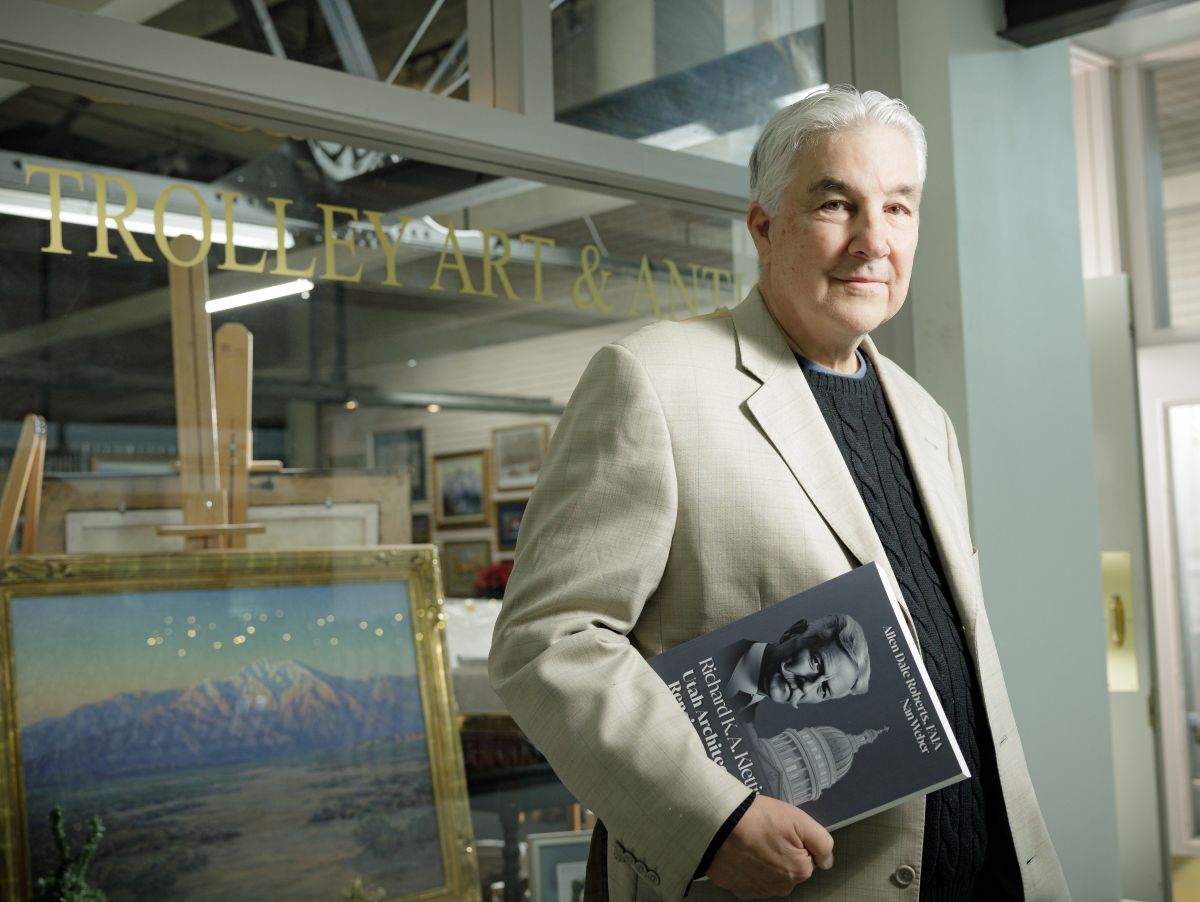
    Out of more than 400 buildings designed by Richard Kletting, over 300 have been torn down. That number alone reframes the conversation. Kletting designed the Utah State Capitol, the Saltair resort, commercial buildings, schools, churches, mansions—virtually every type of structure…

    Continue reading and support independent Utah journalism with a purchase of Utah Stories (Digital + Print) or 3 month free trial (Digital).


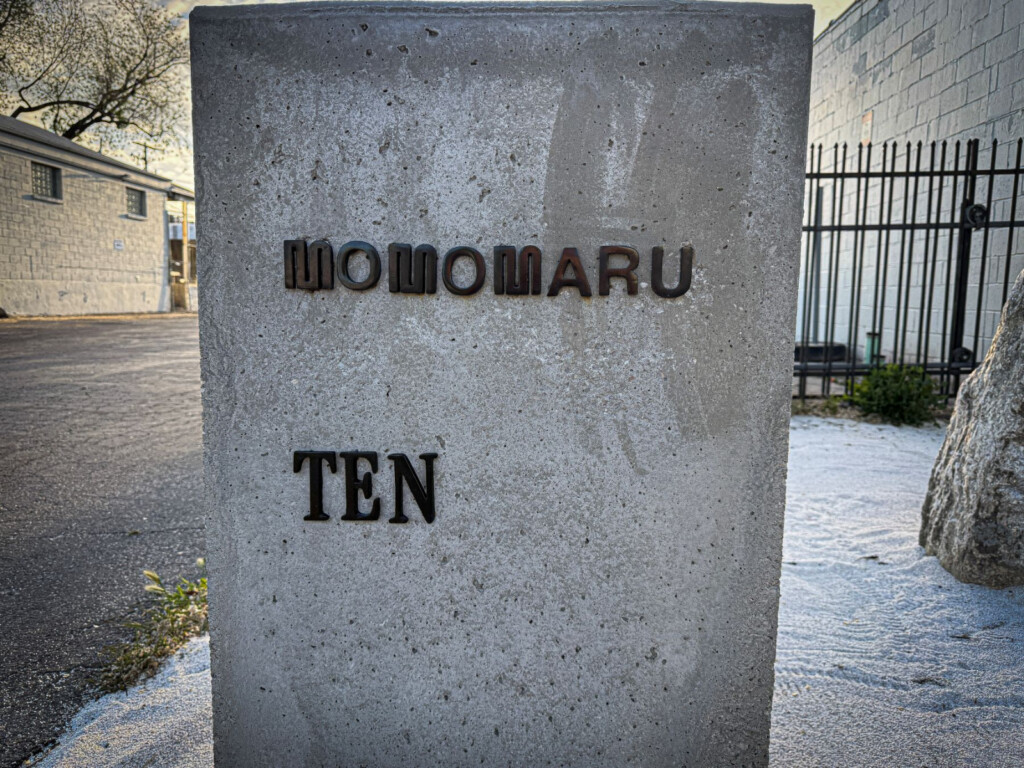
  • Momomaru Sushi Review: Salt Lake City’s New Destination for Japanese Hand Rolls

    A new Salt Lake City sushi spot is drawing crowds with Japanese-style hand rolls served fresh, fast, and warm, offering a more intimate and interactive take on traditional sushi.


  • The Stratos Project Was Already Approved. So Why the Public Meeting?

    Thousands showed up to protest. The decision may have already been made.

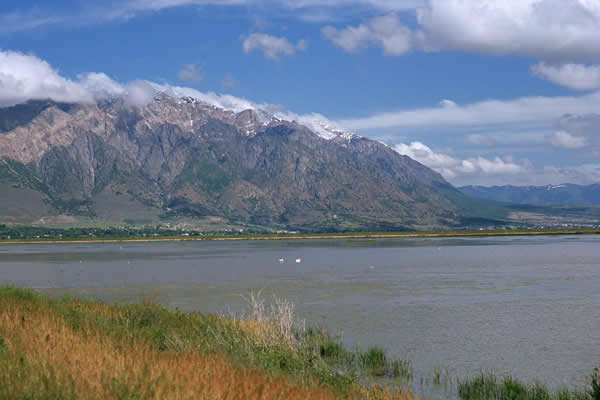
    When thousands of Box Elder County residents packed the fairgrounds to protest the proposed 40,000-acre Stratos data center, they thought they were confronting the people in charge.

    They weren’t.

    The county commissioners stood at the front of the room, absorbing the anger, the frustration, the disbelief. They looked like decision-makers. But by their own account, they weren’t.

    Because the decision may have already been made—long before the public ever showed up.

    The Illusion of Authority

    What happened at that meeting wasn’t civic engagement. It was something closer to theater.

    No meaningful public comment. No real debate. No clear path for residents to influence the outcome. Just a room full of people reacting to a project that, structurally, may already be locked in.

    Why?

    Because the real authority doesn’t sit with Box Elder County.

    It sits with the Utah Military Installation Development Authority.

    Once MIDA designates a project area, the rules change. Local zoning can become irrelevant. Private land stays private. Water rights remain private. And the role of local government shifts from decision-maker to facilitator.

    In plain terms: the county doesn’t decide if the project happens. It helps manage how it happens.

    So when residents showed up demanding answers, they were asking the wrong people.

    A Process That Skips the Public

    That should concern anyone paying attention.

    Because it flips the normal order of things. Instead of:

    Proposal → Public input → Decision

    We get:

    Decision → Public meeting → Reaction

    And by the time the public enters the room, the real levers of power have already been pulled.

    So what exactly was that meeting?

    If commissioners don’t have authority to stop the project, then the meeting wasn’t about deciding anything. It was about absorbing pressure. Managing optics. Creating the appearance of a process that had already moved on.

    That’s not transparency. That’s choreography.

    Follow the Missing Pieces