It’s a summertime staple: grilled, barbecued cheeseburgers topped with lettuce, pickles, onions and fresh, vine-ripened tomatoes. It doesn’t get much better than this, except for the addition of an ice-cold beer.
Americans consume an average of 73 pounds of red meat per person per year. But how is all of this beef produced?
In one pound of ground beef (from most major supermarkets) there could be beef from up to 1100 different animals! This is why when there is a food scare the recalls can go into the millions of items sold. Scary stories about e-coli outbreaks have caused many to become vegans. But a black bean burger just can’t compete with a grilled beef cheeseburger.
It just so happens that there is a way to enjoy a guilt-free hamburger this summer and save the environment at the same time.
Environmental Cattle Ranching
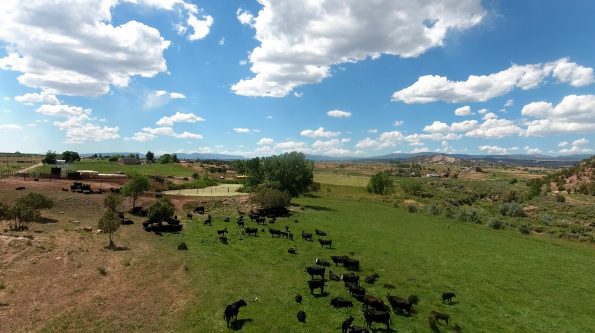
Nearly every cow spends the majority of its life in a pasture where it grazes on an assortment of weeds, grasses, sagebrush, flowers and delectable morsels of wild abundance. When land isn’t overgrazed, cattle help spread their manure and fertilize millions of acres of Utah grassland.
Allan Savory is considered the father of environmental ranching. He demonstrates in his books and lectures how if ranchers practice “intensive rotation” they can actually benefit the environment by reversing “desertification” and the effects of climate change. But that’s a big “if”. Grasslands all over Utah are overgrazed. They look like the putting greens on golf courses. Both animals and plants are starving. However, if grass is grazed properly it will have time to grow deeper roots, which improves soil and pastures. Further, it can actually sequester more carbon in roots and soil, reversing high levels of carbon in our atmosphere while improving underground springs and aquifers as well as soil conditions.
Allan Savory is featured in our second video on grass-fed beef below
But are consumers prepared to pay more for beef that is grass-fed and raised in an environmentally friendly manner? Examine the alternative.
What Really Goes Into Cheap Ground Beef
In order for ground beef to cost around $3.50 per pound at the grocery store, cattle that are about one year old will spend the last four months of their lives in a feedlot, where a cow will gain about 30-40% of its total body weight while eating a diet consisting mostly of corn.
As ruminant animals, cows stomachs were never designed to process corn and grains, and cows often get sick eating this diet. But cows gain an enormous amount of weight very quickly by eating corn; up to 3.5 pounds per day, as opposed around 2 pounds per day in a pasture. Due to the lack of pasture in the winter and spring, fattening cows in feedlots has become the standard for the beef industry, which wants nothing more than to produce exactly what consumers crave: cheap, fatty meat.
Bjorn Carlson describes the process for corn-fed cows and the process for raising grass-fed livestock in the video below:
Corn-finished beef became the norm around 80 years ago during WWII, when there were fewer farm hands and cows needed to be raised with less human input and work. But modern science is well aware of the health problems a grain-based diet causes for cow’s, which are intended to digest grass, not grains, while unhealthy cows produce unhealthy beef.
The Problem with Corn-Finished Beef
Starting in the 1970s, doctors began recommending that patients suffering from high cholesterol should eat less red meat and more lean meats. Consumers began switching to pork and chicken, and as a result, beef sales began to decline.
But factory chickens, pork, and even fish are also fattened by eating a diet consisting of mostly… you guessed it: corn. Most of our meat is fattened with corn. So the question is, is there anything wrong with this?
Fattening cows, chickens, pigs and fish, from primarily corn, caused nutritionists to notice a common problem in the finished product; there is an imbalance of HDL and LDL cholesterol in these meats. There is also less Omega 3 fatty acids (the fatty acid which aids with good brain health and functioning); and the overall nutritional profile of the meat does not appear nearly as good as meat produced with a more balanced diet (in other words, pasture-raised or free-range animals).
However, few consumers are aware of these facts. Most residents living in rural areas are aware that wild game such as deer, elk and bison are far healthier and leaner than the meat bought at supermarkets, and the ratio between Omega 6 and Omega 3 fat in game is one to one, but few are aware that pasture-raised or grass-fed cows, chickens and pork are healthier to eat than corn-finished animals.
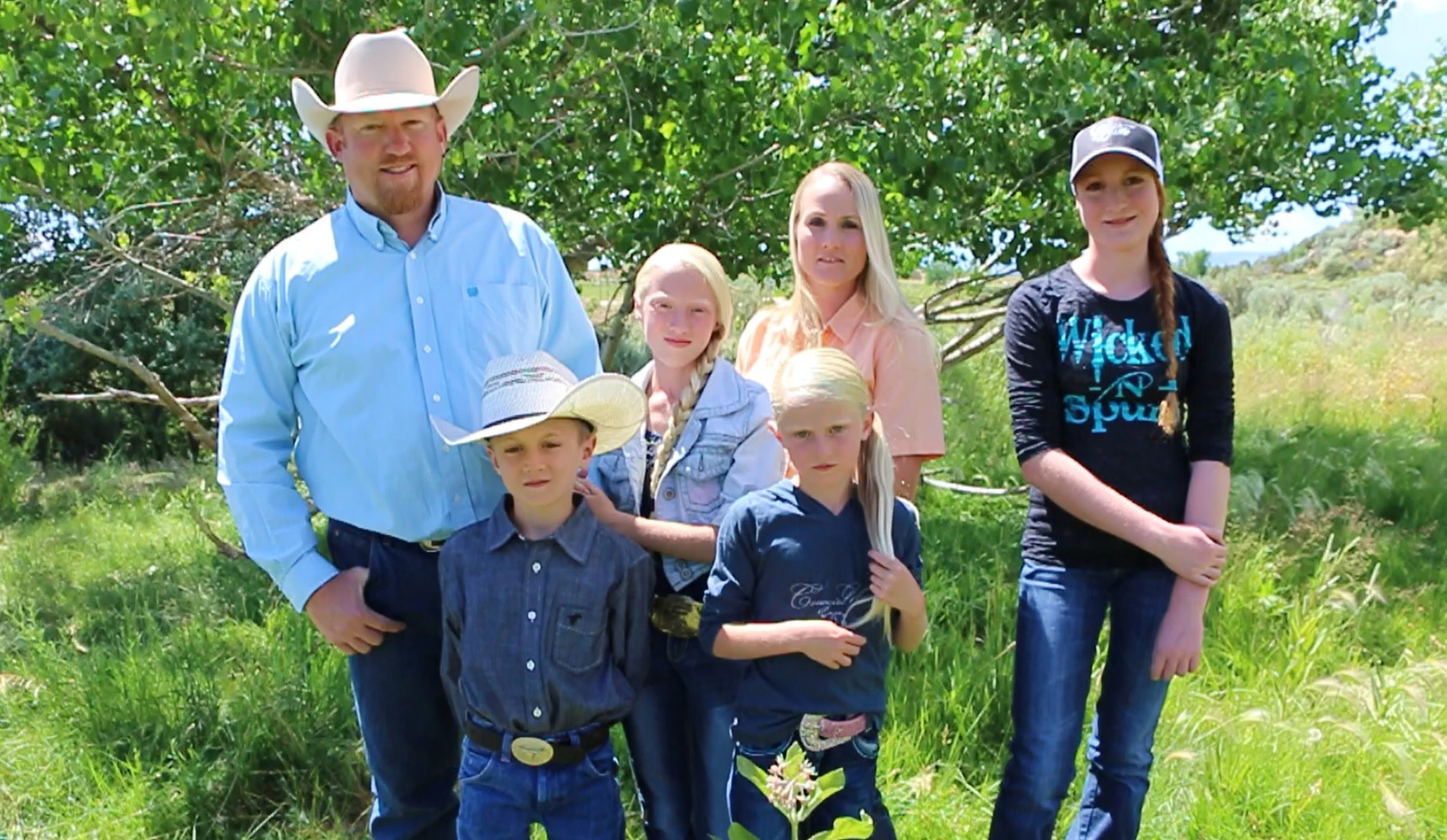
There are currently just a handful of local producers of grass-fed beef in Utah. I headed out to the Uintah Basin to meet with two ranchers near the town of Altamont: Bjorn and Shanna Carlson (with their children) and Alarik and Beth Myrin (with their children and grandchildren). Bjorn worked for Alarik on his ranch and became a convert to the grass-fed method of ranching in his early twenties.
In our interview, Alarik, of Canyon Meadows Ranch, makes it clear that he believes both grain and grass-finished beef are “healthy products,” and adds, “A lot of consumers still prefer grain-finished beef.” But there isn’t yet enough demand for him (and most ranchers) to raise grass-fed beef exclusively. Still Myrin says he appreciates the environmental benefits of intensive rotational grazing. They were able to continue and improve the rotational grazing system with the return of their son Nils after attending the University of Utah and start selling their grass fed beef directly to the public when their daughter, Deborah returned to the ranch after studying Rangeland Management and learning the ideas of Alan Savory while working at the Quivira Coalition—an innovative agrarian program. Alarik’s son, Rik, took me on a tour of case-study pastures.
We visited one pasture with grass up to four feet tall. Purple alfalfa flowers are in bloom along with long, native Utah wild grasses, and after seven seasons, most invasive species of weeds are gone. “After seven years of keeping this pasture, dozens of native grass species have returned,” Says Rik.
Their system is to graze around 100 animals in a 20-acre pasture for about one week, then rotate the cows to a new pasture or “paddock” (encircled by an electric fence). After grazing, the pasture is allowed to rest and restore for a period long enough for the forage to recover. “It’s takes longer for the cows to grow and mature, but we feel good about the final product we are producing and the improvements we are seeing year in our pastures every year.” says Rik.
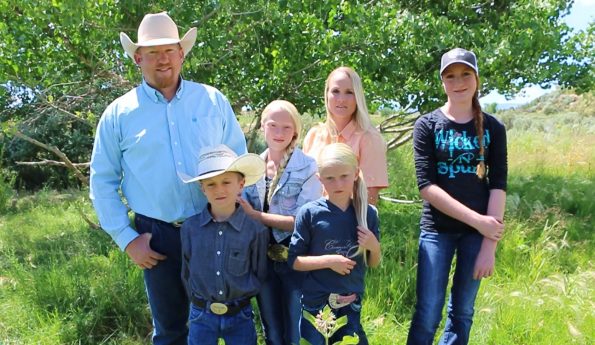
About ten minutes away is Bluebell, Utah, where Bjorn and Shanna Carlson, along with their four kids, are in their first decade of raising grass-fed beef on their Blue Tree Ranch. Their initial investment of 50 cattle is now up to to over 100, and they sell the offspring at farmers markets. As first-generation farmers, they didn’t have the luxury of inheriting land, but they believe it’s a business model that works. “We get to know our customers, and it’s all about interacting with individuals and families who buy their beef from us at the markets,” Bjorn says. On Saturdays, Bjorn and his son attend the Ogden Farmers Market while Shanna and her girls are at the Salt Lake City Farmers Market.
Like the Myrin Ranch, Blue Tree Ranch has thick lush pastures and also implements the practice of rotational grazing. “We use no fertilizers or pesticides. Everything works in an ecosystem unto itself. It’s how mother nature intended it,” said Bjorn Carson of Blue Tree Ranch. Bjorn adds, “I don’t want to sell anything to my customers that I wouldn’t put on our own dinner table.”
Watch our video series on grass fed beef ranchers in Utah. In part one Rik Myrin shows the improvement made to his pasture in Altamont, Utah. In part two Alarik Myrn explains why he decided to change to grass fed beef ranching. In part three Bjorn Carlson and his family talk about their ranch in Bluebell, Utah.
Watch the first video that focuses on Canyon Meadows ranch here:
See parts 2 and 3 here: