 Glioblastoma multiforme (GBM) is the most common and aggressive form of primary brain cancer. GBM is extremely hard to treat and the prognosis for survival is bleak.
That is until researchers at a Jersey Isle-based oncology company, Novocure determined that low intensity, alternating electrical fields could be used to inhibit cancer cell replication and cause cancer cell death. Salt Lake’s Harris Undersea Systems (which recently acquired Exelis, Inc.) partnered with Novocure to produce piezoceramic elements that are one component of the treatment system used to deliver the electric fields in this breakthrough cancer treatment approach.
According to Jim Brunelle, director of Harris Undersea Systems, “The researchers determined what characteristics they needed to produce the electric fields (called Tumor Treating Fields, or TTFields) and approached different companies for ceramic samples such as the ones made by Harris. Engineers at Harris worked with the Novocure to refine and evolve piezoceramic performance to meet their requirements to get the desired results. Piezoceramic materials produced by Harris are also a key component in submarine and surface ship sonar systems for the U.S. Navy since the 1950s.”
Harris provides the piezoceramic discs that and its 50+ year expertise in piezoceramic discs that are a key component of the delivery system. The technology, called Optune, has been shown to slow or reverse tumor progression by inducing cell death in certain solid tumors. Harris has delivered over 10 million discs to Novocure since their partnership began.
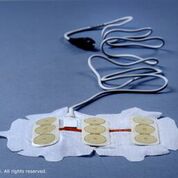
According to Brunelle, the ceramic discs are assembled into a device that the patient wears. The device puts out an electric field that interferes with cancerous cells ability to reproduce. “It’s not a cure, but a treatment that inhibits the growth of tumors,” Brunelle says. The piezoceramic has to be created under exacting conditions to produce a set of characteristics that provide an efficient way to produce the optimum electric field.
Brunelle says, “We started in 2003 providing samples to Novocure for them to evaluate performance of our ceramic. We worked with them to refine characteristics to achieve optimal performance. In 2006 the equipment was used in clinical trials treating recurrent GBM patients. The success of the treatment resulted in approval for recurrent GBM treatment by the FDA in 2011. Clinical trials were subsequently initiated for treatment of newly diagnosed GBM patients, with FDA approval granted in October 2015. Trials are ongoing or intended to be started for pancreatic, ovarian, and lung cancers and brain metastases.”
Bob, from Wisconsin had GBM Stage four brain cancer. He tells his story on the Novocure website. He tried all the current treatments, including surgery, pinpoint radiation and chemotherapy. The treatments were not totally successful, so when his daughter read about TTFields therapy he went to University of Chicago, Illinois to learn more about it.
He was fitted with the device with a series of four arrays attached to his head, placed according to a “map” to be most effective. The arrays are hooked to wires that hook into a machine that generates the electric fields. The machine is portable and either worn on a patient’s hip or carried with them. Bob after a short adjustment became used to the device that he could wear to work, to sleep, to shower and even dance.
According to Novocure Chief Operating Officer Mike Ambrogi, “Novocure has had a successful partnership with Harris for over ten years in our mission to improve the lives of cancer patients. The high quality of the product and the tremendous support we have received from the Harris team have played an important part in the treatment of over 2,500 patients. The very dedicated group in Salt Lake City is helping us make a difference.”
Novocure and Harris are transitioning piezoceramic technology that is used extensively in sonar systems to medical technology that has the potential to save lives in the war against cancer.