Utah Stories

Vegan Bodybuilder

Victor Barragan Razo pledge of compassion connects cultures and causes.

|


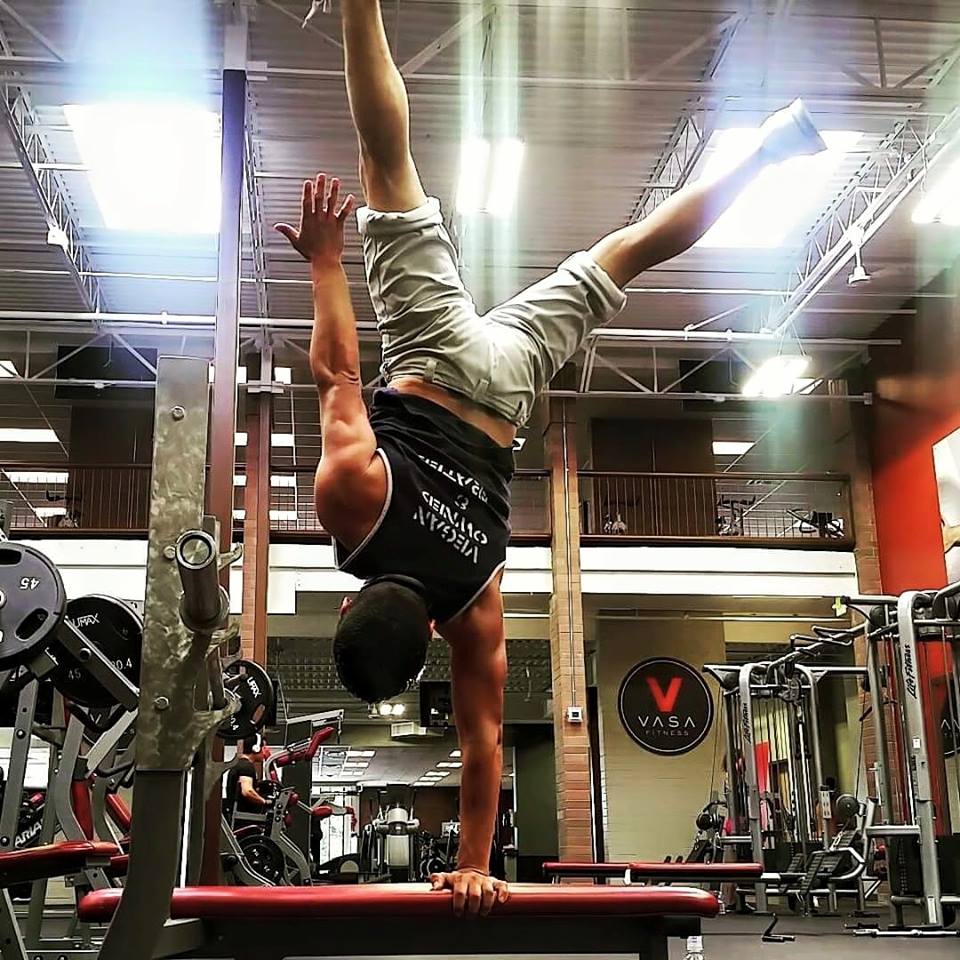
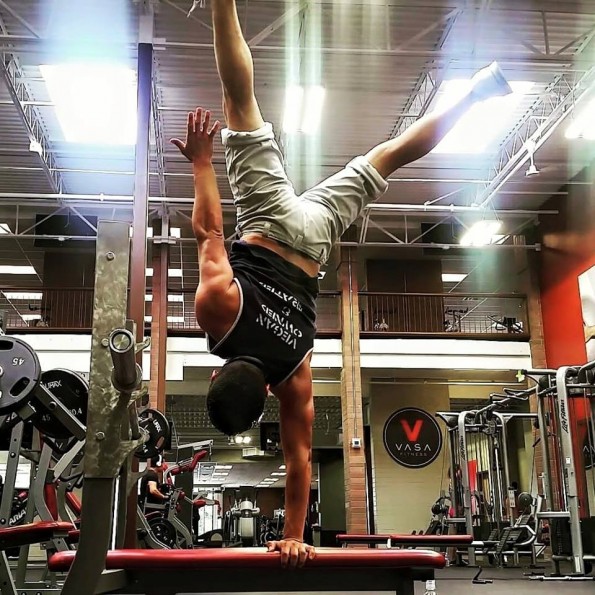
VictorHandStand
Photos courtesy of Victor Barragan Razo

He speaks three languages and can read braille.  He plays with fire and nunchakus, but also with creature big and small.  He built his body of steel with vegan protein and by lifting other up rather than lifting weights.  He can mix bachata and acroyoga.  He has more likes than an exhibitionistic teenager. His superhero compassion has compelled him to speak up for a range of causes for humans and other species.  He is known with celebrity by the monikers of Solar Fire Ninja, the Veganator, and, most recently, PETA’s Sexiest Vegan Next Door.  But, to his friends and community he is simply and sweetly Victor Barragan Razo of West Valley City.

He wasn’t always a creative activist.  He moved to the US from Mexico as a youngster. A few years ago he was overweight, without ambitions or goals:  “I had made that connection to the animals at the farm when I was growing up, but I was never able to water those seeds.  Moving to this country was a distraction.  The seed was about to die, so I needed to feed this seed.  It was going to die.  So I said, this is the time.  It’s do or die.  I was tired of living like a typical American.  I decided not to hurt any animals.  Sure enough, following my heart is what gave me the most success in my life.’’

A log of Victor’s activities consistently challenges stereotypes.  He is a Latino vegan bodybuilder.  Modeling, veganism, and spirituality?  His motto: ‘’My body is a temple, not a graveyard.’’
VictorVeganMulitas
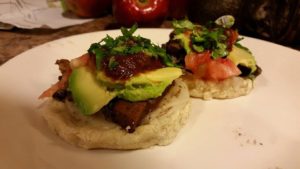
Victor’s Vegan Mulitas

Mi Ranchito liked his vegan mulitas, flan, ceviche, and pastel so much that they are on track to include them in their menu.  He regularly accepts invitations to cook for the curious, filming trilingual how-to videos in English, Spanish, and Sign Language. He is a performer, combining influences of acrobatics, fire, nunchakus, Latin dance, capoeira, acro-yoga, and more.   He volunteers at the Ching Farm Sanctuary, is working on submitting a video to American Ninja Warrior, and will be a judge and performer at the Miss Utah Pageant.  More than garnering fame for his own dreams and talents, he seems more motivated to serve as a crossover ambassador between cultures and causes.  How is this disparate momentum possible?

‘’A lot of people get turned off by the word vegan because of the passion behind it.  They think of people that are just obsessed about animal rights.  If everybody were to step into other people’s shoes, they would probably realize that these people have been through experiences that other people haven’t.  We could all understand each other a little bit better.  We think that we can just live here for free and however we want, but that’s not how I feel.  If we’re here, we’re here for a purpose, and I feel that purpose is to help out others.  That is the unifying thing.  I am not just talking about animals.  I am referring to everyone in general: animals, differently-abled.  We are all different in some way.’’

‘’If you see someone that is really passionate, out there holding a sign, they are passionate for a reason.  If you find out that reason, it might actually change your life.  We require people who make others more aware, give them a sense of being uncomfortable.  I question, why it is that we do things as a society? rather than just follow along.  I don’t see myself as any different from someone from the past who protested.  This is history repeating itself over and over again, when human slavery was around, when women weren’t able to vote, the Holocaust.  We realized that it was hurting someone.  Many don’t see animals the same as humans. This is all connected. Whether you treat a human or an animal wrong, it’s all connected.’’

Join our newsletter.
Stay informed.


  • Highway 6 and the Midland Trail: Utah’s Transcontinental Highway History

    From Price Canyon to Delta’s desert stretch, Utah played a central role in building the Midland Trail, one of America’s earliest transcontinental highways and the foundation of today’s Highway 6.


  • Whiskey, Bullets & a Buried Town: Archaeologists Reveal Alta’s Wild Past

    Before Alta was known for powder days and lift lines, it was a silver mining town clinging to the side of a narrow canyon. In the late 1800s, men lived at 8,000 feet, went underground each day, and endured winters that regularly buried buildings in snow. This past summer, that mining town resurfaced — literally — during construction at the Alta Ski Area.

    To understand what Alta really looked like, you don’t begin with legend. You begin with its trash — and this time, that happened almost by accident.

    Alta Ski Area was installing underground water reservoirs to support snowmaking. Because the project sits on Uinta-Wasatch-Cache National Forest land, an archaeologist was required to monitor the excavation. No one expected the trench to produce much.

    But, It did.

    Artifacts began surfacing almost immediately. Enough that the Forest Service contacted the Utah State Historic Preservation Office for help. Lexi Little, who coordinates the Utah Cultural Site Stewardship Program, helped mobilize nearly 30 volunteers to assist with what quickly became a focused two-week excavation.

    Winter deadlines were approaching. The pipes for the reservoirs had to go in the ground. There wasn’t time for a slow, extended dig.

    “It was two weeks of digging in the dirt and helping figure out exactly what we were looking at,” Little said.

    Most of the people screening soil weren’t professional archaeologists. They were trained stewards from around Utah — part of a statewide volunteer network that now approaches 500 people. They poured dirt through shaker screens, scanning for fragments that could piece together a town long buried.

    “Archaeology is human trash,” Little explained. “Archaeologists are very into trash.”

    Alta had left plenty behind.

    https://youtu.be/hzIHzx3OGoo?si=dKcl2CEz-t6FZzYw

    Victorian-style ceramics appeared first — the kind typically used in hotels. Medicine bottles followed. Ink bottles. Hand-blown glass. A porcelain doll’s foot surfaced from the soil, a small detail that shifted the mental image of the town. Families were here. Children were here. This wasn’t only a camp of miners.

    The bottles helped establish time. Manufacturing details — whether glass was hand-blown or mold-made, whether a maker’s mark appeared on the base — allowed archaeologists to date many of the artifacts to the 1870s through the 1890s, when Alta was booming as a silver mining town.

    “That gives you that range of dates for when Alta was really booming,” Little said.

    One reusable soda bottle clearly stamped “Salt Lake City” connected the canyon to the valley economy below.

    Then something unusual rolled out of a dirt pile.

    A corked bottle. Intact. Liquid still inside.

    Continue reading and support independent Utah journalism with a purchase of Utah Stories (Digital + Print) or 3 month free trial (Digital).


  • The Only Full Bottle of Alcohol Ever Found in Utah Was Unearthed in Alta

    When a backhoe rolled a corked bottle out of the dirt at Alta this summer, no one immediately grasped what they were holding. It wasn’t empty. It wasn’t shattered. It was full. “The bottle that was discovered up at Alta is the only bottle of alcohol ever discovered in an archaeological excavation in the state…


  • How Horses Help Kids Heal: Inside Utah’s Equine Therapy World

    Kelty Johnson trains horses for a living, but her deeper work happens in the quiet space between animal and human. On the Utah Stories podcast, she explains how equine therapy helps children regulate emotions, build confidence, and reconnect through presence rather than pressure.