Beer Stories

Wasatch & Squatters Growing Empire

Two of Utah’s biggest and most influential breweries join forces.

|


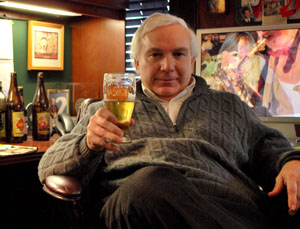
Wasatch Owner and UBC Production Boss Greg Schirf. Squatters and Wasatch offer their high-point beers for sale from their Beer Store located at 1763 S 300 W.
Owner Greg Schirf. Squatters and Wasatch Beers production offer their high-point beers for sale from their Beer Store located at 1763 S 300 W.

One of the biggest news stories concerning beer in Utah in the past year has been the merger that Squatters and Wasatch Beers have made with Fireman Partners. The story broke in the Boston Globe. The breweries so far have been silent on the nature of their expansion plans. For the first time Greg Schirf has opened up and revealed a few intriguing specifics.

One of the biggest outstanding questions was: Will Squatters become Wasatch or Wasatch become Squatters?  According to Schirf, they have been in talks but in the near future both labels and brands will maintain their own distinctive identities. The only big news is two giant 240 barrel fermentation tanks are on order and will arrive sometime within the year. This will increase Squatter’s and Wasatch’s brewing capacity by thirty percent.

Wasatch’s founder Greg Schirf has been know for a man who doesn’t mind stirring up the beehive state’s honey pot to generate a little buzz.

Before the late ’80s, Utah was synonymous with just two things in the eyes of many people: the greatest snow on Earth and the biggest American born religion. Fine quality microbrews and the state’s culture proved mutually exclusive.

Greg Schirf changed all of that when he opened the Wasatch Brewery in Park City in 1986, Utah’s first brewery after the closure of Fisher Brewery . He proposed the legislation that legalized brew pubs in the state, sparking a beer revival in Deseret that continues to gain momentum in spite of what Schirf describes as opposition from a widespread “Zion curtain mentality.” More than two decades later, the Utah Brewers cooperative, which consists of both Wasatch and Squatters breweries, won the prize for Mid-Size Brewing Company and Mid-Size Brewing Company Brewer of the Year at the Great American Beer Festival.

“The brew pub law that we got changed 25 years ago changed the complexion of Utah pretty significantly,” Schirf said. “There hadn’t been any breweries in Utah for quite some time prior. We were literally so far under the radar [the state legislature] didn’t know what the hell we were talking about.”

Wasatch beers has since become as recognizable and distinctly Utahn as the prominent mountain range that inspired its name. On the national level, however, Schirf says it took beer aficionados some time to warm up to Utah’s breweries. The much maligned lower alcohol content of the Beehive State was an image problem Wasatch/Squatters had to overcome.

“When we first got started . . . we were always recognized as a lower alcohol beer and we kind of got dissed for that. But that’s all changed in the last three or four years. All of the breweries here are making really fine higher alcohol beers. That’s really allowed us to change our reputation.”

Squatter’s nine percent alcohol by volume Hops Rising and Wasatch’s eight percent Devastator have helped to change this perception. Additionally, Wasatch has recently launched their new Ghostrider White IPA, a 6 percent alcohol by volume beer that Schirf says has a nice citrus presence and a hint of coriander.

Schirf says that, in addition to the Ghostrider White, his favorite beer to drink right now is Wasatch’s Kolob Kolsch. Formerly a seasonal beer called Summer Twilight, it has since been rebranded as a year-round ale named for the planet described in Mormon scripture.

For a brewery owner of his caliber, however, Schirf has remarkably little to say about his favorite beer and food pairings. Rather, he focuses on pairing beer with lifestyle. The Kolob Kolsch, he says, is great for fishing. The Ghostrider White is perfect for apres work or ski. Perhaps it’s only fitting that Utah’s home grown beer revolutionary would look toward the activities and lifestyle that have made Utah famous to bring out the best from his beer.

, , ,


Join our newsletter.
Stay informed.


  • Highway 6 and the Midland Trail: Utah’s Transcontinental Highway History

    From Price Canyon to Delta’s desert stretch, Utah played a central role in building the Midland Trail, one of America’s earliest transcontinental highways and the foundation of today’s Highway 6.


  • Utah Acquires US Magnesium Assets in $30M Deal to Protect the Great Salt Lake

    Utah leaders announced the state has successfully won the bid to acquire key assets of the defunct US Magnesium facility on the Great Salt Lake, including its associated water rights and property.


  • Whiskey, Bullets & a Buried Town: Archaeologists Reveal Alta’s Wild Past

    Before Alta was known for powder days and lift lines, it was a silver mining town clinging to the side of a narrow canyon. In the late 1800s, men lived at 8,000 feet, went underground each day, and endured winters that regularly buried buildings in snow. This past summer, that mining town resurfaced — literally — during construction at the Alta Ski Area.

    To understand what Alta really looked like, you don’t begin with legend. You begin with its trash — and this time, that happened almost by accident.

    Alta Ski Area was installing underground water reservoirs to support snowmaking. Because the project sits on Uinta-Wasatch-Cache National Forest land, an archaeologist was required to monitor the excavation. No one expected the trench to produce much.

    But, It did.

    Artifacts began surfacing almost immediately. Enough that the Forest Service contacted the Utah State Historic Preservation Office for help. Lexi Little, who coordinates the Utah Cultural Site Stewardship Program, helped mobilize nearly 30 volunteers to assist with what quickly became a focused two-week excavation.

    Winter deadlines were approaching. The pipes for the reservoirs had to go in the ground. There wasn’t time for a slow, extended dig.

    “It was two weeks of digging in the dirt and helping figure out exactly what we were looking at,” Little said.

    Most of the people screening soil weren’t professional archaeologists. They were trained stewards from around Utah — part of a statewide volunteer network that now approaches 500 people. They poured dirt through shaker screens, scanning for fragments that could piece together a town long buried.

    “Archaeology is human trash,” Little explained. “Archaeologists are very into trash.”

    Alta had left plenty behind.

    https://youtu.be/hzIHzx3OGoo?si=dKcl2CEz-t6FZzYw

    Victorian-style ceramics appeared first — the kind typically used in hotels. Medicine bottles followed. Ink bottles. Hand-blown glass. A porcelain doll’s foot surfaced from the soil, a small detail that shifted the mental image of the town. Families were here. Children were here. This wasn’t only a camp of miners.

    The bottles helped establish time. Manufacturing details — whether glass was hand-blown or mold-made, whether a maker’s mark appeared on the base — allowed archaeologists to date many of the artifacts to the 1870s through the 1890s, when Alta was booming as a silver mining town.

    “That gives you that range of dates for when Alta was really booming,” Little said.

    One reusable soda bottle clearly stamped “Salt Lake City” connected the canyon to the valley economy below.

    Then something unusual rolled out of a dirt pile.

    A corked bottle. Intact. Liquid still inside.

    To access this post, you must purchase Utah Stories (Digital + Print) or 3 month free trial (Digital).


  • The Only Full Bottle of Alcohol Ever Found in Utah Was Unearthed in Alta

    When a backhoe rolled a corked bottle out of the dirt at Alta this summer, no one immediately grasped what they were holding. It wasn’t empty. It wasn’t shattered. It was full. “The bottle that was discovered up at Alta is the only bottle of alcohol ever discovered in an archaeological excavation in the state…