
Cottonwood Heights Small Business Owners Fight New Police Department’s Heavy-Handed Treatment
Cottonwood Heights is indeed a “shining city upon a hill.” Located on the pathways that once led to the most productive silver mining claims in Utah, the same pathways now lead to the best skiing on earth. The drainage basin for the Big and Little Cottonwood Canyon Creeks flows down through a ravine past The Old Mill area. This area was recognized in 2007 by Money Magazine as one of the top 100 places in the United States to live and do business.
This area is, by all measure, a success. The tax revenue produced here enabled Cottonwood Heights to liberate itself from Salt Lake County in 2004 and empowered the small city of 34,000 residents to form its own school district, police department, city council and mayor’s office. It’s a small city, but the residents control their own sovereignty and destiny, one might assume.
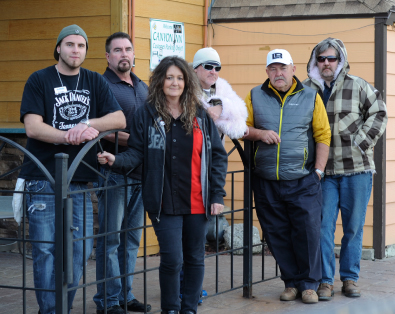
But not everyone is happy with Cottonwood Heights’ changes, especially since the establishment of the police department in 2008. When CHPD was formed, the department chose to focus on DUIs. By providing such a strong police force to serve such as small area, they have conducted what Mayor Kelvyn Cullimore would describe as an abundance of “good police work.” Or, “heavy-handed treatment and harassment,” if you ask some of the business owners located at the mouth of the canyons. The proprietors of the 7-Eleven, Canyon Inn, Porcupine Pub and The Lift House have collected over 1,000 signatures in protest to “stop the heavy-handed treatment of CHPD.”
For 22 years, Jim Stojack has owned Canyon Inn. Stojack works in his kitchen most days and now is covering two shifts. Business has never been so slow. This, Stojak says, is because the police are focused on pulling over his customers, most of whom drink responsibly. But many receive DUI tickets, even when they blow under the legal limit.
Stojak believes that a big reason police are targeting his business is that “they would like to see me disappear.” He believes the Canyon Inn’s western-style beer and dance bar doesn’t jive with the mayor’s vision. Plans are moving forward with construction of a $65 million office, retail, condominium and hotel project just to the south of Jim’s property.
Cottonwood Heights’ part-time mayor is the CEO at Dynatronics in Union Park, just two blocks from city hall. Mayor Cullimore and Stojak are diametrically opposite personalities with conflicting aspirations for the city. Cullimore sees Stojak as a fear-stoking rabble rouser fueling conspiracy theories that the city has the intent to “steal [local business owners’] property.”
Cullimore’s prime directive as mayor is to keep the roads of Cottonwood Heights safe from drunk or impaired drivers. To accomplish this task, as well as to respond more quickly to emergencies, 34 officers—one officer for every thousand residents—serve on CHPD. Officers drive souped-up white Dodge Chargers. They have gas masks and an incident response vehicle they are prepared to use for a riot if need be.
On Tuesday nights, which have been the Canyon Inn’s best nights for the for the past 12 years, there are often up to four police cars patrolling within a few hundred yards of the bar, stopping motorists suspected of DUI driving northbound on Wasatch Drive.
Cullimore denies that there is an excess of officers serving this area. Recently officers from UHP have replaced officers from CHPD. How the CHPD is being phased out by another department was not addressed. The Cottonwood Heights Chief of Police, Robby Russo wasn’t immediately available for comment. In response to asking why the CHPD wouldn’t wouldn’t talk about harassment complaints, Cullimore said, “You just did, you brought them to me, and I’m his boss.”
Stojak has proof that all night long officers from UHP and CHPD are pulling over customers. He has hours of video footage taken from his own parking lot and from the Park and Ride at the mouth of Big Cottonwood Canyon. Stojak himself received four tickets for various infractions, but never a DUI, because he never drinks when working. He was looking forward to showing a judge his footage and talking about his his business’ decline due to oppressive police presence. Instead, all of Stojak’s infractions were dismissed in court. According to DUI attorney Tyler Ayers, this dismissal of bogus charges issued by CHPD, and long, drawn out court hearings is nothing new. But, it is adversely affecting the lives of innocent motorists.
“My clients have been arrested for blowing a .03, a .05.,” Ayers said. “They’re well under the legal limit. Many, many people are pulled over with no driving pattern whatsoever. They just come up with BS reasons to pull them over, like their license plates lights are out, or they lie and say they they’ve exhibited a driving pattern and when I see the video there is no driving pattern. I think that in Cottonwood Heights especially, that sort of behavior is not only tolerated, it’s part of their culture. It’s part of the way they do it there.”
According to Mayor Cullimore, Tyler Ayers has “an axe to grind.” When asked to elaborate why a DUI attorney would be so opposed to DUIs, Cullimore believes that Ayers is speaking for his clients.
Ayers’ personal records show 67 dismissals out of over 300 cases. This is a 23 percent dismissal rate compared to what he says has been consistently a five percent dismissal rate by the county and state police departments.
Cullimore offers no indication anything is wrong. “I’m proud of the job they are doing, and in fact they just received an award from the State of Utah for the outstanding job they are doing in keeping our roads safe.”
To show their collective discontent with the city, all of the local business owners opted out of belonging to the Cottonwood Heights CDA (Community Development Agency). This action, according to Mayor Cullimore, is not in their best interest because it prevents the business owners from having a “voice” in the $62 million project south of their businesses.
Please stay tuned for Standing Their Ground: Part II