Debate

City Creek Center: The true cost of the Mormon mall

Why the Crossroads Mall and the ZCMI Center were torn down to build the City Creek Center.

|


Five years ago Utah Stories produced its first documentary video asking why Crossroads Mall and the ZCMI Center were being torn down just thirty-five years after they were built to construct the City Creek Center.

This was a question no other media outlet was asking. Instead, all they reported on was how wonderful the City Creek Center would be, and how great it was that the LDS Church was investing $1.5 billion in the blighted downtown Main Street shopping district. I was amazed that there wasn’t a single story questioning the sense in destroying buildings that had presumably run their course 35 years after they were constructed. Nobody was shedding any tears over the destruction of the malls, which had no historical nor architectural value, but still, nobody was questioning why they were built in the first place.

It’s worth mentioning that the City Creek Center investigation was my first experiment into hyper-local journalism. After graduating from the University of Utah in Journalism and Film, it became clear to me that the main-stream media in Salt Lake– like much of the country — simply doesn’t want to ask tough questions, nor do investigations that require compiling several sources to paint a larger picture. Asking the “why” required too much time and energy when they were completely focused on the “what”. Especially the “what” that had the least amount of relevance to daily life.

For this investigation I interviewed Tony Weller of Weller Books, Bart Stringham from Utah Woolen Mills, John Speros from Lambs Grill and the late Richard Wyrick (Mr. Downtown) of Oxford Shoes as well as city planners and historians. What I learned —besides how knowledgeable and eloquent all these men were on the important issues of downtown— was that not only was the media neglecting the voices of the small business, but city leaders were also neglecting the interests of the business owners who literally built downtown, with their hard work and tax base they paid over 150 years. Instead of helping these folks they were working to entice corporate America to invest in Salt Lake City to put the locals eventually out of business.

This investigation clearly presented that politicians and city leaders have forgotten that 80% of their tax base comes from local small businesses, not corporate America. It is to the great detriment of locally-owned and operated businesses that city leaders provide huge tax incentives for chains to open their businesses in their area, while they do nothing for locally owned small businesses in terms of tax breaks. This doesn’t provide a level playing field nor a “free market”. This trend continues to the detriment of no only small business owners, but even more greatly to the culture of towns and cities across the West. A man I recently spoke to said, “When you find the same 10 stores in every city in America, Where is there any sense of culture or place?.” A good question, I didn’t have an answer.

  in August of 2010 in Utah Stories' "Mall Wars" issue Utah Stories posed the question: What will now happen to the Gateway Mall once City Creek Center canabalizes most of their best tenants? Gateway cannibalized the best tenants from the Crossroads Mall and the ZCMI Center in 2001; just as the Crossroads and ZCMI put the Main Street local businesses under in the late 1970s. When nobody examines history or the bigger picture, history is destined to repeat itself. These mall wars are the result of city leaders partnering with "expert" developers to provide a retail shopping environment in-line with the fads of the day. But these designs always favor corporate retail over local small businesses. National mall corporations have national retail partners they favor in all their projects across the country. This takes the power out of local businesses, and local developers and places power into the hands of corporate owners who play cronyism. The LDS Church partnered with Taubman to build the City Creek Center. Taubman has enticed a lot of great tenants into the new City Creek Center, but what favors has Taubman provided to Abercrombie and Fitch, Old Navy and Express to be lured away from Gateway— owned by the Utah based Boyer Company? These giant chains as well as at least 12 othershave all given up on Gateway to now reside in the City Creek Center. Lease details and terms are not public information. But we can be assured with 99% certainly Taubman nor CCRI will answer our tough questions, which they have dodged for the past five years. If all of the effort City Leaders put into attracting outside investment were instead put into improving conditions for local businesses to survive and thrive on Main Street, Salt Lake City would still have Wolf's Sporting Goods downtown, as well as the Paris Company, Auerbachs, Broadway Music, Keith O'Brien, Buster Brown and about 40 other businesses that collapsed after the malls were built. But instead these businesses went under as a direct result of city leaders believing the "experts" and corporations were much more knowledgeable than local business owners regarding the growth and development of Salt Lake City. Local small business owners are the largest portion of our tax base, they provide the culture, community and leadership for shaping every great city into a great place, its about time the media and politicians understand these facts.

Much more on the history of downtown Salt Lake City from Utah Stories

Debate

Watch Complete interviews with downtown merchants The Skybridge Causing a Divide International Critics Weigh in on Skybridge Debate

Analysis

City Creek Center Comparison with the MGM Grand City Center in Las Vegas

Philosopy

What Would Jesus Do With Two Billion Dollars?

History

How Main Street Was Traded for Wall Street: The Great Divide Post World War II Suburban Growth The Decline of Main Street The Rise of the Malls Crossroads Mall Opens to Eager Shoppers

, , , , , ,


Join our newsletter.
Stay informed.


  • Utah Fits All Scholarship Applications Open Through April 30 for K–12 Students

    Utah families have more learning paths than ever and, increasingly, more ways to make those paths affordable. This spring, the Utah Fits All Scholarship opened  for new family applications on April 1, and the application window stays open for one month. The program is a public K–12 scholarship that provides $4,000 to $8,000 per student,...


  • Utah Homelessness Crisis: Tyler Clancy Challenges ‘Housing First’ Failures

    “It’s not normal to see someone sleeping on the sidewalk in a sleeping bag with a needle sticking out of their arm.”

    That sentence should not be controversial. In a sane society, it would barely need saying. But in Utah — where politicians, nonprofits, consultants, and bureaucrats have spent more than a decade congratulating themselves for “addressing homelessness” while the streets of Salt Lake have become more dangerous, more drug-soaked, and more morally disorienting — it lands like an indictment. And it came not from a crank, a talk-radio host, or a downtown business owner at the end of his rope, but from Tyler Clancy, Utah’s newly appointed homeless coordinator.

    That matters because if Clancy is serious — and after sitting down with him, he appears to be — then he represents something Utah’s homelessness system has not had in a very long time: someone willing to say the obvious out loud. The old script is dead. Everybody knows it, but almost nobody in power has wanted to admit it. 

    For years, Utah’s homelessness policy has been built on a polite fiction — that if we build enough units, distribute enough funding, and avoid being too “judgmental,” the crisis will gradually resolve itself. That story was easier to maintain when Utah was receiving national praise for “solving chronic homelessness.” It is much harder to sustain now, when the conditions on the ground tell a very different story.

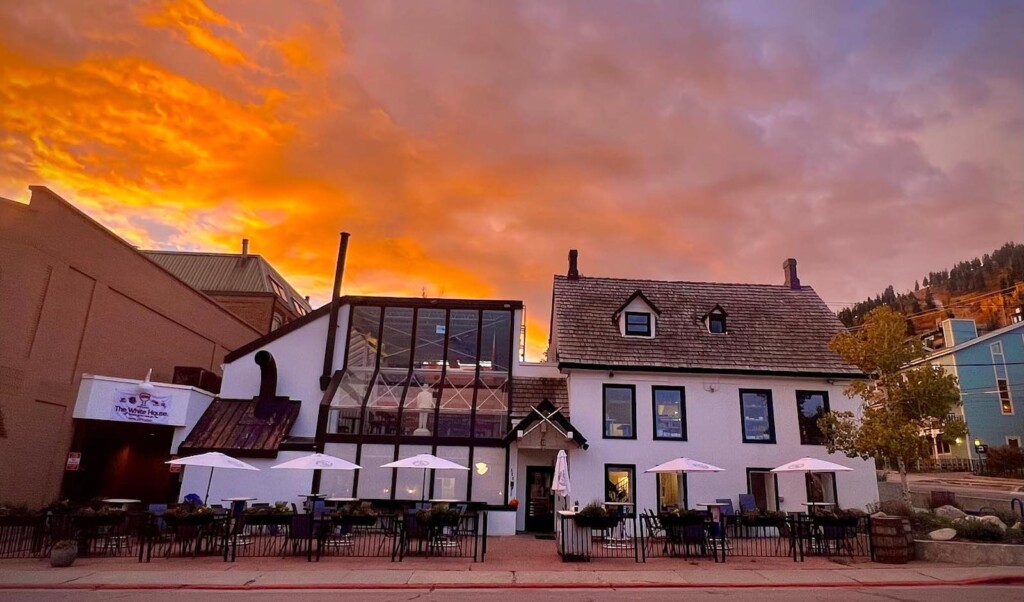
    Magnolia Apartments opened to help alleviate homelessness, but the results were not all positive.

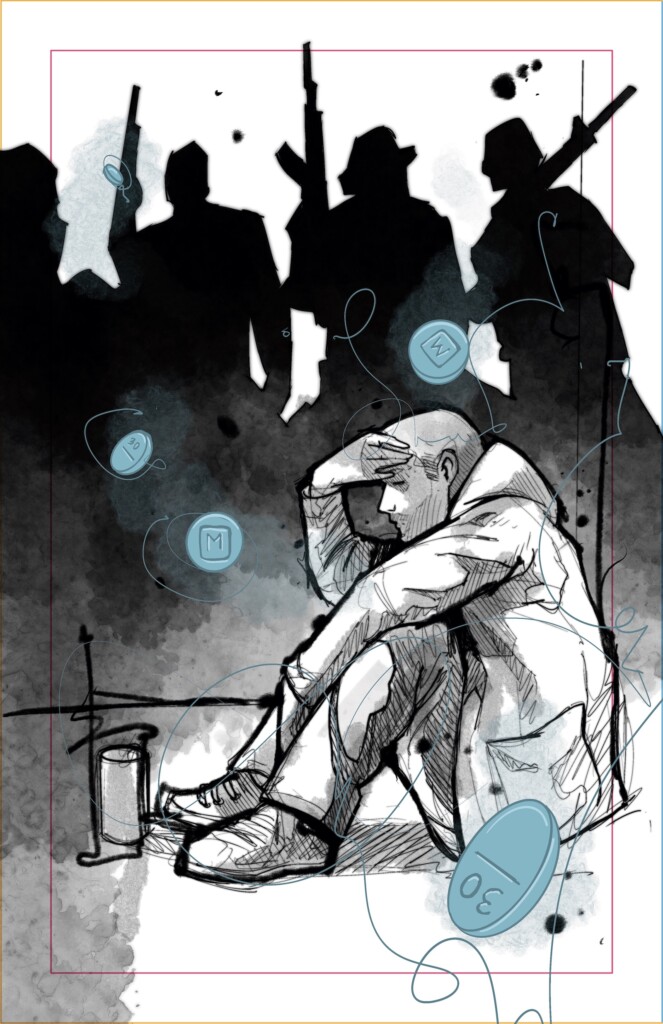
    Part of that failure became painfully clear over the last four years. By most accounts, former homelessness coordinator Wayne Niederhauser was a decent man and a very nice guy. But one person close to him described his tenure as that of “a tiger without stripes”— someone with the title, but not the appetite to challenge the sprawling network of nonprofits and service providers receiving millions in taxpayer dollars. That lack of accountability has had real consequences. Multiple former and current residents have told Utah Stories that of the roughly 60 original tenants who moved into Magnolia when it opened, about 20 have since died — most, they say, from accidental drug overdoses. 

    If those accounts are even close to accurate, they should have triggered a public reckoning. Instead, the system kept moving, protected by good intentions, insulated from scrutiny, and largely unbothered by outcomes that would be considered a scandal in almost any other context.

    That is the machine Clancy is stepping into, and unless he is willing to confront it directly — not just coordinate around it — his role risks becoming one more layer of management over the same failures. The reality he inherits is not complicated in the way policymakers like to suggest. It is visible, immediate, and increasingly impossible to explain away. 

    Open drug use, fentanyl addiction, untreated mental illness, rising disorder, and a growing sense among both the public and the homeless themselves all indicate that the system is not working. Complexity exists, but it has also become a convenient shield for cowardice. It is the language people use when they want to avoid saying what is plainly in front of them: Utah has spent years managing visible human collapse while calling it compassion.

    The Lie Utah Told Itself

    For years, Utah’s approach to homelessness rested on a narrative few in power were willing to question. It sounded compassionate. It polled well. And it avoided uncomfortable truths.

    Continue reading with a Utah Stories subscription. Start your 3-month free trial.

    Continue reading and support independent Utah journalism with a purchase of Utah Stories (Digital + Print) or 3 month free trial (Digital).


  • Left in a Box as a Baby: Trauma, Alcoholism, and Addiction

    A man abandoned as a baby builds a structured life in law enforcement, but unresolved trauma and alcoholism slowly begin to unravel it. His story raises a harder question about how change actually happens.


  • Utah Official’s $36K Travel Reimbursements Raise Questions About Use of Taxpayer Funds

    The trek into the office is a necessary evil for many employees; unpaid time that could be spent elsewhere. But some state employees are able to cash in on their commutes.

    That includes one member of Gov. Spencer Cox’s cabinet who heads the Utah Department of Cultural & Community Engagement. The department oversees a number of civic and social programs ranging from museums, libraries and the state historical society, to volunteerism efforts and multicultural affairs. 

    The employee’s in-state travel expenses made up a large chunk of the department’s employee reimbursements in recent years, according to documents obtained by The Utah Investigative Journalism Project obtained through a public records request. 

    The UIJP reviewed spreadsheets detailing the reimbursed expenses of the department’s 17-person leadership team over the 2024 and 2025 fiscal years. 

    The analysis showed one employee, Executive Director Donna Law, accounted for nearly a third of the team’s reimbursements in 2024 and 43% in 2025. Law, who lives in Cedar City, spent more than 11 times the average amount spent by all other employees included in the analysis. 

    The majority of Law’s expenses were categorized as in-state travel, which includes mileage and lodging. Between the two years, she spent $21,607.94 on lodging, $10,135.42  on auto mileage, and $1,455.00 in miscellaneous travel expenses and meals for a total of over $33,000. 

    The next highest amount spent on in-state travel was $3,385. Law’s overall spending far exceeded any other employee.

    The nearly $36,000 Law spent on travel and other items wasnearly three times that spent by the employee with the second highest amount in reimbursements. His expenses, in contrast, were largely out-of-state travel.

    Continue reading and support independent Utah journalism with a purchase of Utah Stories (Digital + Print) or 3 month free trial (Digital).