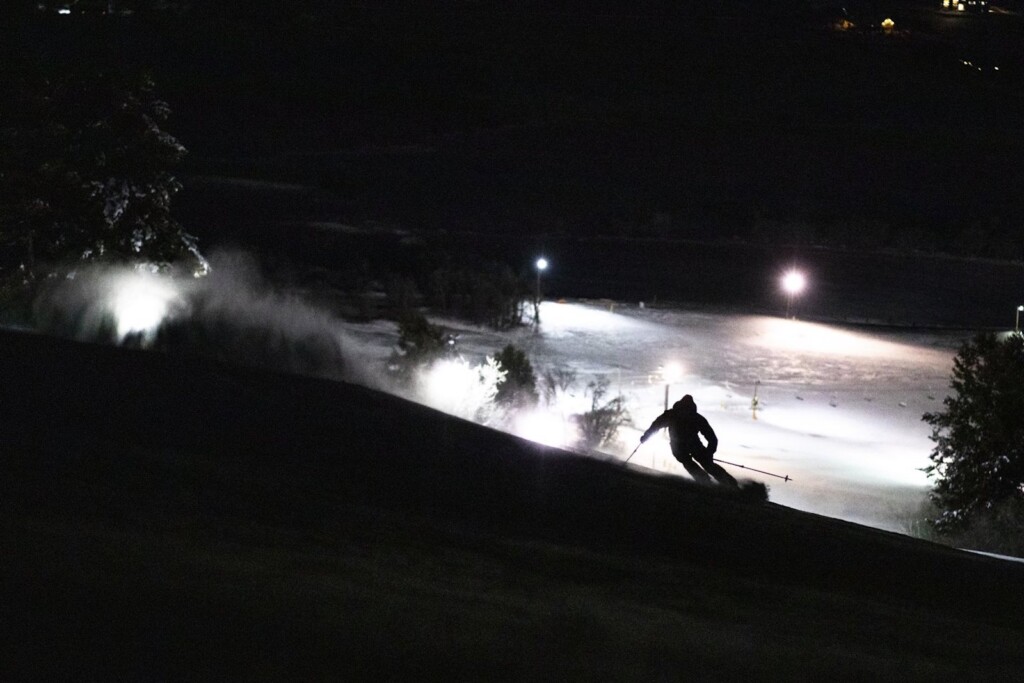
Many in Utah don’t realize that some of their ski resorts transform into a nocturnal playground, providing a unique and more affordable opportunity to glide down the slopes under the glow of floodlights.
Advantages of Night Skiing
One of the most compelling reasons to explore night skiing is the ability to beat the daytime crowds and save on lift tickets. With fewer skiers and snowboarders on the slopes, guests can enjoy more runs with less waiting time for lifts. This reduction in crowd density not only enhances the skiing experience but can also contribute to a safer environment, especially for beginners or those looking to practice new skills without pressure.
Night skiing is often more affordable than its daytime counterpart. Many resorts offer reduced rates for night lift tickets, making it an economical choice for those looking to maximize their skiing budget. This cost-effectiveness extends to families and groups, who can experience the slopes together without the higher price tag often associated with peak daytime hours. As long as beginners are prepared, this can be the most cost-effective way to dabble in the hobby.
Finding Peace — and Stars — On the Mountain
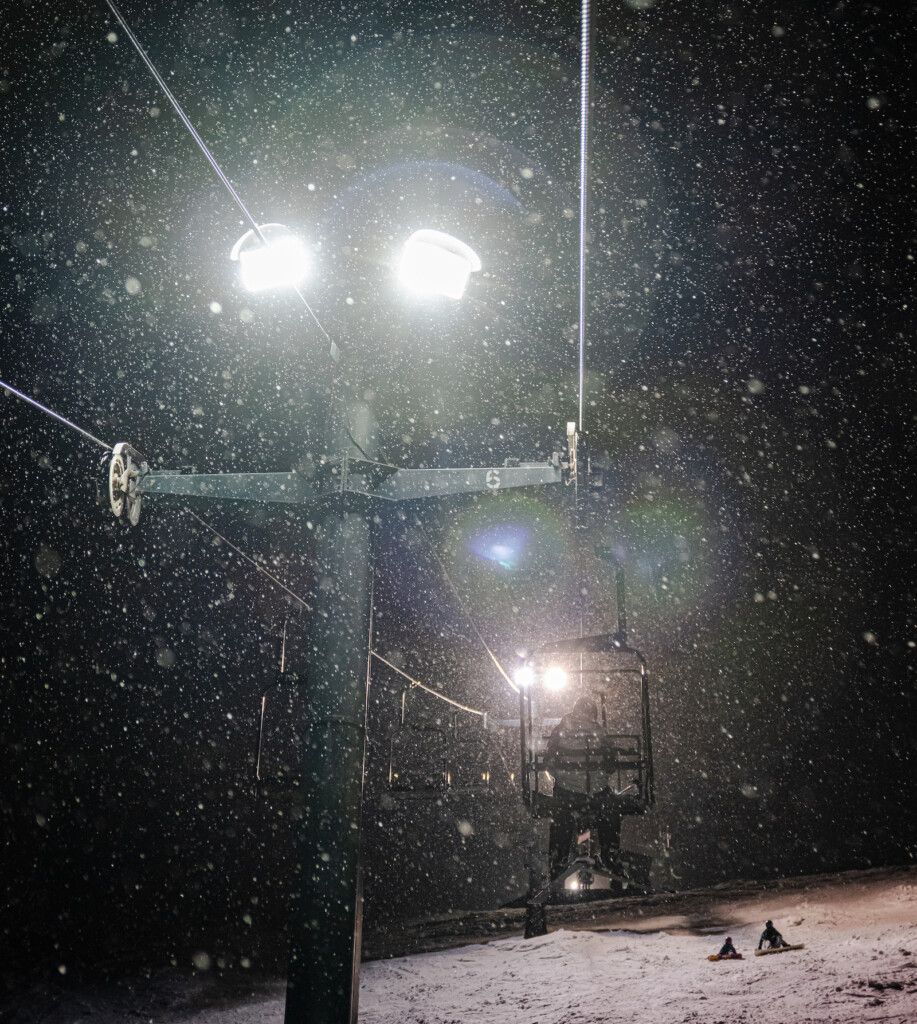
Beyond the practical benefits, night skiing in Northern Utah is a unique way to experience nature in the winter. When else would you head to the top of the mountain in the middle of the night in below-freezing temperatures? The beauty of a snow-covered landscape under the night sky offers a rare peaceful retreat from the bustling daytime activities. It’s an invitation to witness the winter world in a new light, — literally — and to embrace the cold season’s beauty in a quiet, more intimate setting.
Resorts That Offer Night Skiing
Not every resort in Utah offers night skiing, but many do. Here’s a breakdown of cost, hours, and things to keep in mind when planning your night skiing experience:
Nordic Valley Ski Resort
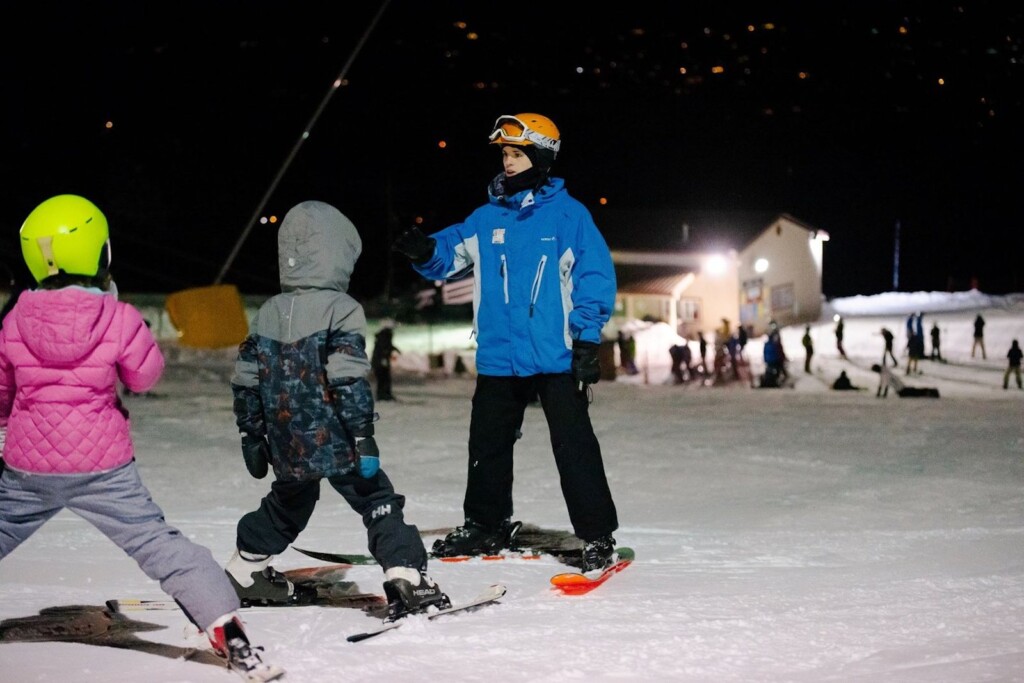
Known for its expansive night skiing operation, Nordic Valley lights up a significant portion of its terrain. Night skiing here runs from 3 pm to 8 pm, Monday through Saturday, starting December 15, 2023. Group lessons are available for all ages, with beginners only from 5 pm to 7 pm.
Brighton Resort
Brighton boasts the most extensive night skiing terrain in Utah with more than 200 acres, four lifts, and the main terrain park accessible. Night skiing operates from 4 pm to 9 pm, Monday through Saturday, for almost the entire winter season. Brighton also offers group lessons on Thursday nights.
Cherry Peak
Cherry Peak keeps three lifts running from 5 pm to 8:30 pm, Monday through Saturday, allowing for a cozy night skiing experience. This resort is noted for its family-friendly atmosphere and varied terrain suitable for night skiing enthusiasts.
Powder Mountain
At Powder Mountain, the Sundown lift and Tiger rope tow stay open for night skiing from 3 pm to 9 pm daily, providing a unique opportunity to enjoy less crowded slopes and the serene night atmosphere.
Sundance Mountain Resort
Sundance opens most of its front mountain for night skiing on Monday, Wednesday, Friday, and Saturday. It also lights up its terrain park for those looking to add some extra thrill to their night skiing experience.
Preparation Tips for Night Skiing
Planning a night skiing trip requires forethought and preparation to ensure a smooth and enjoyable experience. Here are several tips to help you get ready for an adventure on the slopes after dark:
Check the Resort’s Schedule
Night skiing availability can vary significantly between resorts and even throughout the season at a single location. Before you go, make sure to check the resort’s official website or call their customer service for the most current information on night skiing hours and any special events that might affect normal operations.
Dress Appropriately for the Cold
Temperatures can drop significantly at night, making proper attire crucial. Wear layers that can be easily added or removed as needed. Don’t forget a beanie or helmet liner, waterproof gloves, and thermal socks to keep your extremities warm.
Consider a Helmet with Light
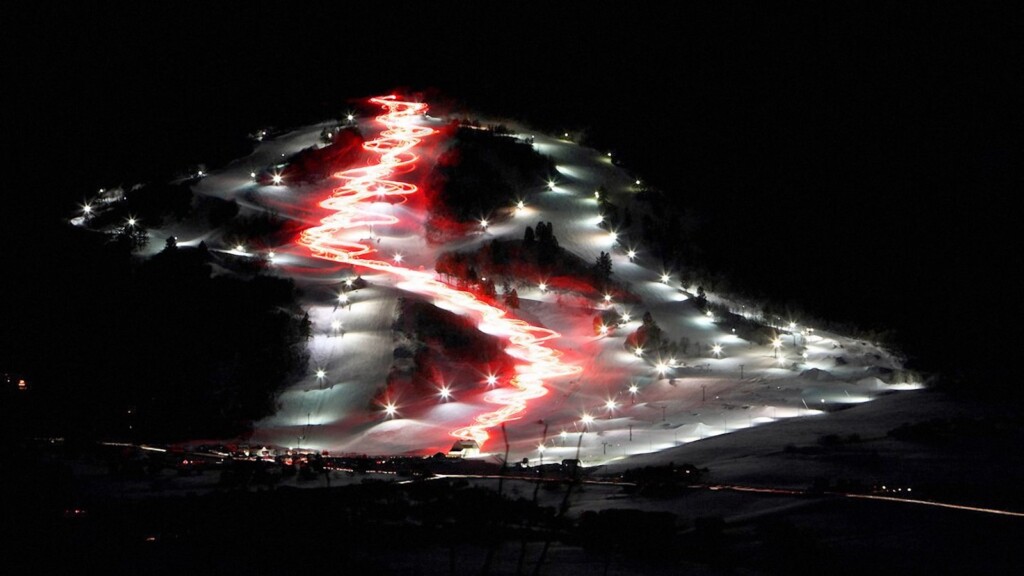
Visibility can be more challenging at night, even with the slopes being lit. Wearing a helmet equipped with a light not only improves your visibility but also makes you more visible to others. It’s an extra safety measure that can enhance your night skiing experience.
Use Goggles with Clear or Lightly Tinted Lenses
Goggles designed for low-light conditions can significantly improve your visibility at night. Look for lenses with a high VLT (Visible Light Transmission) rating, such as clear, yellow, or amber lenses, which help to enhance contrast and visibility on the snow under the lights.
Familiarize Yourself with the Terrain
If possible, try to ski the runs you plan to tackle at night during the daytime. Familiarity with the terrain can significantly improve your confidence and safety when skiing those same runs under the lights.
Safety First
Always ski within your ability level and follow the resort’s rules and recommendations. Consider skiing with a buddy for safety, and take a fully charged phone with you in case of emergency.
Feature image and other images courtesy of Taylor Hartman.