

Gourmandise Bakery, Peter Prier Violin Making School and the Ibarra Building next door to HSL Restaurant make up a few of the weaves of the cultural and economic tapestry in the district located around 300 East between 200 and 300 South. With drug use and drug trafficking running rampant, both day and night, and garbage strewn across lawns and on sidewalks, this neighborhood has certainly seen better days.
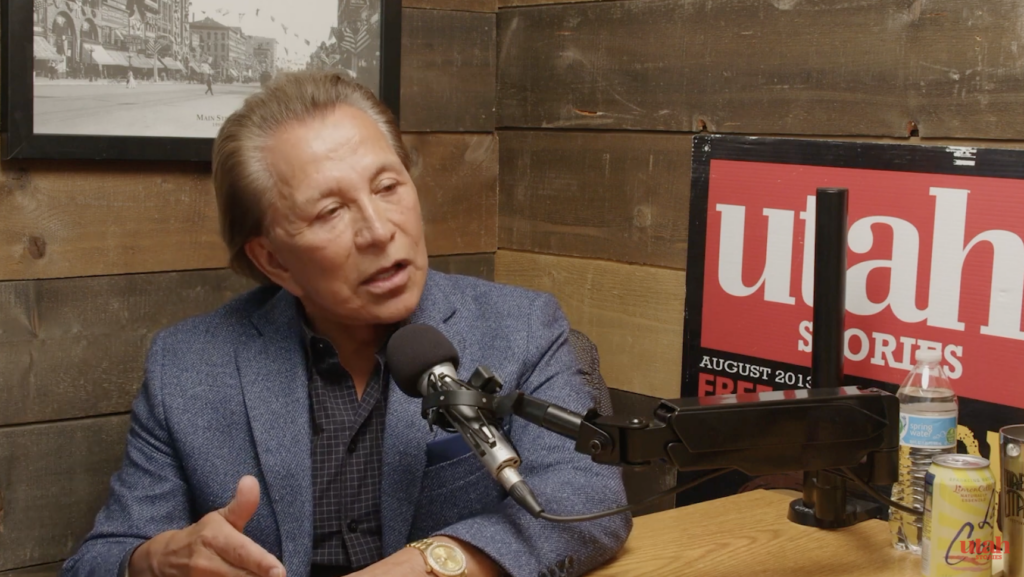
Salt Lake City Entreprepreneur, David Ibarra visited the Utah Stories podcast to discuss his experience with the homeless issues in his neighborhood in Salt Lake City. Ibarra has been in Salt Lake City for many years and has seen the city change and evolve drastically over the past few years, and not always for the better.
Business owner David Ibarra described an incident in which he was attacked outside of his Salt Lake City business.
“There was an individual that was breaking into a car — my car — and had taken some stuff and was walking out,” Ibarra said. “I saw him walking away and I said, ‘Hold up! Give me that stuff! Drop it!’ I grabbed him by his shoulder. He had a knife in his right hand and began to try to penetrate the knife into my stomach. Luckily, I knew how to handle myself from the neighborhood I grew up in. I grabbed the knife with my left hand, wrestled him to the ground (which wasn’t too hard), got the knife out of his hand and called 911. I held him down for 28 minutes with no response.”
Ibarra said the police never came to handle the incident, so he went across the street to a market where there happened to be an off-duty officer who summoned the police.
Ibarra believes that in order for the homeless population in Salt Lake City to survive another winter, “We immediately need a sanctioned encampment to not abate, but to move.”
We often only see one side of an issue. When it comes to homelessness in Salt Lake City, we can try to see it from the business owner’s side or from the homeless person’s side. But attempting to look at the homeless issue from both sides gives a better perspective for finding a middle-ground solution. Ibarra has a long history of finding solutions to problems. He ran for Mayor in the previous election in 2018 with an impressive resume for problem solving.
Ibarra is a speaker, leadership consultant, and author who is involved in many different types of business fields including hospitality, automotive, software, and leadership consulting industries. He has founded several companies including eLeaderTech, IBG, David Ibarra Enterprises, Beyond Think and Grow Rich Institute, and owner of the Yes! Our Kids Can program.
Ibarra says he experienced the environment that the Magnolia Apartments created in that neighborhood. “I used to own a condo for 20 years across from Magnolia. It got so dangerous that I couldn’t have my girlfriend walk there or stay there because they’re shooting up drugs right on the street,” Ibarra said.
Ibarra ended up selling his condo across from the Magnolia due to the excessive drug trafficking he was constantly witnessing there. Ibarra believes that we may be losing the city to rampant drug use and homelessness because of all his negative experiences as a business owner and Salt Lake City resident and he strongly supports Rocky Anderson’s run to become Salt Lake City Mayor once again.
