Podcast

Where Booze and Hiking Brings Lifelong Friendships in Utah Outdoors

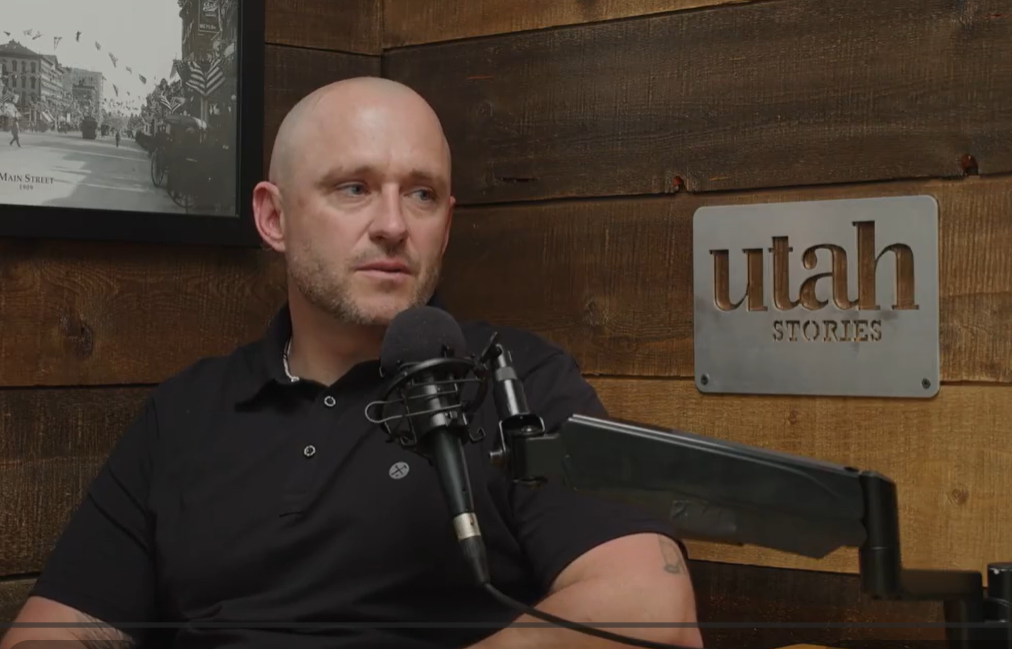
Cindy and Angelique the founders of Women’s Wine Hiking Society came on the Utah Stories podcast to discuss the details of their group.

|


Utah and hiking go together, throw booze into the equation and you feel like you’re in California. Women’s Wine Hiking Society is where sisterhood, hiking, and booze meet. 

Women’s Wine Hiking Society was created in 2016 when Cindy Vance and Angelique Fish met when Fish’s ex-husband friend’s introduced the two. They went on their first backpacking trip in 2016. They enjoyed that trip so much that they started a Facebook group inviting more women to join them. 

“We would have just kind of impromptu hikes that we would post on Facebook and we just weren’t really getting a lot of people coming on the hikes back then,” Fish said. 

The society began expanding during the pandemic and eventually got 2,400 members by the end of 2020. 

An organization involving liquor in Utah isn’t a commonality due to the teetotaler nature of the predominant religion. Utah’s population is predominantly LDS,  68% according to the U.S. Census and The Church of Jesus Christ of Latter-day Saints. Despite that, the founders of the society said they don’t receive much backlash for alcohol being involved with their group because many members actually don’t drink, including Fish herself. 

“I don’t know that we really received criticism. We would get questions a lot, is that safe? Are you drinking while you’re hiking? I think those were the kind of questions we got, but we didn’t really get any criticism,” Vance said. 

The alcohol component is to be inclusive to not just Utah natives, the women reflected. “I don’t drink. There are a lot of women in our group who don’t drink. But the alcohol part is just to make our group less intimidating,” Fish said. 

Typically people who are not born and raised in Utah join Women’s Wine Hiking Society. It gives newcomers an opportunity to feel welcome in Utah amongst a culture they may not be familiar with. According to Fish they are all surprised when at the beginning of a hike one of the participants reveals to be from Utah. “ It’s like a unicorn,” Fish exclaims. 

The group charges $5 for day hikes, and 20% of that goes to a charity of the group’s choosing at the end of the year. Women’s Wine Hiking society does not limit their activities to hiking. They organize a variety of events which you can find on their website

And so far the concept behind Women’s Wine Hiking Society has been very popular among Utah women and gender neutral causing it to expand to all 50 states.

Cheers to Vance and Fish!

,

Join our newsletter.
Stay informed.


  • Why Most People Stay Stuck in Business and What It Takes to Move Forward

    Every so often, you meet an immigrant who came here with almost nothing and managed to build something exceptional.

    Prakash Shah is the kind of man who has spent enough time around risk that he no longer treats it like an interruption.

    Today, he works in business brokerage and advisory, helping owners sell companies, helping buyers decide whether they should step in, and, when the fit is right, helping connect those buyers with private equity. He works in a world of valuations, leverage, due diligence, and hard questions that most people would rather postpone. He also operates in Utah real estate and has built a career around seeing value before it is obvious to everyone else. That is who he is now. What makes him interesting is how early that instinct started to form, and how little his life resembles the way most Americans are raised to think about comfort, career, and security.

    He grew up in Nepal in a boarding school system that would feel severe to many Americans. He was an only child, yet he saw his parents only twice a year for twelve straight years, until high school graduation. He lived inside routine. He shared space with boys from different social classes and different family circumstances. The school was structured enough that money did not buy you any special standing once you were inside. Everyone followed the same rules. Everyone was subject to the same discipline. In his case, it was an army school. Everything was measured. Everything was scheduled. In that kind of environment, you do not build your life around preference. You build it around adaptation.

    That contrast matters.

    A lot of American children are raised to search for what fits them. What are you passionate about? What do you enjoy? What feels right? Those are not bad questions, but they can create a habit of waiting for life to align itself before action begins. Prakash learned something else much earlier. He learned that life often does not align itself first. You enter the room as it is, you deal with the people in it, and you figure out how to function without making your comfort the center of every decision. He said that one of the biggest lessons from those years was tolerance, the ability to live with people from all walks of life and genuinely learn to get along with them. That is not a soft value. In business, it turns into resilience. In negotiation, it turns into patience. In career terms, it turns into range.

    When he came to the United States over 25 years ago, he did not arrive with the kind of runway that allows for a prolonged identity search. He came with two suitcases and enough money for one semester. He went to Hunter College in New York City, then to NYIT near Central Park, studying media and then media and technology management. He also studied psychology. Those details matter because they show something about his mind. He was interested in people before he built a career around deals. Even then, what attracted him was not technical prestige. It was understanding motives, behavior, and how people reveal themselves.

    But New York is merciless toward vague ambition. It demands payment in rent, transit, food, and time.

    Prakash worked constantly. He took multiple jobs. He paid tuition, paid rent, and skipped most of what Americans imagine as college life. There were no romantic years of drifting from café to concert to self-discovery. He talked about not having the luxury of dates, travel, or finding himself. He was working. Even laundry was not a small detail. In New York, he pointed out, you do not just throw clothes in a machine at home. You haul them to the laundromat, count quarters, and measure what is necessary. He also described distraction in a way that most native-born Americans probably do not think about. For immigrants, distraction is not always pleasure. Sometimes distraction is the constant pressure of competing needs. Tuition or rent. Food or savings. A better coat or another month of making do. He was not romanticizing the struggle. He was describing the arithmetic of it.

    That arithmetic did not make him cautious. If anything, it did the opposite.

    While in college, he had the option of safer analytical work. Instead, he took a sales job with Time Warner Cable that sent him into the South Bronx from 6 p.m. to 10 p.m. to knock on doors. He is not a physically imposing man. He knew exactly what kind of neighborhoods he was walking into. He described apartment buildings where people kept pit bulls, where tension was normal, where one mistake in tone or timing could end a conversation immediately. For most people, that kind of job would have been something to survive and forget. For him, it became a school in human behavior. “It’s not about talking… it’s about listening,” he said.

    One story from that period says almost everything about how he operates. He knocked on a door one night around 8:45 and found himself facing a huge man with a gun on the table, pit bulls nearby, and a half-eaten pizza in front of him. It had all the ingredients of a very bad scene.

    Continue reading and support independent Utah journalism with a purchase of Utah Stories (Digital + Print) or 3 month free trial (Digital).


  • Left in a Box as a Baby: Trauma, Alcoholism, and Addiction

    A man abandoned as a baby builds a structured life in law enforcement, but unresolved trauma and alcoholism slowly begin to unravel it. His story raises a harder question about how change actually happens.


  • Cottonwood Heights Corruption Allegations: A Case That Never Reached a Courtroom

    A year ago, we here at Utah Stories recorded a podcast episode that we never published. We were revisiting corruption allegations from ten years ago. We decided not to publish the video, so it sat there on YouTube for nearly 12 months.

    Then somehow the video was published. How? We are not sure, but once it got out there, the comments came pouring in.

    Dozens of viewers, then hundreds, supported the video with their comments on our examination of allegations of police misconduct in Cottonwood Heights. The video recounts how the Police Department was reported by business owners as focusing enforcement on customers of the former Canyon Inn bar. These allegations did not result in a publicly documented, full investigation by Utah’s Justice Department nor the FBI (at least to our knowledge). So why rehash the past?

    We believe the story of The Canyon Inn (and other area business owners) vs. CHPD and Cottonwood Heights Mayor Kelvin Cullimore raises questions about what can happen when allegations surface and do not move forward through a formal legal process with state or federal oversight.

    In 2012, Cottonwood Heights business owners at the mouth of the canyons began publicly objecting to police activity whereby up to seven cruisers were pulling over 711 and Canyon Inn bar customers on their busiest evenings.

    According to those accounts, drivers leaving the bar were frequently pulled over by police and were given DUI tickets, sometimes even after passing a sobriety examination. The volume and concentration of those stops led residents and business owners to complain about the “heavy-handed treatment” of CHPD toward motorists, especially in and around the Canyon Inn and neighboring 711, and eventually the Porcupine Pub.

    Customers responded in predictable ways. Some chose not to return and avoid the area. Others went to different establishments. Over time, the owner of the Canyon Inn, Jim Stojack, stated that his revenue declined by 70% and that he believed police activity near his business was the main contributing factor.

    Utah Stories reported on these concerns by conducting interviews; gathering video documentation provided by those involved; and making public records requests. Through our GRAMA requests, we reviewed DUI citations issued by the Cottonwood Heights Police Department and examined how those cases were resolved in Holladay Justice Court. During that period, we observed a higher number based on our review of DUI cases dismissed in court due to lack of evidence compared to other jurisdictions. One DUI attorney, Tyler Ayers, went on record saying that CHPD was issuing a high volume of DUI citations that were later dismissed.

    That observation raised questions about how cases were being documented and prosecuted. It did not, on its own, establish intent or misconduct, but it became part of a broader set of concerns raised by multiple sources.

    Continue reading and support independent Utah journalism with a purchase of Utah Stories (Digital + Print) or 3 month free trial (Digital).


  • From LDS Mission to Heroin Addiction: A Utah Man’s Descent and Recovery

    More than 100,000 Americans died from drug overdoses in a single year. That number is often repeated, rarely absorbed, and almost never understood in a way that forces real reflection. Because addiction doesn’t usually look like chaos at the beginning.