Utah Farmers

Growing Citrus Trees in the Middle of Urban Sprawl in Ogden, Utah

the largest fruit-bearing citrus collection in Utah, soaking up the warmth of the sun on the property, wedged inside of a neighborhood between two houses and behind a new development. 

|


People who want to learn more about Chad’s techniques can tour his farm and even lend a hand in the work. Photo by Chad Midgley.

Cultivating a sustainable oasis amidst Utah’s urban sprawl.

“You won’t find pomelos or kumquats like this growing anywhere else. This greenhouse keeps them warm enough all winter,” says Chad Midgley, owner of Chad’s Produce. “Now, who wants a cutting of a tree to take home?”

The last farm tour of the season at Chad’s Produce stands in a greenhouse on an Ogden property, surrounded by dense citrus trees. According to Midgley, it’s the largest fruit-bearing citrus collection in Utah, soaking up the warmth of the sun on the property, wedged inside of a neighborhood between two houses and behind a new development. 

While the urban sprawl pushes through open land and historic farms in Utah, there’s a parallel demand from residents for the availability of local, fresh food. Midgley, a fierce believer in the community-building power of agriculture, has been working to meet this demand, farming property in urban Utah for more than 11 years. What started as a small operation in Syracuse eventually ballooned out to five properties in Syracuse, Bountiful, Ogden and West Bountiful.

Midgley calls his farms permaculture food forests, using a type of growing technique that mimics the structure and function of a natural forest, layering plants together and harnessing the power of nature for nutrients. Designed to be sustainable and low-maintenance with the ecosystem and sustainability in mind, Midgley says he’s doing more than just producing food in these urban plots. He’s helping the land.  
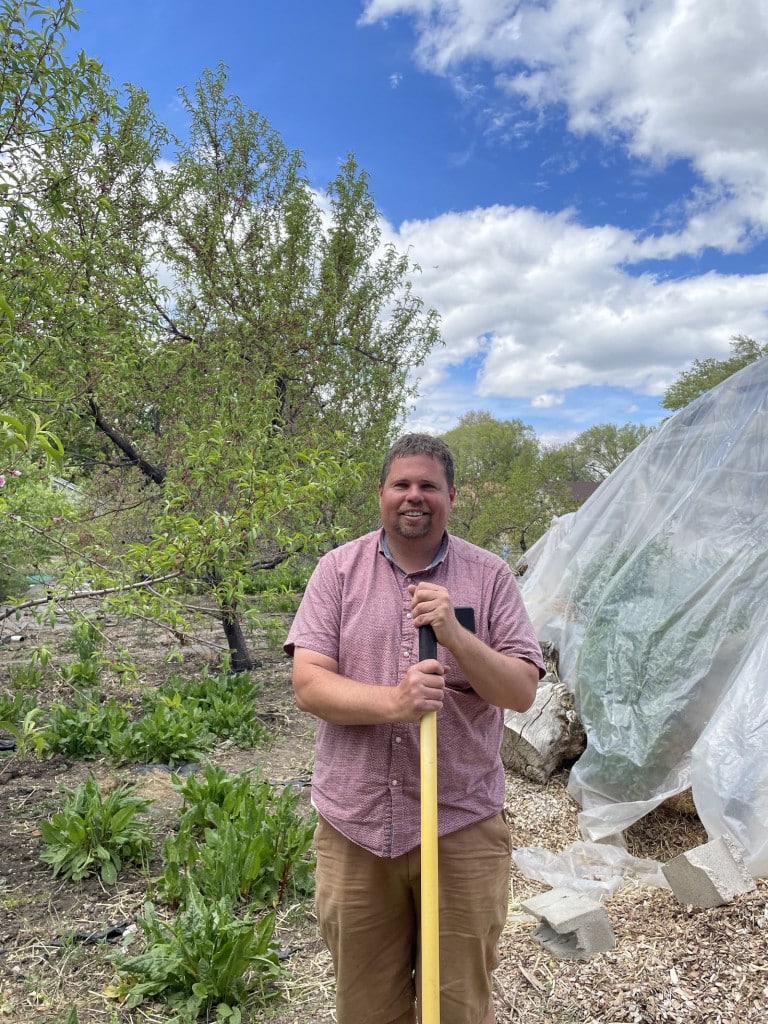
Chad Midgley. Photo by Taylor Hartman.

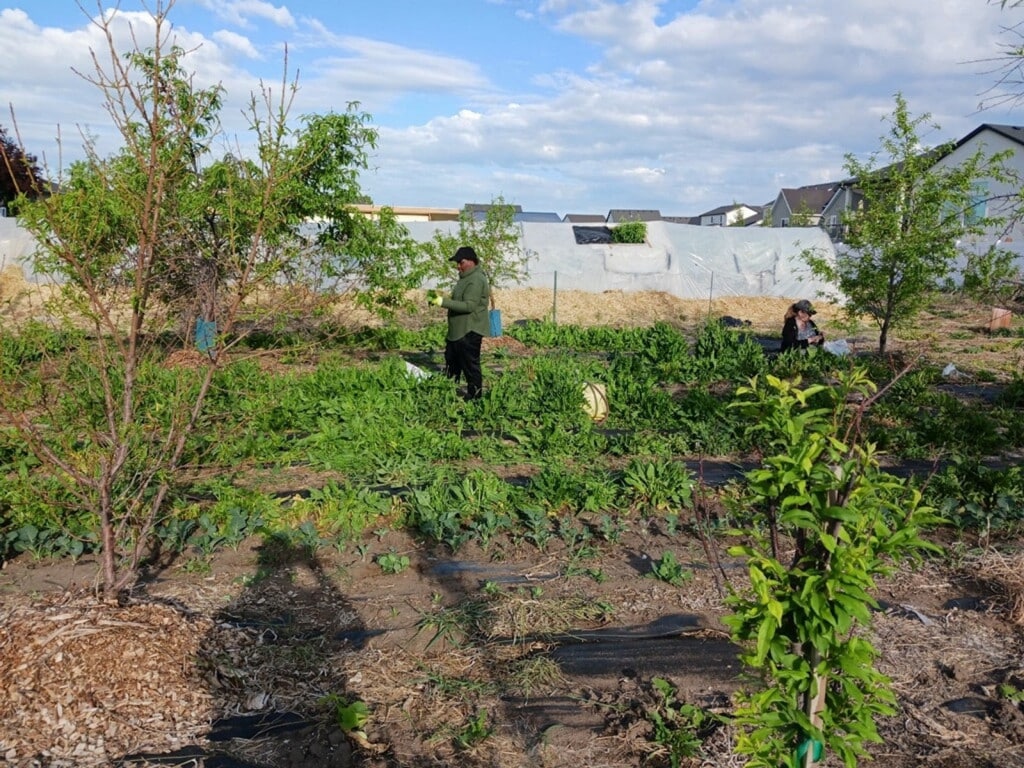
Touring Midgley’s farm is like entering a labyrinth a corn maze with more plants than just corn. Using sustainable and organic farming practices means you won’t find neat and tidy rows of identical-looking plants. Here, different crops cohabitate together, providing shade, aerated soil, or pest control for the plants around them. Wood chips sit in mounds throughout, slowly turning into nutrient-rich compost that will feed the soil.

“This is what a healthy growing environment looks like,” Midgley said. “If you dig down, you’ll see worms eating the chips. We have a very good ecosystem here.”

For Midgley, the process of growing sustainable, healthy food is just the start. Equally important is his mission to share the food he grows and the techniques he uses with those who want to learn. Stroll down the Ogden Farmers Market on Saturday mornings, and Midgley’s cheerful voice is sure to greet you, beckoning you to try one of his heirloom peaches, greens, basement-grown strawberries, and more. This connection with consumers is what he says he values most about farmers markets, and is part of Midgley’s vision for a more local-centric food future.

“They come, they try the produce, and they want to learn more, and then we want them eventually to want to tour, then have a hand in farming as well,” Midgley said. 

Each bite of Chad’s Produce is a result of generations of hard, careful work building a good ecosystem and soil to farm in. While standing on the Ogden property, Midgley remembers discovering that the farm he’d bought had been grown on and cared for from the time the early pioneers first arrived. With irrigation through the back, and healthy soil, he couldn’t have asked for a better place to start.

“I bought this, and I came to find out this whole area was a big orchard,” Midgley said.

Now, he feels a bit of sadness watching the area change. Just behind his orchard space in Ogden, a large apartment complex is going up, blocking the view of his farm from the road.

“You could see citrus trees in Ogden,” Midgley said. “The farm has a special spirit about it that you don’t get in all the dwellings that people are building.”
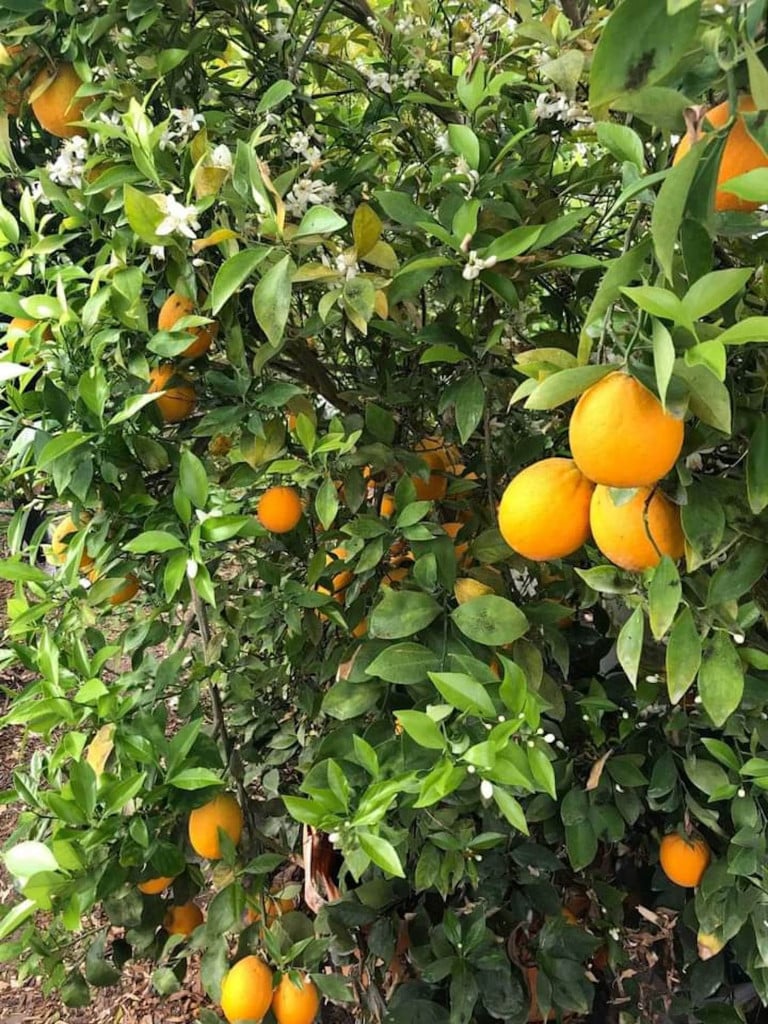
Photo by Taylor Hartman.

The sentiment Midgley has is shared throughout Northern Utah and the rest of the state. According to the Census of Agriculture, acreage farmed in Utah is shrinking or staying flat year after year. Still, in this permaculture forest, at least for now, even the sounds of the busy street nearby are muted and the bird songs amplified.

Chad’s Produce can be found at the Ogden Farmers Market on Saturdays from May 27 to September 9, and at other markets throughout Northern Utah during the season. He gives tours of his properties from February through May, or upon request. 

Find more information here.  



Join our newsletter.
Stay informed.


  • Riverbed Ranch Utah: Cult, Commune, or Utah’s First Modern Homesteading Town?

    Driving out past the town of Delta on a gravel road for a couple of hours, we almost turned around. Following a rain storm, the road is wet and muddy but still decent. Jesse Fisher is worried we’ll get stuck, but we plow through giant puddles of water, and as the clouds lift, we reach the homestead community of Riverbed Ranch, consisting of 1250 acres of reclaimed desert.

    Almost like an oasis, Riverbed Ranch is home to 40 families who decided to depart city life, municipal taxes, congestion, air, light and sound pollution, and live in a place among chickens, goats and cows on self-reliant homesteads. 

    Describing Riverbed Ranch as “bucolic” would be inaccurate at this point. Sometimes there are purple flowers in the valley, but currently it is a desert — still beautiful, but most of the properties in the sprawling valley are still works-in-progress. But the scale of the valley and witnessing in person the first brand new town to break ground in Utah in 75 years is quite remarkable. 

    A few of the 2.5 acre plots consist of a trailer and a fence. Some plots have nice little homes that appear very homemade; others have more complete homes with nice fencing, with nicely organized pens for different animals, orchards and organization. 

    Some homes under construction even appear upscale and modern, where the inhabitants are indeed living as modern homesteaders, not seeking “luxury retreats” like so many other empty homes in Utah being built in hot tourist destinations such as Moab and Park City.

    We start by speaking with Tom and Kathy Barnes, whose homestead is a model for order and function. Turkeys walk around in their pen, excited for feeding time. Beside the turkey pen is another pen for chickens; one for goats, and another for pigs. All of the pens are connected to a large barn. By the look of their operation, the Barnes appear to be seasoned professionals.

    Indeed they are. Tom and Kathy raised their eight children “on a teacher’s salary,” homesteading in Payson, Utah on ten acres, reaching the point where the only store-bought items were toilet paper, shampoo, toothpaste and cashews. Most everything else, including fresh fruits, vegetables, milk and meat were raised themselves.

    Tom had just finished feeding his three hungry pigs when he took a moment to talk to me.

    “What are the advantages to living on a homestead?” I ask. 

    “Listen,” he says. “You can hear a pig eating … Once in a while we will hear a fighter jet pass over but that’s it.” 

    The Barnes are calm and content in their semi-retirement. They set up their homestead at Riverbed Ranch five years ago. They already knew homesteading and they realized even in retirement they could help the other inhabitants here, those with less experience, learn how to take on the demanding but satisfying lifestyle.

    “It’s basically like an extended family,” says Tom. “We are all like-minded out here. We are all going to help one another when our neighbors need help.”

    Tom says he and most of his neighbors are members of the LDS Church, and that most of the city’s LDS members are a part of a ward which makes up their “ward family.” “Out here,” he says, “everybody is our extended family. So we all know we are going to help one another and learn to get along … Like early pioneers in a small town. It’s very much the same thing.

    A wild goose chase?

    “We could live out here like it was 1849, but we have all of the conveniences of modern society, so why not take advantage of the best of both worlds?”

    I wonder how adaptable these modern pioneers are. Raised on a homestead, would these folks ever want to join the modern world again? The Barnes kids are mostly choosing city life, but their kids and grandkids love visiting them, running around free-range. Tom adds, “One of our sons is starting his own homestead in Piute County.”

    We drive around on the hard gravel roads and get a sense of how all of the residents here justify the hard-scrabble, off-grid life, which requires living off pumped well water, solar power for electricity, and propane for heat. 

    We are aiming to get a sense of the  bigger reason why all of these people are out here, far away from freeways and Walmarts. Are they all latter-day preppers?

    To access this post, you must purchase Utah Stories (Digital + Print) or 3 month free trial (Digital).