Go Local

Discover and Visit Utah’s Natural History Wonders in All of Its 29 Counties

In all 29 counties throughout the Beehive State, the NHMU has identified and marked a point of natural or cultural significance for Utahns and visitors alike to discover. 

|


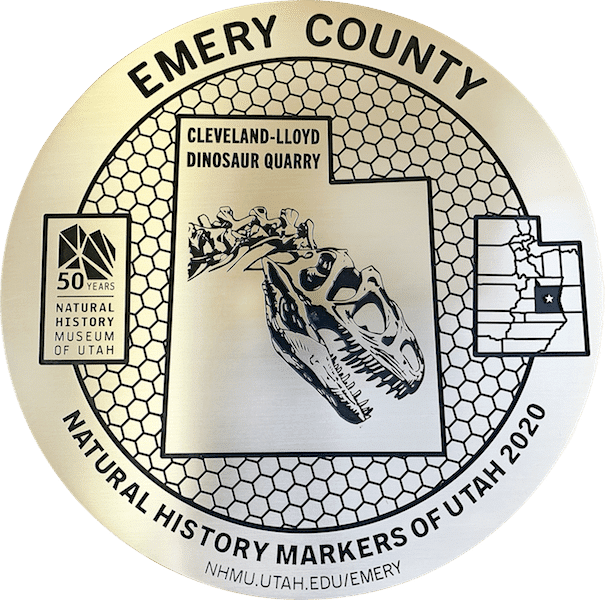
Salt Lake City-based O.C. Tanner created the 29 custom brass markers at each site. Provided Photo: NHMU.


Utah’s natural history isn’t just in a museum.

As the Natural History Museum of Utah approached its 50th anniversary, staff began brainstorming ways to commemorate the occasion. The result was the newly launched Explorer Corps program. In all 29 counties throughout the Beehive State, the NHMU has identified and marked a point of natural or cultural significance for Utahns and visitors alike to discover. 

“It became clear that it wasn’t about our 50th — it was about how we tell the story that natural history is not just in a museum but really all around us all the time,” says Beth Mitchell, senior manager of external communications at NHMU. “There are many spots that are considered natural and cultural history wonders in every county in Utah.” 

With the help of officials in each county, NHMU set out to identify the natural wonders scattered throughout the state twenty nine unique sites tagged with custom-made brass markers made by Salt Lake City-based O.C. Tanner. With an app or downloadable or hardcopy “passport” (available at public and tribal libraries), explorers can find out information about how to find each marker alongside fast facts, tips and links to more in-depth information on the museum’s website.
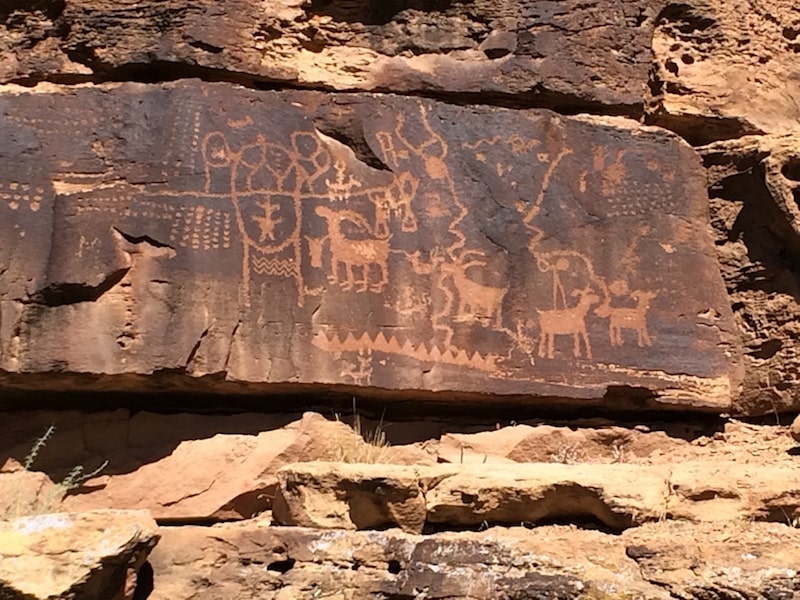
Rock art at Nine Mile Canyon. Photo by Nicole Anderson.

There’s Nine Mile Canyon in Carbon County, just 42 miles outside of Price, featuring hundreds of rock art panels, granaries, houses and other archaeological sites created by Indigenous people more than 1,000 years ago; the Cleveland-Lloyd Dinosaur Quarry in Emery County, containing the densest concentration of Jurassic dinosaur fossils ever found, located near Cleveland, Utah; and the Fish Springs Wildlife Refuge at the southern end of the Great Salt Lake Desert in Juab County, which hosts more than 275 species of birds. Juab County, located south of Tooele County, gets its name from the Ute word “yoab” meaning “level plain.”

“There’s a 1,500-year-old jardin juniper tree that’s way up high in Cache County at the top of this 6-mile climb. It is the oldest Rocky Mountain juniper tree in the world. The marker itself is at the trailhead, but I think the big prize is if you do that hike,” adds Mitchell. 

Located near the town of Croydon in northeastern Morgan County, Devil’s Slide is made of limestone that was laid down more than 160 million years ago, uplifted 70 million years ago, and eventually eroded into its distinctive shape over time. “Many people may have driven by Devil’s Slide on [Highway] 84 in Morgan County several times but not really realized what a geologic wonder it is,” notes Mitchell. 
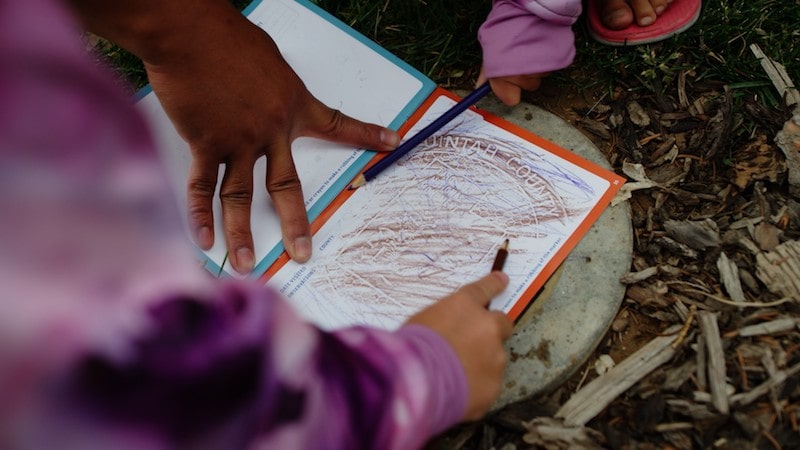
With the “passport” created by NHMU, participants can take etchings of the brass markers at each site. Provided Photo: NHMU.

As part of the Explorer Corps program, NHMU launched the Race to 29!, giving people a chance to win one of two week-long adventures next summer in a Winnebago motorhome, and use the opportunity to explore all that Utah has to offer. 
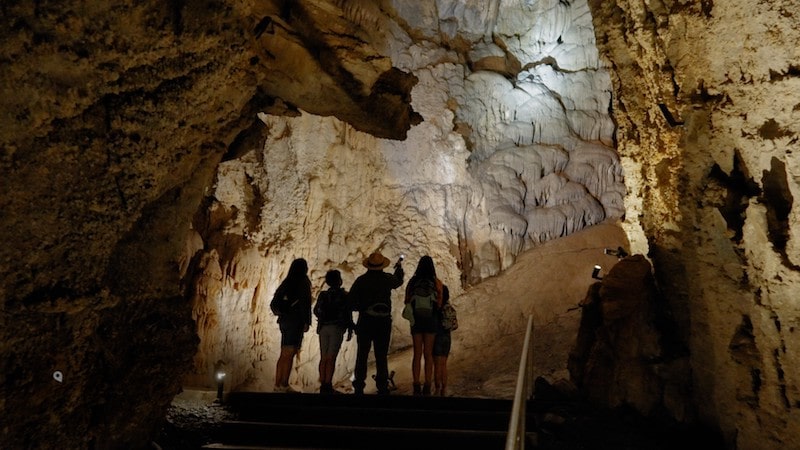
Timpanogos Cave in Utah County is one of 29 sites identified throughout the state as a natural wonder in the Natural History Museum of Utah’s new Explorer Corps program. Provided Photo: NHMU.

We hope that people interact with the program,” says Mitchell. “We get to highlight these places and encourage people to learn about Utah and visit as we all rebuild from COVID. Hopefully, you learn something that piques the imagination of that next generation of scientists and explorers.” 

Visit NHMU’s website for more information on the Explorer Corps program, to discover the 29 sites throughout Utah, and to enter the contest.

Additional content provided by David E. Jensen

Subscribe to Utah Stories weekly newsletter and get our stories directly to your inbox

* indicates required


, , ,

Join our newsletter.
Stay informed.


  • Utah Archaeology Month 2026: Events, Sites, and 13,000 Years of History

    “Utah is filled with 13,000 years of human history,” explains archaeologist and State Historic Preservation Officer, Chris Merritt. “Every single artifact tells us something about the people that came before us, from the first Native Americans entering what we now call Utah to the remains of the uranium mining industry. Each layer of the past tells more of the story of who we are as Utahns.”


  • The Perfect Girls’ Day in Park City: Brunch, Shopping, Spas & Nightlife

    After a week of work, grocery shopping, meal prep, driving the kids around, housework and last minute emergencies, a day of bonding and fun with our BFF’s is just what the doctor ordered. Fortunately, one of the best getaways is just a short drive away to Park City.


  • Can Utah Farms Survive the Corporate Food System?

    Local farms and restaurants battle similar economic pressures as they struggle to survive in a tight economy where slim profit margins and increased labor costs and conditions are often beyond their control.


  • The Utah Bombings That Exposed One of America’s Greatest Forgers

    On an ordinary October morning in 1985, downtown Salt Lake City was shattered by a blast that killed businessman and document collector Steve Christensen. Hours later, a second bomb tore through a quiet Holladay neighborhood, killing Kathy Sheets, the wife of Christensen’s former business partner. The next day saw a third explosion. This one was in a car near Temple Square that nearly killed rare-documents dealer Mark Hofmann. 

    Rumors swirled instantly, tying the attacks to money, religion, and shadowy early-Mormon documents Christensen had recently acquired. For days, Utah held its breath. What unfolded was stranger and darker than fiction. The bombs weren’t the work of religious extremists or enemies of the Church of Jesus Christ of Latter-day Saints, but instead, the doings of Mark Hofmann himself. Hofmann was a nerdy, soft-spoken dealer who had secretly become one of the most skilled document forgers in American history. 

    His creations were so convincing that they reshaped historical narratives, fooling scholars, collectors, and church leaders. When the lies began to close in, the bombs became his final, desperate attempt to keep his world from collapsing.

    Hofmann had been fabricating Mormon and American historical documents for years. He was a prodigy of deception, sourcing period paper, mixing inks that cracked just right, and mimicking handwriting with obsessive precision. Most of all, he knew how to read people. Utah in the 1970s and ’80s was a collector’s paradise. As bookseller Ken Sanders told Salt Lake Magazine, it was “a consciousness shift,” a recognition that rare Utah history was a treasure worth pursuing. It was also, he notes, fertile ground for affinity fraud.

    Nothing captured that vulnerability more than the Salamander Letter, a supposed 1830s correspondence which claimed Joseph Smith encountered a magical white salamander rather than an angel. The document shook Latter-day Saint circles. Church leaders, worried about its implications, quietly purchased it along with other materials Hofmann dangled before them. Many reasoned that if the church was willing to buy it, then it must be authentic and true, and Hofmann understood that psychology perfectly.

    Continue reading and support independent Utah journalism with a purchase of Utah Stories (Digital + Print) or 3 month free trial (Digital).