Customers are not “masking” their hostility toward business owners
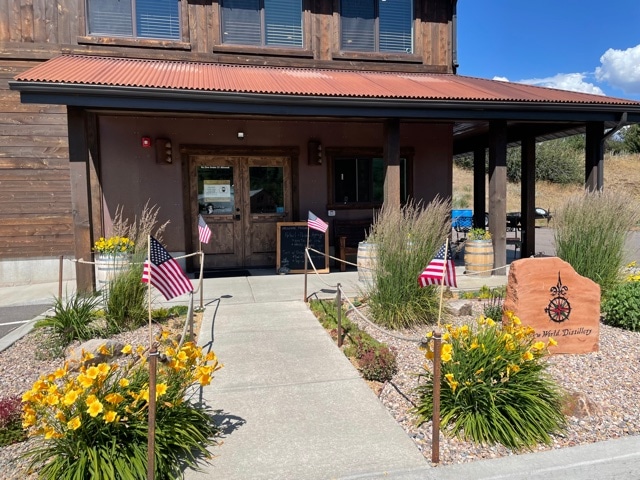
In-person attacks towards small businesses in Eden, Utah — an idyllic, quiet town, as the name suggests — have been an almost daily occurrence over the past year from both locals and out-of-state visitors seeking dining and shopping in the popular Ogden Valley tourist destination. Angered over mask requirements, customers at New World Distillery and Don Pollo Mexican Gourmet Restaurant have assaulted employees verbally and physically with spitting, door-kicking and mask flinging.
The vitriol surrounding COVID-19 regulations, particularly masks, on social media and news outlets since the pandemic began have tuned us in to the widespread disrespect happening behind our screens throughout these unprecedented times of social isolation, but less observed is the in-person verbal and physical harassment directed at private businesses that continues, even as social distancing measures have decreased.
Utah’s statewide mask mandate ended on April 10, 2021 after Governor Spencer J. Cox hesitantly signed HB 294 “endgame bill” into law on March 24, emphasizing in a statement on his website that under the new law, counties and private businesses would still be able to issue their own mask requirements and that the public would need be respectful:
“If you go into a business and they are requiring you to wear a mask, wear a mask. If you’re not comfortable with indoor dining, order takeout. We need a measure of grace and patience with each other. We have to treat each other with respect,” Gov. Cox stated. But unfortunately, as Governor Herbert stated (according to NPR) after issuing the statewide mask mandate in November 2020, “there is no legislation or executive order that can mandate civility, respect and basic consideration for others.”
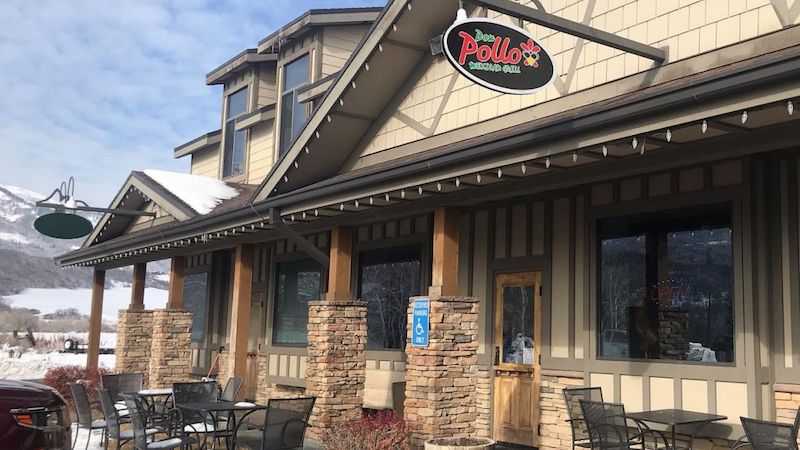
“I will never work in the service industry again,” said Shauna Miller, who stepped up as general manager of Don Pollo when it opened during the pandemic in December 2020. “It was that bad.”
Miller, who wanted to help the family-run business succeed, recently left due to exhaustion from customer backlash over mask requirements, which the restaurant upheld to protect themselves both during and several weeks after the state mask mandate was lifted. “Their behavior was abhorrent,” she said. Adults were “throwing tantrums,” walking out and swearing never to support the business again. In February, a man spit on her.
She had politely asked him to wear a mask and he refused saying it’s his right, prompting her to walk him outside where she would bring his take-out order. He said, “You’re going to hell,” and spit so forcefully that it landed everywhere, including on her. What he didn’t know, perhaps because of her mask, is that she is his neighbor.
Ashley Cross, co-owner of New World Distillery, who has chosen to continue requiring masks until cases decline more consistently, said she sees more hostility from locals and tourists from states with looser COVID restrictions. If a car pulls into their business parking lot with a California license plate, she feels she will probably be safe.
Following CDC guidelines to the best of their ability from the very beginning of the pandemic, Ashley and Chris Cross have received almost daily responses ranging from disrespect to physical assault at the retail space of their distillery. Things intensified around February with the anticipation of vaccinations and the end of the statewide mask mandate in April.
“I had a guy take off his mask and cough in my face just to prove a point. I also had a woman from Texas throw a mask at me. Today, I had a customer tell me that people like me who have had the vaccination are going to die and that she would not support our business based on our policies,” Cross stated. A man kicked their entry door so forcefully it left a crack in the wood.
Shocked at the behavior, she still tries to have empathy. “I understand they’re not getting the experience they expected,” said Cross, who runs the destination distillery with people coming from all over outside the state.“But we’ve been in a global pandemic for fifteen months and none of us expected this experience.”
Cross says there are things about their business people don’t know. They value each of their employees, who are irreplaceable, and feel a responsibility to keep them safe, including one who is a cancer survivor of less than five years.
“Chris is one of the best distillers in the world, he is irreplaceable. If he loses his taste of smell we are done,” said Cross. “These protocols are meant to protect ourselves, our business, to try to stay alive.”
To anyone willing to understand, Cross explains why they are still requiring masks inside their business: Weber County is still at a “moderate” level of COVID risk, and Eden was on the cover of the paper in June as a COVID hot spot, according to the Weber County Health Department. Any of their employees getting sick could mean being forced to close, and the Delta variant is spreading rapidly.
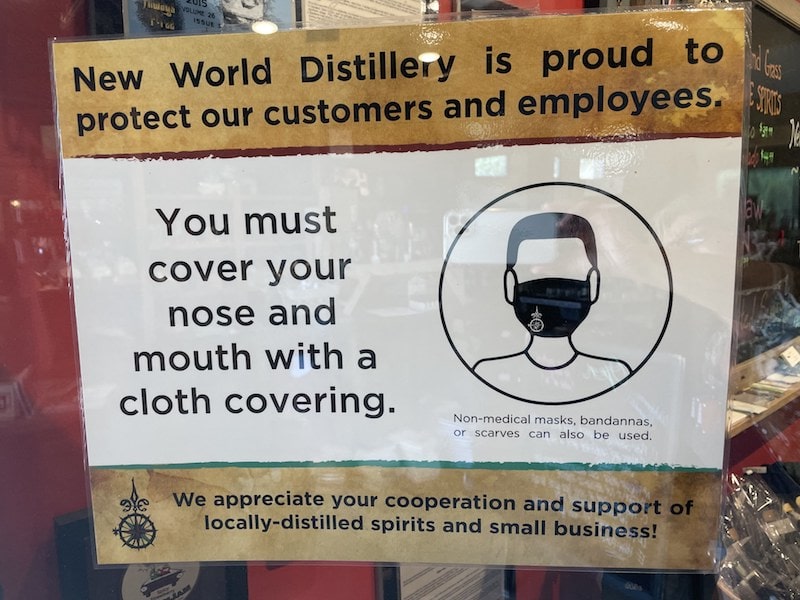
A welcoming sign greets customers with notification of the mask requirement, alongside a basket of free disposable masks. Still, people turn away or walk in unmasked to challenge and question the policy. Frustration and anger is also expressed by vaccinated people who think they should be exempt from having to wear a mask. But Cross still sees the risk in assuming the vaccines are a “bullet-proof vest.”
“I know people are tired and frustrated and anxious to get back to normal, but now we’re dealing with a new variant and breakthrough cases for people who have been vaccinated,” Cross said.

Athena Steadman owns Simply Eden, a goat milk and lotions shop that has operated a little differently during the pandemic. Steadman put a chain across the front door to her shop with a sign, allowing four customers at a time, a move she thinks helped mitigate some of the aggression they’d started to see in the beginning. Like Don Pollo, Simply Eden also continued to require masks for 4-6 weeks after the statewide mask mandate ended, which Steadman says made things harder at that point.
“People who made rude comments would walk away, and I’m okay with that,” she said, because she didn’t want to deal with combative behavior towards her employees. “Our business model is kindness and we hope people feel better than when they come in,” Steadman said. “And that’s hard when people come in angry about the masks.” What they don’t know is that Steadman’s medical condition, MS, makes taking all precautions all the more necessary.
“As much as Utah is a very pro-business state, the Governor put businesses in a hard situation to police things. And I think that’s why there was so much anger towards these businesses,” Steadman said.
“[The customer’s] rights are more important than the business’s right to stay open. I heard it time and time again,” Miller said. “It was so crazy, I worried about people shooting us.” The verbal violence came from older people, she said, not anyone under age 40.
“People are angry because it’s not their way, and they don’t understand,” said Miller. A few employees were sick with COVID and were out for 14 days, making it extremely hard to function. “I’ve never been so tired in my life,” she said.
Businesses just want to stay open and keep their employees safe. “It’s not personal; it’s not to offend you; it’s not to hurt your rights. It’s not about you,” Miller said. “How about we just be supportive of whatever COVID measures they are doing to make sure they can’t still be here in the next few months, six months, 12 months…”
MORE STORIES
They are stealing our water, Liberty Utah
New World Distillery in Eden Restarting their Distillery Tours
Farm to Bath at Simply Eden
Subscribe to Utah Stories weekly newsletter and get our stories directly to your inbox