Utah Stories

The Corrupted Leader Who Tainted Utah’s Medical Cannabis Program

The audit on Department of Agriculture revealed the extent of the corruption of Kerry Gibson and his team, Natalie Callahan and Sasha Clark.

|


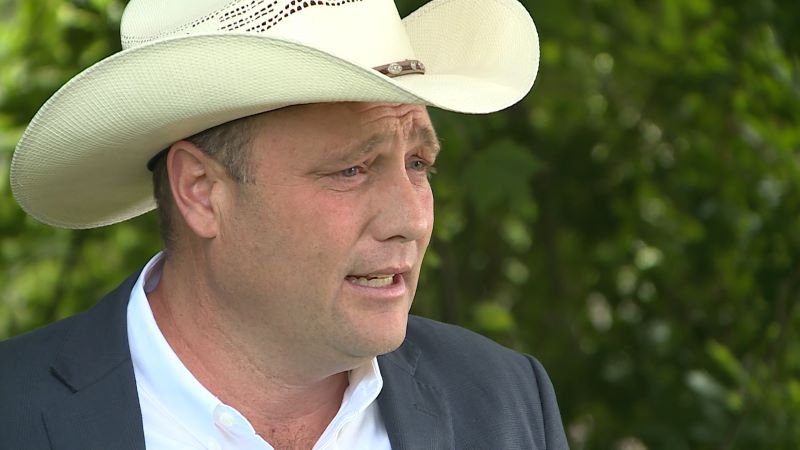
Kerry Gibson was the former Weber State County Commissioner.

Under his stewardship, ranchers that Utah Stories have spoken to have been losing their land and their water due to the overdevelopment of the area. But somehow Kerry Gibson became a darling of state GOP leaders. According to one rancher we spoke with, Gibson used his post to improve conditions for his own family’s dairy farm. Weber County paid a huge sum to install a cement drainage ditch in Weber County paid for by taxpayers. The ditch would collect excess runoff so that his family farm would not suffer flood damage from the Weber River. This government largess didn’t extend to other farmers or ranchers in the area. This might have set into motion a pattern for Gibson’s dealings as he was promoted. The big question is how and why he was promoted, when there was so obviously a conflict of interest with his Government PR firm.

When Gibson took over to become the Chief of the Utah Department of Agriculture, he brought with him Natalie Callahan and Sasha Clark from his PR company, the Dicio Group.  Potential conflict of interest statements were never made, nor was there any oversight to examine if Callahan and Clark were billing hours for both the PR firm and the Department of Agriculture. The hours that Callahan billed were highly excessive: she logged 427 hours of overtime during her nine-month stay. In one two-week period she logged 179 total working hours. To break this down: if she were working 80-hour weeks: The Department of Agriculture is only open five-days per week, she would need to be working 19 hour days, if she was working just week days. Why was she working so late? What was she doing? Utah Stories is attempting to get a comment from Callahan.

Later on, the State performed an audit on Gibson’s short time at the Utah Department of Agriculture. This audit revealed the extent of the corruption of Gibson and his team, mostly Ms. Callahan to be exact.
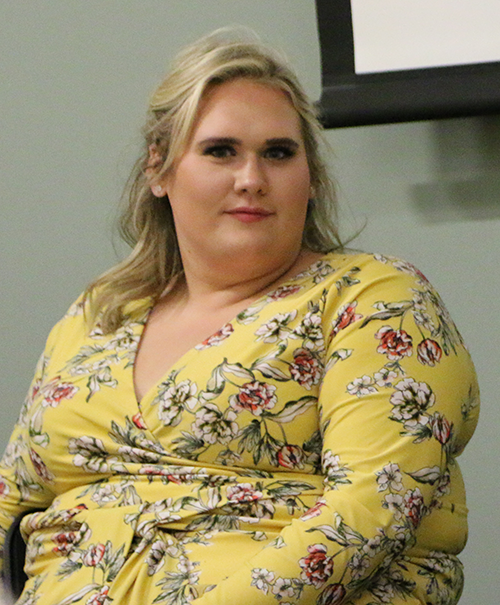
Natalie Callahan

For example, Gibson and Callahan attended a conference in Hawaii. Callahan took the liberty to upgrade the seats on the plane at the expense of Utah taxpayers. Then she upgraded their rooms as well (also on the dime Utah taxpayers). Callahan was also billing hundreds of hours of additional overtime, collecting huge sums for her position as director of operations and agriculture programs. Utah Stories has also learned that in her short period at the Utah Department of Agriculture Callahan was taking the liberties of firing people who had been with the department for years and also silencing anybody who might have any complaints about the ways in which things were being operated.

Gibson was brought on about the same time that the Utah Department of Agriculture would be taking over all of the operations of the State’s medical cannabis, and hemp growing operations. There was at least one candidate, who was acquainted with both Gibson and Callahan and who received their growing license after Gibson paid a special visit to their potential growing site. We have learned that the operation in question is True North.

Neither Gibson nor Callahan were supposed to have any influence over the committee and process which was assigned to review who received licenses.

The only revelation the audit on Gibson offers is that “Applicant A” might have received their growing license without merit. Only eight licenses were handed out and it appears that only two of the growing operations are able to produce anywhere near enough medical-grade cannabis to meet the current demand.

We are certain that this story, the corruption goes much deeper. We would like to commit more time and resources to this investigation. If you would like to help please support our local advertisers and tell them you found them in Utah Stories. This is your Utah. Help us expose the corruption and abuse of power.


BACK TO:  THE STORIES THE MAINSTREAM MEDIA DOESN’T WANT YOU TO KNOW

MORE BY RICHARD MARKOSIAN

MORE ABOUT CORRUPTION IN UTAH

BACK TO OTHER STORIES


, , , , , , ,


Join our newsletter.
Stay informed.


  • The Utah Bombings That Exposed One of America’s Greatest Forgers

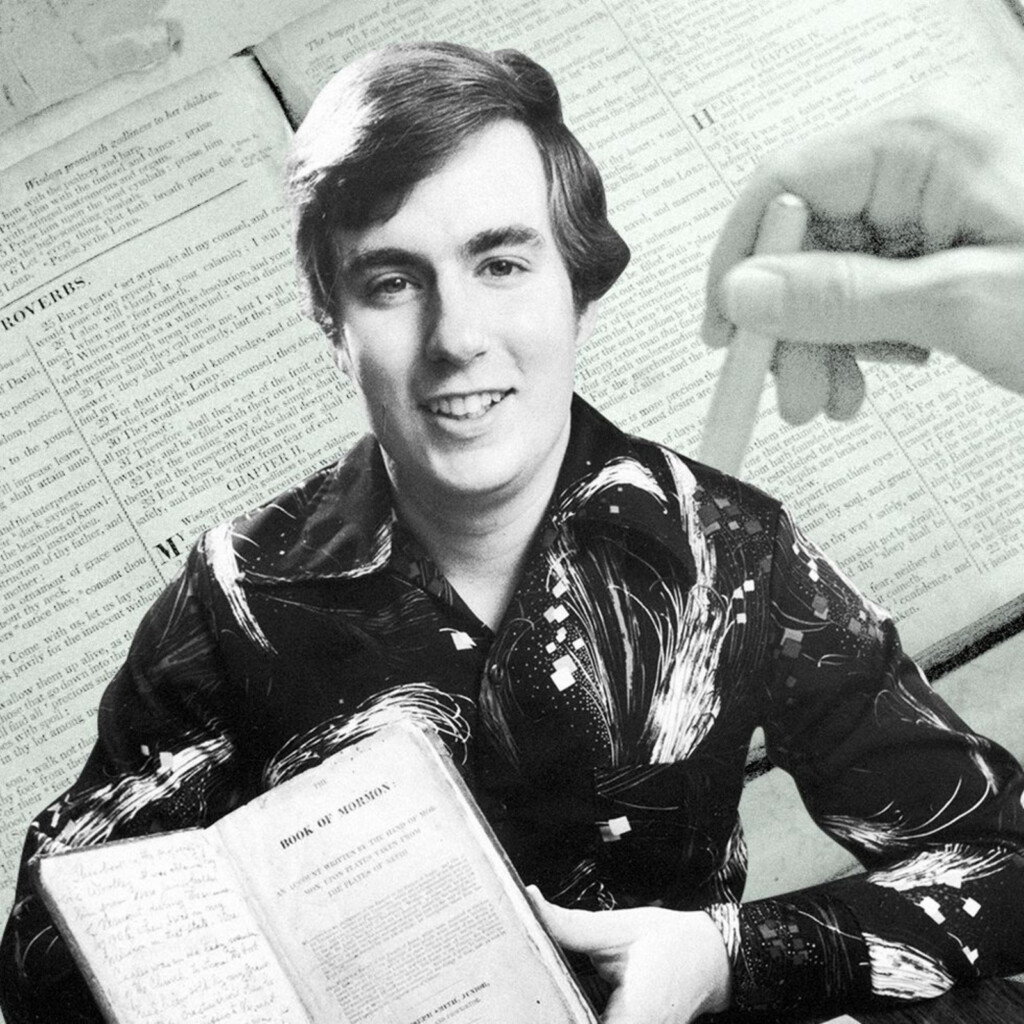
    On an ordinary October morning in 1985, downtown Salt Lake City was shattered by a blast that killed businessman and document collector Steve Christensen. Hours later, a second bomb tore through a quiet Holladay neighborhood, killing Kathy Sheets, the wife of Christensen’s former business partner. The next day saw a third explosion. This one was in a car near Temple Square that nearly killed rare-documents dealer Mark Hofmann. 

    Rumors swirled instantly, tying the attacks to money, religion, and shadowy early-Mormon documents Christensen had recently acquired. For days, Utah held its breath. What unfolded was stranger and darker than fiction. The bombs weren’t the work of religious extremists or enemies of the Church of Jesus Christ of Latter-day Saints, but instead, the doings of Mark Hofmann himself. Hofmann was a nerdy, soft-spoken dealer who had secretly become one of the most skilled document forgers in American history. 

    His creations were so convincing that they reshaped historical narratives, fooling scholars, collectors, and church leaders. When the lies began to close in, the bombs became his final, desperate attempt to keep his world from collapsing.

    Hofmann had been fabricating Mormon and American historical documents for years. He was a prodigy of deception, sourcing period paper, mixing inks that cracked just right, and mimicking handwriting with obsessive precision. Most of all, he knew how to read people. Utah in the 1970s and ’80s was a collector’s paradise. As bookseller Ken Sanders told Salt Lake Magazine, it was “a consciousness shift,” a recognition that rare Utah history was a treasure worth pursuing. It was also, he notes, fertile ground for affinity fraud.

    Nothing captured that vulnerability more than the Salamander Letter, a supposed 1830s correspondence which claimed Joseph Smith encountered a magical white salamander rather than an angel. The document shook Latter-day Saint circles. Church leaders, worried about its implications, quietly purchased it along with other materials Hofmann dangled before them. Many reasoned that if the church was willing to buy it, then it must be authentic and true, and Hofmann understood that psychology perfectly.

    Continue reading and support independent Utah journalism with a purchase of Utah Stories (Digital + Print) or 3 month free trial (Digital).


  • The Armenian DNA Mystery No One Can Explain

    Joulhayan described ancient remains discovered near the Aras River, near Mount Ararat, where researchers reportedly compared ancient genetic samples with modern Armenians and found remarkable continuity stretching back thousands of years.
    “How could that be?” he asked. “Mongolians attacked. Turks. Persians. Romans. Greeks. Armenian DNA should have changed.”


  • Utah Wants Affordable Homes. So Why Did It Kill the Starter Home Bill?

    Utah leaders have spent years talking about affordable housing.

    Governor Spencer Cox has repeatedly emphasized the need for more attainable housing, with a goal of creating tens of thousands of starter homes priced below $300,000. Yet despite broad agreement that housing affordability remains one of the state’s biggest challenges, one proposal designed specifically to encourage the construction of smaller, more affordable single-family homes failed to advance during the most recent legislative session.

    The question raises an uncomfortable issue: if Utah agrees there is a shortage of starter homes, why are those homes still so difficult to build?

    According to attorney and real estate professional Asha Klarich, much of the debate comes down to how communities want to grow and who gets to make those decisions.

    House Bill 184, known as the Small Lots and Starter Homes Amendment, was intended to reduce regulatory barriers and allow smaller homes to be built on smaller lots. The proposal would have created a process for builders and homeowners to seek exceptions to local zoning requirements and construct homes on lots as small as roughly 5,400 square feet.

    The idea was straightforward. Smaller lots generally mean lower land costs. Lower land costs can translate into lower home prices.

    For many first-time buyers, that sounds far more appealing than another apartment building or densely packed townhome development.

    “I think most people would prefer a smaller home on a smaller lot than apartment-style living in a high-rise,” Klarich said during a recent discussion about housing legislation.

    The bill ultimately failed.

    Continue reading and support independent Utah journalism with a purchase of Utah Stories (Digital + Print) or 3 month free trial (Digital).


  • Fogo de Chão Salt Lake City Review: When Friendly Service Isn’t Enough

    The restaurant itself felt polished in that distinctly corporate way, where every detail seems carefully planned. We sat outside near a large fire feature on the patio while dance music drifted through the speakers and shoppers passed by. It felt lively, upscale, and relaxing for someone who had spent most of the day feeling unappreciated.