Utah Stories

Utah’s Economy is Reopening, The Challenges that Small Business Owners Will Face

In this episode we discuss four main points that Utah small business owners should be aware of: The giant corporate handouts that the PPP turned into Employees not wanting to work due to increasingly generous unemployment benefits Utah’s coming reopening of our economy Talking with one downtown restaurant owner about how he is doing

|


In this episode we discuss four main points that Utah small business owners should be aware of:

  1. The giant corporate handouts that the PPP turned into
  2. Employees not wanting to work due to increasingly generous unemployment benefits
  3. Utah’s coming reopening of our economy
  4. Talking with one downtown restaurant owner about how he is doing

LISTEN TO THE PODCAST:

WATCH THE VIDEO:

More about the giant corporate handouts that the PPP turned into

From a Forbes article on the 20th. 71 publicly traded corporations received the funding. They received $300 million. 

Due to public backlash, Shake Shack decided to give their money back. They received $10 million. Shake Shack has a market cap of $1.6 billion.

The latest update was that large corps might be shut out of the new round of funding that was opened up on Monday. Massive restaurant chains such as Potbelly and J. Alexander’s received the money. 

The new round allocated $310 billion, $60 billion specifically reserved for smaller businesses without existing banking relationships.

Keybank (my personal company bank), didn’t offer any help, nor did my twenty years of doing banking with them make any difference. Smaller banks are stepping up helping the smallest small businesses. Continental Bank helped us as well as other small businesses.

Another small business problem: Employees who are asking to be laid off due to government generosity.

I mentioned this earlier that one of the businesses in my Goldman Sachs 10K cohort is a retail outfit and they are having a hard time retaining employees who want to be laid off. It turns out they are not alone.

The Cares Act is offering an extra $600 per week from the Federal Government on top of existing unemployment benefits.

So concerning the PPP, if your employees would rather get unemployment benefits than come back, then you as a small business owner need to pay all of the money back.

If you are giving PPP money to employees, even if they aren’t coming to work, they won’t qualify for the government benefits.

Unemployment will last four months, where PPP money only lasts eight weeks.

What does this mean? Your workers can earn more by not working than by working in a lot of cases. So we might see a lot of people choose to remain unemployed through the summer because they get more money doing nothing.

So this is just one of the major problems of the Federal Government stepping in. You can only keep workers if they have a greater incentive to work than to not work. Most people will choose to stay home and not work if they are earning more money by not doing so.

Why is nobody in the media bringing this up other than Forbes Magazine? Nobody is talking about how awful this is going to be to get the economy restarted if everyone is getting paid more to stay home. Why aren’t they talking about this?

I’d like to hear from you on this one.

Utah-related news: Restaurants and the economy reopening with huge restrictions

Our testing capacity in Utah is still exceeding demand. This is very good news. They can’t get enough people to come in and get tested, so they are saying anyone who has even one symptom should come and get tested.

Utah’s economy is reopening starting Friday. The preparations that have taken place include randomized testing. The Crush the Curb (test Utah website) is recommending whether or not someone should go in for a test and where the closest testing location is located.

We are learning there are many infected asymptomatic carriers who contract COVID-19 and develop no measurable symptoms. This is bad news. Any person can have Coronavirus and be infecting others and have absolutely no symptoms at all. So it sounds like unless we are doing randomized testing all of the time, we aren’t really going to maintain containment. 

Lieutenant Governor Spencer Cox told Fast Company Magazine, “Testing is huge. We have to learn to live with the virus until there is an antiviral. We are just not going to shut down for five or six months.”

So with this, we have very detailed protocols in place for how we are going to handle the hot spots and outbreaks. We now know that with reopening  there will be an increase in infection and outbreaks. It’s going to be close to impossible to contain this without an antiviral, but the alternative to higher infection is much worse. 

The alternative is we decimate our economy while seeing massive jumps in suicide and drug abuse. We see our social fabric gets torn out from under us where most local ma-and-pa restaurants and bars wouldn’t survive. 

So obviously it’s going to be extremely difficult over the next few months. People are going to get infected and die. But we need to reopen our economy, we can’t let millions of people be out of a job and we can’t let our federal government believe they can print an infinite amount of money without collapsing our economy through eventual inflation. (We have an upcoming two-part series on inflation we are offering free on the Utah Stories show)

Still, local restaurants are preparing to reopen.

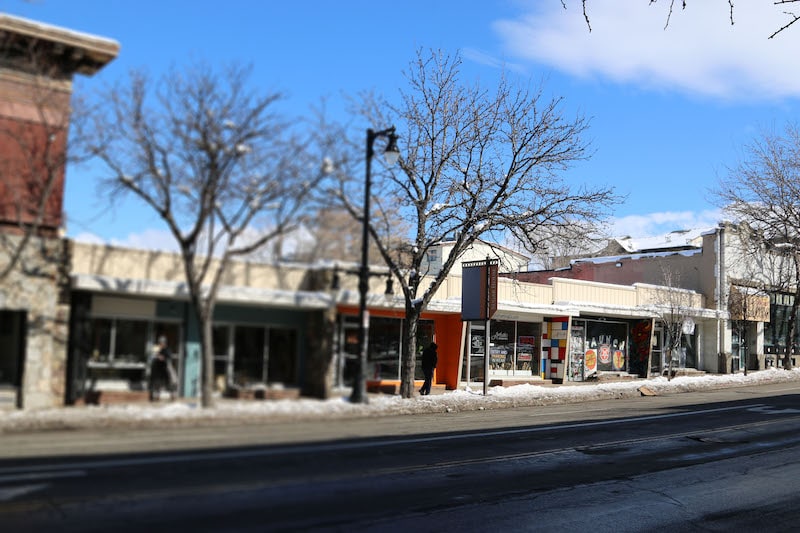
One new downtown restaurant that was beginning to build an excellent customer base is a place in North Salt Lake’s Marmalade District called Diversion Eatery. We spoke to owner Ryan Peterson.

US: Tell us what is going on with you at Diversion Eatery?

RP: We partner with local breweries and do tap takeovers etc. We offer live music and a lot of social events…

US: What kind of food do you offer at Diversion Eatery?

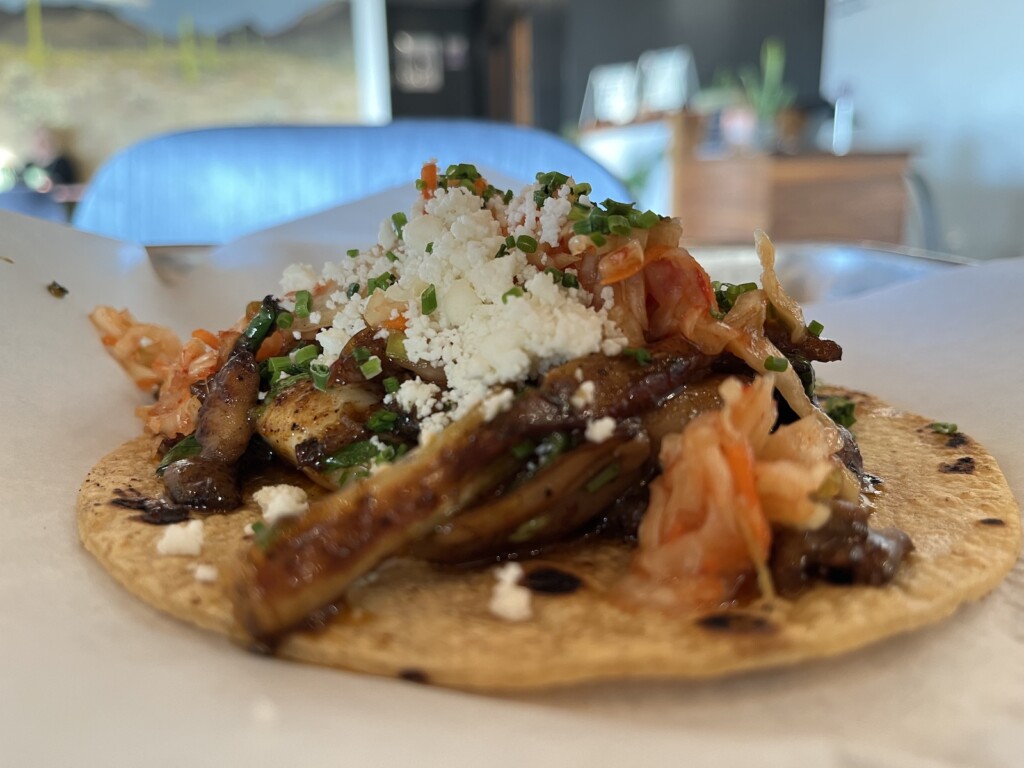
RP: We have burgers, pizzas, salads. What I’ve done for a stuffed burger here, I ended up taking the top off the burger and making a burger bowl. You can get it on a bun and you can have it taquito-style.

US: Have you applied for the PPP and the EIDL loans?

RP: I’ve applied and received a PPP loan. I didn’t get the City or County loans. 

US: What are you planning for the May 1st reopening? What are you going to need to do about that?

RP: I will open up according to the state rules and regulations. We will be doing everything they require. We still need to know what every requirement is. But we were already practicing very stringent sanitation measures. We will do everything they need including our entire staff wearing facemasks all of the time.

US: Where can people find you online and through social media to support you?

RP: Best way is diversioneatery.com. Diversion eatery app. And if you would like delivery and live within a three-mile radius it’s free.

US: I’ve heard that the food delivery places are taking a chunk. Is it a lot better if people use your app or your curbside delivery?

RP: That is correct. Curbside delivery is much better for us.

For the full interview, listen to the podcast:

FOR MORE UTAH STORIES PODCASTS GO HERE.


Join our newsletter.
Stay informed.


  • Artist Kate Kilpatrick Brings Utah’s History to Life Through Murals

    “I think we’re all interconnected; as individuals as well as societies,” Kilpatrick notes. Her work showcases those connections exuberantly, and whatever scale she’s working on, you can bet that in terms of energy and spirit, she’s painting large.


  • Why Most People Stay Stuck in Business and What It Takes to Move Forward

    Every so often, you meet an immigrant who came here with almost nothing and managed to build something exceptional.

    Prakash Shah is the kind of man who has spent enough time around risk that he no longer treats it like an interruption.

    Today, he works in business brokerage and advisory, helping owners sell companies, helping buyers decide whether they should step in, and, when the fit is right, helping connect those buyers with private equity. He works in a world of valuations, leverage, due diligence, and hard questions that most people would rather postpone. He also operates in Utah real estate and has built a career around seeing value before it is obvious to everyone else. That is who he is now. What makes him interesting is how early that instinct started to form, and how little his life resembles the way most Americans are raised to think about comfort, career, and security.

    He grew up in Nepal in a boarding school system that would feel severe to many Americans. He was an only child, yet he saw his parents only twice a year for twelve straight years, until high school graduation. He lived inside routine. He shared space with boys from different social classes and different family circumstances. The school was structured enough that money did not buy you any special standing once you were inside. Everyone followed the same rules. Everyone was subject to the same discipline. In his case, it was an army school. Everything was measured. Everything was scheduled. In that kind of environment, you do not build your life around preference. You build it around adaptation.

    That contrast matters.

    A lot of American children are raised to search for what fits them. What are you passionate about? What do you enjoy? What feels right? Those are not bad questions, but they can create a habit of waiting for life to align itself before action begins. Prakash learned something else much earlier. He learned that life often does not align itself first. You enter the room as it is, you deal with the people in it, and you figure out how to function without making your comfort the center of every decision. He said that one of the biggest lessons from those years was tolerance, the ability to live with people from all walks of life and genuinely learn to get along with them. That is not a soft value. In business, it turns into resilience. In negotiation, it turns into patience. In career terms, it turns into range.

    When he came to the United States over 25 years ago, he did not arrive with the kind of runway that allows for a prolonged identity search. He came with two suitcases and enough money for one semester. He went to Hunter College in New York City, then to NYIT near Central Park, studying media and then media and technology management. He also studied psychology. Those details matter because they show something about his mind. He was interested in people before he built a career around deals. Even then, what attracted him was not technical prestige. It was understanding motives, behavior, and how people reveal themselves.

    But New York is merciless toward vague ambition. It demands payment in rent, transit, food, and time.

    Prakash worked constantly. He took multiple jobs. He paid tuition, paid rent, and skipped most of what Americans imagine as college life. There were no romantic years of drifting from café to concert to self-discovery. He talked about not having the luxury of dates, travel, or finding himself. He was working. Even laundry was not a small detail. In New York, he pointed out, you do not just throw clothes in a machine at home. You haul them to the laundromat, count quarters, and measure what is necessary. He also described distraction in a way that most native-born Americans probably do not think about. For immigrants, distraction is not always pleasure. Sometimes distraction is the constant pressure of competing needs. Tuition or rent. Food or savings. A better coat or another month of making do. He was not romanticizing the struggle. He was describing the arithmetic of it.

    That arithmetic did not make him cautious. If anything, it did the opposite.

    While in college, he had the option of safer analytical work. Instead, he took a sales job with Time Warner Cable that sent him into the South Bronx from 6 p.m. to 10 p.m. to knock on doors. He is not a physically imposing man. He knew exactly what kind of neighborhoods he was walking into. He described apartment buildings where people kept pit bulls, where tension was normal, where one mistake in tone or timing could end a conversation immediately. For most people, that kind of job would have been something to survive and forget. For him, it became a school in human behavior. “It’s not about talking… it’s about listening,” he said.

    One story from that period says almost everything about how he operates. He knocked on a door one night around 8:45 and found himself facing a huge man with a gun on the table, pit bulls nearby, and a half-eaten pizza in front of him. It had all the ingredients of a very bad scene.

    Continue reading and support independent Utah journalism with a purchase of Utah Stories (Digital + Print) or 3 month free trial (Digital).


  • Ancient Pyramid Discovered in Sugar House Park, Salt Lake City

    A Salt Lake City resident says he may have uncovered what he believes to be a buried structure beneath a well-known hill in Sugar House Park, raising questions that have drawn both curiosity and skepticism.


  • Utah Fits All Scholarship Applications Open Through April 30 for K–12 Students

    Utah families have more learning paths than ever and, increasingly, more ways to make those paths affordable. This spring, the Utah Fits All Scholarship opened  for new family applications on April 1, and the application window stays open for one month. The program is a public K–12 scholarship that provides $4,000 to $8,000 per student,…