

Can USANA deal with Chinese laws?
Major multi-level marketing companies like USANA face crackdowns in China, where the business practice is widespread, sometimes violent, and very illegal.
The following story was written and reported by The Utah Investigative Journalism Project in partnership with Utah Stories.
USANA encounters multi-level problems in China
Multi-level marketing is as American as apple pie and as Utahn as green jello.
But in recent years, some of the biggest MLMs have realized that real growth and expansion means digging the base of their distributor pyramid down so far that it comes out the other side of the world in China.
China has become a major market for companies such as Herbalife and the Utah company, USANA.
According to company documents, between 2010 and 2016, when USANA got into China, annual revenue for the company topped $1 billion.
Revenue from China and Hong Kong alone grew by 227 percent, totaling nearly three-quarters of all of the supplement company’s revenue increase.
What about Chinese law?
For all that big money, there was just one big problem—multi-level marketing is not legal in China.
In the US, MLM distributors primarily earn money through recruiting people in their downline chain—but this bedrock MLM practice is absolutely not allowed under Chinese law. These companies now face crackdowns by Chinese authorities that threatens their bottom line.
Jason Jones is an Ohio-based attorney well versed in MLM companies.
He currently has multiple lawsuits pending against industry behemoth HerbaLife for allegedly taking advantage of people in dire straits who end up saddled in debt through the purchase of HerbaLife products they’re unable to sell.
He points out these companies have recently bet big on international markets.
“These big American MLMs completely strip-mine people and leave nothing but husks in their wake. People lose massive amounts of money—often all the money they have plus all the money they can borrow,” Jones says. “Large scale pyramid schemes are an American invention and an American export.”
But the MLM world in China is much different than in the United States.
Under Chinese law, this business is known as “multi-level cheating,” and while just as in the US, the business often results in mediocre earnings, the same business in China can also involve organized crime elements using violence or the threat of violence to recruit and hold people in their downlines.
While there’s been no news locally of USANA’s troubles in China, shareholders in the company first got a shock on February 7, 2017, when the company disclosed in public filings that it was “conducting a voluntary internal investigation” regarding its China operations.
A lawsuit later filed by irate USANA shareholders alleged that while the company was warned by Chinese authorities as early as 2016 that it was being investigated for running an illegal MLM, the company never communicated this to shareholders.
Instead, executives painted a rosy picture for investors of how sales in China were based solely on a traditional sales model—unlike all of the company’s other revenue.
On March 3, 2017, Chinese authorities made at least three arrests of USANA distributors in China and froze over 52 million in US dollars of company assets.
Steve Dickinson is an attorney with the Seattle-based law firm of Harris and Brickens that specializes in helping American startups navigate the business landscape of Communist China and has himself been developing relations in China since 1984.
He stresses that MLMs are “100 percent illegal” in China, but admits that it doesn’t stop them from operating.
He says many average Chinese struggle to find extra revenue that could sustain them instead of having it diverted into Communist Party coffers. Thus, many people are vulnerable to financial fraud.
“Hundreds of millions of people who are absolutely desperate and see no future for themselves at all are very susceptible to scams,” Dickinson says. “There are people in China that specialize in preying on them and they do it in conjunction with organized crime and the local government.”
A 2017 account in The Daily Mail describes how Chinese authorities began cracking down on MLMs after receiving reports of people in MLMs being forced to live in squalid communal houses and spend their days recruiting new distributors.
In the northern Shanxi Province, a 23-year-old student had been beaten to death for refusing to recruit new members to an MLM that he had been lured into.
Even as recently as July 8, 2019, MLMs in China were in government crosshairs.
The Chinese Anti-Pyramid Promotion Association
An article from the Chinese Anti-Pyramid Promotion Association speaks of a raid in Heilongjiang Province against a company that resulted in nearly 700 arrests.
In the article, a victim of this MLM said his recruiters told him, “As long as you don’t get off the bus, one day [you] will climb the throne of the business manager,” only to later feel trapped by the recruiters.
Another spoke of how other victims lived 10 people to a single house under the eye of their recruiter.
There is no evidence to suggest USANA’s operations in China have been that extreme, but like many MLMs, their distributors have been known to make misleading claims.
Xiahongshu.com or “Little Red Book Reviews” is a popular Chinese social media and e-commerce site.
A simple search for USANA brought up numerous listings claiming the products have miraculous results in treating fatigue, allergies, high cholesterol, and liver disease.
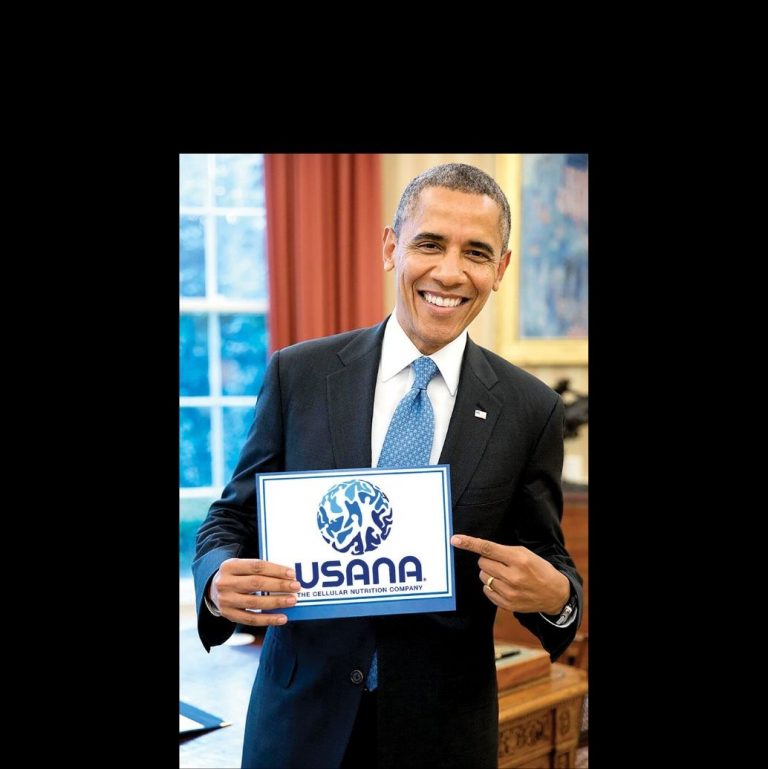
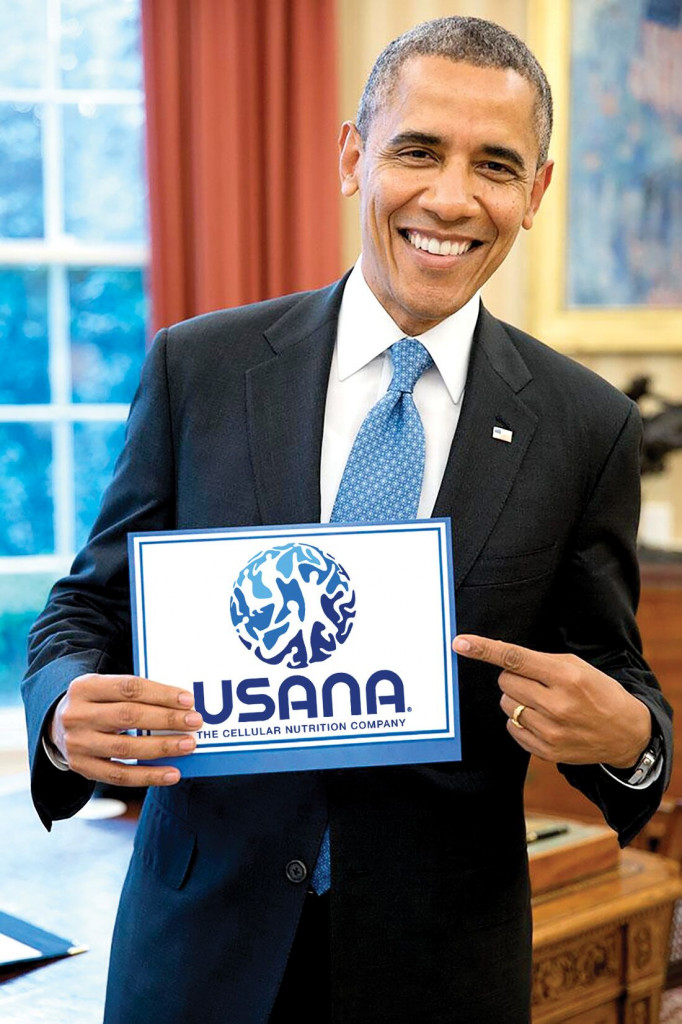
One of the top posts on the site shows a video of President Barack Obama holding a photoshopped USANA sign to the camera.
The text in the post quotes a supposed exchange between a reporter and the former president: “Will you publicly announce that you are using USANA products as a President? The president answered the reporter very calmly: ‘I just want to give myself and my family the best. If you can recommend a better nutrition than USANA, then I am willing to switch to better nutrition.’”
Dickinson says the reason some MLMs have gotten away with it for so long is because in China there’s no real Better Business Bureau or small claims court.
Government corruption allows scammers to thrive as long as citizen complaints don’t reach a boiling point.
“In the United States you could write your congressman,” Dickinson says with a chuckle. “I laugh, but that can actually be a very effective technique for local problems. In China, the local official you’re writing to is probably running the scheme.”
But if complaints reach the level of “civil unrest,” then he says the government will come down—hard.
What about USANA?
USANA would not respond to calls for comment or respond to emailed questions about their business operations in China.
But on May 7, 2019, the company filed a report to investors telling them that for the first quarter of 2019, sales for the company decreased by $19 million, largely because of issues related to the Chinese government’s review of their industry and “negative media coverage” in the country.
The company stated this governmental review was completed in April and they expected that business would return to normal in the country.
Investors can only hope so, because according to the same filing, the company put net sales in China alone as equal to 52 percent of the total company sales.
For Jones, it’s clear these companies have dug themselves through to the massive Chinese market and may also have dug themselves into a massive financial hole.
“China is obviously the biggest market with the most room for growth,” Jones says. “I think it would spell big trouble for these companies if China decided to stop allowing pyramid schemes to operate within the country.”