Healthy Utah

A better approach to cancer treatment

There is amazing, groundbreaking, and potentially life-changing medical research currently going on. The way doctors are able to diagnosed and treat patients is changing at a very rapid pace. The problem, though,  is getting the major medical community to more swiftly  adopt  these emerging (or not-so-emerging) best practices. 

|


Helping people live better, live longer

There is amazing, groundbreaking, and potentially life-changing cancer medical research currently going on in the United States—the way doctors are able to diagnose and treat patients is changing at a very rapid pace. The problem, though, is getting the major medical community to more swiftly adopt these emerging (or not-so-emerging) best practices.

Dr.John Librett wants to change that.

Not only is Dr. Librett an authority on preventative medicine, he is also an expert on health policy and medical practices and procedures; he is the CEO of Survivor Healthcare.

Evidence-based medicine

When Librett was in medical school studying evidence-based medicine, he was diagnosed with cancer. “And that was the beginning of my deep dive into the healthcare system,” he said.

After the cancer diagnosis, Librett started noticing something. His own doctors were applying their medicine to him, but at the same time, “I was studying the evidence related to my cancer and they weren’t matching up,” he said.  “What the doctors were doing and what I was reading should be done wasn’t the same.”

The reason for this is because there is a gap in medicine, and it’s slow to catch up.

“Right now,” Librett said, “the gap in medicine between the known and the applied known is about 17 years.” What he means is, generally, we, as consumers of medicine,  and our physicians, are 17 years behind the current evidence-based, fda approved, science.

The point is this: there are latest-and-greatest practices being adopted, just not at the rate that we need them to happen.

There is no doubt that our medical system is broken, but that doesn’t mean it is useless. It’s just complicated … no, it’s only complicated because we haven’t learned how to be smart consumers of medicine.

So how does one go about becoming a smart consumer of medicine? How can you learn to navigate the often stressful and seemingly illogical labyrinth that is the American healthcare system?

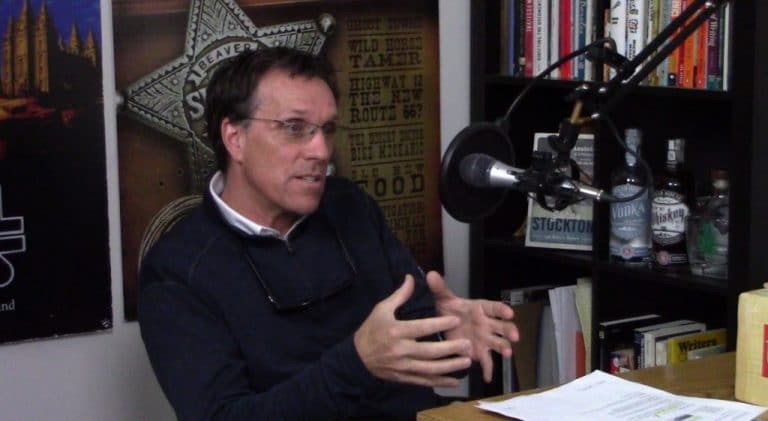
On The Utah Stories Show, we sat down with Dr. Librett to discuss these issues and much much more.

It’s a fascinating, helpful discussion—because what you think you know about modern medical practices and procedures is probably wrong. Please join us.

Listen to the podcast:

, ,

Join our newsletter.
Stay informed.


  • A Salt Lake City Gym Uses Fitness and Community to Support Addiction Recovery

    “What I think is really special about that place is that doing hard things is a way that we can become proud of ourselves,” said nursing student Vince Minutello, who has started exercising at the gym in Salt Lake City as a requirement for one of his courses.


  • How I Lost 120 Pounds and Changed My Relationship With Food

    Throughout most of my life, I used food to cope with chaos, depression, and pain I did not yet understand. By my early twenties, I weighed over 320 pounds and felt trapped in a body that limited every part of my life. This is the story of how learning about food, mental health, and habit-building helped me lose 120 pounds and rebuild stability.


  • US Magnesium Bankruptcy and the Environmental Cost to the Great Salt Lake

    Now, with US Magnesium declaring bankruptcy, questions long deferred are rising to the surface. What happens to decades of toxic waste sitting just miles from a shrinking lake? Who is responsible for cleaning it up? And what does it mean for the communities who breathe the dust when the wind lifts off the exposed lakebed?


  • When Main Street Burned: The Aftermath of the Salt Lake City Fire That Hit Downtown Bars

    Fire doesn’t respect zoning, property lines, or even the most popular block on Main Street. On the evening of Monday, August 11, 2025, a blaze that began around 8:40 p.m. on Main Street. It moved quickly through a row of aging, interconnected buildings that had become the heart and soul of Salt Lake City’s fledgling bar district. By the time firefighters brought it under control, multiple businesses were damaged, dozens of workers were displaced, and one of the city’s most active stretches went dark.

    The fire started at London Bell and spread into neighboring structures, severely damaging Whiskey Street. White Horse never caught fire, but smoke, water, and a partial roof collapse caused extensive interior damage, forcing a full rebuild. Other nearby businesses were affected as well, including some that had helped turn this part of Main Street into one of its most active and economically stable stretches.