
Utah Farmers

Snuck Farm: Ethics and Agriculture Transcend Generations

Page Westover started Snuck Farm in Pleasant Grove in 2015 on land that her grandparents inherited from their grandparents. From the beginning she wanted it to be something different. She says, “I’ve always had a love of nature and good food. I went to Utah State University and majored in nutrition with an emphasis in…

|


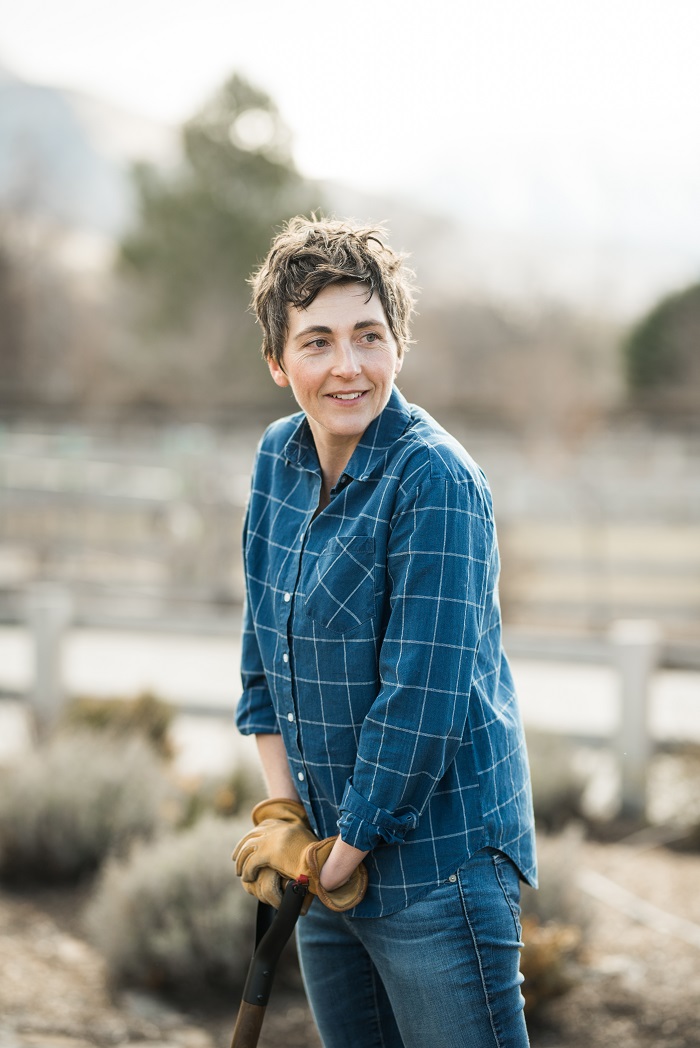
Page Westover, owner of Snuck Farm. Photos courtesy of The Kinship Creative.

Page Westover started Snuck Farm in Pleasant Grove in 2015 on land that her grandparents inherited from their grandparents. From the beginning she wanted it to be something different. She says, “I’ve always had a love of nature and good food. I went to Utah State University and majored in nutrition with an emphasis in dietetics.” After working in her field for more than 10 years, she found she really loved inspiring people to eat better by choosing good whole foods over processed foods. Ultimately, she decided she really wanted to be a producer and give something of value to the community.

Snuck Farm is named after Page’s grandfather, Boyd “Snuck” Fugal. She explains that “when he was young, all the kids his age got together and gave each other nicknames—girls and boys.” Fugal earned his name from his propensity to sneak around and play jokes on the others. He was known as “Snuck” his whole life.

Page also inherited his business model from her grandparents. Their motto is Eat Well, Do Good. “I had a desire to make it more than just a business,” Page says. “My grandparents definitely did a lot of good for the local community. They donated land for parks and churches. They served on school boards and city councils. So when I started the farm, I wanted to marry two things—eating well and doing good.”

The farm sits on 3½ acres, quite small for a working farm, but Page uses hydroponic greenhouses that allow her to grow eight times the amount of food she could grow in more traditional fields.
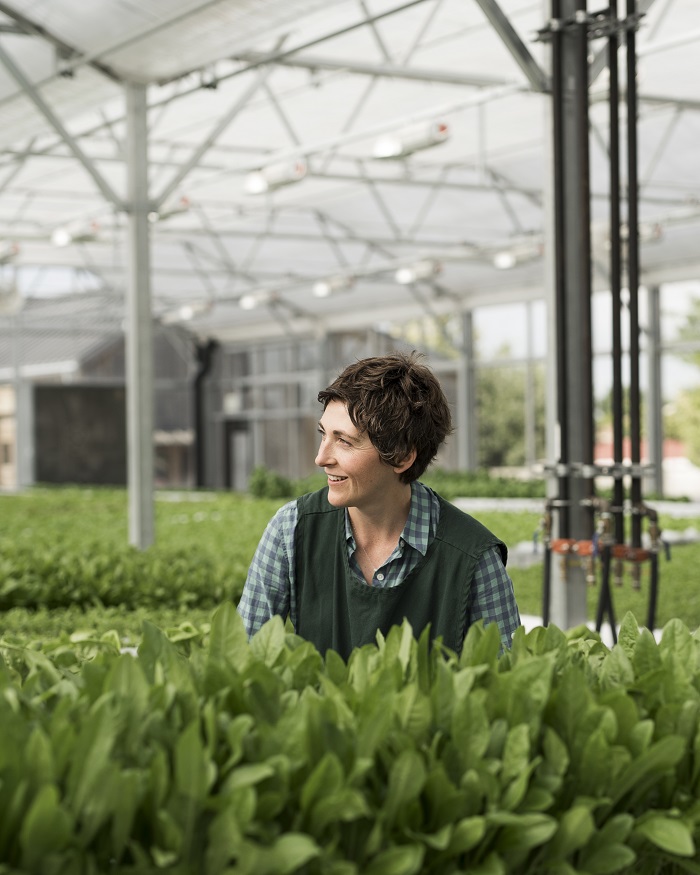
Working in the hydroponic garden.

She primarily grows all manner of greens in the two hydroponic greenhouses including head lettuce, butter lettuce, arugula, kale, chard, and a variety of herbs year round. Her hydroponics work by running a nutrient solution through channels that sit off the floor holding the plants. It is constantly recirculating and so uses 90 percent less water than traditional farming methods. There is also very little water lost to evaporation. “The plants take what nutrients they need from the solution and then it is recirculated.” No soil is involved in this process.

Page also has a few plots to grow crops such as tomatoes, cucumbers, and peppers organically; and she just started a soil greenhouse.

Most of the produce is sold to local restaurants and corporate cafeterias at businesses such as Adobe, Vivint, and Ancestry.com. Page has found that she is able to market easily to those with similar food values as her own.

She also sells to the general public through a subscription CSA-type model (Community Supported Agriculture). Customers pay a monthly subscription fee and pick up fresh produce weekly at the farm or drop off locations.
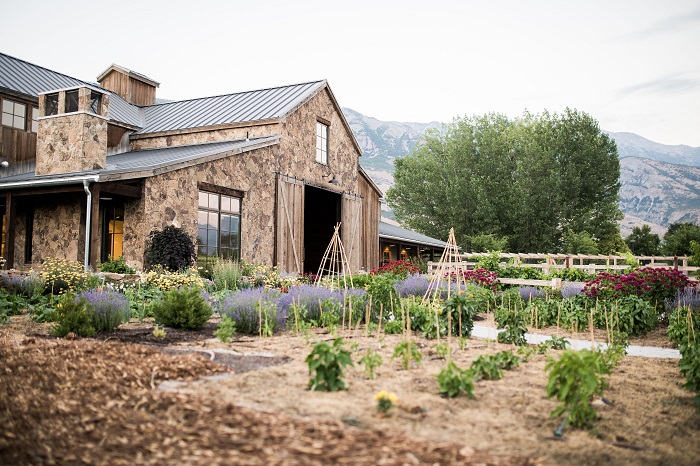
With so many Utah farms in danger of corporate encroachment, Page and her family made a conscious family decision to preserve the small acreage left of the original farm acreage. When her grandparents died, the city zoned the property into ¼ lots. Page was able to work with the city to have it rezoned as residential agriculture. She feels secure. “We’re right in the middle of the neighborhood, a small piece of land, but we took measures to insure it doesn’t get developed. We are trying to build something that will last generations.”

Page is on a mission to provide local food to her community. “It feels like a treasure for the community. When three major food organizations are in charge of our food, it’s hard to sleep at night thinking about food security. We need resources where our communities are providing local food. I focus on the future and the mission and I just go.”

Snuck Farm
504 W 1100 N, Pleasant Grove



Join our newsletter.
Stay informed.


  • Riverbed Ranch Utah: Cult, Commune, or Utah’s First Modern Homesteading Town?

    Driving out past the town of Delta on a gravel road for a couple of hours, we almost turned around. Following a rain storm, the road is wet and muddy but still decent. Jesse Fisher is worried we’ll get stuck, but we plow through giant puddles of water, and as the clouds lift, we reach the homestead community of Riverbed Ranch, consisting of 1250 acres of reclaimed desert.

    Almost like an oasis, Riverbed Ranch is home to 40 families who decided to depart city life, municipal taxes, congestion, air, light and sound pollution, and live in a place among chickens, goats and cows on self-reliant homesteads. 

    Describing Riverbed Ranch as “bucolic” would be inaccurate at this point. Sometimes there are purple flowers in the valley, but currently it is a desert — still beautiful, but most of the properties in the sprawling valley are still works-in-progress. But the scale of the valley and witnessing in person the first brand new town to break ground in Utah in 75 years is quite remarkable. 

    A few of the 2.5 acre plots consist of a trailer and a fence. Some plots have nice little homes that appear very homemade; others have more complete homes with nice fencing, with nicely organized pens for different animals, orchards and organization. 

    Some homes under construction even appear upscale and modern, where the inhabitants are indeed living as modern homesteaders, not seeking “luxury retreats” like so many other empty homes in Utah being built in hot tourist destinations such as Moab and Park City.

    We start by speaking with Tom and Kathy Barnes, whose homestead is a model for order and function. Turkeys walk around in their pen, excited for feeding time. Beside the turkey pen is another pen for chickens; one for goats, and another for pigs. All of the pens are connected to a large barn. By the look of their operation, the Barnes appear to be seasoned professionals.

    Indeed they are. Tom and Kathy raised their eight children “on a teacher’s salary,” homesteading in Payson, Utah on ten acres, reaching the point where the only store-bought items were toilet paper, shampoo, toothpaste and cashews. Most everything else, including fresh fruits, vegetables, milk and meat were raised themselves.

    Tom had just finished feeding his three hungry pigs when he took a moment to talk to me.

    “What are the advantages to living on a homestead?” I ask. 

    “Listen,” he says. “You can hear a pig eating … Once in a while we will hear a fighter jet pass over but that’s it.” 

    The Barnes are calm and content in their semi-retirement. They set up their homestead at Riverbed Ranch five years ago. They already knew homesteading and they realized even in retirement they could help the other inhabitants here, those with less experience, learn how to take on the demanding but satisfying lifestyle.

    “It’s basically like an extended family,” says Tom. “We are all like-minded out here. We are all going to help one another when our neighbors need help.”

    Tom says he and most of his neighbors are members of the LDS Church, and that most of the city’s LDS members are a part of a ward which makes up their “ward family.” “Out here,” he says, “everybody is our extended family. So we all know we are going to help one another and learn to get along … Like early pioneers in a small town. It’s very much the same thing.

    A wild goose chase?

    “We could live out here like it was 1849, but we have all of the conveniences of modern society, so why not take advantage of the best of both worlds?”

    I wonder how adaptable these modern pioneers are. Raised on a homestead, would these folks ever want to join the modern world again? The Barnes kids are mostly choosing city life, but their kids and grandkids love visiting them, running around free-range. Tom adds, “One of our sons is starting his own homestead in Piute County.”

    We drive around on the hard gravel roads and get a sense of how all of the residents here justify the hard-scrabble, off-grid life, which requires living off pumped well water, solar power for electricity, and propane for heat. 

    We are aiming to get a sense of the  bigger reason why all of these people are out here, far away from freeways and Walmarts. Are they all latter-day preppers?

    Continue reading and support independent Utah journalism with a purchase of Utah Stories (Digital + Print) or 3 month free trial (Digital).