

Delicious and Healthy
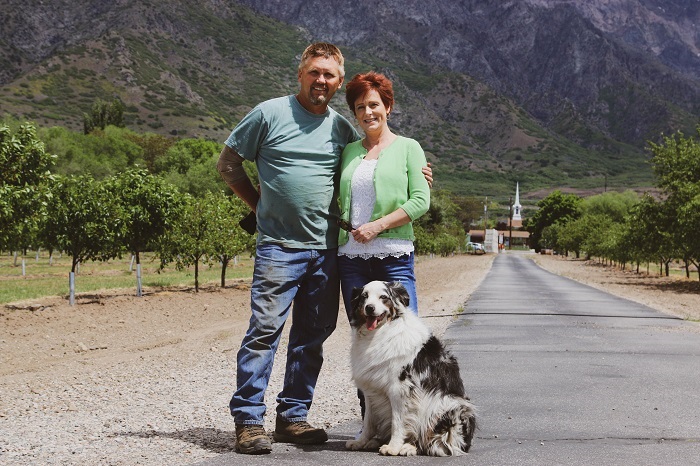
Chock-full of antioxidants and a natural source of melatonin, the benefits of tart cherries juice have been making health headlines in recent years. “People love it,” says second-generation cherry farmer Dan Woodyatt, who ships the orchard’s distinctively tart Montmorency cherry juice concentrate to customers coast-to-coast.
Although he’s hesitant to make any grand scientific proclamations about the curative properties of cherries (hello there, FDA watchdogs), he says of Woodyatt’s devoted following, “Our concentrate is a huge seller,” for people struggling with many types of body inflammation (especially arthritis, gout, and joint pain), and as a sleep aid, with each quart bottle of concentrate packing the punch of about 2,000 cherries.
In fact, his father is a walking billboard for the benefits of a tart cherry habit. Turning 90 years old this summer, Glen Woodyatt is still pretty spry, enjoying his semi-retirement traveling in his RV and helping out in the orchard. “My dad worked every day until he turned 88 and I started running the farm,” says Dan. “When he’s here, he still comes out every morning and wants to help.”
The Origins of Woodyatt’s Cherry Farm
It’s a family legacy of farming that’s become increasingly endangered all over rural Utah. In the 1950s, Glen Woodyatt bought the land formerly occupied by an apple orchard. A native of Willard, Utah, he started out by diversifying his orchard strategy, planting cherries, peaches, and row crops like corn and watermelons to sell at his fruit stand on Highway 89. Seeing a demand in the market for pie cherries, Glen Woodyatt shifted his operation almost exclusively to vibrant burgundy-hued tart-sweet Montmorency cherries.
Eventually, Woodyatt became one of the state’s biggest pie cherry growers; currently, Utah ranks second in the nation for tart cherries. “We’re the only cherry farmers in northern Utah now,” says Dan of the combination of Woodyatt’s 20 acres of cherry orchards and another 18 acres managed in Perry by another orchardist who sells their stock to Woodyatt.
Now going on 75 years, the Woodyatt family orchard has been a popular stop on Utah’s Famous Fruit Way. This section of historic U.S. Highway 89, between Willard and Brigham City, is home to numerous family-run fruit stands, many of which operate from mid-June through roughly October. Woodyatt’s stands apart, both because patrons have the opportunity to visit the farm store in the midst of the family’s beautiful cherry orchards, and for the fact that their shop is open year ‘round from 9 am to 9 pm “We’re open every day,” says Dan, “even Christmas.” Just look for the old orange tractor and the “Woodyatt Cherry Farm” sign proclaiming “Tart Cherry Concentrate,” on the west side of the highway.
Uncertain In Cherry Farming
Between encroaching development and younger generations not interested in farming, Dan says that their orchard’s long-term future is in flux, pointing to similar challenges for neighboring farm stands like Pettingill’s and Grammy’s. “I don’t know what’s going to happen when we get old,” he says, whose own grown children haven’t shown an interest in agriculture.
And Dan notes there are additional challenges to the Famous Fruit Way’s rural way of life. “The subdivisions are closing in.” His concern echoes the findings of a 2012 study by the Utah Agriculture Sustainability Task Force (UASTF), which noted that 96 percent of Utah’s orchards located in areas along the Wasatch Front are experiencing the most rapid growth. Even more troubling, the report states that “Utah produces roughly 10 percent of the fruit it needs” to be locally sustainable, and that “Utah‘s climate and elevation limit the places where fruit can be grown commercially. Unfortunately, these areas are also the most threatened by development.”
A recent Envision Utah study is even more alarming. “Utah’s food production has declined precipitously to where Utah now produces only 2% of its vegetables, 3% of its fruit and 25% of its dairy”; although the state covers 98 percent of its grains and 135 percent of its protein needs, “these percentages could further decline significantly as Utah’s population nearly doubles and we lose more prime farmland by 2050.”
Dan thinks it’s a shame more young people aren’t going into agriculture, and he’s not alone in his concern about the rising age of Utah’s farmers, which, as of the last census, had moved up to 57 years of age. Even with pie cherry trees being notoriously sensitive (he planted 630 new trees this year, with the prime life cycle of a Montmorency cherry tree 15–20 years), and the never-ending depredation of gophers on the trees’ roots, Dan prefers working in the orchard any day over his previous 20-plus-year career as a grocery store manager. “It’s a low-stress occupation, even taking into account things like the weather,” he says of the intense summer hours associated with harvest, preserving, and working at multiple farmers markets, but is balanced with a relatively laid-back winter. “It’s a good life … and can be pretty profitable the way we do it.” Especially with Woodyatt’s emphasis on products that have year-round appeal and sale opportunities.
Hard Work Tasty Output
With an eye on quality control, Dan and his wife Lisa Woodyatt have an on-site commercial kitchen where they prepare dried cherries and a number of cherry products such as jam and pre-baked pies they sell both at the store and at local farmers markets.
Orchard visitors can also purchase the popular concentrate, pitted pie cherries (both sweetened and unsweetened) by the frozen container in quantities from 4 to 30 pounds, and fresh cherries when they’re in season. Fresh, dried or frozen, my family gobbles them down like candy. Lisa says production is at its peak during cherry season in July. “I make pies until I wish I was dead. Dan makes the filling and I make the crust, and we bake them up 20 at a time.”
Not to knock Lisa’s hard work, but what a delicious way to go, right? Although if we eat enough tart cherries, there’s a good chance that fateful day will be a long, long time in the future.
Where to find Woodyatt Cherries:
Woodyatt Cherry Farms, 7630 S. Hwy 89, Willard, 801-721-0130
Open year-round, 9 am–9 pm,
Downtown SLC Farmers Market, Pioneer Park: Saturdays, June–October, 8 am–2 pm
Murray Park Farmers Market, 200 E 5200 S., Fridays and Saturdays, August–October, 9 am–5 pm, localharvest.org/murray-farmers-market-M1012
Ogden Farmers Market, Historic 25th Street between Lincoln & Grant Avenues, Saturdays, June–September, 9 am–2 pm,
Park City Farmers Market, NEW LOCATION for 2018, near Silver King Resort parking lot, Wednesdays, June–October, 2 pm–6 pm
More family farms on Utah’s Famous Fruit Way: facebook.com/UtahsFamousFruitWay/
