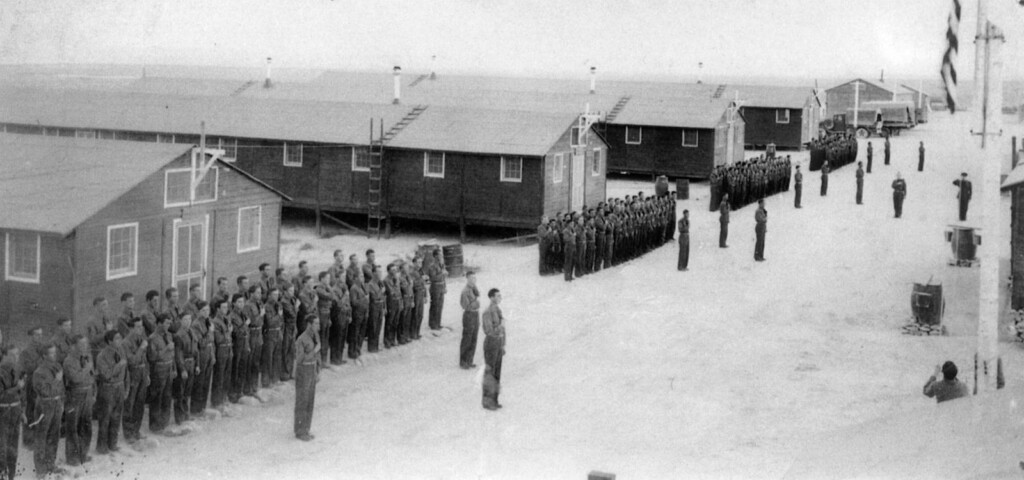

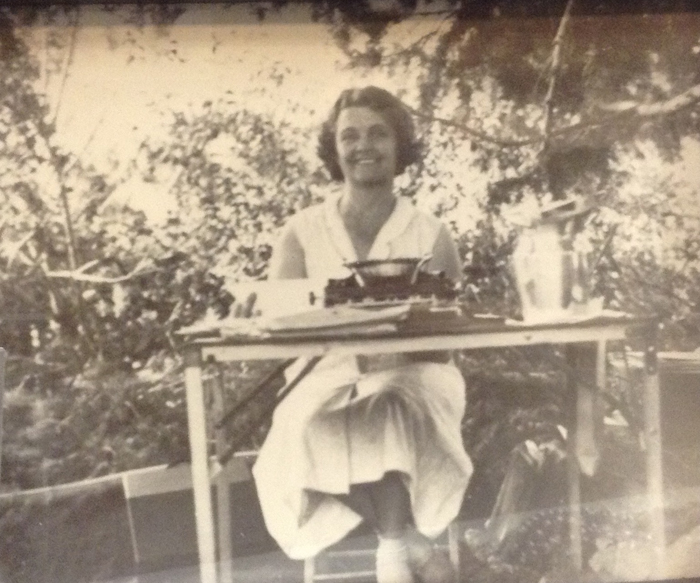
Marie Ogden claimed a direct communiqué with God via divine manipulation through her typewriter. She began touring the country, lecturing, slowly gaining a devout and following congregation, and would eventually establish the little-known pious commune, the Home of Truth, in 1933 …
You probably haven’t heard of Marie Ogden. Hell, most of the people living in Monticello, Utah–where her intriguing story unfolded and remains–under the age of 50, haven’t heard of her either.
As I drove down that forever-long black line, Route 6, on way to Monticello, and the property where close to 84 years ago, nearly 100 members of the Home of Truth lived in wait for the End of Days, I listened to my audio recorder spit out my own robotic voice, dictating ideas, angles, and thoughts. I listened to myself read articles, histories, and essays I recorded earlier because, like you, I too hadn’t heard of her; and I was meeting Emma Kemp, a Los Angeles artist and writer.
For a month, Emma’s staying in the only one of four structures that’s been renovated and made livable, living amongst the still-standing homesteads that exist like skeleton-outliers of what was once a community of peaceful truth-seekers, researching the property and its histories for her upcoming book.
… Marie grew up to be an affluent, well-educated woman; a substantial member of her Newark, New Jersey community, she ultimately was elected president of the New Jersey State Federation of Women’s’ Clubs.
All that changed, however, in 1929, when the death of her husband affected her deeply, filling her with the bitter desire for the incorporeal: she started questioning life and what takes its place—she wanted to understand God, she wanted Truth. Marie turned her back on the materialistic world she’d always known and turned her attention to the metaphysical.
She found comfort in Spiritualism—a branch of belief where the dead are endowed with the ability to communicate with the living and provide knowledge and wisdom regarding moral and ethical quandaries and insights into the very nature of God …
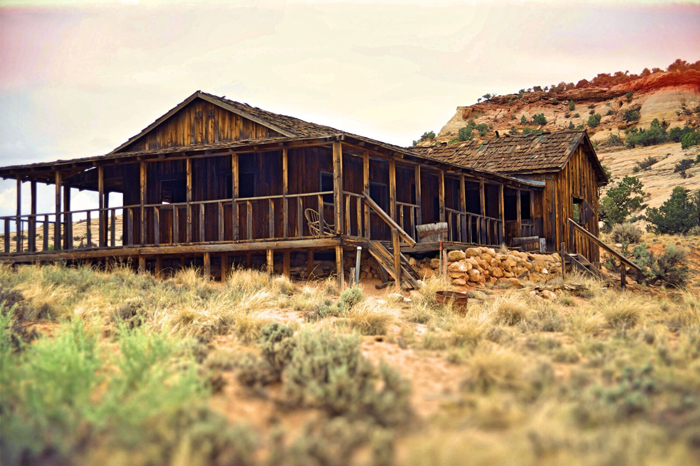
When I pulled up to the property, it wasn’t hard for me to believe why so many religious narratives and text contain elements of the desert. Notwithstanding the seeming inhospitable attitude of such arid climates, the desert is ripe for finding lost things.
I unrolled the window and a furnace-blast of heat exploded in my face; the temperature gauge in the car showed 100 degrees.
I sat there in the car, sweating and smoking a cigarette, skipping tracks on the recorder looking for something specific.
In one of her revelations, God counseled Marie to prepare for the End of Days. She was to establish a colony dedicated to the “Truth,” and was given a mental snapshot of where this colony would reside, much like Brigham Young 86 years prior. She alleged she knew “it was on virgin soil, far removed from city life.” It was on this humble parcel of land the communal group staked its root and waited for the Second Coming.
I kept the recorder playing as I hopped the fence and made my way up a winding, sandy path to the little cottage Emma was staying in. With no one around, it felt as if I had just stepped into a horror movie. I was certain, for the briefest of moments, that I would run into ghost, If not Marie herself, then maybe the spirit of, what’s her name?
… There was no burial in the days following the death of one Edith Peshak, a loyal member of the Home of Truth—she died of cancer surrounded by the existential distances of Southern Utah’s Dry Valley desert, and in the company of friends, family, and fellow Home of Truth members; instead, the corpse was washed in a salt solution and given milk twice a day for more than a year.
Marie believed there was a cord connecting present life to the thereafter, and that cord has never been cleaved; the dead have the power to choose whether to stay in this life or, by cutting the cord, pass on. According to her, Peshak wasn’t really dead, but rather, only in a kind of liminal state …
This fascinating, albeit little known—and oft times misunderstood—history survives as it existed: on the fringe. And the story, the group, and Marie herself, continue to be sensationalized in the media, in part because of the word “Cult,” and the way we erroneously apply it.
Despite myriad articles and essays, nothing I came across got to the dregs of the story, the real essence and intent of it. Marie, her Home of Truth and her pious followers have been thoughtlessly and hastily labeled a “Cult,” as if they summoned darkness, practiced blood magic on their own.
Emma wants to change that. “[Marie] wasn’t secretive,” she told me, touching on the topic of whether the Home of Truth was a cult. We were seated in a really comfortable, homely remodeled kitchen. I couldn’t help but twinge with a tad of jealousy. No cellphone reception. No television set. No radio. I wanted to stay there for a month and spend my time in contemplative silence while researching and writing.
“I think the differentiation between a cult and say, a commune, is…to me, a cult’s way of thinking is more draconian; there isn’t an openness to engage others outside of that particular group.”
If we allow this modifier, then, by all accounts, Marie and her congregation certainly cannot be considered a “Cult.” They welcomed outsiders, were regularly involved in the community; the relationship between them and their Mormon neighbors was amicable. Marie simply wanted to share her vision, her message—she had purchased the local paper, The San Juan Record, and readily editorialized her communiqué with God.
Still, some will argue that the group was a cult (which, technically, by definition, they were, but so too is Mormonism, Catholicism, hipster communal living, the organic food movement etc.), but it’s easier to baptize those living on the fringe as “potentially dangerous” or “crackpots” than it is to try and penetrate the unfamiliar.
And that’s one of the reasons driving Emma to write the book. “I think in order to really understand something, you have to understand it from within,” she said. “Marie was genuine in her convictions … whether or not she was channeling God or speaking with God really isn’t important.” What’s important, Emma and I agree, is intent.
Were her intentions harmful? The answer is a resounding no.
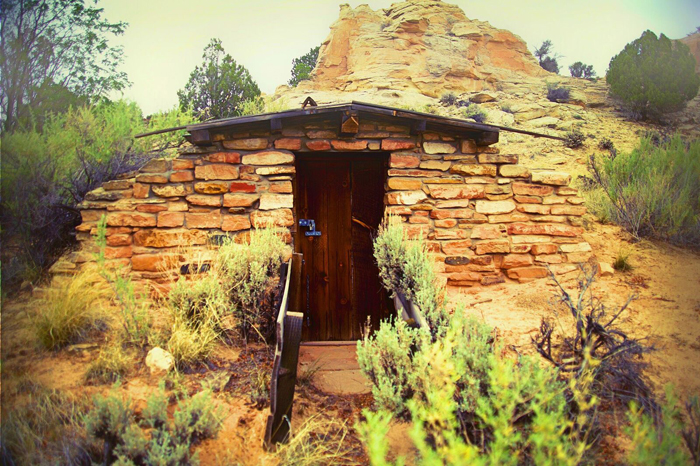
Not long after leaving, the actual extent and reach of Marie’s narrative became apparent, something much more than what has heretofore been covered: it’s a story of hardship and longing; it’s a record of the Human Condition, how we deal with our own mortality—far more complex and interesting than 500 words, even 1400, will allow (what’s the saying—“I would have written something shorter, but I didn’t have the time.”). I’ll leave that up to Emma Kemp.
[After the diaspora of the Home of Truth, Marie continued to live on the Home of Truth site, often working as a piano teacher until her death in 1977. Marie died in a nursing home in Blanding, Utah]