 It was 30 years in the making when the Topaz Museum finally opened in July. Its director, Jane Beckwith, said, “We come together today as a community that balances immigration … with kindness, or in this case, a lack of kindness.”
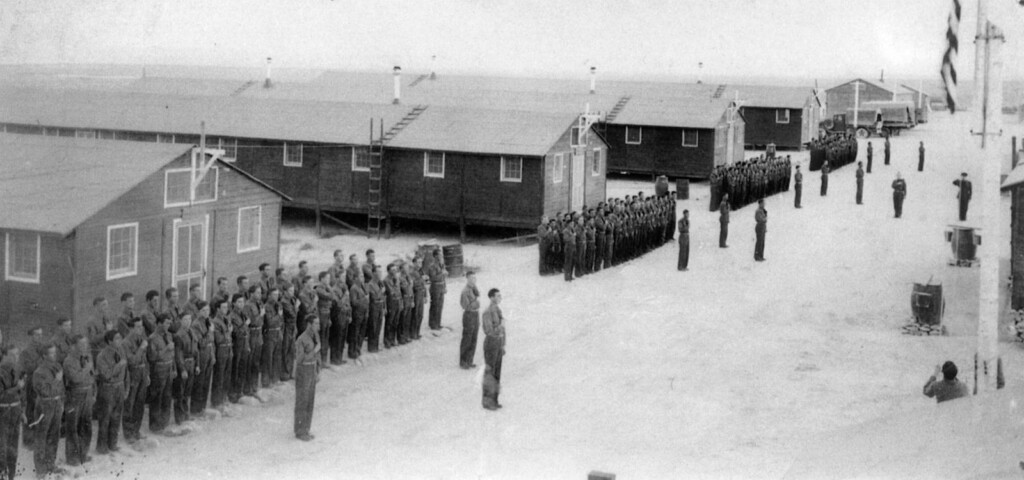
The museum commemorates the internment of Japanese-Americans in southwestern Utah after Japan’s attack on Pearl Harbor. President Franklin Roosevelt’s Executive Order #9066 forced more than 110,000 people of Japanese ancestry, two-thirds of whom were U.S. citizens, to leave everything they had—businesses, homes, possessions—and move to ten inland camps to live under suspicion, armed guard, and behind barbed wire until the end of World War II.
Over 11,000 Japanese-Americans were sent to Topaz between September 11, 1942, and October 31, 1945, when the camp finally closed, making it Utah’s fifth largest city at the time.
The museum is intended to help us understand our past mistakes and to respect the fragility of our democracy. It offers a glimpse into the hardships and wretched living conditions the internees faced, but is balanced by exhibits of art and personal belongings that reveal a strong community.
The museum’s collection has grown to 87 paintings created at the Topaz Art School including works by Chiura Obata, who became an art instructor at the University of California, Berkeley. Some of the most intricate work was made from found objects. Artists gathered small shells and seeds found throughout the internment camp and fashioned them into pins, figurines, jewelry, and decorative objects. More than a dozen are on display at the museum.
The exhibits remind visitors that not a single Japanese-American was ever prosecuted or convicted for any case of espionage against the United States. One Topaz internee, Fred Korematsu, was a civil rights activist who refused Roosevelt’s order and became a fugitive until he was arrested and held in jail in San Francisco.
With the help of the ACLU, Korematsu challenged the legality of the Japanese-American internment, but was convicted of violating the president’s executive order and sent to Topaz. In 1983, Korematsu’s conviction was vacated when evidence came to light proving the government’s lawyers had lied in his case.
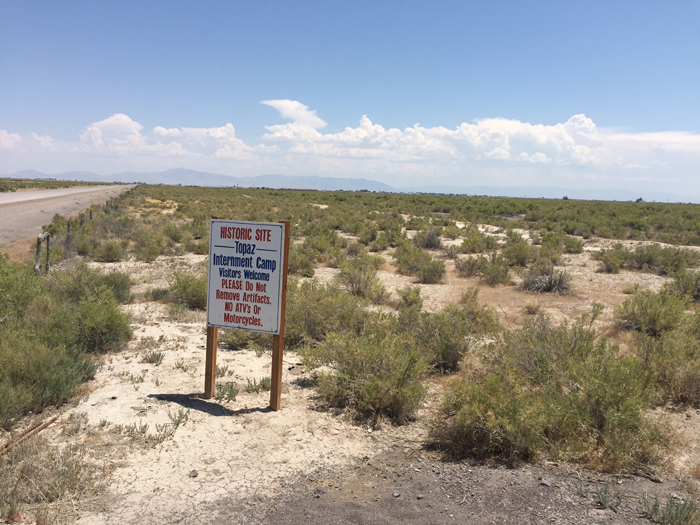
The internment camp site itself is 640 acres (one square mile) located sixteen miles northwest of Delta (10000 West 4500 North). The museum owns all but 6 acres of the land, and only the concrete foundations of the mess halls, barracks and latrines, as well as random artifacts, remain. Despite the lack of structures, the site was designated a National Historic Landmark in 2007. If you visit the site, leave no trace and leave what you find.
From Delta, if you head northeast through Lynndyl toward Salt Lake City, you can’t miss seeing the historic Bullion, Beck & Champion Headframe in the Tintic Mining District as you enter the town of Eureka, or the perfectly aligned trees of the orchards in Genola.
If you go southwest toward Great Basin National Park, you’ll be able to find ancient trilobites or smooth pieces of sharp-edged obsidian at nearly a dozen rock hounding sites along Highway 6 in Millard County. Before you leave Delta, stop at Delta Freeze for a grilled cheese sandwich, milkshake and, as the sign advertises, “newly installed air conditioner.”
Road trips are as much a mindset in America as they are a physical act. Seventy-five years ago, thousands of Japanese-Americans from California were forced to take a road trip they didn’t wan, anticipate, or deserve. As we hop into our truck to leave Delta, we’re reminded that the freedom to hop into that truck to explore the byways should never be taken for granted. §
The Topaz Museum is located at 55 West Main Street in Delta. It’s open Monday through Saturday from 10am to 5pm, and is free, although donations are appreciated.