Online Exclusives

Muslim Community Center Open House

Opening doors to open minds, the Muslim Community Center hosts an open house.

|


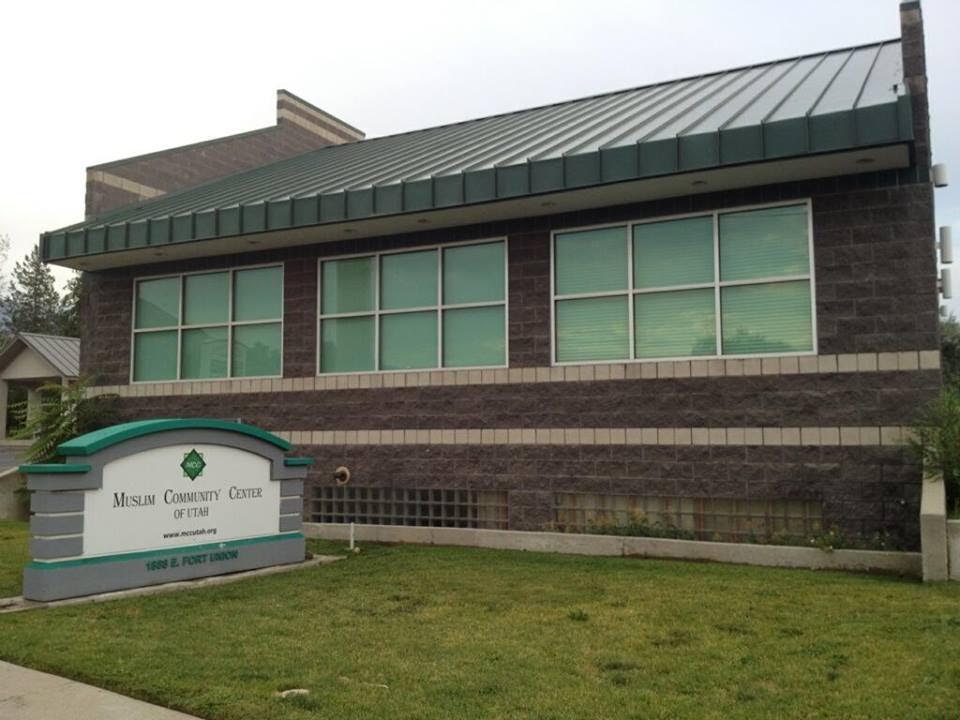
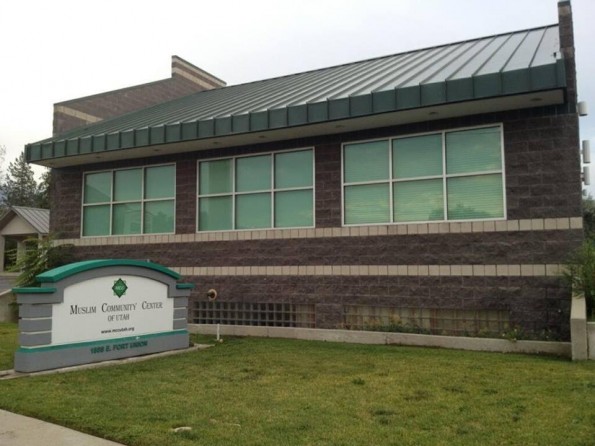
Muslim community centerThe Muslim Community Center is holding a public open house for all ages and denominations on Saturday, February 6 from 12 p.m. to 5 p.m. at 1888 E Fort Union Blvd in Cottonwood Heights.

“It’s a chance to meet and get to know Muslims in your community,” Muslim Community Center member Maysa Kergaye said.

The open house will have food, henna, face painting, Arabic calligraphy,  a Selfie Booth and an ongoing five-minute Powerpoint Presentation with Q&A Station.

“The Selfie Booth will have Islamic clothing for women and children to put on and take a picture with their own phone,” said Kergaye.

Kergaye will be there to teach how to wear the scarves and other clothing pieces.

“I want to break that fear,” she said. “Once they see their own picture wearing a scarf, they can realize we’re just people wearing a scarf. Sometimes you see someone wearing a scarf and they just look like a foreign person, a non-American. But no, we’re just Americans who choose to wear scarfs. When you see yourself in it, I think it breaks that barrier and it makes it more human.”

She hopes the open house will break down those barriers and prejudices.

“If you know a Muslim you don’t tend to have those prejudices,” Kergaye said. “When you hear something, you think, I know a Muslim and they aren’t like that. But when you don’t know anyone, you tend to believe everything you hear in the news. If don’t know any Muslims, and someone tells you something, you tend to assume it’s true of all Muslims.”

And it’s a great chance to visit a mosque, she said. “A lot of people have never been to one, and they are intimidated to just show up. Unlike Temple Square, no one is assigned to welcome visitors. It’s just luck of the draw whether someone there will be comfortable enough to walk up to you and say, ‘Hi, are you visiting? Do you have any questions?’”

“With the open house, there will be people there to answer questions, as well as a lot of other people like you who are also there just to learn and observe,” she said.

As visitors will be asked to remove shoes, she recommends wearing shoes that are easy to take on and off, as well as clean socks without holes.

The Muslim Community Center is one of twelve mosques in the Salt Lake Valley. It opened in June 2014 and has since hosted many programs, events and ongoing activities, such as potlucks, Sunday School, babysitting services, youth camps, yard sales and Friday prayers.

“Anybody is always welcome to come to any of our activities,” she said.

To learn more about the open house and future activities, visit www.facebook.com/mccutah.

 

,

Join our newsletter.
Stay informed.


  • The $7 Million Recruit: How NIL Changed College Athletics Forever

    In 2012, Jabari Parker, a top high school prospect and member of the Church of Jesus Christ of Latter-day Saints, was facing his biggest decision to that point in his life: where to play college basketball. 

    Fans of BYU athletics hoped and perhaps prayed that Parker would pick the school owned by the church he was raised in. BYU was listed as one of his final choices. But he ultimately chose to spend his college years at Duke before attempting a career in the NBA. BYU fans were disappointed, but no one was truly surprised. Duke over BYU was the best choice for a young prospect in 2012. 

    A.J. Dybantsa.

    What changed between 2012 and 2024 when A.J. Dybantsa, the number one high school prospect, chose BYU over every other school? The answer is roughly $7 million dollars. That is what Dybantsa is reportedly making to play basketball at BYU. 

    The deal was supported by Utah Jazz owner Ryan Smith, who met multiple times with the Dybantsa family in multiple attempts to bring the young player to Provo. 

    According to Smith, he had no financial role in bringing Dybantsa to BYU, but the influence of Utah’s most famous billionaire acting as a “booster” or unofficial recruiter certainly swayed the decision.

    Prior to 2021, boosters acting as recruiters was taboo to the NCAA governing body. It was called improper recruiting. But in 2021, California began the modern era of NIL, or the ability of a college athlete to benefit from their name, image, or likeness, when they passed the “Fair Pay to Play Act.” 

    This new law gave college athletes in California the ability to benefit from their NIL, something that was banned in the rest of the country to that point. The NCAA saw that this law would create an unfair advantage for California schools that could now give young athletes the chance to make money off their talent and image while still in college. 

    The NCAA knew they needed to do something quickly, so they rushed through a policy that opened up NIL to all college athletes in the country, and it has been expanding and evolving over the last four years. 

    Grant Duff, who has coached at the University of Utah, Weber State University, and is now the defensive coordinator for Idaho State University, says, “The best part of NIL is that athletes have an opportunity to make good money. The downside comes with the free-for-all that money causes.”

    Dybantsa confers with BYU Head coach, Kevin Young.

    One of the biggest current examples of what a school can do when the boosters are willing to pay for success is Texas Tech University. From 2020-2024, Texas Tech had 34 wins, which works out to 6.8 wins per year with a low of 4 wins and high of 8. Then Texas Tech’s boosters got involved, led by Cody Campbell, an oil industry businessman and Chairman of the Texas Tech board. The football program was given 28 million dollars for NIL with a simple message attached to the large pile of money: Win. And win now. And win they did. 

    By signing NIL deals with athletes in the transfer portal, Texas Tech went from a middle-of-the-pack school in their conference to one of the top 12 teams in the country. They didn’t just win games in 2025, they made many of their opponents look like they didn’t belong on the same field, including the University of Utah and BYU twice. That is what money can buy.

    Continue reading and support independent Utah journalism with a purchase of Utah Stories (Digital + Print) or 3 month free trial (Digital).


  • Priced Out of Summer Fun? These Activities Cost Almost Nothing

    As summer approaches, many of us start looking for new ways to be active. Whether you’re emerging from a cozy winter of hibernation, or searching for a replacement for skiing and snowboarding, there are inexpensive and accessible ways to get outside, get active, and make the most of summer. 


  • The Reality of Meth Psychosis on Utah’s Streets

    On the streets of downtown Salt Lake City, psychosis has become part of the landscape.

    People scream at invisible enemies. Some believe they are prophets. Others wander through traffic carrying conversations with voices nobody else can hear. To passersby, it can look theatrical, bizarre, and absurd. But behind many of those episodes is a darker reality few people want to confront directly: methamphetamine-induced psychosis, prolonged sleep deprivation, trauma, addiction, and the slow destruction of a person’s ability to distinguish reality from delusion.


  • Did Utah Leaders Already Sell Out Tremonton to Big Tech?

    When Kevin O’Leary appeared on Fox Business and casually announced that Utah would soon become home to what could be the largest AI data center project in the world, many Utahns had the same reaction:

    Wait… this was already approved?