Utah Stories

Ogden’s Rainbow Gardens

When you visit Ogden, don’t miss “Utah’s Largest Gift Store.”

|


rainbow gardens
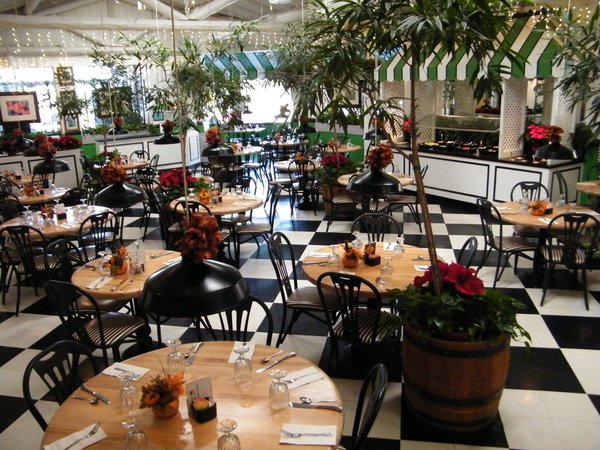
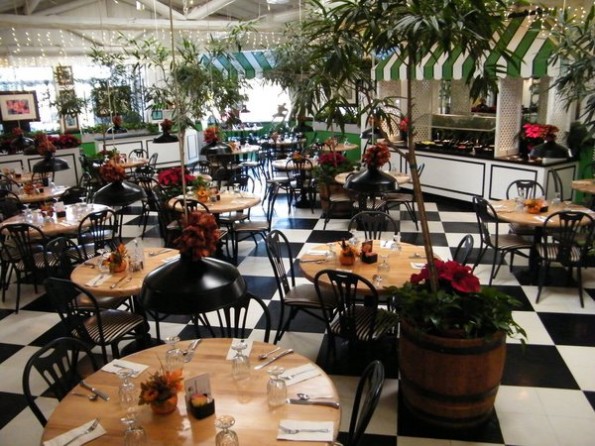
The Greenery Restaurant at Ogden’s Rainbow Gardens

Seated by the windows at The Greenery, a classic diner nestled in the Rainbow Gardens emporium,  you can look out at the mountains of Ogden Canyon. Across the street is the entrance to the Ogden Eccles Dinosaur Park and you can head up the road and stop in at the Weber County botanical garden. 

Between the restaurant, the boutique-style Planet Rainbow, and “Utah’s Largest Gift Store,” Rainbow Gardens offers enough for a full afternoon of activities. Owner Jenny King Francl says that that visitors tend to be an older crowd, mixed in with young parents continuing the traditions they remember from childhood. But with a resurgence of interest in “retro” dining experiences, market-style variety, and urban exploration, younger audiences are discovering this unique Ogden experience.

The King family, longtime owners of Rainbow Gardens, have been running the place for three generations. In that time, the so-called “Ballroom Boutiques” have expanded from one room to two, the second being a former swimming pool that they’ve turned into a terraced solarium called the Gift Garden. Here buyers can find local and exotic plants, garden decor, home accessories and carefully selected holiday items. None of these products come across as chintzy, no chunks of glitter on poorly shaped butterflies or plastic flamingoes. Jenny says she carefully selects each item with her team, trying to maintain an atmosphere that invites nostalgia while still feeling new.

DSC_0790The same is true of the Christmas Porch, a room in the back of the main shop that feels like it’s lost in December all year long. There are a few pop culture ornaments, but even these obvious sellers are well-crafted. Most of the ornaments are atypical of the Christmas shopping experience: Glass bulbs with branches of evergreens inside, bubble lights in the chimneys of detailed model houses with animatronic figures in the windows, the smells of winter in a bag with ingredients fresh enough that the cinnamon stings the tip of your nose if you hold it too close.

In the main shop, the Ballroom Boutiques, the walls are titled by theme: Soaps and Scents, Gourmet Goodies, Fabulous Fashions. The Soaps area alone has so many varieties it is hard to know where to begin, from artisan soaps to hand-dipped candles and every other scent-delivery system imaginable. Regular visitors Gordon and Maria Milligan, a couple in their twenties, like to peruse each nook before deciding what to buy. Maria says they don’t come to shop, just to experience the place, but they tend to always go home with something. This time it’s a pair of earrings.

Across from the restaurant and Ballroom Boutiques, there’s Planet Rainbow, a smaller shop with local books, new age items and readings for those with interests in the metaphysical, and a cafe on the far end that doubles as a Salt Lake City Olympics museum and gift shop. Gordon buys a pack of tarot cards for purely academic interest. He tells me he’s a collector of hobbies and interests, doing a little bit of everything.

Between the two sides of the center is a hallway, full of poster-size recreations of old postcards showing Ogden Canyon landmarks and work from local artists. At the end of the hallway is My Heritage Fabrics, an award-winning shop that provides classes as well as a good selection of materials for the hobbyist.

After all this shopping, there’s still the food. While dining of the 1960’s has largely disappeared, The Greenery succeeds in making the experience and the dishes feel current and classic. They serve typical diner meals like burgers, pastas, enchiladas, and soups. But they also serve rarities like crab louie salad, a dish that they have salvaged through attention to the flavor and look that made diners enjoy it in the past. And the famous Mormon Muffins. I sit down to dinner with Gordon and Maria and they order six muffins–the menu offers single orders and the sextet option.

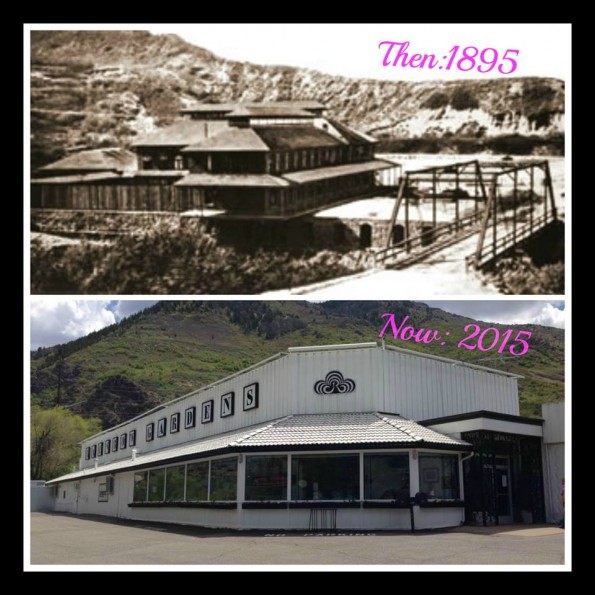
Rainbow Gardens is not the only thing to see in Ogden Canyon by far. But it is one trip that should not be rushed. While they have updated their inventory and continually bring in new local artists to brighten up the walls with their work, the attraction for a new generation of visitors should be in the timelessness of the Gardens’ seeming antiquity. Gordon’s father took him there as a child and raved about a hot dog vending machine where he used to spend his change. The vending machine is gone, but the visitors return for the new experiences. For Jenny, who curates the Rainbow Gardens atmosphere, and for Gordon and Maria, who return monthly, the center is as exciting now as it must have been for the older couples eating in the Greenery and browsing the Ballroom Boutiques not simply for nostalgia, but for fresh experiences as potent as the memories of their first visit.11215145_811962182225758_8771235256936177330_n
Join our newsletter.
Stay informed.


  • The $7 Million Recruit: How NIL Changed College Athletics Forever

    In 2012, Jabari Parker, a top high school prospect and member of the Church of Jesus Christ of Latter-day Saints, was facing his biggest decision to that point in his life: where to play college basketball. 

    Fans of BYU athletics hoped and perhaps prayed that Parker would pick the school owned by the church he was raised in. BYU was listed as one of his final choices. But he ultimately chose to spend his college years at Duke before attempting a career in the NBA. BYU fans were disappointed, but no one was truly surprised. Duke over BYU was the best choice for a young prospect in 2012. 

    A.J. Dybantsa.

    What changed between 2012 and 2024 when A.J. Dybantsa, the number one high school prospect, chose BYU over every other school? The answer is roughly $7 million dollars. That is what Dybantsa is reportedly making to play basketball at BYU. 

    The deal was supported by Utah Jazz owner Ryan Smith, who met multiple times with the Dybantsa family in multiple attempts to bring the young player to Provo. 

    According to Smith, he had no financial role in bringing Dybantsa to BYU, but the influence of Utah’s most famous billionaire acting as a “booster” or unofficial recruiter certainly swayed the decision.

    Prior to 2021, boosters acting as recruiters was taboo to the NCAA governing body. It was called improper recruiting. But in 2021, California began the modern era of NIL, or the ability of a college athlete to benefit from their name, image, or likeness, when they passed the “Fair Pay to Play Act.” 

    This new law gave college athletes in California the ability to benefit from their NIL, something that was banned in the rest of the country to that point. The NCAA saw that this law would create an unfair advantage for California schools that could now give young athletes the chance to make money off their talent and image while still in college. 

    The NCAA knew they needed to do something quickly, so they rushed through a policy that opened up NIL to all college athletes in the country, and it has been expanding and evolving over the last four years. 

    Grant Duff, who has coached at the University of Utah, Weber State University, and is now the defensive coordinator for Idaho State University, says, “The best part of NIL is that athletes have an opportunity to make good money. The downside comes with the free-for-all that money causes.”

    Dybantsa confers with BYU Head coach, Kevin Young.

    One of the biggest current examples of what a school can do when the boosters are willing to pay for success is Texas Tech University. From 2020-2024, Texas Tech had 34 wins, which works out to 6.8 wins per year with a low of 4 wins and high of 8. Then Texas Tech’s boosters got involved, led by Cody Campbell, an oil industry businessman and Chairman of the Texas Tech board. The football program was given 28 million dollars for NIL with a simple message attached to the large pile of money: Win. And win now. And win they did. 

    By signing NIL deals with athletes in the transfer portal, Texas Tech went from a middle-of-the-pack school in their conference to one of the top 12 teams in the country. They didn’t just win games in 2025, they made many of their opponents look like they didn’t belong on the same field, including the University of Utah and BYU twice. That is what money can buy.

    Continue reading and support independent Utah journalism with a purchase of Utah Stories (Digital + Print) or 3 month free trial (Digital).


  • Cottonwood Heights Corruption Allegations: A Case That Never Reached a Courtroom

    A year ago, we here at Utah Stories recorded a podcast episode that we never published. We were revisiting corruption allegations from ten years ago. We decided not to publish the video, so it sat there on YouTube for nearly 12 months.

    Then somehow the video was published. How? We are not sure, but once it got out there, the comments came pouring in.

    Dozens of viewers, then hundreds, supported the video with their comments on our examination of allegations of police misconduct in Cottonwood Heights. The video recounts how the Police Department was reported by business owners as focusing enforcement on customers of the former Canyon Inn bar. These allegations did not result in a publicly documented, full investigation by Utah’s Justice Department nor the FBI (at least to our knowledge). So why rehash the past?

    We believe the story of The Canyon Inn (and other area business owners) vs. CHPD and Cottonwood Heights Mayor Kelvin Cullimore raises questions about what can happen when allegations surface and do not move forward through a formal legal process with state or federal oversight.

    In 2012, Cottonwood Heights business owners at the mouth of the canyons began publicly objecting to police activity whereby up to seven cruisers were pulling over 711 and Canyon Inn bar customers on their busiest evenings.

    According to those accounts, drivers leaving the bar were frequently pulled over by police and were given DUI tickets, sometimes even after passing a sobriety examination. The volume and concentration of those stops led residents and business owners to complain about the “heavy-handed treatment” of CHPD toward motorists, especially in and around the Canyon Inn and neighboring 711, and eventually the Porcupine Pub.

    Customers responded in predictable ways. Some chose not to return and avoid the area. Others went to different establishments. Over time, the owner of the Canyon Inn, Jim Stojack, stated that his revenue declined by 70% and that he believed police activity near his business was the main contributing factor.

    Utah Stories reported on these concerns by conducting interviews; gathering video documentation provided by those involved; and making public records requests. Through our GRAMA requests, we reviewed DUI citations issued by the Cottonwood Heights Police Department and examined how those cases were resolved in Holladay Justice Court. During that period, we observed a higher number based on our review of DUI cases dismissed in court due to lack of evidence compared to other jurisdictions. One DUI attorney, Tyler Ayers, went on record saying that CHPD was issuing a high volume of DUI citations that were later dismissed.

    That observation raised questions about how cases were being documented and prosecuted. It did not, on its own, establish intent or misconduct, but it became part of a broader set of concerns raised by multiple sources.

    Continue reading and support independent Utah journalism with a purchase of Utah Stories (Digital + Print) or 3 month free trial (Digital).


  • Why Did Salt Lake City Tear Down Its Most Beautiful Buildings?

    If you go into the Utah State Archives and spend time with photographs from the late 1800s and early 1900s, you start to notice something that doesn’t line up with what exists today.

    Main Street looks cohesive. Not in a uniform way, but in a way that suggests the people building it shared an understanding of proportion, material, and permanence. Four-story buildings line the street—stone, brick, cast iron—each one detailed in ways that don’t feel incidental. Arched windows, carved stone, brickwork that changes pattern as it rises. Even the cast iron facades were designed to replicate masonry, not hide behind it.

    Then you go downtown and try to find those same buildings.

    Most of them are gone.

    Out of more than 400 buildings designed by Richard Kletting, over 300 have been torn down. That number alone reframes the conversation. Kletting designed the Utah State Capitol, the Saltair resort, commercial buildings, schools, churches, mansions—virtually every type of structure…

    Continue reading and support independent Utah journalism with a purchase of Utah Stories (Digital + Print) or 3 month free trial (Digital).


  • Momomaru Sushi Review: Salt Lake City’s New Destination for Japanese Hand Rolls

    A new Salt Lake City sushi spot is drawing crowds with Japanese-style hand rolls served fresh, fast, and warm, offering a more intimate and interactive take on traditional sushi.