How often have you heard that Sugar House has good vibe and a hip arts scene? That reputation endures, due in large part to the presence of two pillars of the arts community – the Rockwood Art Studios and Petersen Art Center.
In 1994, there were plenty of vacant, affordable spaces to rent or buy in Sugar House. Harold Petersen and his son Mark were looking for a spot to open an art center, and the place they found was an empty 30-year old office building where the Marlo Theatre once stood. Beyond the papered windows and faded for-sale sign, the Petersen’s envisioned a private art school for people of all ages who wanted to enrich their lives by developing their artistic abilities. The building was ideal for an art supply store downstairs with classrooms above and solid enough for a two-ton ceramic kiln to be assembled – like a ship in a bottle – on the second floor.
The Sugar House art scene was thriving because of the availability of inexpensive studio and gallery spaces. Five years after the Petersen’s opened their center, the Rockwood Furniture building was remodeled with 24 artists’ studios on its two floors; every space was rented before the remodeling was even finished. Now, SaltGrass Printmakers and 2100 Studios provide additional room for established and emerging artists to work.
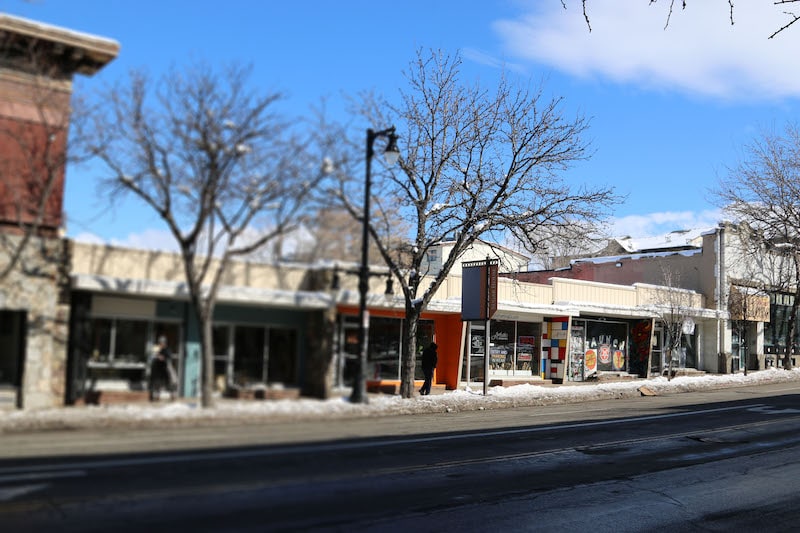
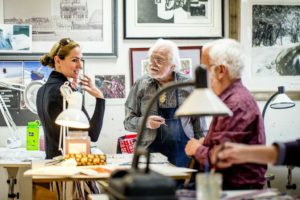 New construction in the district has been good for many businesses, but the arts environment has inevitably changed. Lease rates have risen, and competition for parking spots near the commercial core hinders retail art sales. Some artists have moved away, while others have found innovative ways to show and sell their pieces. The Local Colors of Utah Gallery is a cooperative enterprise where thirty local artists display their creations. Retail businesses such as Artistic Framing Co. and One World Gifts allow artists to use their wall space for exhibits. On the second Friday of each month, stores around the crossroads of 2100 S/1100 E host the Sugar House Art Walk, which benefits participating merchants, musicians and artists alike. These, along with the annual arts festival, help to sustain a healthy arts community in Sugar House.
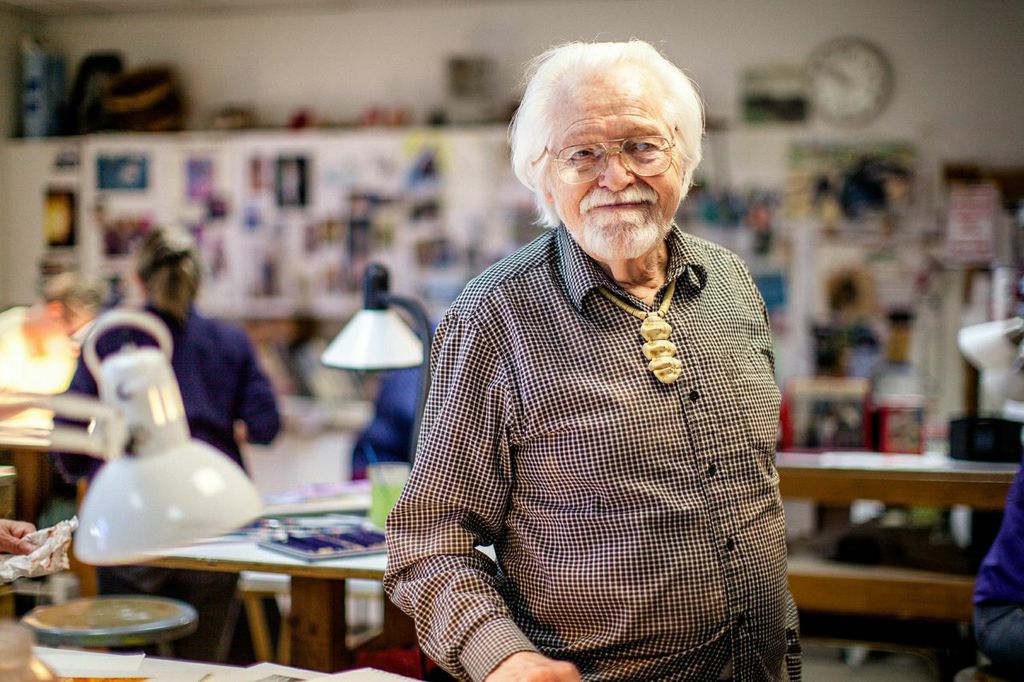
Harold “Pete” Petersen has taught drawing and painting to thousands of students during his thirty years as head of the art department at Highland High School, as an adjunct professor of art education at the University of Utah, and since opening the Petersen Art Center. Petersen wrote, “My students are [youth] who have a special aptitude in art; retired men and women who now have time to develop a latent talent; young working men and women who need to counter their stressful jobs with quiet creativity; and talented young to middle-aged mothers who feel a need for self-fulfillment outside the home.”
Mark Petersen, himself a celebrated artist in ceramics, recalled that there was a time before audio recordings when music was more about playing than listening to others make music. He said visual art used to be the same. The creative experience is part of a well-rounded life, and touches people’s existence in a holistic way. By extension, artistic expression enhances and enriches the whole community. And perhaps explains why Sugar House is still hip and artsy.