Utah Stories

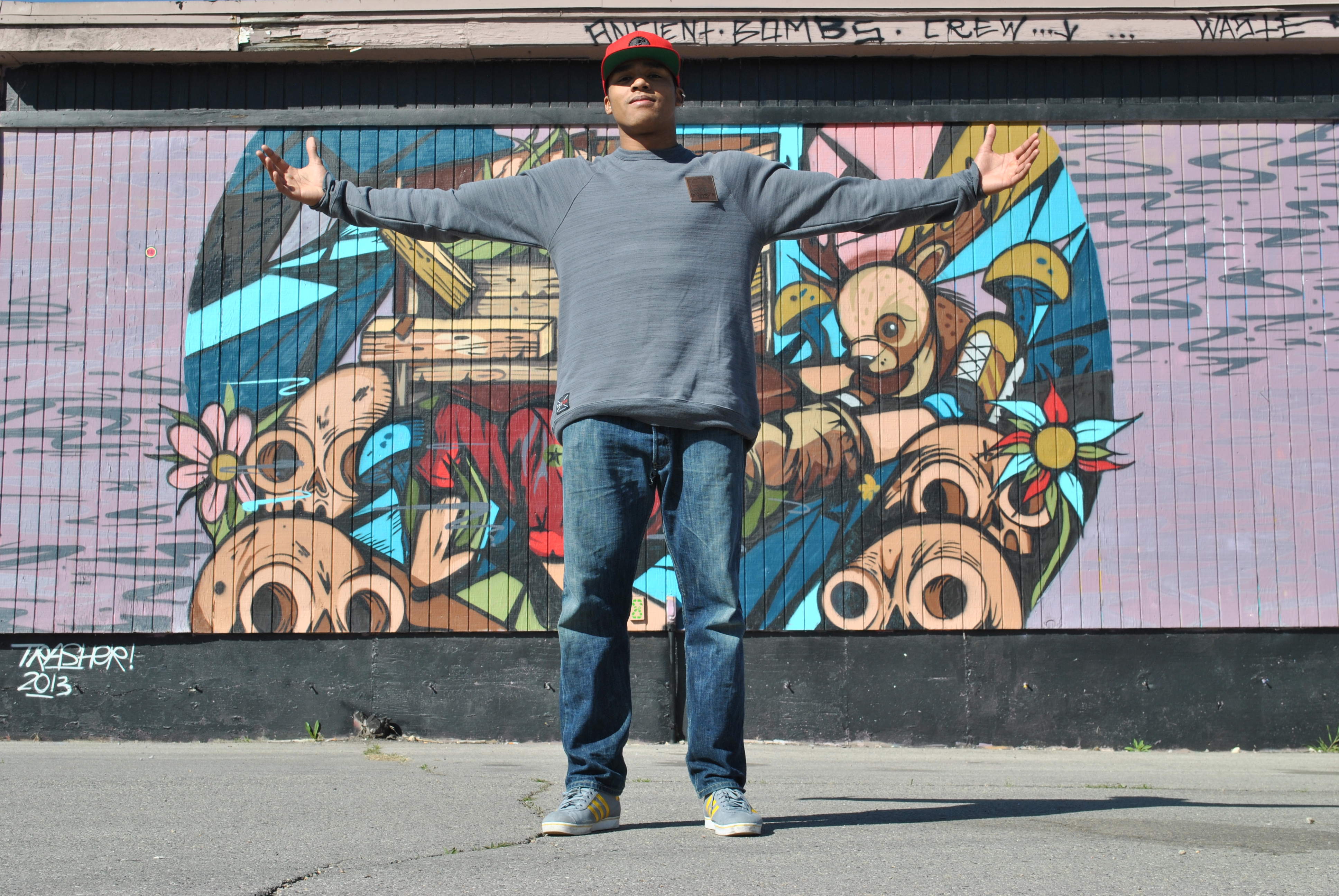
Tristan Thomas of SLC’s Bboy Federation

Salt Lake City’s Bboy Federation provides an space for Utah’s dancers

|


DSC_0463
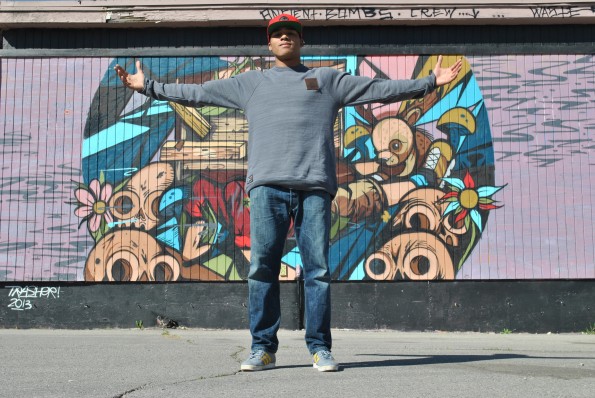
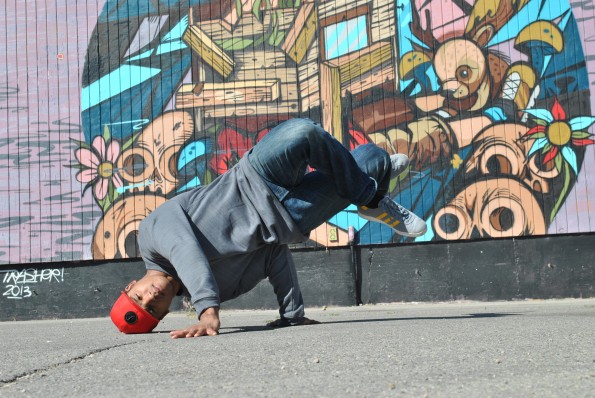
Tristan Thomas of Bboy Federation. Photos by Mark Salgado

A football injury eight years ago sent Tristan Thomas, aka Kool Aid, aka, Killa Bee, on a quest for dance.  While living in Japan, he knew he wanted to learn urban street dance, or breaking, when he was inspired by an episode of the anime show, Samurai Champloo. One of the characters performed a windmill, a continuous spinning move performed on the floor across the shoulders and torso. He attempted the move in his living room and according to Tristan, “I sucked.”

But through determination, self-teaching and friends he learned the moves and started entering “battles,” which are dance competitions where dancers compete against each other with ever increasingly difficult and innovative moves to impress the judges. He also met Joshua Perkins of the Bboy Federation in Salt Lake

The Bboy Federation is housed in a facility sponsored by the Utah Arts Alliance. According to their website, “UAA aims to foster the arts in ALL forms in order to create an aware, empowered and connected community.” The Bboy Federation has an open, inviting dance space for practice and battles. It gives an ever increasing number of dancers a home and a place to try out new moves. Tristan says, “When I first started going to battles there would be 20 people in the room with eight battling. Now there can be up to 100.”
DSC_0467Tristan competes as much as possible and excels at it. “I don’t care if I”m sick or hurt – it doesn’t matter. I compete.” The battles are run bracket-style. After a preliminary round where judges watch all the dancers and decide who is good enough to advance, the battle rounds begin and are whittled down until only two remain. Those two battle it out until a winner is crowned.

Tristan has tried other forms of dance such as popping and ballet. After a few hours of ballet he said he gained a huge respect for what the artists do.  Besides battling Tristan now teaches, passing on what he’s learned. He also performs. He’s been in a couple of movies; High School Musical 3 and My Dear, Dumb Diary, along with some commercials, but his first love is still the thrill of dancing in a battle.

The key to winning, according to Tristan, is to stay focused. “Dance to the music versus just doing cool moves. Whoever is in the moment, dancing and looking good while they do it, will win.”


Story by Connie Lewis



Join our newsletter.
Stay informed.


  • Highway 6 and the Midland Trail: Utah’s Transcontinental Highway History

    From Price Canyon to Delta’s desert stretch, Utah played a central role in building the Midland Trail, one of America’s earliest transcontinental highways and the foundation of today’s Highway 6.


  • Whiskey, Bullets & a Buried Town: Archaeologists Reveal Alta’s Wild Past

    Before Alta was known for powder days and lift lines, it was a silver mining town clinging to the side of a narrow canyon. In the late 1800s, men lived at 8,000 feet, went underground each day, and endured winters that regularly buried buildings in snow. This past summer, that mining town resurfaced — literally — during construction at the Alta Ski Area.

    To understand what Alta really looked like, you don’t begin with legend. You begin with its trash — and this time, that happened almost by accident.

    Alta Ski Area was installing underground water reservoirs to support snowmaking. Because the project sits on Uinta-Wasatch-Cache National Forest land, an archaeologist was required to monitor the excavation. No one expected the trench to produce much.

    But, It did.

    Artifacts began surfacing almost immediately. Enough that the Forest Service contacted the Utah State Historic Preservation Office for help. Lexi Little, who coordinates the Utah Cultural Site Stewardship Program, helped mobilize nearly 30 volunteers to assist with what quickly became a focused two-week excavation.

    Winter deadlines were approaching. The pipes for the reservoirs had to go in the ground. There wasn’t time for a slow, extended dig.

    “It was two weeks of digging in the dirt and helping figure out exactly what we were looking at,” Little said.

    Most of the people screening soil weren’t professional archaeologists. They were trained stewards from around Utah — part of a statewide volunteer network that now approaches 500 people. They poured dirt through shaker screens, scanning for fragments that could piece together a town long buried.

    “Archaeology is human trash,” Little explained. “Archaeologists are very into trash.”

    Alta had left plenty behind.

    https://youtu.be/hzIHzx3OGoo?si=dKcl2CEz-t6FZzYw

    Victorian-style ceramics appeared first — the kind typically used in hotels. Medicine bottles followed. Ink bottles. Hand-blown glass. A porcelain doll’s foot surfaced from the soil, a small detail that shifted the mental image of the town. Families were here. Children were here. This wasn’t only a camp of miners.

    The bottles helped establish time. Manufacturing details — whether glass was hand-blown or mold-made, whether a maker’s mark appeared on the base — allowed archaeologists to date many of the artifacts to the 1870s through the 1890s, when Alta was booming as a silver mining town.

    “That gives you that range of dates for when Alta was really booming,” Little said.

    One reusable soda bottle clearly stamped “Salt Lake City” connected the canyon to the valley economy below.

    Then something unusual rolled out of a dirt pile.

    A corked bottle. Intact. Liquid still inside.

    To access this post, you must purchase Utah Stories (Digital + Print) or 3 month free trial (Digital).


  • The Only Full Bottle of Alcohol Ever Found in Utah Was Unearthed in Alta

    When a backhoe rolled a corked bottle out of the dirt at Alta this summer, no one immediately grasped what they were holding. It wasn’t empty. It wasn’t shattered. It was full. “The bottle that was discovered up at Alta is the only bottle of alcohol ever discovered in an archaeological excavation in the state…


  • How Horses Help Kids Heal: Inside Utah’s Equine Therapy World

    Kelty Johnson trains horses for a living, but her deeper work happens in the quiet space between animal and human. On the Utah Stories podcast, she explains how equine therapy helps children regulate emotions, build confidence, and reconnect through presence rather than pressure.