Utah Stories

Mano Thai Diner: Vegetarian Thai Good at Its Finest

A family tradition of vegetarian thai located in Salt Lake City.

|


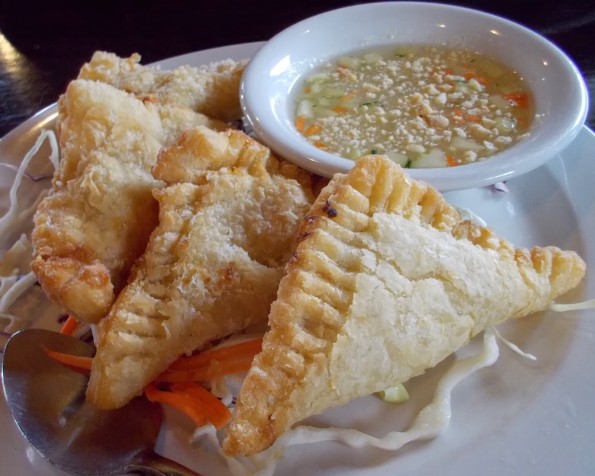
curry puffs
Curry Puffs at Mano Thai Photos by Amanda Rock

In a city where there are more Thai restaurants per capita than Thailand, they don’t warrant much attention, but the convenient location of Mano Thai Diner was too good to ignore. I dragged my husband there for the lunch special, a selection of two entrees with jasmine rice, brown rice or noodles for only $7.99 or a single serving of curry for $5.99.

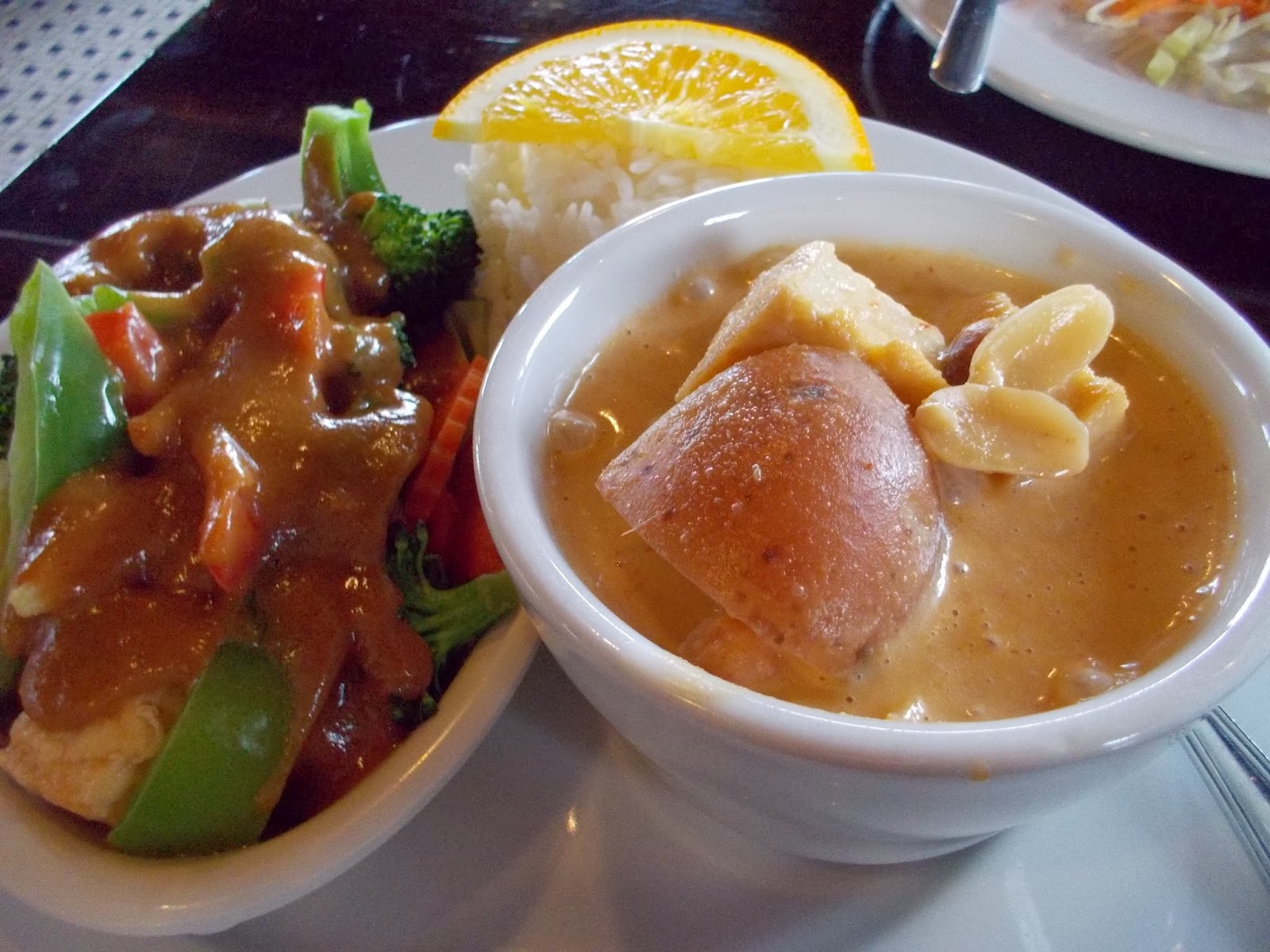
I scarfed down my Massaman Curry, rich and mellow loaded with potatoes, onions and peanuts in sumptuous coconut milk-infused curry. My second selection was Tofu Pad Pra Ram, steamed veggies and tofu covered with sweet peanut sauce. The combination of sweet and savory always makes my mouth happy! As an appetizer we selected the Curry Puffs, yellow curry potato-filled pastries. Four pastries come in an order for $6.95, which is ideal to split with the lunch special.

“We opened Mano Thai to continue a family tradition.” says owner Mookie Wilder. “This traditions goes back several generations in both the North and South areas of Thailand. We offer the same dishes and recipes that we serve back home in Thailand.”

Since the extent of my knowledge of Thai food comes from Salt Lake City, I can’t speak to the authenticity of the dishes, but I can assure you most things I’ve tried are delectable and the service is consistently friendly and prompt. It takes something exceptional for a Thai restaurant to distinguish itself in Salt Lake City, and Mano Thai Diner has it.

Most every Thai place has vegetarian options, but Mano Thai Diner has carefully constructed their vegetarian menu to stand out with faux meat options like chicken and beef as well as tofu. “We offer a contemporary vegetarian menu, not just substituting tofu for meat, or leaving out items, but completely original unique dishes that have become popular with both our regular customers and hard core vegan and vegetarian customers.” boasts Wilder.

The Tom Kha Gai (Coconut Soup) is a dreamy blend of coconut milk, herbal lemon-grass, tart lime juice, mushrooms and silken tofu. This is what I crave when I’ve had a bad day or am feeling sick. The small ($4.95) usually satiates me, but the large ($10.95) insures left-overs.

If salad sounds better than soup, go with the Larb Lettuce Wrap. The vegetarian version is served with savory minced tofu in a fiery, pungent dressing – a unique taste that I’ve come to crave. The fresh lettuce and sticky rice help the spiciness go down, and it’s fun to assemble each bite. A half order is $6.95 and a full order is $9.95.
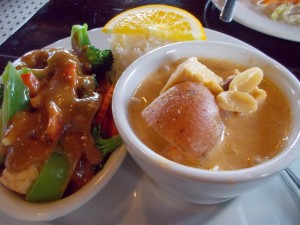
lunch special
The Mano Thai Lunch Special

Khao Soi ($9.95) is a curried noodle dish hailing from the northern part of Thailand. Tofu is served over rice noodles and garnished with crunchy fried noodles, shallots, cilantro, pickled mustard greens, fried whole chilies and a squeeze of lime juice. The acidity from the pickled greens and lime juice against the coconut milk-based curry blows my mind every time I eat it. I like to substitute the vegetarian beef; it soaks up the curry and adds a chewy texture.

On the lighter side of noodle-based deliciousness is the Spring Noodle ($8.50), super thin rice noodles are the base of the dish, topped with cucumber, lettuce, onion, cilantro and chopped peanuts. The irresistible part is the hot, fried and crispy sliced spring rolls and slightly sweet sauce; it’s a pleasurable contrast. 

Mano Thai Diner is located on 41 West and 3300 South and open 7 days a week. An excellent choice for a quick lunch or grabbing take-out for dinner through the handy drive through window, Mano Thai Diner might be your new favorite vegetarian restaurant. They offer meaty dishes too, but with such a superb vegetarian menu, why risk the high cholesterol and heart disease?

 

Join our newsletter.
Stay informed.


  • The $7 Million Recruit: How NIL Changed College Athletics Forever

    In 2012, Jabari Parker, a top high school prospect and member of the Church of Jesus Christ of Latter-day Saints, was facing his biggest decision to that point in his life: where to play college basketball. 

    Fans of BYU athletics hoped and perhaps prayed that Parker would pick the school owned by the church he was raised in. BYU was listed as one of his final choices. But he ultimately chose to spend his college years at Duke before attempting a career in the NBA. BYU fans were disappointed, but no one was truly surprised. Duke over BYU was the best choice for a young prospect in 2012. 

    A.J. Dybantsa.

    What changed between 2012 and 2024 when A.J. Dybantsa, the number one high school prospect, chose BYU over every other school? The answer is roughly $7 million dollars. That is what Dybantsa is reportedly making to play basketball at BYU. 

    The deal was supported by Utah Jazz owner Ryan Smith, who met multiple times with the Dybantsa family in multiple attempts to bring the young player to Provo. 

    According to Smith, he had no financial role in bringing Dybantsa to BYU, but the influence of Utah’s most famous billionaire acting as a “booster” or unofficial recruiter certainly swayed the decision.

    Prior to 2021, boosters acting as recruiters was taboo to the NCAA governing body. It was called improper recruiting. But in 2021, California began the modern era of NIL, or the ability of a college athlete to benefit from their name, image, or likeness, when they passed the “Fair Pay to Play Act.” 

    This new law gave college athletes in California the ability to benefit from their NIL, something that was banned in the rest of the country to that point. The NCAA saw that this law would create an unfair advantage for California schools that could now give young athletes the chance to make money off their talent and image while still in college. 

    The NCAA knew they needed to do something quickly, so they rushed through a policy that opened up NIL to all college athletes in the country, and it has been expanding and evolving over the last four years. 

    Grant Duff, who has coached at the University of Utah, Weber State University, and is now the defensive coordinator for Idaho State University, says, “The best part of NIL is that athletes have an opportunity to make good money. The downside comes with the free-for-all that money causes.”

    Dybantsa confers with BYU Head coach, Kevin Young.

    One of the biggest current examples of what a school can do when the boosters are willing to pay for success is Texas Tech University. From 2020-2024, Texas Tech had 34 wins, which works out to 6.8 wins per year with a low of 4 wins and high of 8. Then Texas Tech’s boosters got involved, led by Cody Campbell, an oil industry businessman and Chairman of the Texas Tech board. The football program was given 28 million dollars for NIL with a simple message attached to the large pile of money: Win. And win now. And win they did. 

    By signing NIL deals with athletes in the transfer portal, Texas Tech went from a middle-of-the-pack school in their conference to one of the top 12 teams in the country. They didn’t just win games in 2025, they made many of their opponents look like they didn’t belong on the same field, including the University of Utah and BYU twice. That is what money can buy.

    Continue reading and support independent Utah journalism with a purchase of Utah Stories (Digital + Print) or 3 month free trial (Digital).


  • The Reality of Meth Psychosis on Utah’s Streets

    On the streets of downtown Salt Lake City, psychosis has become part of the landscape.

    People scream at invisible enemies. Some believe they are prophets. Others wander through traffic carrying conversations with voices nobody else can hear. To passersby, it can look theatrical, bizarre, and absurd. But behind many of those episodes is a darker reality few people want to confront directly: methamphetamine-induced psychosis, prolonged sleep deprivation, trauma, addiction, and the slow destruction of a person’s ability to distinguish reality from delusion.


  • Did Utah Leaders Already Sell Out Tremonton to Big Tech?

    When Kevin O’Leary appeared on Fox Business and casually announced that Utah would soon become home to what could be the largest AI data center project in the world, many Utahns had the same reaction:

    Wait… this was already approved?


  • Why Restaurants Like Mazza Are Disappearing

    Across Salt Lake City, luxury restaurants continue to open. High-end dining rooms remain packed. Investors continue buying buildings in formerly quirky neighborhood districts. Chains increasingly move into areas once dominated by independent businesses. Meanwhile, many middle-class restaurants, the kinds of places that helped shape Salt Lake’s local identity over the past two decades, are struggling to survive.