Utah Stories

Oasis in the Desert – Desert Water Gardens

Millcreek’s Desert Water Gardens offers everything necessary to build and maintain an aquatic garden.

|


Craig Smith, a retired civil engineer, was walking along 900 East one day and came upon Desert Water Gardens. He stopped to take a look, started helping out, fell in love with the business and then bought it three years later.

Desert Water Gardens offers the largest inventory of aquatic plants in the state, as well as pond design and construction and pond cleaning services. Sterling Herrmann started the business around 28 years ago in Bountiful. It moved to its current location, in Millcreek, in 2000.
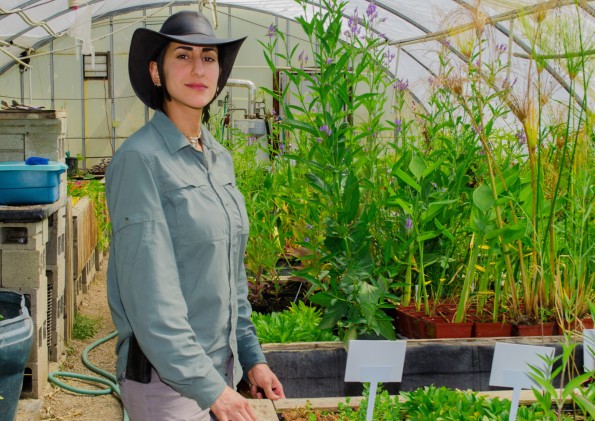
Desert Water Garden Manager Sheida Hajarian in her greenhouse
Sheida Hajarian – store manager and botanist

Sheida Hajarian is the store manager onsite botanist. She is in charge of starting, growing and monitoring the 187 different types of aquatic plants that Desert Water Gardens offers. She loves the store and interacting with the customers, but her favorite part of the job is working with the plants.

Plants are either potted in a clay nutrient soil in order to anchor the roots or are bare-roots and placed directly in ponds. Sheida explains that aquatic plants get their nutrients to grow directly from the water.

There are an amazing variety of aquatic plants.  Utah native plants include marsh verbena, horsetail, and aquatic golden rod. Some of the medicinal plants are heal’s all and St. John’s wort.  Umbrella palms, papyrus and lotus make up some of the tropical and exotics. There are even edible plants in the form of watercress, taro and bloody dock.

Sheida starts all of the plants in the greenhouse except for the water lilies. The lilies grow in the ponds at the back of the business and are separated by color. Though many of the plants are winter hardy the tropicals have to be taken inside during cold weather or they will die.

Ponds can fit into any landscape and any budget according to Sheida. The upkeep depends on the plants used along with other features. Some plants will filter the water through their roots leaving no need for a motorized filter. Even a barrel or planter can be turned into an aquatic ecosystem.

The ponds at the entrance to Desert Water Gardens are inviting. Walking past, visitors can’t help but be tempted to stop and enjoy the variety of plants, the sound of running water, the cool breeze, the dragon flies flitting along the surface and the goldfish swimming along. No wonder Craig Smith didn’t want to leave.
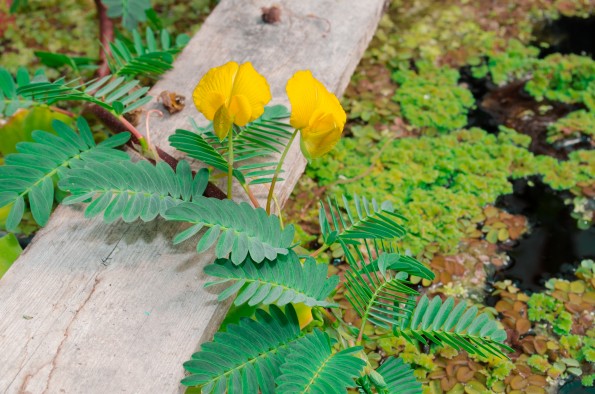
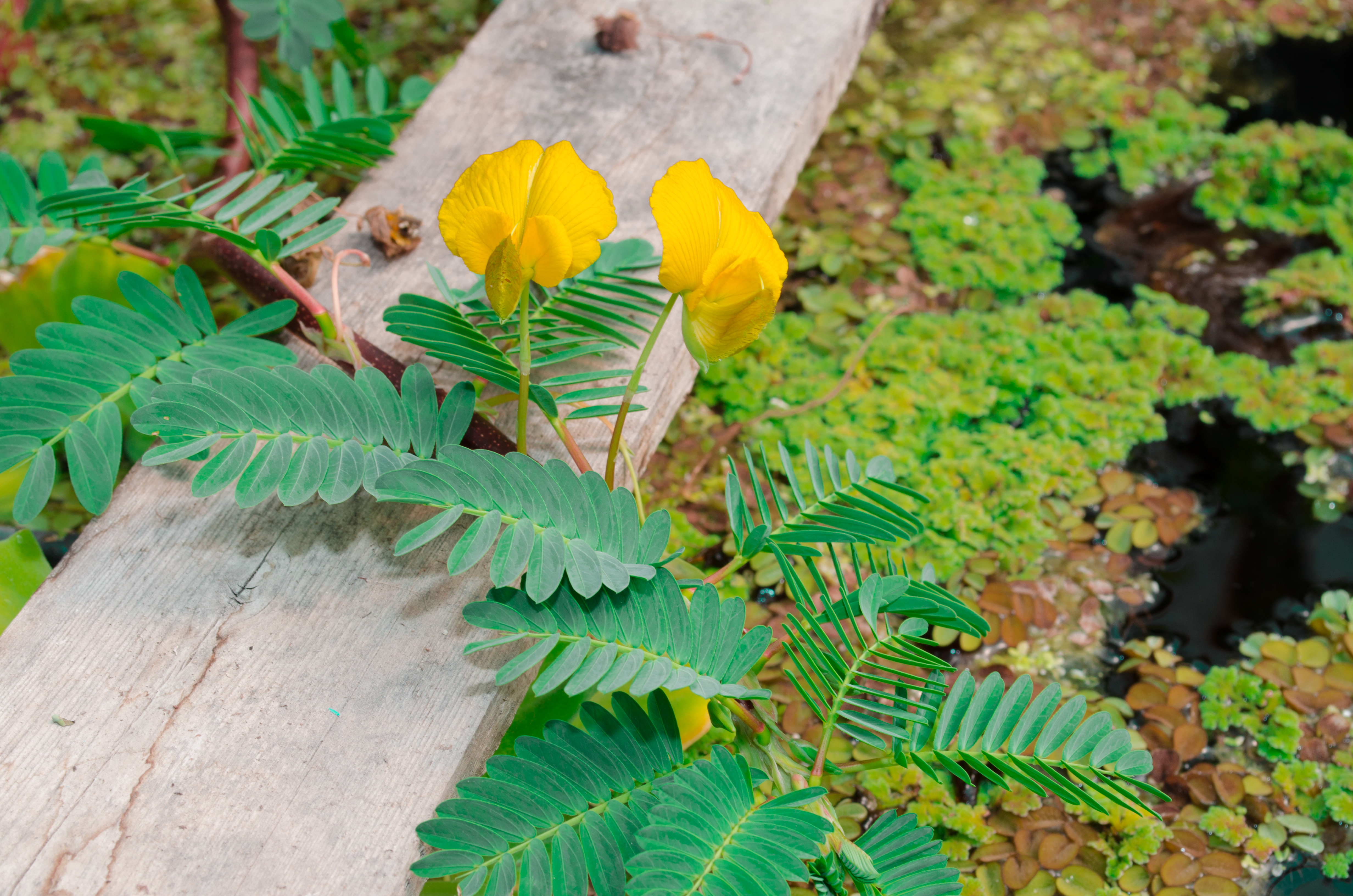
Giant Aquatic Sensitive plant

Desert Water Gardens is at 3674 South 900 East

http://www.desertwatergardens.com


Join our newsletter.
Stay informed.


  • Why Restaurants Like Mazza Are Disappearing

    Across Salt Lake City, luxury restaurants continue to open. High-end dining rooms remain packed. Investors continue buying buildings in formerly quirky neighborhood districts. Chains increasingly move into areas once dominated by independent businesses. Meanwhile, many middle-class restaurants, the kinds of places that helped shape Salt Lake’s local identity over the past two decades, are struggling to survive.


  • A Simple Prepaid eSIM Setup for Smoother International Trips

    International travel feels easier when mobile data works the moment a trip begins. Maps, booking details, local transport apps, translation tools, and messaging services have become part of the travel routine. When access to these essentials is delayed, even a short airport transfer can feel more stressful than it should. That is why many travelers…


  • The Armenian DNA Mystery No One Can Explain

    Joulhayan described ancient remains discovered near the Aras River, near Mount Ararat, where researchers reportedly compared ancient genetic samples with modern Armenians and found remarkable continuity stretching back thousands of years.
    “How could that be?” he asked. “Mongolians attacked. Turks. Persians. Romans. Greeks. Armenian DNA should have changed.”


  • Utah Wants Affordable Homes. So Why Did It Kill the Starter Home Bill?

    Utah leaders have spent years talking about affordable housing.

    Governor Spencer Cox has repeatedly emphasized the need for more attainable housing, with a goal of creating tens of thousands of starter homes priced below $300,000. Yet despite broad agreement that housing affordability remains one of the state’s biggest challenges, one proposal designed specifically to encourage the construction of smaller, more affordable single-family homes failed to advance during the most recent legislative session.

    The question raises an uncomfortable issue: if Utah agrees there is a shortage of starter homes, why are those homes still so difficult to build?

    According to attorney and real estate professional Asha Klarich, much of the debate comes down to how communities want to grow and who gets to make those decisions.

    House Bill 184, known as the Small Lots and Starter Homes Amendment, was intended to reduce regulatory barriers and allow smaller homes to be built on smaller lots. The proposal would have created a process for builders and homeowners to seek exceptions to local zoning requirements and construct homes on lots as small as roughly 5,400 square feet.

    The idea was straightforward. Smaller lots generally mean lower land costs. Lower land costs can translate into lower home prices.

    For many first-time buyers, that sounds far more appealing than another apartment building or densely packed townhome development.

    “I think most people would prefer a smaller home on a smaller lot than apartment-style living in a high-rise,” Klarich said during a recent discussion about housing legislation.

    The bill ultimately failed.

    Continue reading and support independent Utah journalism with a purchase of Utah Stories (Digital + Print) or 3 month free trial (Digital).