Debate

Geist Rally in Salt Lake City

hundreds of protesters and hundreds more motorists demonstrate that pets are more than personal property.

|


Utah Stories attended the Justice for Geist rally on Saturday June 28th. Our July issue’s cover story Justice For Geist (coming out tomorrow) makes the call to state leaders to change our laws to make pets more than personal property.

To consider that in the eyes of our criminal justice system, our dogs and cats are no different  than a stereo or computer, and are collateral damage if they happen to be killed when officers are doing their job—doesn’t work for the couple thousand people who attended the rally.

The argument the Geist was “a threat” and therefore killing him was justified; or that “a threat” is somehow an acceptable excuse for a dog’s death—doesn’t work for us, who consider our dogs as family members.

If an animal is attacking a Police Officer and that Officer’s life is in jeopardy, then this is an excuse to do harm to an animal. I have been reminded over the past few days (by Devil’s advocates) that indeed some dogs do attack people, and can cause great harm to people. Certainly if a dog is protecting a criminal and that dog cannot be subdued in any other manner, then lethal force can be  justified. Geist never touched Officer Olsen, or if he did, Chief Burbank chose not to say anything about this in his press conference on Friday June 27th.

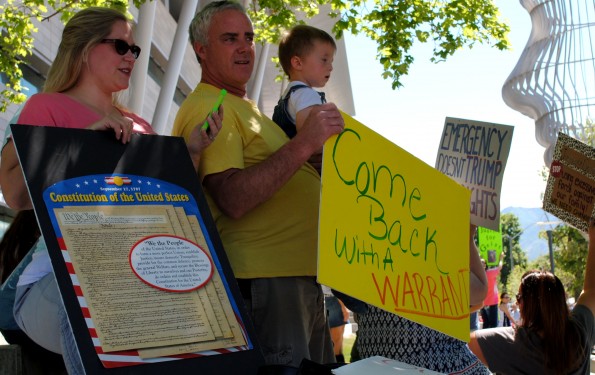
Officers need proper training on the protocols and procedures in handling resident’s dogs when they enter  private property without a warrant. Signs at the rally remind us that the Constitution prevents unlawful search and seizure.

The U.S. Postal service and UPS deliver drivers, never need to pull out guns and open fire on threatening dogs, nor should ever the Salt Lake City Police Department.
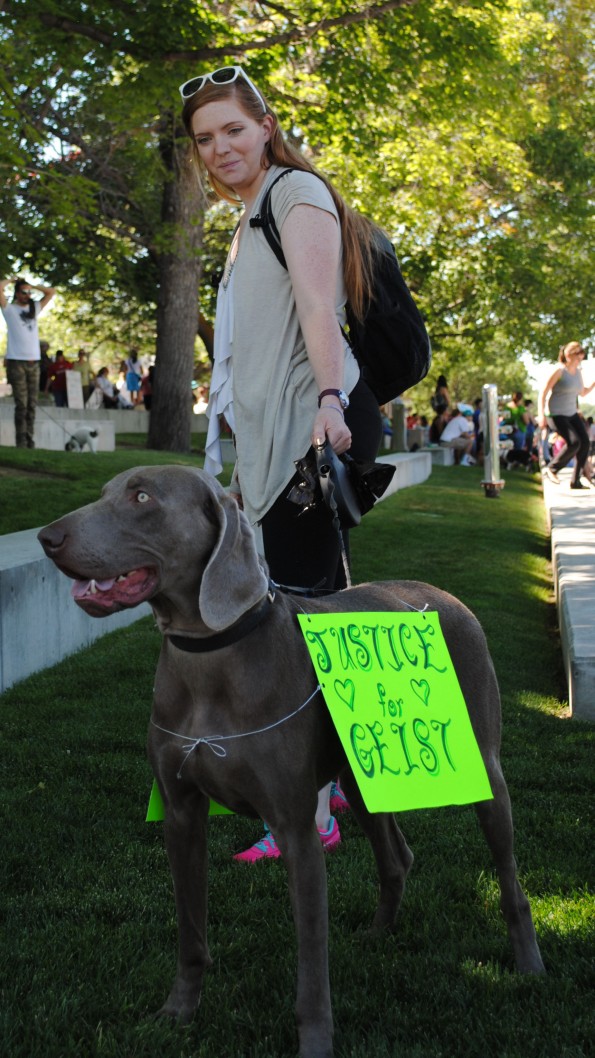

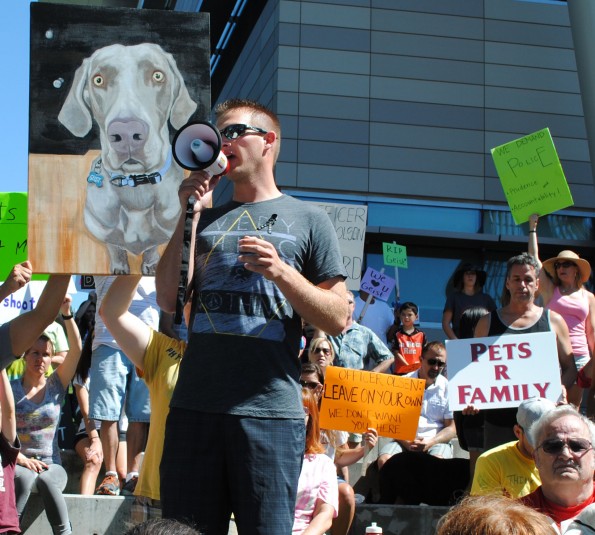
weimaraner
Several Weimariners (like Geist) were in attendance at the rally. None were shot.
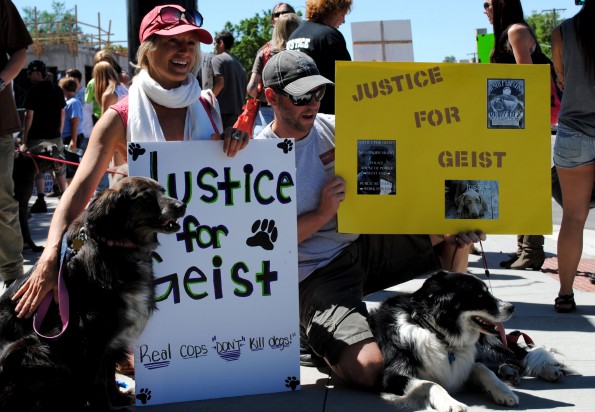
justice for geist
Sean Kendall said he was “amazed and overwhelmed” by the turnout of protesters. He said he is still morning the death of his dog Geist. Kendall wants nothing less than to see Officer Olsen fired for his misconduct. He also admonished those who are writing letters saying that Officer Olsen should be killed.
justice for geist 2
Real cops don’t kill dogs.
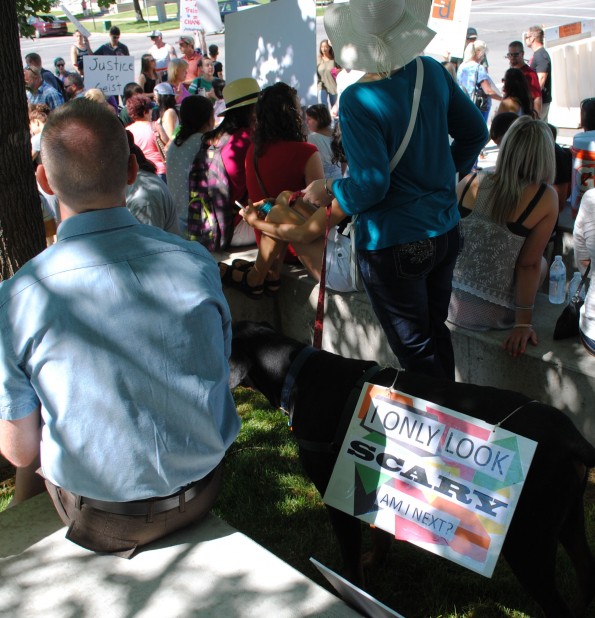
i only look scary
I only look scary. Am I next?

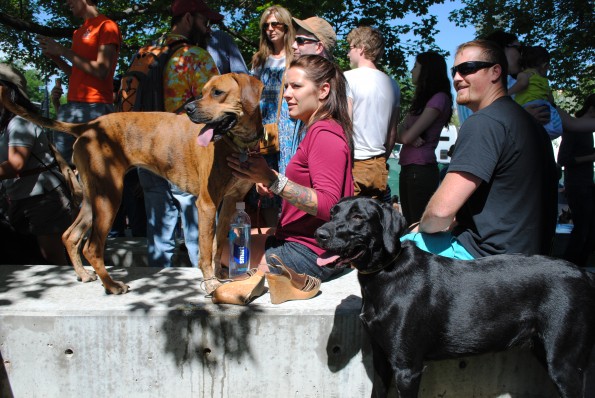
dog rally

dog justice
“Officer Olsen, leave on your own. We don’t want you here.”
constitutional rights
“Come back with a warrant”
constitution rights
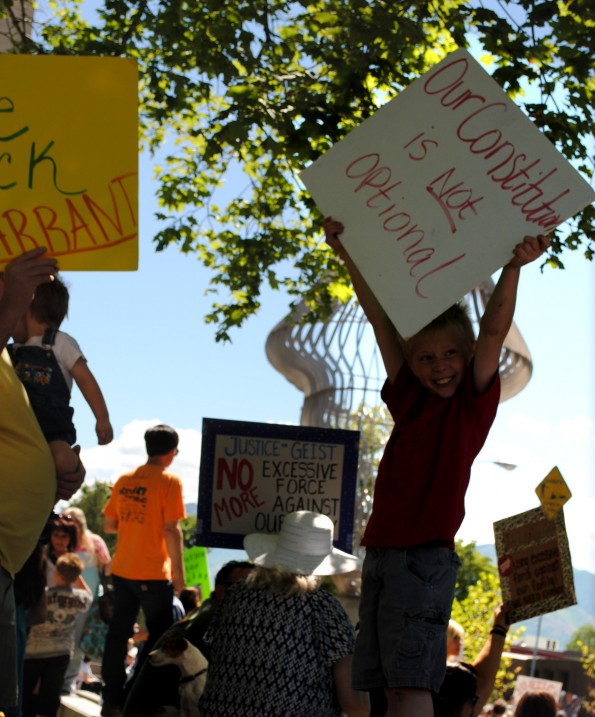
“Our Constitution is not optional.”
, ,


Join our newsletter.
Stay informed.


  • Ogden Valley City Incorporates as Voters Deliver a Surprising Mayoral Outcome

    Ogden Valley City has officially incorporated at a pivotal moment for northern Utah, just as growth pressures tied to the 2034 Winter Olympics begin to accelerate. Voters also delivered an unexpected mayoral outcome, setting the tone for how the new city will approach land use, local control, and the work of building a government from the ground up.

    To access this post, you must purchase Utah Stories (Digital + Print) or 3 month free trial (Digital).


  • Whiskey, Bullets & a Buried Town: Archaeologists Reveal Alta’s Wild Past

    Before Alta was known for powder days and lift lines, it was a silver mining town clinging to the side of a narrow canyon. In the late 1800s, men lived at 8,000 feet, went underground each day, and endured winters that regularly buried buildings in snow. This past summer, that mining town resurfaced — literally — during construction at the Alta Ski Area.

    To understand what Alta really looked like, you don’t begin with legend. You begin with its trash — and this time, that happened almost by accident.

    Alta Ski Area was installing underground water reservoirs to support snowmaking. Because the project sits on Uinta-Wasatch-Cache National Forest land, an archaeologist was required to monitor the excavation. No one expected the trench to produce much.

    But, It did.

    Artifacts began surfacing almost immediately. Enough that the Forest Service contacted the Utah State Historic Preservation Office for help. Lexi Little, who coordinates the Utah Cultural Site Stewardship Program, helped mobilize nearly 30 volunteers to assist with what quickly became a focused two-week excavation.

    Winter deadlines were approaching. The pipes for the reservoirs had to go in the ground. There wasn’t time for a slow, extended dig.

    “It was two weeks of digging in the dirt and helping figure out exactly what we were looking at,” Little said.

    Most of the people screening soil weren’t professional archaeologists. They were trained stewards from around Utah — part of a statewide volunteer network that now approaches 500 people. They poured dirt through shaker screens, scanning for fragments that could piece together a town long buried.

    “Archaeology is human trash,” Little explained. “Archaeologists are very into trash.”

    Alta had left plenty behind.

    https://youtu.be/hzIHzx3OGoo?si=dKcl2CEz-t6FZzYw

    Victorian-style ceramics appeared first — the kind typically used in hotels. Medicine bottles followed. Ink bottles. Hand-blown glass. A porcelain doll’s foot surfaced from the soil, a small detail that shifted the mental image of the town. Families were here. Children were here. This wasn’t only a camp of miners.

    The bottles helped establish time. Manufacturing details — whether glass was hand-blown or mold-made, whether a maker’s mark appeared on the base — allowed archaeologists to date many of the artifacts to the 1870s through the 1890s, when Alta was booming as a silver mining town.

    “That gives you that range of dates for when Alta was really booming,” Little said.

    One reusable soda bottle clearly stamped “Salt Lake City” connected the canyon to the valley economy below.

    Then something unusual rolled out of a dirt pile.

    A corked bottle. Intact. Liquid still inside.

    To access this post, you must purchase Utah Stories (Digital + Print) or 3 month free trial (Digital).


  • Can Utahns Still Afford to Have Kids?

    When families cannot afford homes near their jobs, the daily math becomes brutal. Commutes stretch longer. Childcare costs pile up. Mortgages consume more of a household’s income. The result is what economists call “house-poor” families—people who technically own a home but have almost nothing left over to live on.

    The obvious question is: why isn’t this being fixed?