
Politics

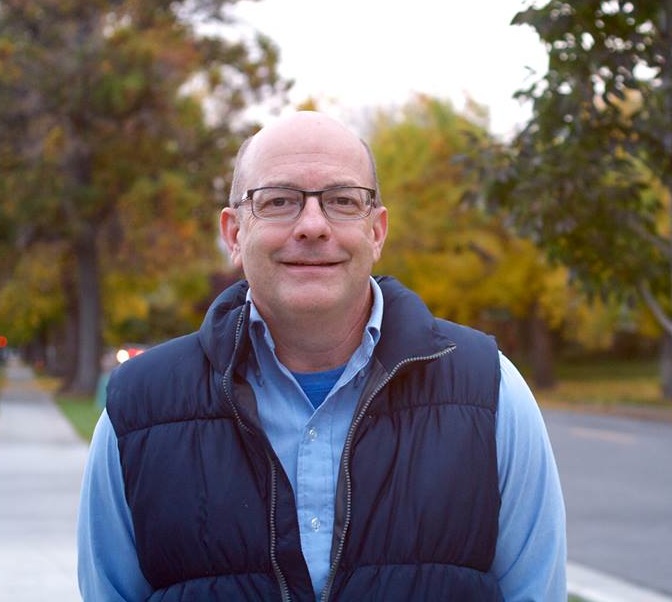
District Five Salt Lake City Council Nominee Bill Davis vs. Erin Mendenhall

Four seats in the Salt Lake City Council are up this election season. Read about the important local issues which will determine the future growth and direction of Salt Lake City. Candidate Bill Davis talks with Utah Stories.

|


What differentiates you from your opponent?

Experience & qualifications – which is why my slogans either say EXPERIENCE MATTERS or SMART, EXPERIENCED, QUALIFIED.

I really do have small business experience – since 1986. Have had numerous businesses. 5, 6 or 7 depending on how you count them and my memory. Have followed the path of the quintessential entrepreneur by leaping off the cliff and almost going broke a time or two. As my website hints at, I currently have three as follows:
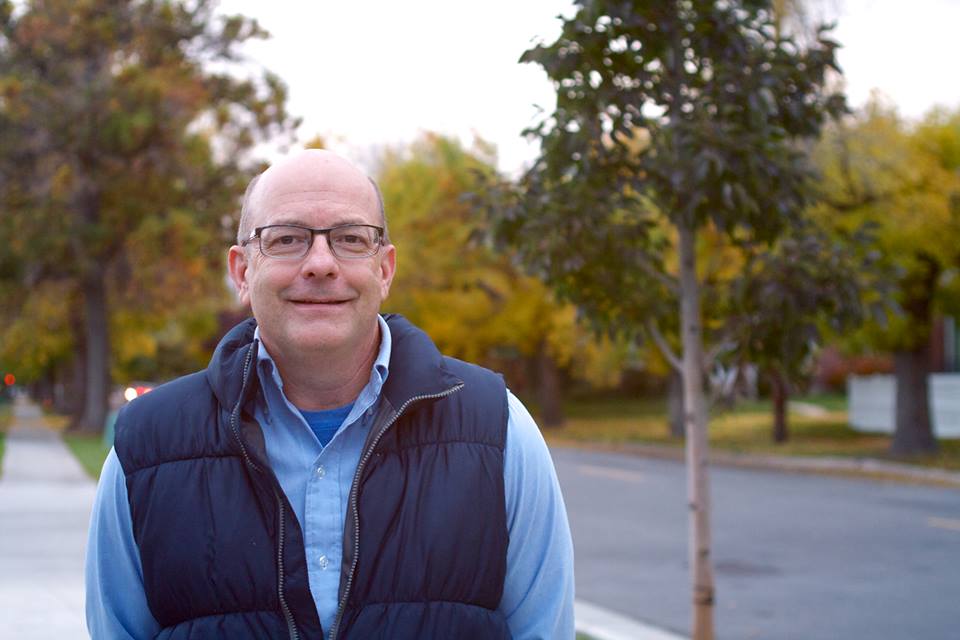
Salt Lake City Council Nominee Bill Davis

GBR Utah – a specialty auto parts parts company that has been around since 1992. Used to be called Great Basin Rovers until Land Rover corporate decided to go after every independent Land Rover business in North America that was using the name Rover. I could have easily won the lawsuit but it would have cost $25,000 and it wasn’t worth it.

GBR Service – a specialty auto service business since 2008.  The specialty is Land Rover – my hobby turned into a job, turned into a nightmare as I describe it.

GBR Enterprises – small real estate company. I do what I describe as recycle old buildings. Mainly commercial but a few residential ones. I like to buy older but structurally sound buildings that have some physical deterioration and functional obsolescence and rehab them. Been a bit slow since the economy ran off the cliff and I have gone from a thriving small businessperson to a surviving small business person.

I really do have 20 years of Community Council leadership (not just participation). I describe how I got involved as I somehow attended a Rio Grande Community Council meeting (the details such as what motivated me to go, are lost to history) and I loved it. I describe it as “democracy on its most basic level”. This was 1995 and you might say that this isn’t 20 years since this is only 2013 but I  actually served on more than one Community Councils concurrently at times. Split out as follows:

Chair – Rio Grande Community Council. It was located downtown and was formed to represent the City’s social service agencies. I was living at Art Space at the time.

Founder & Chair – Downtown Community Council

Ballpart Community Council – Chair and name changer. It at one point was named Peoples Freeway CC

Board – Liberty Wells CC resigned to run for City Council

Was also a trustee for the Salt Lake Community Network an umbrella organization for the City’s Community Councils. Resigned to run for City Council

I’m still the Chair of the Master Plan Amendment Committee of the Ballpark CC. The object of this committee is to have the residential core of this cool little pocket neighborhood back to SR1 i.e. single family residential. It is all RMF 35 & 45 at present. Meaning a developer could come in and scape the houses off the face of the earth and build poorly designed projects like Fletcher Court which is located at about 1400 SW Temple.

I did serve on the City’s Historic Landmarks Commission for 4 years. This was during the time of the Yalecrest local historic designation debate. Sitting on the dais in the City Council chambers in a room full of energetic people and doing the right thing in spite of it not being a popular decision is good experience for being a City Council person!

I did start what is called the British Field Day, 23 years ago. It is an all British car & motorcycle show/rally. It was originally a fundraiser for Hildegards Pantry (an emergency food pantry) located at St Mark Cathedral located downtown. It was held on their green space behind the Cathedral. I worked there as the property manager at the time. It has been very successful especially financially so we started a tradition of donating the excess to non-profits and charitable organizations after we moved the event to Pioneer Park and currently Liberty Park. The organization has donated ~ $100,000 to local groups since then.

What is your business and education background?

As noted above, I have been a small business person for 25 years or so. Prior to self employment and after I graduated from college, I worked for 7 1/2 years as a banker with a local bank that is no longer around (Valley Bank).

I started college at a Community College in Pittsburgh where I grew up. I graduated with two year Associated degree in Biology. When I moved to SLC in May of 1974, I transferred to the U of U and received a degree in Finance in June of 1976. I went back for an additional year and received another degree in Economics in August 1977.

A little known fact about me is that at one point in my life (early 1990’s) I considered becoming an Episcopal priest and took classes in theology from the University of the South for 2 years. I decided that this was not to be my calling and moved on.

It is important for SLC to speak out and show leadership on the air quality issue because we do have a louder voice and it sometimes frames the arguments and narratives if it makes sane, rational & credible arguments.

What can you do to aid local businesses and the community to help in retaining quality of life as the population along the Wasatch Front will double in the next twenty years?

This may sound counter intuitive but make sure that a significant amount of that growth occurs in the City itself. The City has two major fundamental problems. First, 54% of the property is non-taxable because it is owned by federal, State and the City itself. This means that 46% of the property pays property taxes which is a disproportionate burden on the people that live in the City. The second issue is that we have a 100% commuter rate (one of the highest in the nation), which means that the City doubles in population every working day as people commute into the City to work. This is the fundamental issue with our infrastructure. A fixed population has to support this too. A third interesting fact is that the City had a larger population in 1960 than it does now. I propose that the City set a goal of adding 50,000 new residents in the next 10 years. This would increase the population of the City by 20%. it would provide a substantial increase in tax receipts which would allow us to pay for the amenities we need as a City such as an effective mass transit system and we would be able to do it without raising taxes because we will have a bigger pie. The vast bulk of this population growth will be high density, transit oriented residential growth.

A related challenge will be to protect our distinct single family neighborhoods. SLC is blessed in still having an intact urban core and it is critically important that we preserve it.

What do you believe are the most important issues that Mayor Becker and the City Council faced last year?

The budget i.e. trying to maintain the level of services with less funding. The funding level has stabilized after dropping for several years starting in 2009 but it will be several years before we are back up to the level of funding in 2007.

How do you think the City Council can improve on the work they are doing?

Elect experienced representatives. This is a seminal election. 40% of the City Council will be new and this hasn’t happened for a long time. Strong independent experienced leadership will be important.

I also think the City needs to explain things better such as the street lighting fee. The abysmal explanation created a lot of un-needed controversy.

Continuing to work to improve community outreach, participation and communication. Would help mitigate issues such as the Sugarhouse Streetcar.

What are a few issues that the average Sugar House or Liberty Wells citizen should know about and pay attention to for the coming year?

Sugarhouse in not in District 5, it is in 7, although they are neighbors :-). I believe that neighborhood preservation will be important going forward. As an example, if the Sugarhouse streetcar going north gets funding, it will go thru the ELPCO (East Liberty Park Community Organization). There will be intense pressure to up-zone a 6 block swath of land (3 blocks on each side of the tracks) to promote commercial and high density residential development. This is not the spot for high density residential development I was referring to earlier. There are much better places for it! The neighborhood has made it abundantly clear that it wants to preserve the present character of the neighborhood. This neighborhood should consider protecting itself by considering a Character Conservation District or a Local Historic Designation zoning overlay.

Everyone thinks that the Sugarhouse streetcar will have a negative impact on Sugarhouse. Sugarhouse is already a commercial area and the reality is that it will not have much impact on it compared to the impact it will have on ELPCO.

To find out more, please visit:


Join our newsletter.
Stay informed.


  • Utah Homelessness Crisis: Tyler Clancy Challenges ‘Housing First’ Failures

    “It’s not normal to see someone sleeping on the sidewalk in a sleeping bag with a needle sticking out of their arm.”

    That sentence should not be controversial. In a sane society, it would barely need saying. But in Utah — where politicians, nonprofits, consultants, and bureaucrats have spent more than a decade congratulating themselves for “addressing homelessness” while the streets of Salt Lake have become more dangerous, more drug-soaked, and more morally disorienting — it lands like an indictment. And it came not from a crank, a talk-radio host, or a downtown business owner at the end of his rope, but from Tyler Clancy, Utah’s newly appointed homeless coordinator.

    That matters because if Clancy is serious — and after sitting down with him, he appears to be — then he represents something Utah’s homelessness system has not had in a very long time: someone willing to say the obvious out loud. The old script is dead. Everybody knows it, but almost nobody in power has wanted to admit it. 

    For years, Utah’s homelessness policy has been built on a polite fiction — that if we build enough units, distribute enough funding, and avoid being too “judgmental,” the crisis will gradually resolve itself. That story was easier to maintain when Utah was receiving national praise for “solving chronic homelessness.” It is much harder to sustain now, when the conditions on the ground tell a very different story.

    Magnolia Apartments opened to help alleviate homelessness, but the results were not all positive.

    Part of that failure became painfully clear over the last four years. By most accounts, former homelessness coordinator Wayne Niederhauser was a decent man and a very nice guy. But one person close to him described his tenure as that of “a tiger without stripes”— someone with the title, but not the appetite to challenge the sprawling network of nonprofits and service providers receiving millions in taxpayer dollars. That lack of accountability has had real consequences. Multiple former and current residents have told Utah Stories that of the roughly 60 original tenants who moved into Magnolia when it opened, about 20 have since died — most, they say, from accidental drug overdoses. 

    If those accounts are even close to accurate, they should have triggered a public reckoning. Instead, the system kept moving, protected by good intentions, insulated from scrutiny, and largely unbothered by outcomes that would be considered a scandal in almost any other context.

    That is the machine Clancy is stepping into, and unless he is willing to confront it directly — not just coordinate around it — his role risks becoming one more layer of management over the same failures. The reality he inherits is not complicated in the way policymakers like to suggest. It is visible, immediate, and increasingly impossible to explain away. 

    Open drug use, fentanyl addiction, untreated mental illness, rising disorder, and a growing sense among both the public and the homeless themselves all indicate that the system is not working. Complexity exists, but it has also become a convenient shield for cowardice. It is the language people use when they want to avoid saying what is plainly in front of them: Utah has spent years managing visible human collapse while calling it compassion.

    The Lie Utah Told Itself

    For years, Utah’s approach to homelessness rested on a narrative few in power were willing to question. It sounded compassionate. It polled well. And it avoided uncomfortable truths.

    Continue reading with a Utah Stories subscription. Start your 3-month free trial.

    Continue reading and support independent Utah journalism with a purchase of Utah Stories (Digital + Print) or 3 month free trial (Digital).


  • Inside Moab’s Political Divide: Land, Tourism, and the Future of Grand County, Utah

    In the late 1950s, Edward Abbey took a job as a park ranger at Arches National Monument, just outside Moab. What he found there, and what he watched happen to it, would shape the rest of his life. Roads were being cut into the canyon country. Cars were replacing foot traffic. The National Park Service, in the name of accessibility, was engineering a kind of industrialization of the wilderness he’d come to love. Abbey wrote about it in Desert Solitaire, published in 1968, and the anger in that book wasn’t abstract. It came from watching something specific be changed by people who either didn’t understand what they had or didn’t care.

    Grand County has long been the most reliably left-leaning county in the state, a fact that puts it in sharp contrast to nearly everything around it. To understand how that happened, and where things stand now, I spoke with longtime residents and politicians who’ve watched it from the inside, people who’ve served in local government and lived through the shifts firsthand.

    Robert Greenberg.

    Bob Greenberg came from New York in 1976, took a job at the community mental health center, and never left. He went on to chair the Grand County Democratic Party and serve on the county council. When he arrived, he said, “the Democratic Party was said to be able to meet in a phone booth” — and even then, its members were a contradictory bunch. Yellow Dog Democrats from the oil patch were fiscally conservative but surprisingly open socially, allowing different demographics to feel safe moving to the county. 

    “The town fathers were desperate to have new people come to town,” Greenberg recalls. “They just didn’t want the people who actually showed up. They wanted some other people.”

    What followed was a demographic shift nobody planned. The people who filled the gap left by the bust were river guides, federal agency workers, artists, and eventually waves of outdoor recreationists discovering that southeastern Utah was among the most spectacular landscapes on earth. Tourism ended up being the only economic development avenue that actually worked. Manufacturing never had the labor force or market access, sewing factories came and went. The people the tourist economy attracted tended to be younger, more outdoor-oriented, and more liberal.

    Kevin Walker.

    Kevin Walker, a former Grand County commissioner who moved here in 1990 for the landscape, puts the county’s diversity in context. “Moab [is] a pretty diverse place since, I think, at least the 1950s with the uranium mining boom,” he says. “So it’s not a typical Southern Utah town.” 

    Part of what makes Grand County distinct is self-reinforcing. Federal agencies like the Park Service, the Forest Service, the BLM, have large presences here and pull in a different demographic than surrounding counties. People looking to live in Southern Utah with certain values gravitate toward the place where those values already have a foothold. Over time, that critical mass has made Grand County what it is politically, while neighboring counties went in very different directions.

    The defining conflict in Grand County has always been over land.

    In the 1970s and 80s, it was extraction versus preservation in the starkest terms. County commissioners floated toxic waste incinerators. A plan emerged to site a high-level nuclear waste repository at the entrance to Canyonlands National Park. 

    “It really, really galvanized environmentalists everywhere, but particularly in Grand County,” Greenberg says. Activists put up signs at the park entrance, watched them get chainsawed down, and came back with steel reinforcement. That stubborn, physical, unglamorous persistence became part of the local political character.

    Continue reading and support independent Utah journalism with a purchase of Utah Stories (Digital + Print) or 3 month free trial (Digital).


  • The Stratos Project and Corporate Power: Who Controls Utah’s Future?

    If we were all just consumers, Governor Cox, Mike Lee, Speaker Schultz, and Kevin O’Leary would have it easy. If we were just more concerned about money, jobs, and tech, and less concerned about raising our kids in communities (not in front of screens), culture, the environment, and water, those smart dudes would get exactly what they want — Stratos: a city of the future, buzzing with processors and transistors, making all of our AI dreams come true! 

    The world we could live in would be a dazzling, Mr. Wonderful kind of place. We would beat those pesky Chinese in the AI war; our AI robots could do all of our farming and ostensibly harvest the water we need for the Great Salt Lake out of thin air. But apparently, we just don’t get it. We haven’t yet reached the point predicted by Aldous Huxley’s vision in Brave New World, where we are completely distracted, dopamine-driven consumers who only need sex, drugs, and stuff to remain happy.

    Maybe Stratos will be an amazing marvel, and somehow, as Governor Cox claims, “. . . add more water to the Great Salt Lake.” But we aren’t sold. While this Stratos project has received considerable attention, it’s worth taking a step back to attempt to understand how corporate power appears to have usurped civic power.

    Civics is the practice of shaping our society through our collective voices and community involvement. Ask the residents in Tremonton, Utah how well that is working out for them. Can we still shape our world through our elected leaders? Does it matter who we vote for at the ballot box if organizations like UDOT, UTA, and MIDA can supersede our local government authority and citizen backlash? 

    The corporatization of our communities and the interests that impact our political leaders’ decision making processes are seen as far more of a concern than the average Utah resident’s concerns. Special interests and corporate power are shaping Utah’s future more than ever. 

    It’s worth asking: ‘How can we regain control over shaping Utah’s future in light of the growing power and billions that the technocrats now wield in shaping our world today?’ Amazon’s market cap exceeds the GDP of Canada. The “Magnificent Seven” tech stocks now have a greater market cap than the entire GDP of Europe ($23.6 trillion. EU countries have $19.3 trillion GDP). Will tech companies become their own nation-states and dominate their own chunks of various states? Will we become their subjects?

    There are two sides to this coin: We love Utah not just because we have the most outdoor wilderness playgrounds, but also because of Utah’s prosperity and job market. This is because Utah has become a tech hub. Our tech leadership has minted several billionaires and billion-dollar businesses. Utah offers a market and an educated workforce that more businesses and giant corporations want to be a part of. This is a benefit for even non-tech Utahns.

    The problem with this success is that as we dole out more money to attract more tech businesses, data centers, fulfillment centers, and big corporate retailers, it becomes more difficult to carve out our “sense of community.” As corporate sovereignty replaces local business sovereignty, we see that our voices and our votes matter less.

    Ask who our politicians work for, and nearly every Utahn believes they work far more for their corporate donors than they work for the average Utah citizen. So how do we best regain control over our communities?

    Continue reading and support independent Utah journalism with a purchase of Utah Stories (Digital + Print) or 3 month free trial (Digital).