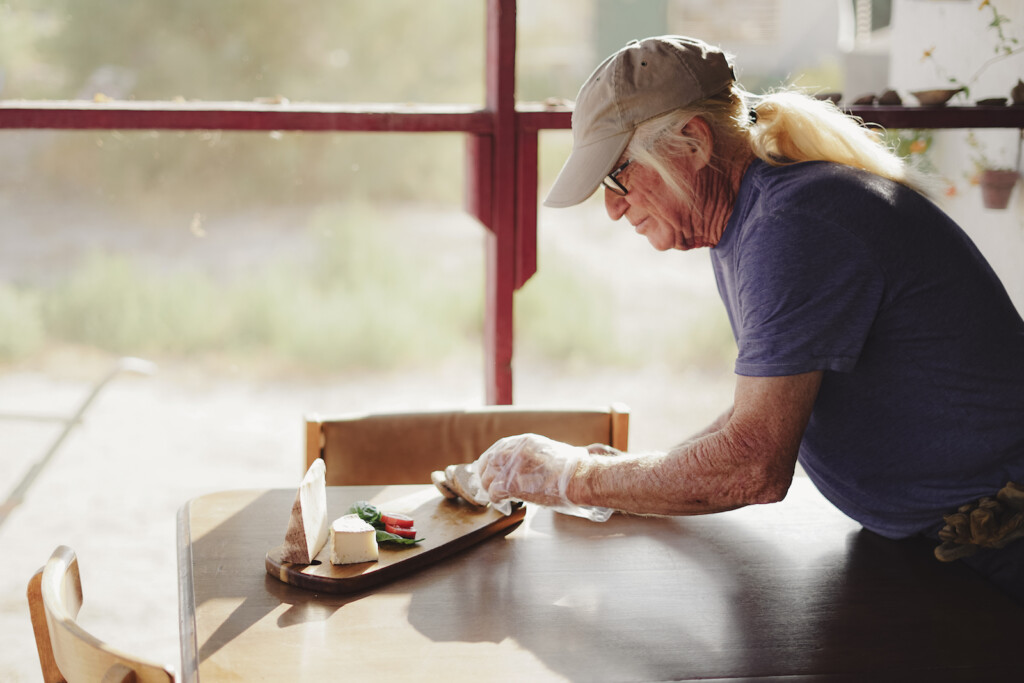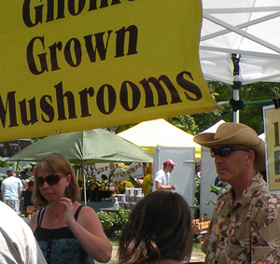
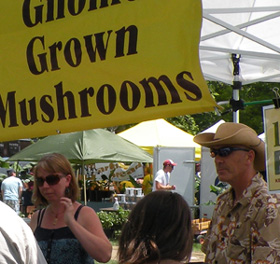
Meet Robert Angelilli a former ski bum/Executive Chef, who now makes his living as a mushroom broker and vendor at the Farmers Market.
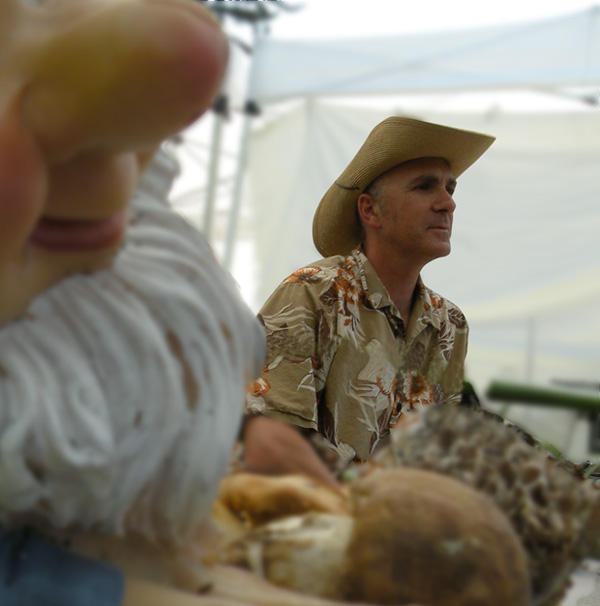 Angelilli’s path to Utah came by way of chasing snow storms and powder in Europe. He says he kept this up in Europe until he found out in Utah, there was no chase required, simply wait and the best snow on earth blankets the mountains in plentiful quantity. Angellili arrived in 1983, one of the most legendary powder years in Utah history.With a passion for mountains, cooking and fungi, Robert Angelilli has become a self-made mushroom man.
As a world traveler, Angelilli believes Utah is also number one for wilderness diversity and access. Like many ski bums who enter Utah, Angelilli found the restaurant industry well suited to his schedule and passion. Growing up in Venice Italy, Angelilli naturally had a pallet for fine cuisine. Consequently, he rose up in the ranks to become an Executive Chef working in Stein Ericksen Lodge, then the Grand America Hotel.
After eighteen years in the restaurant business, Angelilli decided he had enough of the stress and wanted to try using his connections in the fine restaurant industry to become self employed. Today, Angelili makes his living as a full-time mushroom man. Besides mushrooms, Angelilli & his wife, Amber, also own a cake company- FARINA. Together they bake and distribute specialty cakes to upscale restaurants. Distributing rare mushrooms, however, is more similar to rare metal or fine gem trading than typical produce or cake distribution. It requires a fine nose and eye to distinguish fine quality rare mushrooms. This is Angililli’s greatest business asset.
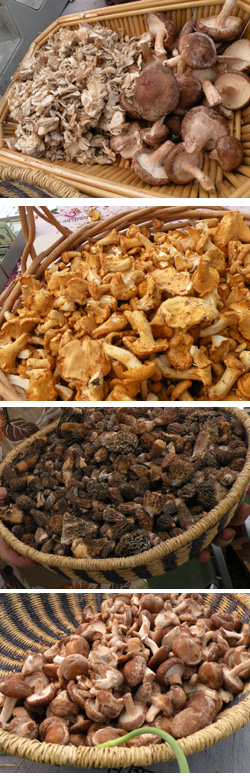
Operating under an unusual business model, Angelilli buys and brokers mushroom deals to some of the most exclusive restaurants in Park City and Salt Lake. Restaurants such as Stein Erickson, 350 Main, Chez Betty, Takashi, Bambara and New Yorker all use his mushrooms in their dishes. Angelilli’s skill for understanding mushroom quality and variety is how he has found his niche within the high-end restaurant industry. Angelilli’s passion, however, is educating Farmers Market shoppers on exotic mushrooms. Advice that offers new culinary experiences to everyday cooks, which is most of his clientelle at the Farmers Market today.
As I’m photographing his stand, a woman approaches and points at some Chanterelle mushrooms,”How much are you selling these for?,” she asks.
“Chanterelle are $22 per pound”
With an astonished look on her face, she says, “Vee can pick those off the ground in the Ukraine.”
“This is Utah. If you can find them off the ground then go for it.”
“Europeans, [especially the French or Russians] often look at the mushrooms and make a snide remark. Then sometimes they come back at the end of the market and see if I’ll sell the mushrooms for a cheaper price, but I wont.” Angelilli says he will sometimes offer his mushrooms for free to potential buyers who are uncertain about the use of exotic mushroom varieties in their cooking.Angelilli says he gets similar reactions to his mushrooms by the Eastern Europeans and French. Vendors and shoppers in European farmers markets maintain a less cordial relationship than they do in the United States. A common strategy in European open-air markets it to denigrate and chide vendors and their product, until the vendor looses confidence and sells his goods for a cheaper price.
Angelilli continues, “If they are nice, I’ll just tell them how to cook with them and then say, ‘After you taste how good they are, come back next week and buy some.’” Because the mushrooms with names like Hen of the Woods and Morel are often unfamiliar to Utahns, Angelilli has become something of a mushroom evangelist. During the Winter, after the Farmers Market season is over, Angelilli can be found in Caputo’s Market explaining the flavor varieties and mushroom recipes.
Truffle Talk
Angelilli says that uneducated cooks tend to overpower food using expensive and rare truffles. He also adds that the truffles that come from the Northeast, are often far inferior to those found in Europe. Italian truffles known as Alba whites are usually excellent and Tony Caputto sometimes carries these in his store. The price per pound for premium truffles is a jaw dropping $3,000. Angelilli believes truffle hype is due to their price and scarcity. The exceptional “earthy” aroma is the unique quality to very fine truffles. However, bad truffles can smell like dirty old socks. Therefore, if a shopper isn’t well acquainted with the nuances of truffle selection, he can get suckered into paying an enormous amount of money for bad shrooms.
 Why Do Europeans Love to Forrage For Fungi?
Angelilli says his passion for mushooms originates not only from their incredible cooking characteristics but also from tradition. Like many European families, Angelilli’s family frequently foraged for mushrooms while hiking in the forests outside of Venice. According to Angelilli, wild mushrooms are alway superior to farmed mushrooms. With a little education anyone can enjoy the delicious wild mushrooms found in Utah. He adds this might be an amazing year for mushroom foraging due the heavy snow pack and the late season thaw. The high Uintah wilderness offers some of the best places to find wild mushrooms.
Fascinating Mushroom Facts
Angelilli’s knowledge of mushrooms goes deeper than just the culinary aspects. He gave me a quick lesson on Mycelium, which are the fungal organism networks that produce mushrooms. Mycelial networks are believed to possibly be the largest organisms on earth. Only some mycelium produce mushrooms and only some mushrooms are edible, many varieties are poisonous.
Most layman, including myself (before I did some googling), might believe that mushrooms are cousins of plants or fruit. Mushrooms, however, are actually more closely related to animals than plants. Unlike plants, mycelium do not produce their own food using inorganic nutrients and photosynthesis. Instead, mycelium produce enzymes to digest organic matter. Human stomachs digest and process nutrients in a similar manner to mushrooms. Angelilli mentioned that it is believed that all land creature’s digestive systems evolved from mushrooms. If theory this is accurate, ironically we can thank the mushroom for our stomachs, which allow us to enjoy lamb shanks with Morel mushrooms drizzled with Truffle oil.