Stuff That Matters

Media Outlets Continue to Inaccurately Confuse LDS and FLDS Faiths

Media Outlets Continue to Inaccurately confuse LDS and FLDS Faith. See differences in faith and why the LDS chruch continues the battle to distance themselves from the FLDS

|

The Salt Lake Temple

Besides the international media, many in Utah confuse FLDS with the LDS faith. A history lesson on the two church’s differences.
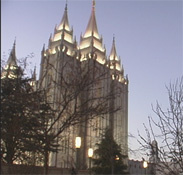
The Salt Lake TempleThroughout the FLDS compound raid saga in Texas, media outlets continue to confuse the FLDS church with the LDS Church. Both French and Mexican media outlets showed photographs of the Salt Lake City LDS Temple while reporting on the raid in Texas. This has caused the LDS Church to have a tough job of damage control in wake of such sloppy journalism. The man mainly responsible for clean up duty is Elder Quentin L. Cook, Public Relations Director for the LDS Church. Cook and his subordinates have issued several statements in the past month in attempts to clear up the confusion, and assumptions media outlets have made about the two faiths

Most recently the Wall Street Journal reported that the FLDS is merely practicing the Mormon faith how it was practiced originally, which is highly inaccurate. When the practice of polygamy began in the LDS Church it was somewhat out of necessity with an abundance of female members and a shortage of males members. Unlike the FLDS where when there is an abundance of male members they rid themselves of the disproportionate numbers, by kicking the unwanted male members out. The FLDS also performs Temple rights and ceremonies that are assumed to be sexually oriented, which the LDS Church has never done.

Cook most recently appeared in a video on the LDS Church’s website appealing to members of the media to “not to include ‘Mormon’ with the word polygamous.” newsroom.lds.org

While it may be understandable that foreign countries confuse the two churches, a recent study conducted by the department of political science at the University of Utah found that most students don’t understand the differences between the two faiths.

In another recent statement the church again made clear the distinct history the LDS church has had with polygamy, when they officially renounced the practice more than 100 years ago.

The Church of Jesus Christ of Latter-day Saints discontinued polygamy officially in 1890. More than a century later, some news reports, especially those outside the U.S., still fail to draw clear distinctions whenever stories arise about polygamy in the Intermountain West.

-April 12th 2008 LDS Church website

In another statement Elder Russell Ballard said, ” You would think that after over 100 years, media organizations would understand the difference.”

It was nearly seventy years ago that the FLDS church was formed when secret polygamist practices caused LDS members to become excommunicated from the LDS Church. The FLDS church still incorporates Joseph Smith as the founder and first profit of their church however they don’t acknowledge LDS President Wilford Woodruff’s announcement in 1890 as Divine counsel, which put an end to the practice of polygamy, within church doctrine.

This announcement by Woodruff created an immediate backlash among many members that were within polygamist families. It wouldn’t be for another generation before LDS polygamist marriages ended completely. Many families continued secret plural marriages for years after Woodruff’s announcement.

The practice of polygamy finally ended both in public and secret when in 1904 the church issued a “Second Manifesto” which would excommunicate any member involved in a plural marriage. The elimination of polygamy from church doctrine is what paved the way for Utah’s statehood and slowly transformed the Church of Jesus Christ of Latter-Day Saints into a main-stream American faith.

The fundamental traits of practicing LDS church members are:

  • Honor for the sanctity of marriage (between a man and a woman only)
  • Dedication to hard work, honesty and good business practices (There are many exceptional LDS business people)
  • Maintain close-knit families, honoring family values
  • Dedicated tithing practice of ten percent of annual income
  • Typically conservative in political beliefs and values

Presidential candidate Mitt Romney was the epitome of a good LDS member. Many Mormons exemplify the true spirit of heartland Conservative American values in their moral “salt of the earth” way of living. However, routinely LDS Members are reminded by other Christians (especially Southern Baptists), how they don’t recognize them as “true Christians”.

To contrast the LDS faith with FLDS is today like comparing Canadians to French, they may have came from similar roots but today they have very few traits in common.

FLDS members also live in close-knit communities however, most would say they live cloistered extremely sheltered lives. Children are often forbidden from wondering outside of compound walls and most haven’t a clue what most American kids watch on TV, listen to or how they behave (which is the only advantage I can see.)

Many FLDS members are extremely hard working but at the same time they take great advantage of the single-mother welfare benefits by conducting their marriages as “spiritual” marriages rather than state recognized unions (which would be illegal under state laws). FLDS Polygamists often make their own clothes, grow vegetables and farm, but rarely interact with people outside of their sect.

The FLDS Church maintains the following beliefs:

  • Jesus was a polygamist and had many wives
  • God is a polygamist
  • in order to become a God in the Celestial Kingdom (after-life) one must either have plural spiritual wives, or be a plural wife
  • The Church leader is a Prophet and communes daily with God
  • The world will soon end and the Prophet, Warren Jeffs, will sit at the right-hand of God with Jesus and Joseph Smith

Like nearly all mainstream Christian faiths in the United States, the LDS Church is evolving and changing with the times. While they will likely never allow women or homosexuals to hold the Priesthood, since 1978 black men have been allowed to be members of their sacred Melchizedek Priesthood. The LDS Church is now building hundreds of mini-temples in nearly 60 different countries. These Temples offer members access the Temple rights and practices that were once reserved for only a rare few on rare occasions. All church sanctioned marriages must take place in Temples. Today in Utah there is much less of a cultural barrier between Mormons and non-Mormons than there were just 30 years ago.

As more media outlets in the United States are recognizing the differences between the LDS and FLDS faiths and reporting on them accurately the reputation of the LDS Church in America continues to be bolstered rather than mocked or persecuted, as it was often in the past. The church has recently also issued a statement of gratitude to the media outlets that are getting it right.


,

Join our newsletter.
Stay informed.


  • The $7 Million Recruit: How NIL Changed College Athletics Forever

    In 2012, Jabari Parker, a top high school prospect and member of the Church of Jesus Christ of Latter-day Saints, was facing his biggest decision to that point in his life: where to play college basketball. 

    Fans of BYU athletics hoped and perhaps prayed that Parker would pick the school owned by the church he was raised in. BYU was listed as one of his final choices. But he ultimately chose to spend his college years at Duke before attempting a career in the NBA. BYU fans were disappointed, but no one was truly surprised. Duke over BYU was the best choice for a young prospect in 2012. 

    A.J. Dybantsa.

    What changed between 2012 and 2024 when A.J. Dybantsa, the number one high school prospect, chose BYU over every other school? The answer is roughly $7 million dollars. That is what Dybantsa is reportedly making to play basketball at BYU. 

    The deal was supported by Utah Jazz owner Ryan Smith, who met multiple times with the Dybantsa family in multiple attempts to bring the young player to Provo. 

    According to Smith, he had no financial role in bringing Dybantsa to BYU, but the influence of Utah’s most famous billionaire acting as a “booster” or unofficial recruiter certainly swayed the decision.

    Prior to 2021, boosters acting as recruiters was taboo to the NCAA governing body. It was called improper recruiting. But in 2021, California began the modern era of NIL, or the ability of a college athlete to benefit from their name, image, or likeness, when they passed the “Fair Pay to Play Act.” 

    This new law gave college athletes in California the ability to benefit from their NIL, something that was banned in the rest of the country to that point. The NCAA saw that this law would create an unfair advantage for California schools that could now give young athletes the chance to make money off their talent and image while still in college. 

    The NCAA knew they needed to do something quickly, so they rushed through a policy that opened up NIL to all college athletes in the country, and it has been expanding and evolving over the last four years. 

    Grant Duff, who has coached at the University of Utah, Weber State University, and is now the defensive coordinator for Idaho State University, says, “The best part of NIL is that athletes have an opportunity to make good money. The downside comes with the free-for-all that money causes.”

    Dybantsa confers with BYU Head coach, Kevin Young.

    One of the biggest current examples of what a school can do when the boosters are willing to pay for success is Texas Tech University. From 2020-2024, Texas Tech had 34 wins, which works out to 6.8 wins per year with a low of 4 wins and high of 8. Then Texas Tech’s boosters got involved, led by Cody Campbell, an oil industry businessman and Chairman of the Texas Tech board. The football program was given 28 million dollars for NIL with a simple message attached to the large pile of money: Win. And win now. And win they did. 

    By signing NIL deals with athletes in the transfer portal, Texas Tech went from a middle-of-the-pack school in their conference to one of the top 12 teams in the country. They didn’t just win games in 2025, they made many of their opponents look like they didn’t belong on the same field, including the University of Utah and BYU twice. That is what money can buy.

    Continue reading and support independent Utah journalism with a purchase of Utah Stories (Digital + Print) or 3 month free trial (Digital).


  • Cottonwood Heights Corruption Allegations: A Case That Never Reached a Courtroom

    A year ago, we here at Utah Stories recorded a podcast episode that we never published. We were revisiting corruption allegations from ten years ago. We decided not to publish the video, so it sat there on YouTube for nearly 12 months.

    Then somehow the video was published. How? We are not sure, but once it got out there, the comments came pouring in.

    Dozens of viewers, then hundreds, supported the video with their comments on our examination of allegations of police misconduct in Cottonwood Heights. The video recounts how the Police Department was reported by business owners as focusing enforcement on customers of the former Canyon Inn bar. These allegations did not result in a publicly documented, full investigation by Utah’s Justice Department nor the FBI (at least to our knowledge). So why rehash the past?

    We believe the story of The Canyon Inn (and other area business owners) vs. CHPD and Cottonwood Heights Mayor Kelvin Cullimore raises questions about what can happen when allegations surface and do not move forward through a formal legal process with state or federal oversight.

    In 2012, Cottonwood Heights business owners at the mouth of the canyons began publicly objecting to police activity whereby up to seven cruisers were pulling over 711 and Canyon Inn bar customers on their busiest evenings.

    According to those accounts, drivers leaving the bar were frequently pulled over by police and were given DUI tickets, sometimes even after passing a sobriety examination. The volume and concentration of those stops led residents and business owners to complain about the “heavy-handed treatment” of CHPD toward motorists, especially in and around the Canyon Inn and neighboring 711, and eventually the Porcupine Pub.

    Customers responded in predictable ways. Some chose not to return and avoid the area. Others went to different establishments. Over time, the owner of the Canyon Inn, Jim Stojack, stated that his revenue declined by 70% and that he believed police activity near his business was the main contributing factor.

    Utah Stories reported on these concerns by conducting interviews; gathering video documentation provided by those involved; and making public records requests. Through our GRAMA requests, we reviewed DUI citations issued by the Cottonwood Heights Police Department and examined how those cases were resolved in Holladay Justice Court. During that period, we observed a higher number based on our review of DUI cases dismissed in court due to lack of evidence compared to other jurisdictions. One DUI attorney, Tyler Ayers, went on record saying that CHPD was issuing a high volume of DUI citations that were later dismissed.

    That observation raised questions about how cases were being documented and prosecuted. It did not, on its own, establish intent or misconduct, but it became part of a broader set of concerns raised by multiple sources.

    Continue reading and support independent Utah journalism with a purchase of Utah Stories (Digital + Print) or 3 month free trial (Digital).


  • Why Did Salt Lake City Tear Down Its Most Beautiful Buildings?

    If you go into the Utah State Archives and spend time with photographs from the late 1800s and early 1900s, you start to notice something that doesn’t line up with what exists today.

    Main Street looks cohesive. Not in a uniform way, but in a way that suggests the people building it shared an understanding of proportion, material, and permanence. Four-story buildings line the street—stone, brick, cast iron—each one detailed in ways that don’t feel incidental. Arched windows, carved stone, brickwork that changes pattern as it rises. Even the cast iron facades were designed to replicate masonry, not hide behind it.

    Then you go downtown and try to find those same buildings.

    Most of them are gone.

    Out of more than 400 buildings designed by Richard Kletting, over 300 have been torn down. That number alone reframes the conversation. Kletting designed the Utah State Capitol, the Saltair resort, commercial buildings, schools, churches, mansions—virtually every type of structure…

    Continue reading and support independent Utah journalism with a purchase of Utah Stories (Digital + Print) or 3 month free trial (Digital).


  • Momomaru Sushi Review: Salt Lake City’s New Destination for Japanese Hand Rolls

    A new Salt Lake City sushi spot is drawing crowds with Japanese-style hand rolls served fresh, fast, and warm, offering a more intimate and interactive take on traditional sushi.