How one blighted neighborhood was transformed over a 25-year-period into a community and cultural hub, but with an uncertain future today.
 |
 |
|
|---|---|---|
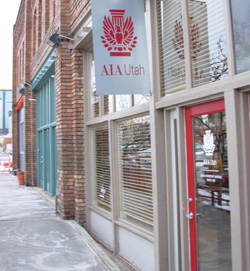
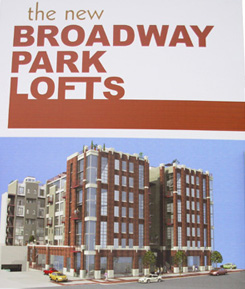
| AIA Utah will be vacating the Pierpont Avenue Artspace at the end of February due to the uncertainty of their new lease arrangement. | The Broadway Lofts are one project of many, building condominiums in downtown Salt Lake City. |
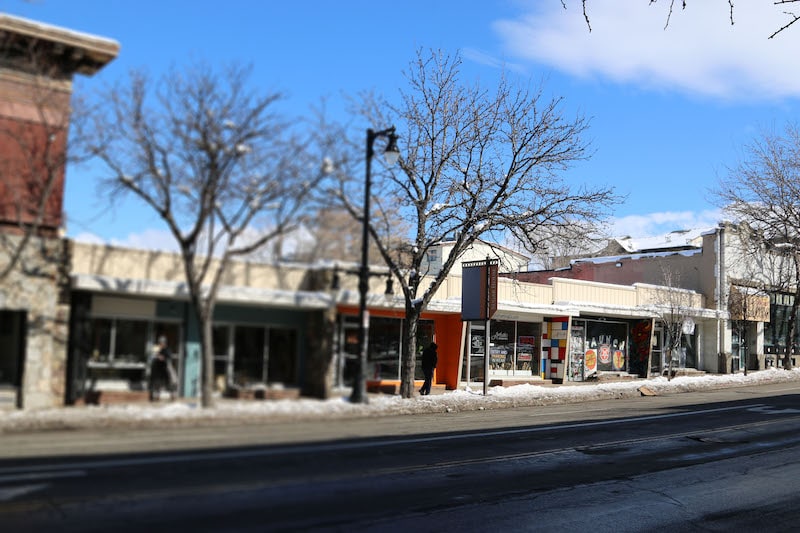
Many consider Artspace, located on Pierpont Avenue in downtown Salt Lake City, to be the initial spark that ignited the downtown Salt Lake City real estate market. To many others Artspace is much more than that. “Its about people, its not about buildings it never has been about buildings,” says Stephan Goldsmith. Now some fear that the bohemian Pierpont art studios could have the artists tenants replaced by wealthy professionals who are now buying up downtown Salt Lake City at a rapid pace. Local residents, who have witnessed the downtown rebound cringe at this prospect. Area residents wish to maintain the buildings that compose Artspace for artists, because it was artists who rescued the dilapidated buildings when they were blighted nearly 30 years ago.
Artspace History
Artspace was established in 1979. It was a time when city leaders where eager for any projects that might help revitalize downtown Salt Lake City. Pierpont Avenue, (between 300 and 400 West), was one of the most dangerous places in Downtown Salt Lake City. One of the buildings that would become Artspace was where the infamous Bradshaw Auto Parts murder took place. It was a time when downtown had suffered great declines in both retail and property values during midst of the suburban sprawl exodus that afflicted many downtown districts across the country. However, not everyone was afraid to live in downtown.
Local sculptor Stephan Goldsmith, (who would later become Salt Lake City Planning Director),along with two other artists, came up with an innovative idea: form a non-profit organization, obtain a grant from the city to refurbish the buildings, then lease the dilapidated buildings from the owners, and sublet the space they weren’t using as artist studios. It was a bold idea coming from a 24-year-old who “didn’t know what a financial statement was…Many people thought we were off our rocker, and we would never get the money,” says Goldsmith. It took an entire year of back-and-forth negotiations between attorneys, city leaders and the building owners and eventually they struck a deal and Goldsmith realized his plan. However, with one major drawback: they would not own their improvements.
“A lot of people told us at the time that 25 years would go by in the blink of an eye. For us 25 years was an eternity. We looked at each other knowing that all the improvements we would make to the buildings we go back to the owners…We were desperate for finding a space we could maintain a long term agreement on. So they signed the papers and began work.
The idea took years to come to complete fruition. “The roofs where leaking in every building…We had to put new electrical in every building, seismic upgrades were needed to keep the buildings standing. There are only a few people who really know the tremendous effort that was involved,” says Goldsmith.
By 1998, however, the buildings and surrounding neighborhood had realized a tremendous improvement. Several spaces above the studios have been converted to upscale loft-style apartments. Today, the Pierpont studios are home to many successful local artists and the street and neighborhood are recognized as a cultural art hub for Salt Lake City.
How cities use artists to revive blighted Urban districts
The model of using artists to revive blighted downtown districts has become a well respected practice for renovation of urban centers all across the United States. The gentrification of these reclaimed blighted areas has also become a common side-effect, that nobody has a great solution to prevent. Government intervention mandating protection for the artist properties forcing low rent, often produces landlords who become negligent and sometimes even arsonists. Other viable protection alternatives have yet to been found.
The tricky balance is to quantify both artist non-tangible cultural investment with owners tangible property.
The tricky balance is to quantify both artist non-tangible cultural investment with property owners tangible property appreciation. The property appreciation would never be possible without the artists and the buildings usually aren’t available for sale within artist’s budgets. So both parties need each other. Both, however, are rarely satisfied by the end result. Its usually its the property owners who cash in, by turning around and selling their artist meccas to wealthy yuppie professionals who want to live in cool urban districts where the artists and culture are. This was the case for Haight-Ashberry in San Francisco and many argue the same has happened in the Sugar House district of Salt Lake City. (seegentrification on wikipedia for more)
Artspace Today
Since Goldsmith’s initial inception, the Artspace organization has become composed of much more than just a few sublet buildings. Goldsmith gave up his duties with Artspace to become Salt Lake City Planning Director. Today, Artspace is a corporate entity with 14 members on its Board of Trustees and they have excellent relations with local banks in financing big projects. Under their umbrella they have completed renovation and construction on two large new buildings in downtown Salt Lake City, with one more currently under construction.
Despite their success the Artspace organization has realized with Pierpont studios, they are no longer interested in leasing properties they don’t own. According to Jessica Norie, Executive Director for Artspace, they are not interested in subleasing from the owners, “due to the uncertainty of the arrangement,” Norie says. This uncertainty has the Pierpont artists and tenants worried. “We have nothing concrete about our future at all, except that Artspace will no longer be our landlord.” says Kate Bullen, owner of Elemente. Bullen and others on Pierpont realize their property has become very hot and they could be told to pay significantly more in rent or be evicted under their new lease with as little as one month of notice. According to the artists we spoke to moving out to one of Artspace’s other properties is not at all equivalent to what is found at Pierpont.
The Pierpont Studios have in recent years become the home of a bi-monthly community art show known as Gallery Stroll. The stroll event operates by connecting artists and their studios directly with buyers. Hundreds of potential art buyers walk through the studios and peruse local art, which defies the reputation of Downtown Salt Lake City for never offering much of a night life or local art scene. Today, hundreds of residents consider Gallery Stroll and the Pierpont studios to be the center for authentic street life in Downtown Salt Lake City. Consequently, local residents, like Luann Lakis, do not want to see the Pierpont studios be redeveloped in any way.
Lakis, her husband and two small children, in the mid-ninetys, made the very unusual move from the Orem suburbs to the downtown Salt Lake City Warehouse loft apartments.”Living here has been such a great move for us. It’s made our children into very interesting people …Artspace has been the center of everything since we moved here. It’s just so sad, nobody has any idea what is going to happen…” Lakis was very upset to learn that longtime resident AIA (American Institute of Architects) would be vacating their space at the end of February.
 |
 |
|
|---|---|---|
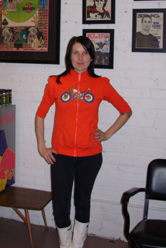
| Angela Brown the the editor of SLUG (Salt Lake Underground Magazine) |
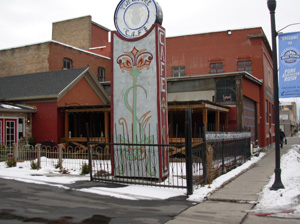
The Tin Wheel Cafe is one of four properties owned by Tony Vina of Vina Distributing. Vina began purchasing properties in downtown Salt Lake City over 10 years ago and has since purchased four buildings that were either abandoned or in very poor condition. |
Elizabeth Mitchell is the Executive Director of AIA Utah. Mitchell’s office has been located on Pierpont Avenue for the past eight years. She believes Artspace has been the catalyst for the great downtown Salt Lake City comeback.
Is Gateway shopping center to blame for Salt Lake City’s recent increases in drug traffic?
Besides being home to two architectural firms, Artspace is also home to a newspaper known as SLUG. Salt Lake Underground newspaper editor, Angela Brown, has witnessed the revival of the area. Brown says, however, that she is not pleased with the some of the recent changes. According to Brown, before the Olympics came to Utah, the Boyer Company (one of Utah ‘s largest property development companies) struck a deal with the city to take the old train yard and dirt fields, West of Artspace, and develop a massive outdoor mall known as Gateway.
“There were always drug dealers and homeless people around, but they were harmless…It wasn’t until after the completion of Gateway that the drug pushers really started becoming aggressive,” said Brown. In July of 2007 one man was stabbed several times in the park. Brown links Gateway with the increased drug trade in the park, “Gateway brings the people with money here to buy drugs, which has brought more [drug] dealers to the park.”
Fortunes being made downtown
Brown believes that Gateway used the prior success of Artspace and redeveloped warehouse lofts to become the trendy retail center it is today. Besides the Pierpont studios and Gateway speculators who bought properties when much of downtown was blighted, have realized incredible fortunes form the downtown comeback.
 |
|---|
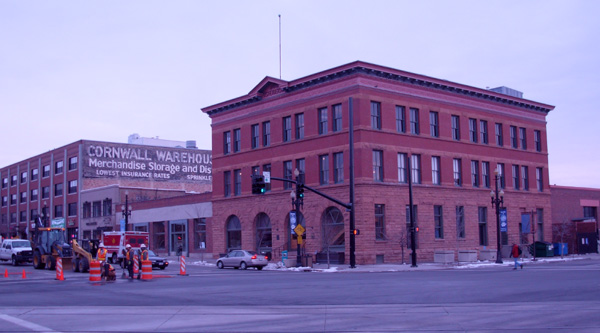
| Formerly abandoned buildings in downtown Salt Lake City are being converted to loft style apartments and upscale restaurants. |
Babs De Lay recognized the potential of downtown Salt Lake City when she became a realtor in the early eighties. “In the mid-eighties most properties surrounding [Pioneer Park] were dirt cheap. Parks always have a big influence in property values in other cities.” Such rare extreme blight found around Pioneer Park in Salt Lake City convinced De Lay the area had potential. De Lay made her big investment in urban Salt Lake City real estate when she purchased two units of the DaKota Lofts in 1998. Her initial investment has since tripled in value.
“Because of who I am and what I do, I couldn’t help but calculate what Artspace might be worth. Let’s see… 15 units over 1000 square feet worth about a million bucks a piece…That place is worth, like a billion dollars!” De Lay said jokingly. However, the owners of the buildings could realize a huge pay day. De Lay believes that maybe the only hope for saving the property is by classifying the buildings as historically protected.
Will Artspace be put on the chopping block and suffer the same fate of gentrification as many argue Sugar House has? Elizabeth Mitchell believes this could very well happen. “They can do what ever they want, tare it down, build something new. We just don’t know, that’s the problem.”
Norie says she has spoken the “the very private owners” of the buildings on Pierpont and she says they have not told her of any plans to renovate the buildings or evict the tenants. “They haven’t told me what they plan on doing. I think they don’t really know what to do…The original owners were brothers and they both died and left the buildings to a son and daughter, who according to City Weekly, “don’t speak to each other.” Norie will be meeting with the owners next week at which time she is hopeful they will reveal their plans. Despite the skepticism of many, some are still optimistic about the future.
 |
 |
|
|---|---|---|
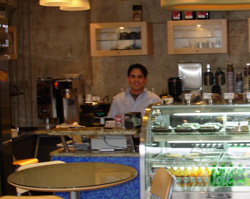
| Diego Castro is the owner of Volke Cafe Bar. | Babs De Lay owns Urban Utah in downtown Salt Lake City. De Lay recently moved her thriving office to the former location of Ruby Tuesday restaurant in the Dakota Lofts. |
West of Tony Caputo’s Restaurant and grocery store, Diego Castro recently opened Volke Cafe bar.
“I am very happy about what is happening around here…Free concerts in the park, the Farmers Market, Gallery Stroll… This is really the center of the reemergence of downtown Salt Lake City…Gateway gets the shoppers, but this is the real thing,” Castro appreciates all of the business he gets from the lofts and the surrounding area and Gateway. “I just hope that they don’t over develop this area.” Diego is optimistic that Artspace will be saved.