
SALT LAKE CITY – The Utah Legislature passed a bill Wednesday requiring all future ADA-compliant ramps to incorporate “fun drops, amusing twists and turns,” and/or loop-de-loops, a measure lawmakers say will revolutionize accessibility throughout the state.
Sen. Carl Wagner, R-Utah County, faces reelection next year and has recently focused heavily on accessibility throughout his local campaign. In an April Senate meeting, Wagner proposed the bill, explaining that he wanted people to associate Utah with words like fun, radical, high-speed, and loop-de-loop. Wagner claimed that spicing up the ADA ramps would be a start.
“I think this would be an exciting change for both the wheeled and the legged,” Wagner said.
Prior to introducing the bill, Wagner traveled to Lagoon, Six Flags, and Disneyland on a state-funded research trip to study the feasibility of using roller-coaster technology in pedestrian infrastructure.
“I rode Wicked three times in a row because the lines were so short when I went. The whole time I was thinking about how I could help people in wheelchairs experience this thrill in day-to-day life.”
Initially, neither the Senate nor the House seemed convinced this was a vital bill. Fellow Senator Sarah Collins called the bill “a completely stupid idea.”
She continued: “I’m worried that Wagner may be in Big Skateboarding’s back pocket. I can only imagine the hoodlums that would abuse these large loop features he’s proposing, taking flash photos and videos for their little skater magazines. Flash photos can be extremely frightening for pedestrians when unexpected.”
Senator Wagner’s proposal gained support when he asked the senators to consider the ADA ramps in the context of the 2034 Winter Olympics, which are to be hosted in Utah. Wagner argued that Utah needed to be more exciting and pro-access for its visitors. He added that it wouldn’t hurt to also use these large ramps to scout talent for the Winter Paralympics.
“They would be doing tricks and flips to and from the library. We could dominate with infrastructure like this,” explained Wagner.
Improving Utah’s image of inclusivity for the Olympics seemed to sway the conversation among the Senate and the House. Sarah Collins commented: “New ADA ramps during the Olympics hold economic potential. Even if only as a stunning visual, they could become an infrastructural wonder that drives tourism. This could be Utah’s Great Wall of China. But only in the sense that it is a tourist attraction. Not that it will be a considerable obstacle for all those who come across it.”
Ultimately, the Senate voted 17-12 for the bill, and the House voted 45-30 in favor. The governor, who was seen riding roller coasters with Wagner at Lagoon three months prior, signed the bill.
Founder and engineer at Lakeside Civil Engineers in Salt Lake City, Frank Osha, described the bill as dangerous and impractical. He pointed out that the speed required to safely execute a loop-de-loop maneuver on the way down a ramp would render it impossible for someone using a wheelchair to find their way back up the ramp.
When asked how he plans to address this issue, Wagner posited they use “one of those tracks in the roller coaster where it sort of grabs the coaster, and it makes that clicking sound when you’re getting dragged up.”
“Maybe it could have that for people to get back up the ramp,” said Wagner.
Frank Osha offered further concerns about a track system, saying pedestrians are likely to fall out of their chairs at the apex of the loop-de-loop when being pulled up.
Bradley Smith, a regional group organizer for Utah Adaptive Sports (and a wheelchair user himself), explained: “If they implement this, I won’t be able to get my groceries.”
Tim Cooper, a prominent local skater with ties to Big Skateboarding, refused to comment on any involvement with the bill, but insisted he had a constitutional right to take flash photographs.
With the bill signed, Senator Wagner plans a supplementary, state-funded research trip to yet another amusement park: Dollywood in Pigeon Forge, Tennessee. Joining him, the governor and Senator Sarah Collins.
“We want to be sensitive to how we use taxpayer dollars when we’re on these trips, so we’re going to try to pack snacks and bring them into the park with us,” said the Governor.
The new legislation is drawing national attention and is being reviewed to ensure it doesn’t conflict with any federal accessibility legislation.
“This definitely conflicts with federal accessibility legislation,” Frank Osha says.
Wagner believes the ramps will pass federal scrutiny.
“The 2034 Winter Olympics is a strong motivator for people to build ramps,” he says,
“By the time these ramps are built, people will be wishing they had a wheelchair just so they could ride our ramps.”
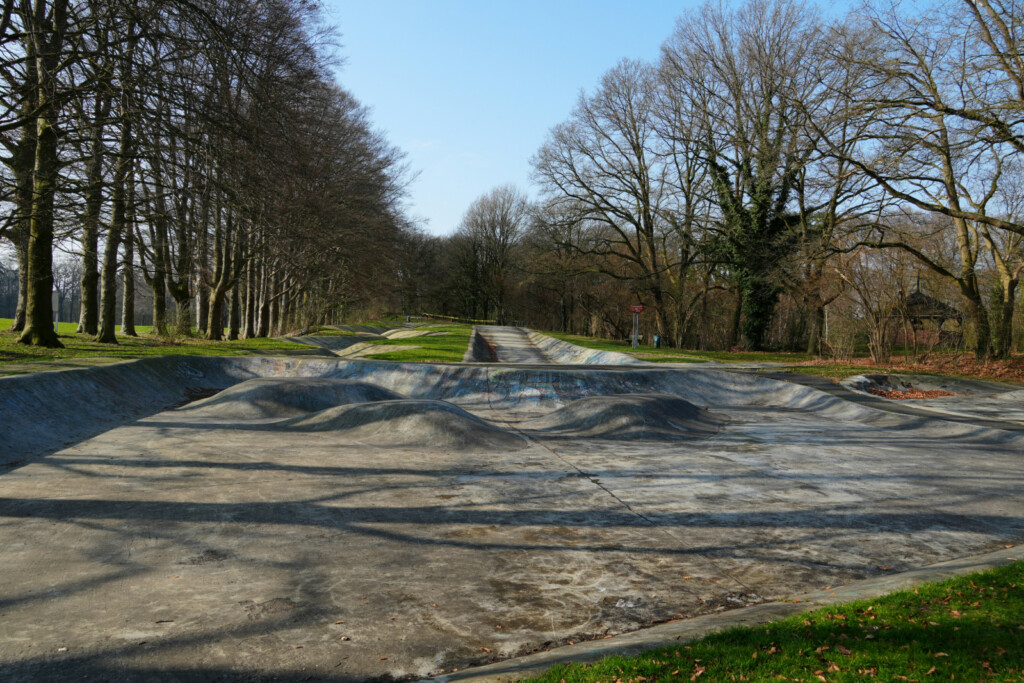
Feature Image: Photo by Milan Slim on Unsplash.
*Editor’s Note: This article is a work of satire and is intended for entertainment and commentary purposes only. While it may reference real places or echo real events, the characters and situations are fictionalized for humor and reflection. At Utah Stories, we believe that sometimes the absurd reveals more truth than the facts alone.