HUMAN DIGNITY

Why Should We Care About the Homeless in Utah?

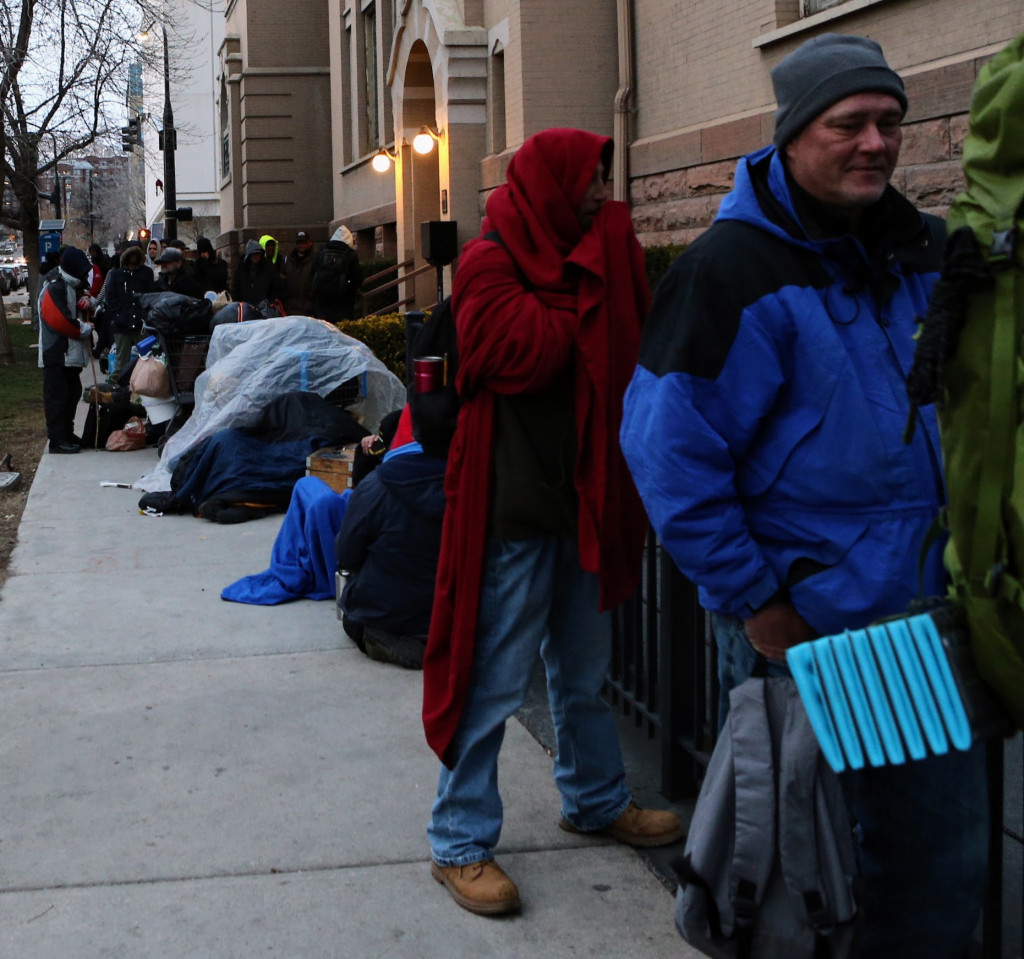
The homeless in Utah, and all over the United States are dying at an astounding rate. At least fifteen people have died in Salt Lake City due to both, cold and drug overdoses this year.

|


Salt Lake City's homeless people. Photo by Robin Pendergrast.
Salt Lake City’s homeless people. Photo by Robin Pendergrast.

Last year over 100,000 people died from drug overdoses, and many of these people were homeless. These people are our “lost sheep.” The homeless in Utah, and all over the United States are dying at an astounding rate. At least fifteen people have died in Salt Lake City due to both, cold and drug overdoses this year. Some say the toll is higher than fifty, but sadly we don’t know how many it is, which I’ll get to later.

American boom towns are exciting places. In milk toast Salt Lake City we are beginning to witness more diversity, culture and shades of skin color than ever before. This is certainly a positive as our cultural isolation is dissolving. Construction projects on every corner built to house thousands of additional souls produce a vibrant energy. This energy is clearly like a hive attracting worker bees. “Industrious” harder workers are attracted to our Beehive state.

But like a successful high-volume restaurant that feeds hundreds of customers, a big city is a kitchen. People come to make it. But it’s a frenzy, it’s fast-paced. It’s hard and cruel, and it produces an enormous amount of garbage. In the case of cities, we treat the homeless as human garbage. While the truth sounds cruel, the facts speak for themselves.

The Salt Lake City Police Department does not deem homeless deaths worthy of investigation. See the story produced by the Utah Investigative Journalism Project on Joe Salas. SLCPD nor the Mayor’s office want to even track homeless deaths. While spending millions on “homeless programs” authorities make no efforts to track the effectiveness of the $200-$300 million per year spent on homeless services. Wouldn’t the first and most important measure be examining homeless deaths? How, why, where and when people are falling through the cracks and dying?

Instead, the SLCPD ignores our inquiries and refuses to discuss the matter in detail. Many homeless people have told us that there is a “serial killer on the loose.” Can we examine or prove this? We have found eyewitnesses who have seen bodies. Does the police care? No. they won’t comment or talk about it. Nobody wants to examine the garbage inside a dumpster, nobody wants to examine the ever-increasing massive homeless death toll, nor examine our growing homeless problems. But the authorities argue, this isn’t happening only in Salt Lake City, this is happening everywhere in the United States. So the question becomes: why should we care?
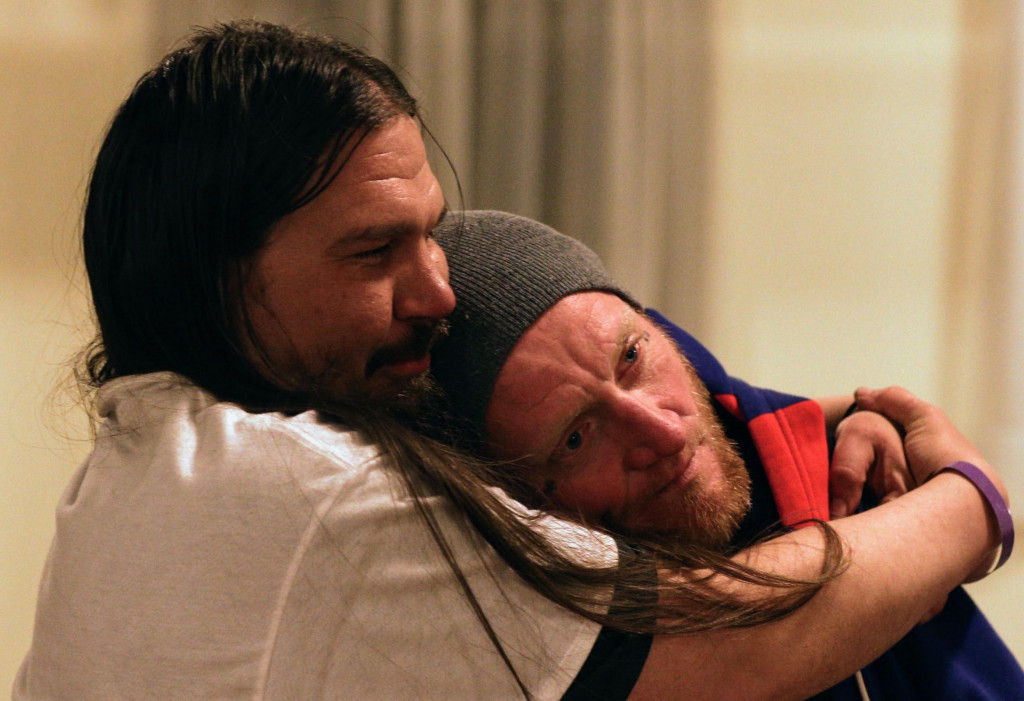
The homeless in Salt Lake City. Photo credit Robin Pendergrast.

We should care because the homeless are our brothers, our sisters, our aunts, uncles, and former friends. Many of them have made bad choices, and many of them have “issues” and “baggage”. But these people are our fellow humans, and more than stuff, they need fellowship. They need people to listen to them. As Ty Bellamy puts it: “if we in Utah care so much about protecting the unborn lives of fetuses, as we just demonstrated in our state-wide abortion ban, why is it that we cannot care about the living who are dying on our streets?”

The homeless are misfits, and we should embrace and understand that the misfits, those who live on the lunatic fringes, produce art and culture. Those who can’t or don’t want to work corporate jobs or be a cog in a wheel of a big corporate machine epitomize. Can you blame them? When the jobs they could most easily get are working at an Amazon fulfillment center, which is probably one of the most dehumanizing jobs any person could have– they would replace a person with a robot in less than a second if they were able – why would a job like that make any person feel hopeful?

Some of the homeless have real talent. Some have sensitivities for art and music, some are our shamans. They are those who remind us that in our race to the future, we are undermining our connections and we are losing our sensitivities. This world is lacking in love and compassion, it’s becoming too cruel, especially for those who were born into cruelty. Most of the homeless are suffering from trauma and PTSD. Most use drugs and suffer from psychological disorders due to trauma, and our answer is to let them die? Harass them? Hasten their inevitable demise? Abort them?

One discovery I found when I first started covering homelessness is the statement that many unsheltered homeless individuals make which is, “I am homeless by choice.” The meaning of this statement is actually more profound than it might seem on the surface.

They choose to be homeless because they are in essence escaping a previous condition that they found extremely undesirable or life-threatening. Why shouldn’t we help them to make this escape, and find a light at the end of the tunnel?

Some appear to be protesting the current human condition. Many want to say they do not want to participate in the “evils of capitalism.” Or participate in “a system that is governed by rules which are written by evil corporations.” Their conclusion is to check out. But in so doing they are making themselves into victims rather than protestors.

Unfortunately, their arguments lack merit when they aren’t actively seeking an alternative that might put their human condition on a higher plane: by engaging in farming, carpentry, cooking, or trades outside of the “capitalistic world” that they deem evil. They could become active protestors by working hard at a locally-owned business, instead, they wallow in their misery. But ultimately they are “lost sheep.” And Jesus said in the parable of the lost sheep that we should value them and their souls, just as we would a lost sheep, “Suppose one of you has a hundred sheep and loses one of them. Does he not leave the ninety-nine in the open country and go after the lost sheep until he finds it? And when he finds it, he calls his friends and neighbors together and says, ‘Rejoice with me; I have found my lost sheep.’ I tell you that in the same way, there will be more rejoicing in heaven over one sinner who repents than over ninety-nine righteous persons who do not need to repent.”

This odd conclusion is striking: God rejoices over the sinners who repent more than the righteous. Why would this be? Perhaps it is because everybody sins. Many become lost, especially lost in sin. But when we are found, we can help find and save others. Isn’t this a big part of what it means to be a “Christian”? If it isn’t then tell me what being Christian means. Tell me what is the value of having a fat bank account as a Christian if it isn’t to help others to be found?

Attempting to find the root causes of homelessness; diving down that deep and dark rabbit hole, we ultimately find a mind virus. A pathogenic thought that justifies their self-inflicted misery. And in being together they commiserate. They will spout crazy thoughts and ideas, but they agree with each other. Very occasionally and rarely do they debate. But sometimes when they do debate there are some nuggets of wisdom.

Salt Lake City is currently experiencing unprecedented population growth. Every city that has experienced this type of double-digit percentage increase in growth in under a decade always experiences a concurrent homeless population spike. This happened in New York City at the turn of the century. It happened in Los Angeles beginning in the early seventies, it happened in Denver a decade ago, and now Salt Lake City is having its turn. Why does this happen? Why can’t everyone who comes here just take part in our booming economy?

People of every social class and stripe come to a boom town seeking opportunity. Some find jobs and opportunities and others fall on “hard luck” or bring their “bad luck” with them. Or they mix with the wrong crowd. But for whatever reason the homeless are simply people who have fallen into a downward spiral, they are down and out, and many of them are stuck.


Subscribe to Utah Stories weekly newsletter and get our stories directly to your inbox

* indicates required


Join our newsletter.
Stay informed.


  • Growing Up in Utah’s Foster Care System: One Child’s Story

    Celeste was five years old the first time she dragged a kitchen stool across the linoleum, climbed up to the stove, and made dinner.

    On good days there was a blue box of mac and cheese from the food bank. If they were really lucky, there’d be a pack of hot dogs or some bacon to slice into the pot. She’d stir the noodles, cut the meat with careful little hands, and call it a gourmet meal. Then she’d walk her younger sister to school, help with homework, run the bath, and put her to bed.

    While most Utah kids her age were learning to color inside the lines, Celeste was learning how to keep another human being alive.

    Her father drifted in and out of jail and drug rehab. Her mother usually lay passed out on the couch, sleeping off hangovers and long nights with men and drugs. The grown-ups in the house didn’t mark time by dinner, bath, or bedtime. Celeste did.

    “I knew enough to know she wasn’t doing her job,” Celeste says of her mom. “But I also knew enough to know I would need to do it for my sister.”

    By seven years old, Celeste wasn’t anyone’s daughter in the way most people think of it. She was the mom.

    In and out of “the system”

    Her life didn’t start out that way. For the first 18 months, Celeste was being raised by an aunt and uncle. They already had a houseful of kids, but they loved her and wanted to keep her. Years later, Celeste would learn her aunt even asked to adopt her—with one condition.

    “She said, ‘You can’t be involved in how we do that. We have to be able to parent her the way we parent our children,’” Celeste recalls. “And he said, ‘I can’t do it. I can’t promise I won’t interfere.’”

    The deal died there. Her biological father chose the possibility of control over the certainty of safety.

    At about 18 months, Celeste’s parents moved away from family “to figure this out on our own.” What followed was five years of drift and chaos. She bounced between relatives, foster homes, and her parents’ place. Sometimes she and her sister would go together. Sometimes people begged to keep her baby brother because he was so little.

    By age seven, the state officially removed them. Her father was back in jail. Her mother’s addiction had swallowed up whatever was left of her ability to parent.

    Most people assume this is where the story turns. Parents lose rights, kids go into foster care, things get better. For Celeste, they didn’t.

    “I moved every six months until I was 16,” she says. “I lived in about 32, 33 cities.”

    In between were “mother-child” drug rehab programs, including one that uprooted them from Salt Lake and dropped them in Detroit, Michigan. On paper, those programs allowed mothers to get clean without permanently losing their children. In practice, at least where Celeste landed, they were barely controlled chaos.

    “You have little kids all the way up to almost-18-year-olds together, and you’re not even allowed to see your mom until she’s at a certain level in the program,” she says. “We basically managed ourselves. That’s not going to go well.”

    Children who’ve already learned to parent themselves simply become young generals in a kid-run unit. In Celeste’s case, that meant fighting other kids and stepping into situations no child should have to navigate.

    “I chose to fight, to put myself in harm’s way to protect my sister,” she says. “Later it made it hard to see myself as abused, because in my mind, I chose it. I wasn’t thinking ‘I’m a victim.’ I was thinking, ‘Look at me taking charge. Look at me keeping her safe.’”

    The parentified child in a foster world

    If you’ve never seen it up close, “parentified child” sounds like another clinical label. If you’ve lived it—or tried to parent a kid like that—you know it’s anything but abstract.

    My own family took in three foster siblings. The oldest was six and arrived in our home with his shoulders squared and jaw set like a tiny drill sergeant.

    “He was exactly like you,” I tell Celeste. “He’d say, ‘Just so you know, I’m in charge of these two.’ He coached us: ‘Here’s how you calm Riley down. Here’s what you do with Abby.’”

    Like Celeste, he wasn’t really acting like a child. He’d become the caretaker, without the brain development or support to do it.

    “You think your decisions are better than what happened to you,” Celeste says, “but your brain’s not developed enough, and nobody’s taught you how to make healthy decisions. And yet you know enough to know something has to be managed.”

    That constant managing keeps kids stuck in fight-or-flight. One therapist described it to us as a train without brakes trying to pull into a station. The child wants to calm down, but doesn’t have the internal wiring to do it.

    “It feels chaotic and unstable, putting it mildly,” Celeste says. “Only time and consistency can help a kid start to regulate. If you move them every six months, you never get either.”

    “Broken” or just brutally complicated?

    Listening to stories like Celeste’s, it’s easy to slap one big label on Utah’s foster care system: broken.

    We felt that way. The three siblings who came to us were bright and funny. Ninety-seven percent of the time, life with them was joyful: playing in the mountains, trips to Moab, board games, laughing with the dogs. The other three percent was absolute crisis: kids beating on each other, getting kicked out of school and daycare, becoming pariahs at karate class.

    That three percent slowly swallowed all the oxygen in the house.

    As behaviors escalated, more professionals got involved—caseworkers, attorneys, therapists. Too often, it felt like the machinery of the system was trying to solve its own problems, not understand the children at the center of them. At one point, it felt like the state was more interested in removing the kids than helping them heal.

    “We felt like the system was hell-bent on destroying the kids,” I tell Celeste.

    She doesn’t flinch.

    From her vantage point—as someone who lived it and now works alongside the people running it—Celeste resists the simple “broken” verdict.

    “People ask me all the time if I think the system is broken,” she says. “And my answer is no, it’s complicated.”

    Coming from her, that’s not spin. She’ll tell you bluntly: “I feel like the system failed me 100 percent.” She can’t point to one thing it did that felt good or healing at the time.

    But as an adult, she can see what she couldn’t as a kid shuttled from house to house: massive gaps. Service gaps, resource gaps, legal gaps. People inside the system working under mandates and timelines most foster families never see.

    “Children aren’t designed to be raised by a system,” she says. “That’s the problem. They’re designed to be raised by a healthy community and a family. So when we take them out of any chance of that happening—even if there was dysfunction there—and put them into this clunky system, it’s chaos.”

    To access this post, you must purchase Utah Stories (Digital + Print) or 3 month free trial (Digital).


  • Left in a Box as a Baby: Trauma, Alcoholism, and Addiction

    A man abandoned as a baby builds a structured life in law enforcement, but unresolved trauma and alcoholism slowly begin to unravel it. His story raises a harder question about how change actually happens.


  • From LDS Mission to Heroin Addiction: A Utah Man’s Descent and Recovery

    More than 100,000 Americans died from drug overdoses in a single year. That number is often repeated, rarely absorbed, and almost never understood in a way that forces real reflection. Because addiction doesn’t usually look like chaos at the beginning.