
The Great Salt Lake has been receiving national headlines in the past year due to its shrinking to half of its regular capacity and the real possibility of it drying up. Stories point out the potential ecological disaster a Salt Lake City without the lake might cause. One aspect that hasn’t been much discussed is its massive brine shrimp industry. If you weren’t even aware this industry existed, nor even knew there were fishermen on the Great Salt Lake, you are not alone.
First off, how could an animal the length of a child’s thumbnail; a crustacean that would fail to make a decent shrimp cocktail for a mouse, be described as a massive industry?
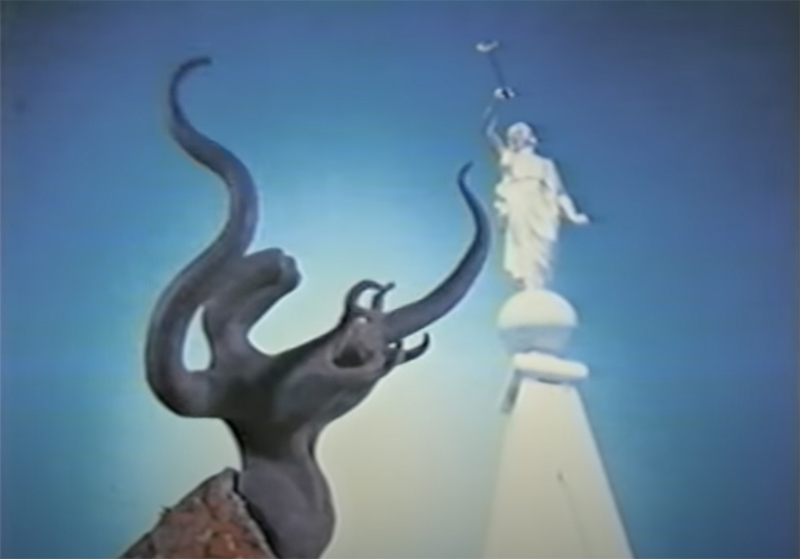
It turns out that not unlike the men of yore who fished the mighty whales on the Baering Straight for their valuable oil, brine fishermen are a rare breed of men who harpoon the tiny shrimp on the saline waters of the Great Salt Lake—actually, not harpoons but very fine nets have been found to be the most efficient means of capturing the shrimp. Still, artists and filmmakers have imagined the havoc a giant brine shrimp might wreak on Salt Lake City.
30 million pounds of raw brine shrimp are harvested each year from the Great Salt Lake. But it’s actually not the shrimp but cysts (or eggs) that have substantial value. Due to their abundant lipid content and fatty acids, cysts or artemia are ideal for fish and shrimp hatcheries, resulting in $67 million per year industry. The GSL provides the world’s largest single source of artemia, currently, around 45% of the total volume produced worldwide. There has never been found an effective artificial substitute for artemia.
Who Makes Money on Brine Shrimping The Great Salt Lake?
While there are numerous brine shrimp companies, paying the $10,000 per year permits to harvest artemia in the months of October through January. Just two companies: Ocean Star International and Great Salt Lake Artemia, corner the market for harvesting and processing. Ocean Star is owned by a Chinese immigrant named Simon Goe, who also owns a nutritional supplement company he is the largest land owner in Snowville, Utah, and a big campaign contributor to Senator Mike Lee. While there are twenty-one permit holders and (Co-op owners), they are a secretive bunch, they don’t divulge much about their industry or operations, which is now in an unexpected spotlight gaining national media attention.
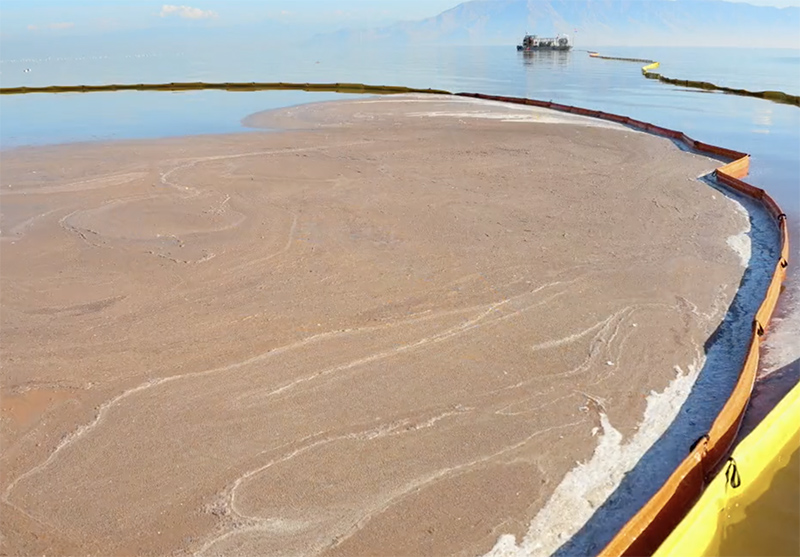
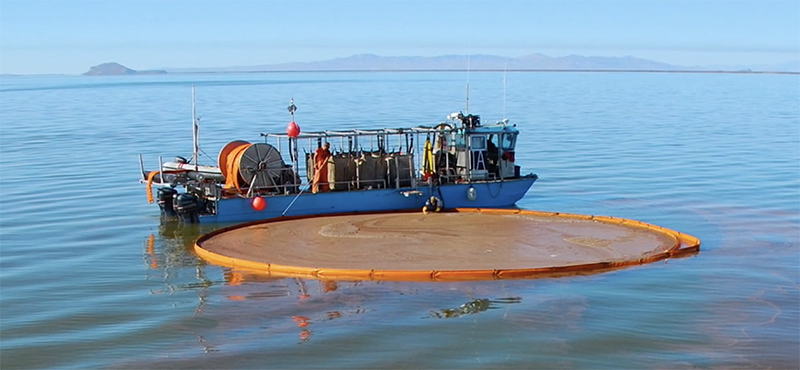
We reached out to nearly a dozen permit holders listed on DNR’s website, and nearly all of them say, “speak to Don Leonard.” President of the Utah Artemia Association. Permit holders’ names are listed on DNR’s website, they include the Eccles family and Galivan family. Most of those holding permits have no actual involvement in fishing or operations. Most appear more like shareholders of the GSL Artemia Co-op. And it appears that just three companies fish the waters. But fishing isn’t the most accurate way to describe brine shrimping it’s more a process of corralling and netting the tiny eggs. Even though, the impact of harvesting the most important food source for migratory bird populations might cause environmentalists to take issue with efforts, there are systems of careful monitoring in place.
The brine population and the overall ecosystem are carefully controlled by Utah’s DWR (Division of Wildlife Resources), this agency has done an excellent job maintaining the long-term sustainability of the fishery, making it the best in the world for the scarce resource.
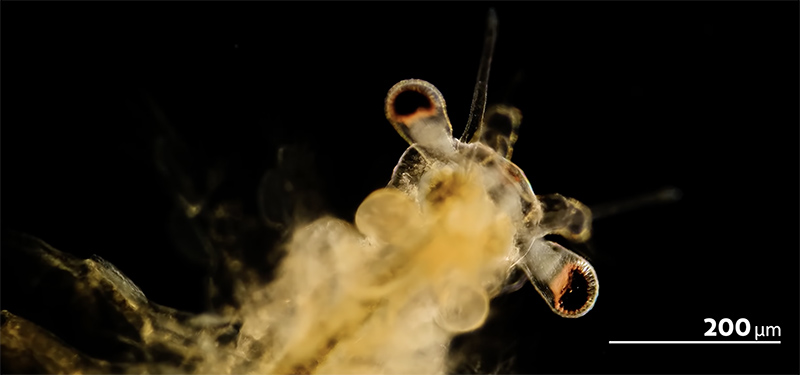
The Ecological Unsung Heros of the Great Salt Lake
Brine shrimp are an important food source for over eleven million migratory birds of 330 different species each year that rest and recharge at the Great Salt Lake for a feeding stop layover on their long voyages across the United States.
Brine shrimp and brine flies provide migratory birds such as pelicans, Ibis, egrets, herons, and eared grebes (the most ubiquitous) the very critical protein fuel they require to make the long journey before they reach their rich feeding areas along the Pacific Ocean and Gulf of Mexico. If the brine shrimp were gone, fewer birds would be able to make the journey.
Many environmentalists argue that Utah’s political leaders have failed when it comes to protecting the Great Salt Lake and its tiniest inhabitants. The development of both the Inland Port and the new Utah State Prison have been built near the lake shore, requiring millions of dollars of extra funding for mosquito abatement. Mosquito “abatement” consists of essentially fumigating mosquito larvae, killing the unborn mosquitos before they hatch.
While some studies have been conducted on the overall impact of Pyrethroids and organophosphates, the aerial insecticide applications are certainly not good for any of the small creatures in the lake including the brine shrimp and artemia. These animals have an interdependent or synergistic relationship with the brine flies and mosquitos as well as the migratory birds who feed on them. Complications and problems will persist for the brine shrimp if lakeside development projects continue. We only need to examine the recent past to see how easily development projects can great adverse consequences on lake biology and ecology.
The Lucin Cutoff Conundrum
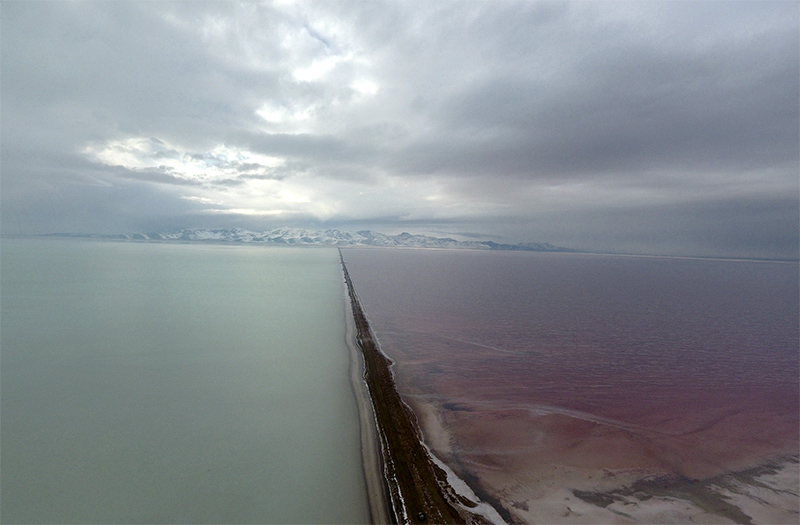
Constructed In 1904, west of Ogden, The Lucin Cutoff allows trains to cross the GSL, to Lucin, Utah. In 1950, the trestle wood bridge was replaced with a rock and roadbase earthen bridge, dividing the lake in two. This has substantially increased the salinity of the North-end of the lake. The impact is clearly visible: from the new differing ecologies: the waters on the north side of the causeway are red while the water on the south side is green. This is due to the type of algae that flourishes in the different levels of salinity. Higher salinity results in diminished brine shrimp populations as they require greater energy to survive. While politicians and environmentalists agree, this development was a mistake, they fear what would happen if the two parts were again combined, increasing salinity on the south end of the lake, especially when water levels are at historic lows. Efforts have been made to mitigate the environmental impacts of this decision and many ideas are on the table, the point is that unless extremely careful measures are taken, the ideas of raising water levels– including a 700-mile pipeline from the Pacific Ocean– will certainly have unintended consequences to the peculiar and unique GSL ecology.
As for the brine shrimp industry folks, only Teri Potter at INVE Aquaculture was willing to talk with us. She said that the industry stakeholders are very concerned about the lake drying and it would be devastating if the lake dried out. She added that piping water in from the ocean would not replace the unique ecology of the Great Salt Lake because the water salinity of the ocean is much lower than the salinity of the Great Salt Lake.