Community Relations

Sugar House Restaurant Site for Sale at 5.5 Million Dollars

The question of what will take Sizzler’s place in Sugar House is bringing out strong emotions in the community. It’s the only privately-owned site in Sugar House Park, and with the multi-million dollar price tag, there are few options that could prove profitable for potential investors.  

|


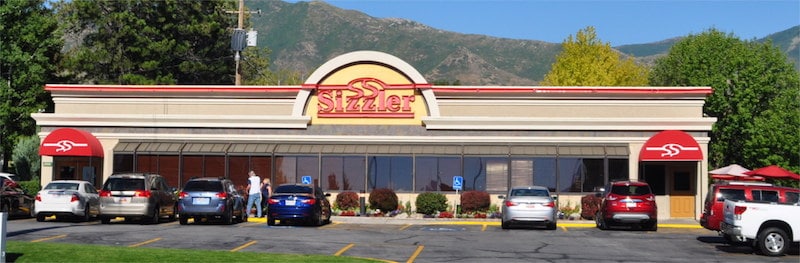
When the Sizzler on the corner of 2100 South and 1300 East in Sugar House shut its doors for good last fall, my husband was oddly devastated. Although he hadn’t dined there in 29 years, he felt comfort in the stability it represented. 

“It has been there my whole life,” he laments. It was one of the few remaining monuments of the Sugar House he knew as a kid, and the lot it sits on is now for sale for a whopping 5.5 million bucks. 

One of America’s first casual steakhouse chains, Sizzler filed for Chapter 11 bankruptcy in September 2020, citing the effects of the Coronavirus pandemic. Many restaurant chains have suffered throughout the COVID-19 pandemic, but Sizzler has been in a general decline in recent years according to data from Restaurant Business, and this wasn’t Sizzler’s first bankruptcy filing. 

The question of what will take Sizzler’s place in Sugar House is bringing out strong emotions in the community. It’s the only privately-owned site in Sugar House Park, and with the multi-million dollar price tag, there are few options that could prove profitable for potential investors.  

According to Judi Short, chair of the Sugar House Community Council Land Use & Zoning Committee, the parcel would have to be rezoned to allow for something that would make money for the property owner. So, one of the few things that could provide a worthwhile profit would be an apartment complex, and Short says she’s heard that it would need to be at least ten stories tall to provide a good return on investment.

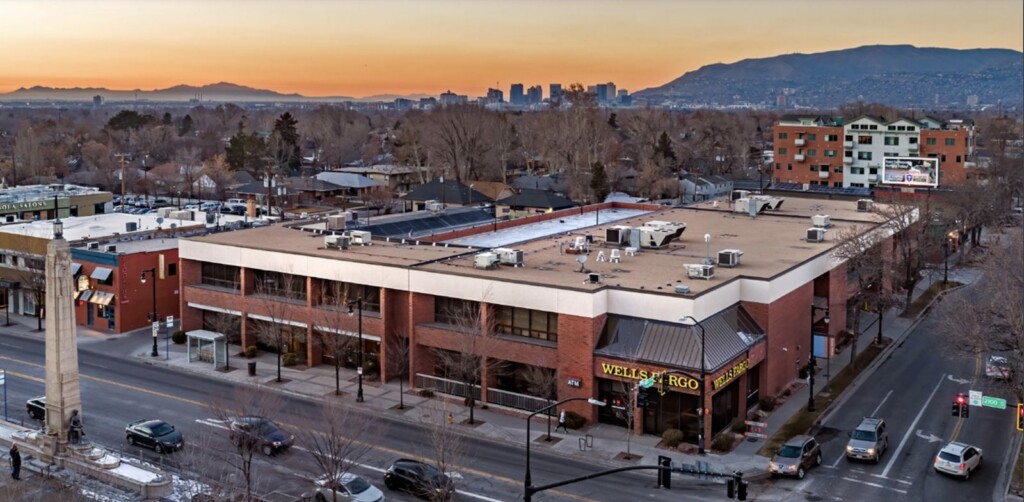
Photo of the Sizzler property taken by Utah Stories drone.

Respondents to a community survey overwhelmingly opposed another apartment in Sugar House, especially one so tall on the corner of a park. Less than a dozen of the more than 300 comments received wanted to see the lot rezoned for apartments, and a majority of the comments favored incorporating the lot into the park. Suggestions included expanding the entrance to the park, adding green space, or opening a new restaurant or coffee shop something park visitors could use. 

Short approached the city about acquiring the lot but does not know if they are looking into it. Considering the 5.5 million dollar price tag, it’s unlikely the city is seriously interested. “The city doesn’t have a pot of gold sitting around,” says Short.  

No real proposals have come through at this time, and although it seems like an apartment may be the only option to justify the high price, constructing one on that corner will not be without difficulty. 

The 0.82-acre site is very small, and access would be a challenge given the busy 2100 South and 1300 East intersection. All parking would have to be onsite, considering parking is not allowed on either street or in the park overnight. An apartment would most likely need more acreage, but as it is, the Sugar House Park Authority is not able to sell any land to the Sizzler parcel because under their agreements, any use of their land has to be for open space.  

A new developer has approached the city about a possible land swap, but the details of this are unknown at the present time. Short apologized for the non-answer when I asked her about the fate of the lot, but there just aren’t any answers at this time. 

My husband says it would have been easier if the lot just stayed a Sizzler. “That was the Sizzler’s home. Nobody ever thought or questioned its existence even though it is the one business in the park,” he says. According to him, the lot can only become part of the park or it must go back to being a Sizzler.


, ,


Join our newsletter.
Stay informed.


  • Has Utah’s Soft-on-Crime Justice Reform Made Communities Safer?

    Has this “soft-on-crime” approach resulted in safer streets?

    SALT LAKE CITY — A decade has passed since former Utah Governor Gary Herbert signed a massive justice reform bill into law in hopes that the state could reduce its prison population and manage low-level offenders through rehabilitation programs instead of incarceration. Has this reinvestment resulted in lower crime and recidivism rates?

    According to the Utah Department of Corrections, that landmark Justice Reinvestment Initiative aimed to “continue holding offenders accountable and securing our communities, but in a way that considers individual risks and treatment needs.”

    Are communities really safer when mental health and substance use needs are addressed through programs administered outside prison walls? The idea was to treat criminals differently based on their mental health needs and backgrounds. But at least one retired Adult Probation and Parole Officer, believes this “soft-on-crime” approach hasn’t resulted in safer streets.

    LOOKING BACK

    State Senator Todd Weiler, in that legislative role since 2012, helped drive the passage of the Justice Reinvestment Initiative (JRI), a massive bill that enjoyed broad-based approval among state officials and the Legislature as a whole.

    In November 2014, Weiler attended the national summit on the issue in San Diego, an event hosted by Pew Charitable Trusts. 

    “I was very involved in it. We had a lot of high hopes,” Weiler, a Woods Cross Republican, said in a recent interview. “That was about the time we were finalizing plans for the new prison. And we actually said that because of JRI we don’t need as many beds because we’ll be incarcerating fewer people. So that new prison was designed with this idea.”

    A key part of JRI dealt with adjusting sentencing for crimes related to addiction, dividing offenders into two basic groups: dangerous criminals who are a threat to society (that group goes to prison), and low-level offenders who get help kicking addictions through state-sponsored programs or private-sector rehabilitation.

    “The ultimate goal was if we have an otherwise good person who got caught up in an addiction, and as a result committed crimes, they need to be punished for their crimes,” Weiler said. “It’s not that we’re going to overlook what they did, but we wanted to focus primarily on helping them overcome their addiction and [that means] getting them back to their job and their family.” 

    Before JRI, low-level drug offenders with felonies would spend years in prison, which wreaked havoc with their lives and future prospects. Addressing the root cause of their theft and property crimes through supervision and treatment made sense. 

    “We’re all imperfect people,” Weiler said. “So we want people working their jobs, paying their bills and raising their kids rather than sitting in jail and watching TV or playing cards.”

    To access this post, you must purchase Utah Stories (Digital + Print) or 3 month free trial (Digital).


  • Salt Lake City Newcomers Club: Finding Friendship and Belonging Since 1948

    Moving away from your hometown can come with many blessings. But for some, it also comes with just as many bouts of loneliness. That ache of not knowing where to meet people, or grieving the friends you left behind, comes in waves. Workplaces and churches can sometimes provide ready-made communities, but what happens when they don’t? Where do you go to find true belonging?


  • A Ski Village or a Tipping Point? Nordic Valley Expansion Divides Ogden Valley

    The project, known as Nordic Village, is expected to roll out over the next decade and represents one of the largest tourism developments in the valley’s history.


  • Fiddler’s Is Back in Sugar House: Revival of a Neighborhood Favorite

    Walking into Fiddler’s today, longtime patrons will recognize the feeling of the old neighborhood, even though nearly everything else has changed.

    The menu, for one, is tight, intentional, and scratch-made. “We created a simpler menu where we utilize most of our ingredients between different dishes,” Jordanna explains. “You can’t waste anything.”

    Everything is made thoughtfully and often gluten-free by default.