Gardening & Farms

Gardening in Pots: Anyone Can Grow a Garden

After gardening virtually all of my life, and later teaching gardening classes through West High School’s Community Education Program, I have concluded that almost anyone can grow a garden. The only real requirement is about six hours of direct sunlight for any location. It could be a small corner of your yard, a patio, or…

|


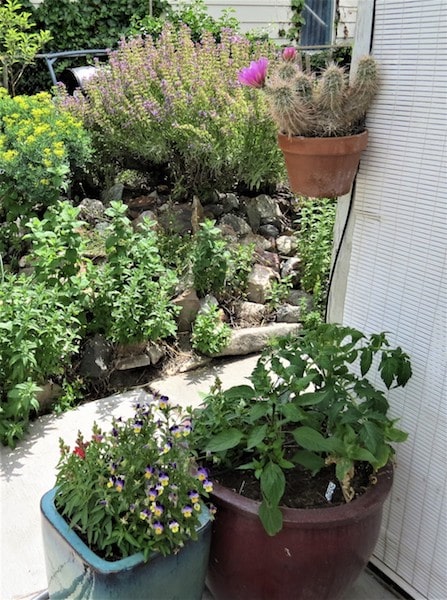
The many possibilities of container gardening. Photos by Dan Potts.

After gardening virtually all of my life, and later teaching gardening classes through West High School’s Community Education Program, I have concluded that almost anyone can grow a garden.

The only real requirement is about six hours of direct sunlight for any location. It could be a small corner of your yard, a patio, or even an outside deck on the east side of a high-rise apartment complex. You could even grow a 25-pound watermelon eight stories up on a south-facing apartment deck simply by training the vines to grow where you want them.
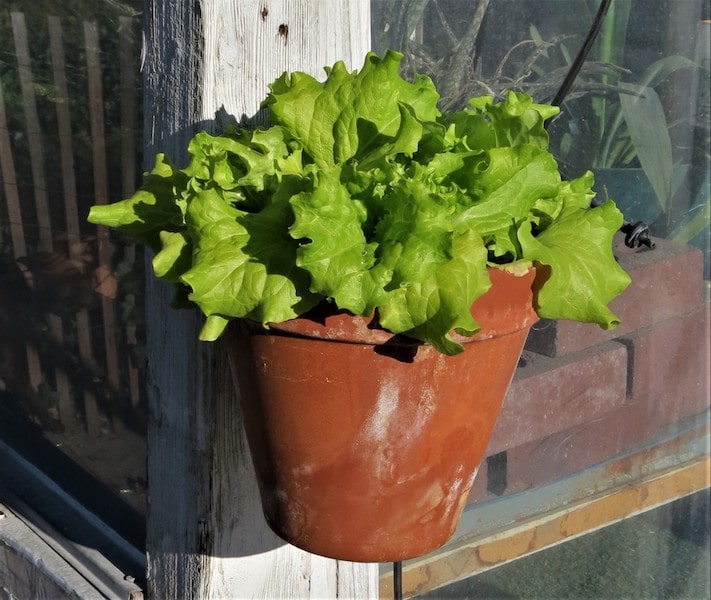
Leaf lettuce in a pot.

Many renters either do not have access to garden space or the owner will not allow them to garden in the yard. However, almost all renters are allowed to grow potted plants, and folks can usually find places to put containers on a back patio or even in soil-less front yards.  Thus, the trick is to grow more things in containers, regardless of whether one has access to a garden area on the ground.

There are almost limitless choices for containers. Over the years I have used everything from plastic pots to old racing tires — anything that can hold a soil mix. For a growing mix, I recommend using mostly real soil mixed with some perlite to help drainage, and compost to add more organic matter for improved fertility.

Watering seems to be one of the biggest challenges for most. Many people simply over-water their plants, thereby stressing them. I recommend letting the plants tell you when to water by waiting for their leaves to droop. To avoid spoiling them, that usually means only watering once about every day or two. I prefer to water in the evening to allow plants to recover overnight.

Lining the bottom of containers with gravel and/or perlite assists draining excess water, however, you might also need a container (tray) below them to catch water draining through to prevent water from running somewhere you don’t want it.

Another technique to growing in smaller spaces is to grow vertically. Use a trellis to support plants such as tomatoes. Allow cucumbers to climb a wall, or even use handrails as opportunities to train them to  increase productivity.

Growing in suspended pots allows increased exposure to sunlight for plants such as strawberries that naturally do better hanging down.


Refurbishing tires as planters.

This year I plan to grow melons in black polyethylene pots and tomatoes in car tires filled with a mix and resting on top of soil in the garden. I also plan on growing snack peppers in a large ceramic pot on the patio for more convenient snacking. We are already eating lettuce and arugula in our salads that I started weeks ago in pots that were easily carried inside when outside temperatures dropped too low.

I’m certainly not talking about farming with polluting rototillers or using fancy irrigation systems. Having occasional fresh veggies or even pet plants to talk to every day is what I am talking about.

Subscribe to Utah Stories weekly newsletter and get our stories directly to your inbox

* indicates required


,


Join our newsletter.
Stay informed.


  • Off the Grid: Four Days in Cataract Canyon

    Far from screens and city noise, a four-day river expedition through Cataract Canyon becomes a journey into silence, deep time, and shared consciousness. Among ancient rock layers and star-filled skies, we rediscover what it means to live with purpose and presence in a distracted world.


  • Utah Farm Animal Rescue: Sixteen Years of Saving Abused Animals

    For sixteen years, a small ranch in West Jordan has given abused farm animals a place to recover and start over. Horses, alpacas, goats, and countless others arrive in rough shape, but with steady care they regain trust and health. What began as one man’s effort to stop animals from being put down has grown into a rescue that also helps people who need a purpose or a place to feel connected.


  • 70 Years of Teaching Utahns Four-Season Gardening

    For seventy years, Millcreek Gardens has helped Utahns understand how to create yards that survive more than a single season. From a humble family start in the 1950s to a thriving three-generation nursery, their story shows why four-season gardening is possible even in Utah’s harsh climate.


  • Chronic Disease in America: Treating Too Late, Prescribing Too Much

    Every January, Americans reflect on the year behind them and draft a familiar list of resolutions. Eat better. Lose weight. Exercise more. Reduce stress. These intentions recur not because people lack discipline, but because the underlying health conditions driving them persist.

    Despite unprecedented medical spending and pharmaceutical access, the United States remains chronically unhealthy. According to the Centers for Disease Control and Prevention, more than 76 percent of US adults live with at least one chronic condition, and over 51 percent live with two or more. The most prevalent conditions are well documented. Heart disease remains the leading cause of death, accounting for 680,981 deaths in 2023, while obesity affects more than 40 percent of US adults. Diabetes impacts 38.4 million Americans, and nearly half of adults have hypertension, a major contributor to stroke, kidney failure, and heart disease.

    Treatment typically begins once disease is clinically apparent, and often relies on pharmaceuticals. Over time, this approach can lead to polypharmacy, the use of five or more medications. Patients with chronic illness frequently average two to four comorbidities, each managed independently, increasing the likelihood that side effects from one medication require another.

    To access this post, you must purchase Utah Stories (Digital + Print) or 3 month free trial (Digital).