
Podcast

Could Greater Adoption of Solar Power Save Utah From Dirty Air?

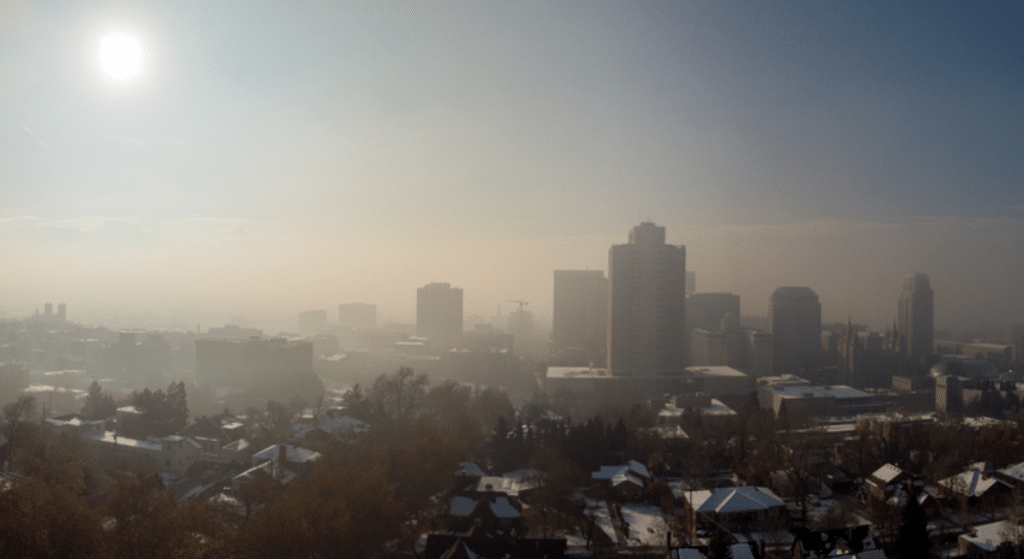
Utah has some of the very worst air quality in the world for the size of our population. In Utah, childhood asthma rates are some of the highest in the U.S. Our abnormally high rates of lung cancer, cardiovascular disease, emphysema are all linked to our particularly high-particulate matter dirty air. Today, there are three…

|


Why aren’t Utah’s political leaders using our budget surplus to expedite our transition?

Utah has some of the very worst air quality in the world for the size of our population. In Utah, childhood asthma rates are some of the highest in the U.S. Our abnormally high rates of lung cancer, cardiovascular disease, emphysema are all linked to our particularly high-particulate matter dirty air.

Today, there are three emerging technologies that could dramatically improve our air quality in the next 2-5 years, if our political leaders choose to use some of our budget surplus to expedite the process to convert us away from fossil fuel energy production.

Electric Vehicles / Solar Arrays / Battery Technology

Those technologies are EVs (electric vehicles); extremely cheap QW/H solar arrays; and battery backup reserves that could drastically improve our solar power generation capacity by storing far more solar-generated power than was ever possible.

Currently, EVs are still expensive compared to ICE (Internal Combustion Engine) vehicles, but not so much when the decreases in maintenance and no fuel costs are included. But Utah is actually cutting back on subsidies for electric vehicles and solar power. Why? Could it have anything to do with special interests who give our political leaders political campaign contributions who are in the oil, gas, mining and coal businesses? We cannot say so for certain, but just from an overall health perspective, if Utah’s political leaders were as concerned with Utahns health as they were helping their buddies in big energy, they would subsidize the adoption of EVs and solar in an a major way.

But of course, what matters just as much as transitioning our vehicles from ICE engines to emission-free vehicles is how we generate our electricity in Utah.

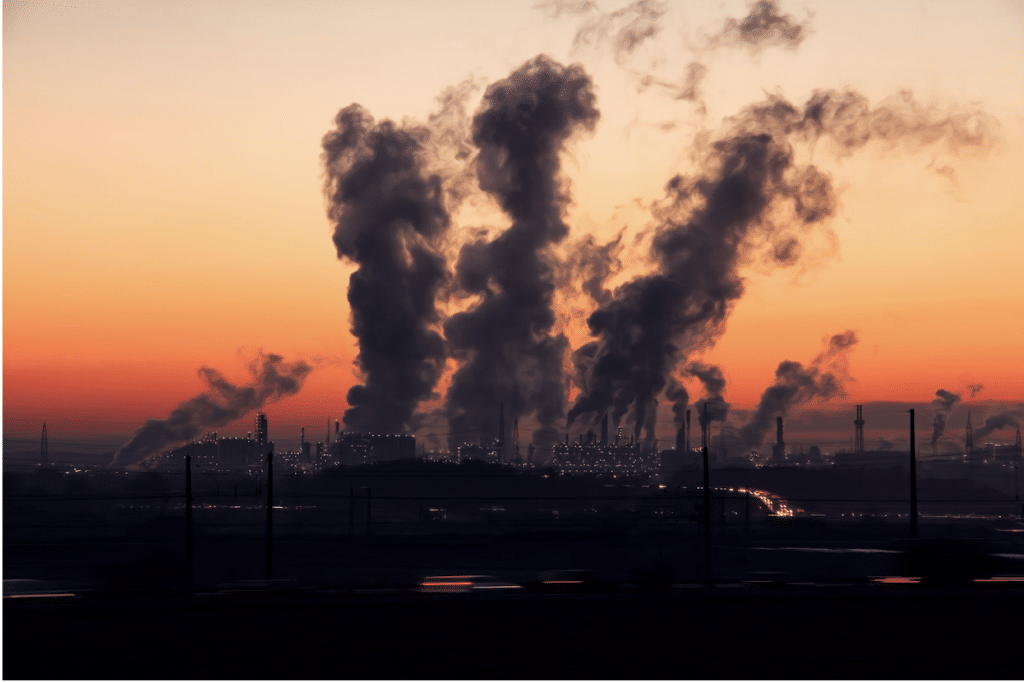
Currently Utah still predominantly generates our electricity by burning fossil fuels.  Around 66% of our power is generated from burning coal and natural gas according to the US Department of Energy. It’s for good reason: Utah has huge reserves of coal; Utah has also huge supplies of natural gas and oil, and the infrastructure for this power generation is already in place.

But the impact of burning these fossil fuels is evident not only from our dirty inversion-day cities along the Wasatch Front but also in our National Parks. In hot summer months, the smog in Canyonlands and Arches National Parks settles into the canyons hazing the views for the millions of visitors who come there to escape the cities and witness some of the most spectacular natural beauty on earth. If we expedited the transition to solar, the coal-burning plants could be used for reserve power only and far less frequently.

The limiting factor of solar power has always been storage. It’s easy to generate plenty of power on sunny days, but on cloudy days the effectiveness of solar is dramatically reduced. Tesla’s new battery technology and their Megapack division is already solving this problem.

A Tesla subsidiary registered as Gambit Energy Storage LLC is quietly building a more than 100 megawatt energy storage project in Angleton, Texas, a town roughly 40 miles south of Houston. This project started not long after Texas was hit with a winter storm that left hundreds of thousand of consumers without power. This program allows for existing energy companies to partner with Tesla and their technology to alleviate and expedite the transition away from fossil fuels.
So What Could Utah Be Doing To Improve Air Quality and Adopt Cleaner Energy?

Very soon our Utah State Legislature will be meeting for a special session to decide what they should be doing with the several billion dollars that the Federal Government is handing out to states for their “Covid relief packages”. Utah’s State Legislature could help us all breathe easier and sooner by offering more solar subsidies, and especially subsidies for low-income residents who drive gas-guzzling vehicles to switch to EVs; and residents who would like to invest in solar arrays on their homes.

There is no doubt that Utah will transition to green energy in the next ten years with the rest of the world. But why not alleviate our growing pains now by expediting this transition?

State leaders have all the power and money to push forward greater subsidies. This could help our air become cleaner, our outdoor recreation to become more healthy and safe, and we could get more people out of cars and on bicycles. 

It’s always been my contention that far more people would be willing to ride bicycles to commute to work; use Trax and Frontrunner and bike share programs if we had cleaner air. Taking measures to expedite this process would be an excellent investment into both Utah’s health and the best mitigating measure we could take to decrease the impact we are feeling from our rapid population growth. Growth is something we all need to live with, but dirty air and lung problems need to end now.


Subscribe to Utah Stories weekly newsletter and get our stories directly to your inbox

* indicates required


Join our newsletter.
Stay informed.


  • When Main Street Burned: The Aftermath of the Salt Lake City Fire That Hit Downtown Bars

    Fire doesn’t respect zoning, property lines, or even the most popular block on Main Street. On the evening of Monday, August 11, 2025, a blaze that began around 8:40 p.m. on Main Street. It moved quickly through a row of aging, interconnected buildings that had become the heart and soul of Salt Lake City’s fledgling bar district. By the time firefighters brought it under control, multiple businesses were damaged, dozens of workers were displaced, and one of the city’s most active stretches went dark.

    The fire started at London Bell and spread into neighboring structures, severely damaging Whiskey Street. White Horse never caught fire, but smoke, water, and a partial roof collapse caused extensive interior damage, forcing a full rebuild. Other nearby businesses were affected as well, including some that had helped turn this part of Main Street into one of its most active and economically stable stretches.


  • Whiskey, Bullets & a Buried Town: Archaeologists Reveal Alta’s Wild Past

    Before Alta was known for powder days and lift lines, it was a silver mining town clinging to the side of a narrow canyon. In the late 1800s, men lived at 8,000 feet, went underground each day, and endured winters that regularly buried buildings in snow. This past summer, that mining town resurfaced — literally — during construction at the Alta Ski Area.

    To understand what Alta really looked like, you don’t begin with legend. You begin with its trash — and this time, that happened almost by accident.

    Alta Ski Area was installing underground water reservoirs to support snowmaking. Because the project sits on Uinta-Wasatch-Cache National Forest land, an archaeologist was required to monitor the excavation. No one expected the trench to produce much.

    But, It did.

    Artifacts began surfacing almost immediately. Enough that the Forest Service contacted the Utah State Historic Preservation Office for help. Lexi Little, who coordinates the Utah Cultural Site Stewardship Program, helped mobilize nearly 30 volunteers to assist with what quickly became a focused two-week excavation.

    Winter deadlines were approaching. The pipes for the reservoirs had to go in the ground. There wasn’t time for a slow, extended dig.

    “It was two weeks of digging in the dirt and helping figure out exactly what we were looking at,” Little said.

    Most of the people screening soil weren’t professional archaeologists. They were trained stewards from around Utah — part of a statewide volunteer network that now approaches 500 people. They poured dirt through shaker screens, scanning for fragments that could piece together a town long buried.

    “Archaeology is human trash,” Little explained. “Archaeologists are very into trash.”

    Alta had left plenty behind.

    https://youtu.be/hzIHzx3OGoo?si=dKcl2CEz-t6FZzYw

    Victorian-style ceramics appeared first — the kind typically used in hotels. Medicine bottles followed. Ink bottles. Hand-blown glass. A porcelain doll’s foot surfaced from the soil, a small detail that shifted the mental image of the town. Families were here. Children were here. This wasn’t only a camp of miners.

    The bottles helped establish time. Manufacturing details — whether glass was hand-blown or mold-made, whether a maker’s mark appeared on the base — allowed archaeologists to date many of the artifacts to the 1870s through the 1890s, when Alta was booming as a silver mining town.

    “That gives you that range of dates for when Alta was really booming,” Little said.

    One reusable soda bottle clearly stamped “Salt Lake City” connected the canyon to the valley economy below.

    Then something unusual rolled out of a dirt pile.

    A corked bottle. Intact. Liquid still inside.

    To access this post, you must purchase Utah Stories (Digital + Print) or 3 month free trial (Digital).


  • The Only Full Bottle of Alcohol Ever Found in Utah Was Unearthed in Alta

    When a backhoe rolled a corked bottle out of the dirt at Alta this summer, no one immediately grasped what they were holding. It wasn’t empty. It wasn’t shattered. It was full. “The bottle that was discovered up at Alta is the only bottle of alcohol ever discovered in an archaeological excavation in the state…


  • How Horses Help Kids Heal: Inside Utah’s Equine Therapy World

    Kelty Johnson trains horses for a living, but her deeper work happens in the quiet space between animal and human. On the Utah Stories podcast, she explains how equine therapy helps children regulate emotions, build confidence, and reconnect through presence rather than pressure.